Performance Improvement Consulting in Lisbon

Motivation is not a character trait. It is a dopamine circuit. When drive disappears, the cause is not weakness but predictive reward saturation in the VTA-nucleus accumbens pathway, and it is specifically addressable.

Performance decline has a specific location in the brain. MindLAB Neuroscience finds the exact circuits that control motivation, learning from mistakes, and confidence. We then reset the brain systems that determine whether you perform at full capacity or fall short.

Book a Strategy Call

Key Points

  1. Performance gaps in organizations trace to cognitive bottlenecks in key decision-makers whose prefrontal function determines the quality of everything downstream.
  2. Process optimization reaches a ceiling when the people executing the process operate with neural architecture that limits their capacity for precision, speed, or adaptability.
  3. The brain automates repeated tasks through basal ganglia encoding — improving performance requires intervening before automation locks suboptimal patterns into permanent neural circuitry.
  4. Cognitive fatigue compounds predictably across organizations, meaning performance degradation follows biological patterns that process redesign alone cannot address.
  5. Sustainable performance improvement requires matching organizational demands to the actual neural capacity of the people expected to meet those demands.

The Performance Plateau That Effort Cannot Break

“You still perform at a level that looks competent from the outside, but internally the machinery feels different — slower, less certain, more effortful where it used to be fluid. That shift is not motivational. It is biological.”

You built something significant. Early momentum was real. Decisions came fast, execution was sharp, and success felt inevitable. Then the plateau arrived. Not as dramatic failure, but as gradual dimming.

The same work that once energized you now creates indifference. Goals that felt urgent now seem abstract. The gap between your capability and actual output has become permanent.

The standard response is pushing harder. More discipline, structure, accountability. When this produces temporary spikes followed by the same decline, people question their motivation. Maybe the drive is gone. Maybe ambition has shifted.

These interpretations are wrong. They mistake a brain event for a mindset problem. Your performance plateau has a biological cause that operates independently of effort, desire, or frameworks.

Conventional performance improvement works at the behavior level. It redesigns habits, restructures schedules, implements systems, and reframes goals. These approaches assume your brain’s performance systems are intact and just need better inputs.

For many high-capacity professionals, this assumption is false. The brain architecture itself has shifted. No amount of behavioral change will fix a circuit-level problem.

The Brain Science of Performance Systems

Performance isn’t one thing. It’s the output of multiple brain networks, each with specific mechanisms that can be independently assessed and targeted.

The reward system starts in the ventral tegmental area — where dopamine production begins — and connects to other motivation centers. This is your brain’s primary drive engine. Research shows dopamine neurons don’t fire for expected rewards. They fire for prediction errors: the gap between what was expected and what happened.

Better-than-expected outcomes create dopamine bursts. Expected outcomes generate no signal. Worse-than-expected outcomes suppress dopamine below baseline. This explains why successful professionals often lose motivation at their peak. As business becomes predictable and rewards expected, the motivation circuit stops firing intensely.

Research also shows that reward prediction errors directly relate to fluid intelligence and complex problem-solving. When this circuit degrades, motivation isn’t the only casualty. Creative thinking and cognitive flexibility decline together.

The second system involves error processing and growth mindset brain patterns. Studies found that growth mindset links to stronger error positivity — a brain signal reflecting conscious error awareness — responses. This brain wave occurs 400-700 milliseconds after mistakes and reflects conscious attention to errors.

Growth-minded individuals show larger error awareness signals and better post-error accuracy. Fixed-minded individuals show weaker responses and less adaptive adjustment to mistakes.
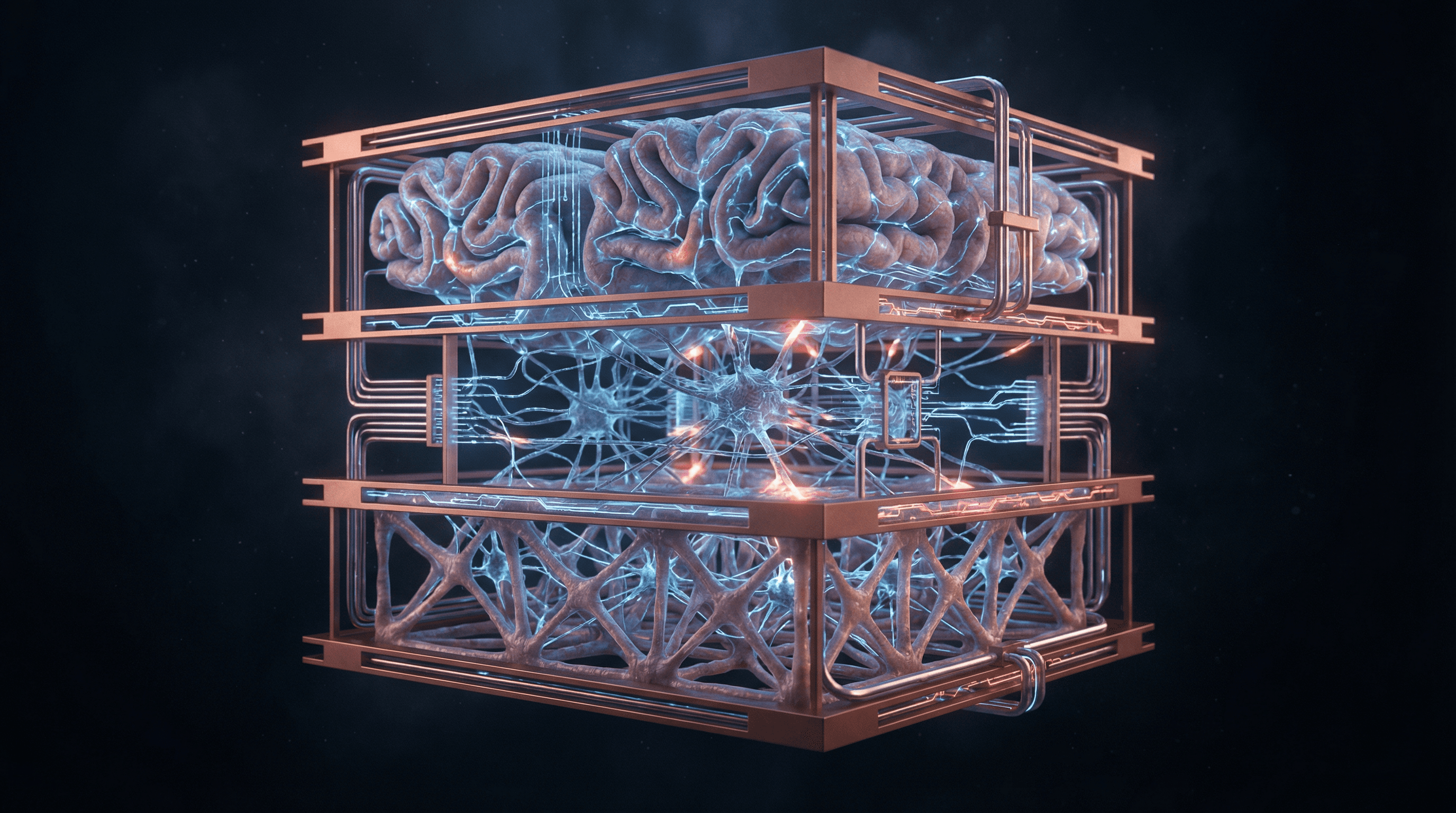
Strategy consulting and organizational development — layered copper neural blueprint connecting operational tiers

Self-efficacy — belief in your ability to succeed — has its own brain architecture. Research with over 1,200 adults found higher self-efficacy scores correlated with specific patterns in the putamen — a motor control and habit region. The putamen connects planning regions with structures involved in skill acquisition and goal pursuit.

This establishes that self-efficacy isn’t just a belief. It’s a function of circuit architecture.

In over two decades of this work, the most consistent finding is clear. High-capacity professionals whose performance has degraded aren’t experiencing motivation, discipline, or strategy problems. They’re experiencing circuit changes that behavioral approaches cannot reach.

How Dr. Ceruto Approaches Performance Improvement

Dr. Ceruto’s method identifies which specific brain circuits are underperforming. She then targets them with precision no behavioral framework can match.

The process begins with assessment of three performance-critical systems. The dopamine reward architecture. The error-processing circuitry. The self-efficacy brain patterns.

For professionals whose reward pathway has entered predictive saturation, the method introduces structured prediction error re-generation. This creates genuine uncertainty loops within goal pursuit that restore dopamine signaling to peak performance levels.

For those whose error-processing has shifted toward fixed-mindset patterns, Real-Time Neuroplasticity — the brain’s ability to rewire itself — re-engineers the error awareness process. The goal isn’t reframing failure through motivational language. It’s recalibrating the brain response so setbacks function as the engaging prediction errors the reward system was designed to process.

Clients describe this as fundamentally different from anything they’ve experienced. Dr. Ceruto doesn’t treat performance as behavioral output to be managed. She treats it as brain architecture to be diagnosed, understood, and recalibrated at the circuit level where performance is generated.

The NeuroSync program targets a focused performance dimension with concentrated intervention. For professionals navigating comprehensive performance demands across multiple domains, the NeuroConcierge partnership provides embedded access to Dr. Ceruto’s methodology as situations evolve.

What to Expect

The engagement begins with a Strategy Call. This focused strategy conversation assesses your performance history, specific domains where output has declined, and conditions under which peak performance last occurred naturally.

From this assessment, a structured protocol targets your specific performance architecture. Each session addresses identified circuit-level patterns with interventions calibrated to the brain change windows governing each system.

There are no generic performance modules. Every protocol element maps to the specific dopamine, error-processing, or self-efficacy circuits your assessment revealed.

Progress tracking uses cognitive performance markers and behavioral indicators, not self-reported satisfaction or subjective improvement impressions. The engagement structures around Hebbian reconsolidation — the brain’s process of rewriting stored memories — windows. This ensures circuit-level changes reinforce at biologically relevant intervals.

The protocol concludes when targeted performance architecture demonstrates stable recalibration under conditions that previously triggered degradation.

The Neural Architecture of Performance

Performance is not a behavior. It is a state — a specific configuration of neural systems that determines what you are capable of producing at any given moment. Most performance improvement efforts treat the output without touching the state that generates it, which is why the improvements they produce are temporary and context-dependent.

At the neurological level, sustained high performance depends on the coordinated function of three systems: the prefrontal executive network, which governs goal maintenance and impulse regulation; the dopaminergic motivation circuit, which drives the effort required to close the gap between current state and desired outcome; and the default mode network, which is responsible for the mental simulation and self-referential processing that allow you to learn from experience and project into future scenarios. When these three systems are aligned and adequately resourced, performance appears almost automatic. When any one of them is depleted, dysregulated, or operating at cross-purposes with the others, the output degrades in ways that are immediately visible but whose causes are rarely obvious from the outside.

The prefrontal network is particularly sensitive to chronic cognitive load. High-performing individuals carry enormous amounts of unresolved decision weight — open loops, deferred choices, unprocessed outcomes — that occupy working memory bandwidth without producing any useful output. This load does not feel like a problem in the moment. It feels like being busy. But the cumulative effect is a measurable narrowing of attentional flexibility, reduced capacity for creative problem-solving, and a gradual shift toward reactive rather than proactive behavior. The person is still performing. They are simply performing below their actual ceiling, and they have been doing it long enough that they have forgotten the ceiling exists.

The dopaminergic circuit introduces a different set of constraints. Motivation at the neural level is prediction-based: the system fires in response to expected reward signals, not actual ones. When the gap between effort and visible progress becomes too large — when results feel uncoupled from action — the motivation circuit begins to disengage. This is not weakness. It is the brain operating exactly as designed, conserving resources in response to a perceived low-return environment. Correcting it requires changing the prediction model, not exhorting yourself to try harder.

Why Traditional Performance Improvement Falls Short

Conventional performance improvement consulting tends to operate in one of two registers: behavioral and systemic. Behavioral approaches focus on habits, routines, and disciplines — the visible actions that high performers take. Systemic approaches focus on structures, incentive alignment, and process design. Both have genuine value. Neither addresses the neural substrate that determines whether the behaviors will actually be executed, whether the structures will be used as designed, or whether the person at the center of the system will have the cognitive and motivational resources required to perform at the level the system assumes.

The result is a familiar pattern: the consulting engagement produces a well-designed plan, the client implements it with genuine commitment, and within three to six months the improvements have eroded. Not because the plan was wrong. Not because the client lacked discipline. But because the brain that was supposed to execute the plan was operating under the same constraints that produced the performance gap in the first place, and no one addressed those constraints directly.

Performance improvement that does not reach the neural level is renovation without structural repair. You can resurface the floor, repaint the walls, and replace the fixtures — but if the foundation has shifted, the renovation does not hold.

How Neural-Level Performance Restructuring Works

My approach begins with a precise diagnostic of the specific neural systems that are limiting performance for this individual, in this context, at this moment. Performance gaps are not generic. A CEO whose output is constrained by prefrontal overload presents differently from one whose dopaminergic motivation circuit has been blunted by a sequence of misaligned incentives, and both present differently from the individual whose performance is limited by a default mode network that generates catastrophic simulations in the absence of sufficient positive feedback. The intervention must be calibrated to the actual constraint.

Antique rosewood desk with crystal brain sculpture and MindLAB journal in warm amber Lisbon afternoon light with historic European wood paneling

For prefrontal load, the work involves systematic reduction of open cognitive loops — not through time management techniques, but through protocols that allow the brain’s executive system to release working memory resources by achieving genuine closure on pending decisions, rather than merely deferring them. For motivational circuit recalibration, the work involves restructuring the relationship between effort and feedback so that the prediction model the brain uses to allocate energy is receiving accurate, high-resolution information about the progress that is actually occurring. For default mode dysregulation, the work involves directed neuroplasticity practices that reshape the content and valence of the self-referential simulations the brain runs automatically in the background of every waking hour.

Each protocol is applied within the specific professional context of the individual — the actual decisions they face, the actual pressures they navigate, the actual performance domains where the gap is visible. This is not generic coaching. It is precision restructuring calibrated to a specific human nervous system in a specific operational environment.

What This Looks Like in Practice

Clients typically notice two categories of change. The first is a reduction in friction — the sense that things that used to require significant effort now come more readily. Decisions that previously consumed extended deliberation resolve more cleanly. Creative output that required sustained forcing now arrives with less resistance. The experience is not of working harder, but of the work matching the effort invested in a way it had not been doing before.

The second category is a shift in ceiling. When the neural systems that govern performance are operating at higher baseline function, the absolute upper limit of what the person can produce in their best moments increases. This is what separates performance improvement at the neural level from performance improvement at the behavioral level: behavioral improvements raise the floor; neural restructuring raises the ceiling.

We begin with a strategy call — one hour of precise strategy conversation that maps the specific constraints on your current performance and identifies the restructuring pathway that will produce the most significant and durable change. No generic frameworks. No borrowed best practices. A precise protocol built around the actual architecture of your performance system.

For deeper context, explore dopamine and workplace performance improvement.

Marker Traditional Approach Neuroscience-Based Approach Why It Matters
Focus Process analysis, gap assessment, and performance metric optimization Expanding the neural capacity of key individuals whose cognitive function determines organizational performance ceilings
Method Performance consulting with root cause analysis, benchmarking, and implementation support Targeted intervention in the prefrontal and executive function circuits of individuals at critical performance bottleneck positions
Duration of Change Process-dependent; improvements plateau when human cognitive limitations reassert as the binding constraint Permanent expansion of individual neural capacity that raises the biological ceiling on organizational performance

Why Performance Improvement Consulting Matters in Lisbon

Lisbon’s performance landscape creates brain demands distinct from any other city in the MindLAB network. The city operates as two overlapping markets with different neural pressures.

The international layer includes Web Summit founders, digital nomads, and startup ecosystem participants operating in English at global velocity. The domestic layer involves Portuguese professionals navigating established corporate hierarchies with relationship-first decision-making.

For the international layer, Lisbon’s annual Web Summit draws over 70,000 attendees in November. This creates predictable performance pressure cycles. Founders experience concentrated demands during preparation and pitch weeks, followed by post-event decision fatigue from commitments made under cognitive load — the total demand on mental processing capacity.

The startup ecosystem itself generates sustained performance demands. Portugal’s 5,091 active startups and five unicorns create an environment where comparative pressure and funding-round velocity drive chronic activation of the dopamine reward system.

The digital nomad community spans Lisbon’s neighborhoods, from Alfama coworking spaces to Cascais cafes. They face a specific performance challenge. Continuous partial attention is the default mode in notification-saturated remote work environments. This directly opposes conditions that trigger the dopamine cascades underlying flow state access.

These professionals are data-driven and optimization-oriented. They measure everything about their business except the brain architecture generating their performance output.

Portuguese professionals operating in the domestic market face different pressures. The relationship-first culture, measured pace of trust-building, and bilingual cognitive load of switching between English and Portuguese create cumulative demands on the prefrontal cortex — the brain’s executive control center.

These demands manifest not as acute breakdown but as gradual performance compression.

Lisbon’s position as a European market entry gateway creates additional demand. Founders from the Americas, Middle East, and Asia relocating to build European operations face compounded neural load. Unfamiliar regulatory environments, new stakeholder networks, and high-stakes capital commitments systematically degrade the brain signal integrity governing strategic performance.

Array

Performance improvement in Lisbon’s emerging tech ecosystem faces a workforce challenge: the talent pool combines Portuguese professionals trained in traditional European business practices with international professionals bringing diverse operational methodologies. Performance improvement initiatives must bridge these different cognitive frameworks — a challenge that standard consulting approaches resolve at the process level while leaving the underlying neural architecture mismatches unaddressed.

The European regulatory environment adds compliance overhead to every performance improvement initiative in Lisbon — GDPR, labor regulations, and cross-border operational rules create constraint layers that consume the cognitive resources of the leaders implementing improvements. Dr. Ceruto’s approach ensures that performance improvement leaders retain sufficient neural capacity for strategic optimization despite the regulatory processing demands that European operations impose.

Dr. Sydney Ceruto, PhD — Founder, MindLAB Neuroscience

Dr. Sydney Ceruto, PhD — Founder & CEO, MindLAB Neuroscience

Dr. Ceruto holds a PhD in Behavioral & Cognitive Neuroscience from NYU and two Master’s degrees from Yale University. She lectures at the Wharton Executive Development Program at the University of Pennsylvania and has been an Executive Contributor to the Forbes Coaching Council since 2019. Dr. Ceruto is the author of The Dopamine Code (Simon & Schuster, June 2026). She founded MindLAB Neuroscience in 2000 and has spent over 26 years pioneering Real-Time Neuroplasticity™ — a methodology that permanently rewires the neural pathways driving behavior, decisions, and emotional responses.

References

Yerkes, R. M., & Dodson, J. D. (1908). The relation of strength of stimulus to rapidity of habit-formation. Journal of Comparative Neurology and Psychology, 18(5), 459–482. https://doi.org/10.1002/cne.920180503

Sapolsky, R. M. (2015). Stress and the brain: Individual variability and the inverted-U. Nature Neuroscience, 18(10), 1344–1346. https://doi.org/10.1038/nn.4109

Schultz, W. (2016). Dopamine reward prediction-error signalling: A two-component response. Nature Reviews Neuroscience, 17(3), 183–195. https://doi.org/10.1038/nrn.2015.26

Miller, E. K., & Cohen, J. D. (2001). An integrative theory of prefrontal cortex function. Annual Review of Neuroscience, 24, 167–202. https://doi.org/10.1146/annurev.neuro.24.1.167

Success Stories

“I just finished the comprehensive program with Dr. Ceruto and felt compelled to leave a review in hopes of steering someone in need toward MindLAB. This was truly an eye-opening experience — I learned so much about myself that I didn’t know existed. Dr. Ceruto was kind, compassionate, and generous with her time. When I needed extra encouragement, she was just a text or call away, no matter the day or time. Her knowledge of how our brain works, combined with that availability, was a game-changer.”

Dee — Nonprofit Director Zurich, CH

“I could perform at the highest level professionally and still feel hijacked emotionally in my closest relationships — and no conventional approach had ever explained why those two realities coexisted. Dr. Ceruto identified the limbic imprint — an amygdala encoding from childhood that was running every intimate interaction I had. She didn't help me understand it better. She dismantled it. The reactivity isn't something I regulate anymore. The pattern that generated it is gone.”

Natasha K. — Art Advisor Beverly Hills, CA

“Every close relationship I had eventually hit the same wall — I'd flood emotionally and shut down or explode, and nothing I'd tried gave me real control over it. Dr. Ceruto identified that my autonomic nervous system was defaulting to fight-or-flight the moment real intimacy was on the line. She didn't give me coping tools. She restructured the default. The flooding stopped because the trigger architecture changed.”

Simone V. — Publicist New York, NY

“Unfortunate consequences finally forced me to deal with my anger issues. I’d read several books and even sought out a notable anger specialist, but nothing was clicking. Then I found Sydney’s approach and was intrigued. Her insightfulness and warm manner helped me through a very low point in my life. Together we worked through all my pent-up anger and rage, and she gave me real tools to manage it going forward. I now work to help others learn how to control their own anger.”

Gina P. — Trial Attorney Naples, FL

“Every metric was green and I felt nothing. Conventional approaches told me I was 'burned out' or needed gratitude practices — none of it touched the actual problem. Dr. Ceruto identified that my dopamine baseline had shifted so high from constant reward-chasing that normal achievement couldn't register anymore. She recalibrated the reward system itself. I didn't need more success. I needed my brain to actually experience the success I already had.”

Rafael G. — Screenwriter New York, NY

“My kids had been sleeping through the night for three years, but my brain hadn't caught up. I was still waking every ninety minutes like clockwork — no amount of sleep hygiene or supplements touched it. Dr. Ceruto identified the hypervigilance loop that had hardwired itself during those early years and dismantled it at the source. My brain finally learned the threat was over. I sleep through the night now without effort.”

Catherine L. — Board Director Greenwich, CT

Frequently Asked Questions About Performance Improvement Consulting in Lisbon

What neuroscience mechanisms are involved in performance improvement?
MindLAB's approach targets three primary systems. The dopamine pathway governs motivation and reward signaling. The error-processing circuitry determines how your brain responds to setbacks. The self-efficacy — belief in your ability to succeed — architecture centered in brain regions controlling goal pursuit. Each system can be independently assessed and targeted with specific protocols calibrated to your neural performance profile.
I have tried performance-focused approaches before without lasting results. Why would this be different?

Behavioral approaches to performance improvement address the output layer: habits, goals, accountability, and mindset language. They assume the brain's performance architecture is intact and simply needs better inputs. Dr. Ceruto's methodology operates at the circuit level, diagnosing which specific neural systems are underperforming and targeting them with protocols mapped to neuroplasticity — the brain's ability to rewire itself — windows. The change is structural. It holds because the architecture itself has been recalibrated, not because a new behavioral pattern has been layered on top of an unchanged neural substrate.

Is this service designed for startup founders, corporate professionals, or both?

MindLAB's performance advisory serves anyone whose professional output is constrained by neural architecture rather than circumstance. In Lisbon, this includes founders navigating the Web Summit ecosystem, digital nomad entrepreneurs managing distributed operations, corporate leaders in multinational organizations, and Portuguese professionals building ventures in the domestic market. The methodology is calibrated to the individual's specific performance architecture, not to a professional category.

How does Dr. Ceruto diagnose performance issues without medication?

Dr. Ceruto's assessment methodology identifies circuit-level patterns through behavioral assessment, cognitive performance markers, and detailed analysis of the conditions under which performance degrades and recovers. This is not a medical intervention. It is a neurological calibration process, modulation, regulation, and re-alignment of the specific circuits governing motivation, error processing, and self-efficacy — belief in one's ability to succeed at specific tasks —. No pharmaceutical intervention is involved at any stage.

Can I work with Dr. Ceruto remotely from Lisbon?

Yes. MindLAB's methodology is fully available through virtual sessions. The assessment and intervention protocols maintain their precision in remote delivery, which makes the approach particularly well-suited for Lisbon's digital nomad and internationally mobile professional community. Sessions integrate seamlessly with schedules that span multiple time zones and geographic locations.

How many sessions does a performance improvement engagement involve?

The engagement is structured around neuroplasticity — the brain's ability to rewire itself — consolidation windows and measured against cognitive performance markers, not arbitrary session counts. The duration depends on the specific neural patterns identified in your assessment and the complexity of the performance architecture being addressed. Dr. Ceruto does not prescribe standard engagement lengths because every neural performance profile is different.

What is the Strategy Call and how does it relate to the full engagement?

The Strategy Call is a focused strategy conversation where Dr. Ceruto assesses your performance history, the specific conditions under which output has declined, and the circumstances that previously supported peak performance. This conversation establishes the neural baseline from which the protocol is designed. It is a precision evaluative instrument, not a preliminary consultation, and it frequently reveals circuit-level patterns that no previous performance assessment has identified.

Why do performance improvement initiatives often produce initial gains that plateau or reverse?

Initial performance gains from process improvement, training, and structural changes reflect the easiest optimizations — removing obvious bottlenecks and implementing straightforward efficiencies. The plateau occurs when the binding constraint shifts from process to people: the cognitive capacity, decision quality, and adaptive capability of the individuals operating the improved processes become the new ceiling.

This is the biological wall that conventional performance improvement cannot breach. No further process optimization will overcome the prefrontal function limitations of the people executing those processes. Sustainable improvement beyond this point requires expanding the neural capacity of the individuals at the bottleneck positions.

How does Dr. Ceruto's approach measure performance improvement at the neural level?

Neural performance improvement manifests in observable behavioral metrics: decision speed and quality, performance consistency across the day and week, recovery time after demanding periods, error rates under cognitive load, and the capacity to maintain strategic thinking alongside operational demands.

Dr. Ceruto tracks these observable outputs as proxies for underlying neural changes. When prefrontal function improves, decision quality measurably increases. When stress-response architecture is recalibrated, performance consistency improves. When cognitive resource allocation is optimized, the individual sustains higher output quality for longer periods. These are measurable and attributable changes, not subjective assessments.

Which organizational roles benefit most from neural-level performance intervention?

Roles where cognitive capacity directly determines output quality benefit most: strategic decision-makers, client-facing professionals whose interpersonal processing drives results, complex problem-solvers whose work resists automation, and leaders whose neural states propagate through their teams via social cognition circuits.

Dr. Ceruto prioritizes roles where the gap between current neural capacity and role demands is largest and where improvement produces the most measurable organizational return. These are typically senior leadership positions, but can include any role where cognitive, emotional, or social processing capacity is the binding constraint on organizational performance.

Also available in: Miami · Wall Street · Midtown Manhattan · Beverly Hills

The Circuits Running Every Performance Decision You Make in Lisbon

From Web Summit pitch preparation to the daily cognitive load of building a European venture, performance architecture is biological. Dr. Ceruto maps your specific neural performance profile in one conversation.

Book a Strategy Call
MindLAB Neuroscience consultation room

The Dopamine Code

Decode Your Drive

Why Your Brain Rewards the Wrong Things

Your brain's reward system runs every decision, every craving, every crash — and it was never designed for the life you're living. The Dopamine Code is Dr. Ceruto's framework for understanding the architecture behind what drives you, drains you, and keeps you locked in patterns that willpower alone will never fix.

Published by Simon & Schuster, The Dopamine Code is Dr. Ceruto's framework for building your own Dopamine Menu — a personalized system for motivation, focus, and enduring life satisfaction.

Order Now

Ships June 9, 2026

The Dopamine Code by Dr. Sydney Ceruto — Decode Your Drive
Locations

The Intelligence Brief

Neuroscience-backed analysis on how your brain drives what you feel, what you choose, and what you can’t seem to change — direct from Dr. Ceruto.