Key Points
- Communication breakdowns persist because the brain's social-processing circuits generate threat-based responses before conscious thought can intervene.
- Real-Time Neuroplasticity™ rewires the neural architecture governing how you connect, so authentic communication becomes the default.
- Once the circuits are recalibrated, the old patterns of defensiveness, withdrawal, or bluntness no longer fire automatically.
- Dr. Ceruto maps your specific communication pattern during the Strategy Call to determine the precise approach.
- MindLAB's methodology produces structural neural change — no scripts, no devices, no indefinite maintenance.
| Marker | Traditional Approach | Neuroscience-Based Approach | Why It Matters |
|---|---|---|---|
| Target of Intervention | Surface communication behaviors | Neural circuits governing social response | Root-cause rewiring vs. surface techniques |
| Primary Method | Scripts, frameworks, active listening drills | Real-Time Neuroplasticity™ rewiring | Automatic responses change, not just habits |
| Duration of Results | Fades without ongoing practice | Permanent neural pathway restructuring | Change that holds without rehearsal |
| Approach to Social Anxiety | Exposure practice and coping tools | Threat-circuit recalibration at the source | The brain stops generating the fear signal |
| Role of Conscious Effort | High — must remember and apply techniques | Minimal — the automatic circuit is rewired | Connection becomes effortless, not forced |
| Personalization | Generic communication models | Mapped to your specific neural architecture | Precision targeting for your exact pattern |
Why Communication & Interpersonal Skills Matters in Miami
Communication & Interpersonal Skills in Miami
Miami runs on relationships. Business here moves through introductions, not applications. Deals happen over cafecito in Brickell, at gallery openings in Wynwood, across dinner tables in Coral Gables. The person who struggles to connect authentically in these settings does not just feel socially uncomfortable. They watch opportunities pass to people who seem to navigate conversation effortlessly. And the frustration compounds because they know exactly what they wanted to say — after the moment has already gone.
What makes Miami’s interpersonal landscape uniquely demanding is its cultural complexity. The city is genuinely multilingual and multicultural in a way that goes far beyond language. Communication norms shift block by block. The directness valued in a Brickell finance meeting reads as abrasive in a family-oriented Coral Gables dinner. The warmth expected in Little Havana feels performative in a Coconut Grove creative studio. Miami has no single communication code. People here are constantly reading and adapting to shifting social expectations — and for someone whose brain already struggles with real-time social calibration, that complexity becomes overwhelming.
The neural reality behind communication breakdowns is more concrete than most people realize. Your brain processes social signals through a network that operates largely below conscious awareness. Tone of voice, facial micro-expressions, body posture, conversational pacing — your brain is reading all of this simultaneously and generating a response before your conscious mind finishes processing the first sentence. When this system is well-calibrated, conversation feels natural. When it is not, you experience the gap: knowing what you want to communicate but unable to deliver it in a way that lands.
This gap shows up differently depending on context. In close relationships, it surfaces as arguments that escalate before either person understands why. In professional settings, it appears as feedback that consistently misses its mark — too blunt, too indirect, too late. In social situations, it manifests as the chronic sense that you are performing rather than connecting. The common thread is a neural system that is generating responses calibrated to threat rather than connection. The amygdala — the brain’s threat-detection center — can learn to treat interpersonal situations as dangerous. When it does, every conversation runs through a filter designed for survival rather than intimacy.
Miami-Dade County’s population exceeds 2.7 million people, with over 70% identifying as Hispanic or Latino. The communication norms here draw from Cuban, Colombian, Venezuelan, Brazilian, Haitian, and a dozen other cultural traditions. Each carries distinct expectations around eye contact, personal space, emotional expression, and conversational rhythm. For someone navigating this environment with a neural system already primed for social threat, the cognitive load becomes enormous. The brain spends so much energy trying to read the room that it has little left for genuine expression.
Dr. Ceruto’s methodology addresses communication and interpersonal difficulty at the circuit level. Real-Time Neuroplasticity™ recalibrates the neural pathways that govern social processing — shifting the brain from defensive monitoring to authentic engagement. The work does not teach scripts or communication frameworks. It rewires the architecture that determines how your brain responds in the moment, so that connection becomes the default rather than the exception. The Strategy Call maps your specific communication patterns and identifies which neural mechanisms are driving the disconnect — a focused phone conversation that replaces guesswork with precision.


Dr. Sydney Ceruto, PhD — Founder & CEO, MindLAB Neuroscience
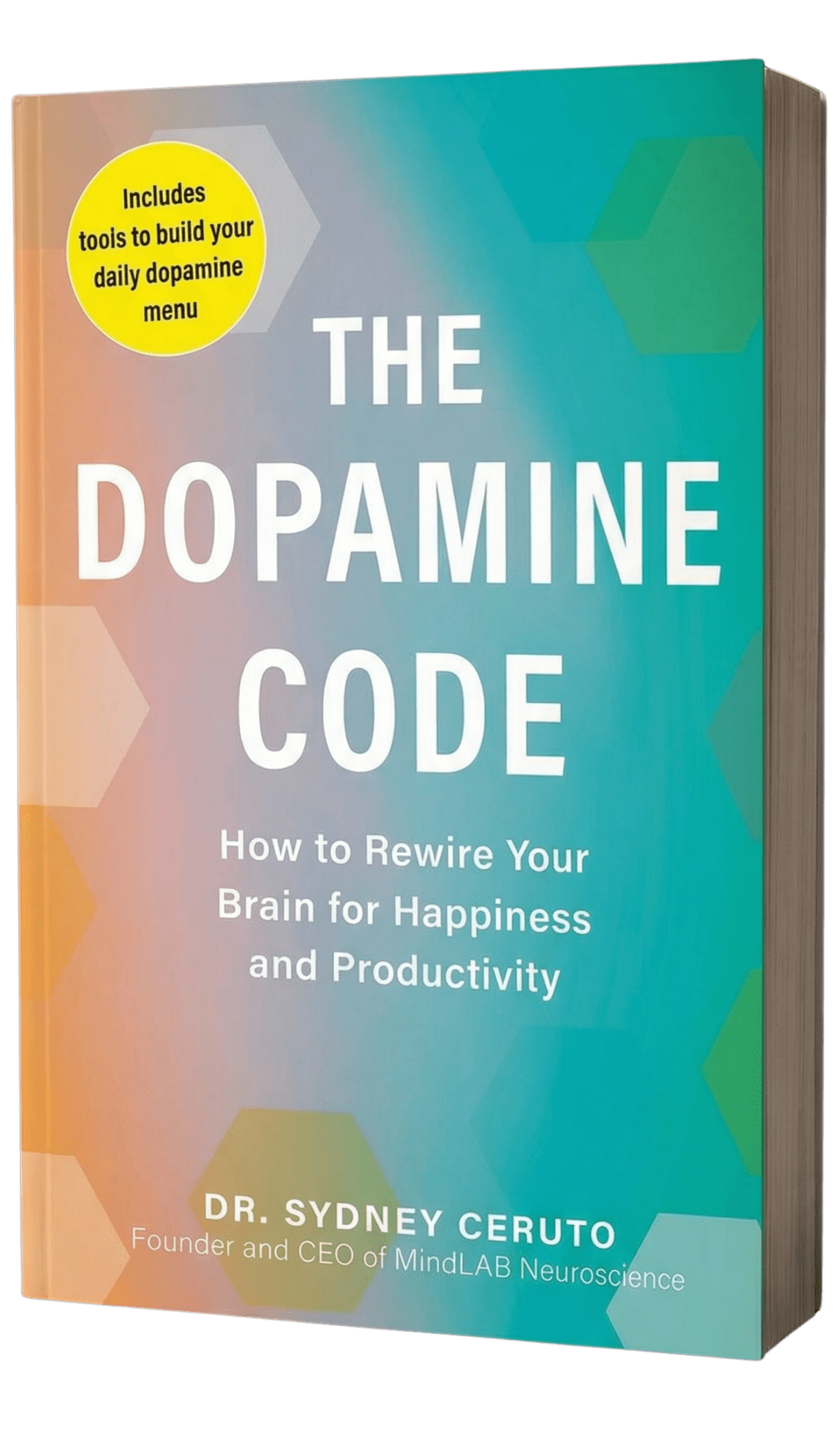
Dr. Ceruto holds a PhD in Behavioral & Cognitive Neuroscience from NYU and two Master’s degrees from Yale University. She lectures at the Wharton Executive Development Program at the University of Pennsylvania and has been an Executive Contributor to the Forbes Coaching Council since 2019. Dr. Ceruto is the author of The Dopamine Code (Simon & Schuster, June 2026). She founded MindLAB Neuroscience in 2000 and has spent over 26 years pioneering Real-Time Neuroplasticity™ — a methodology that permanently rewires the neural pathways driving behavior, decisions, and emotional responses.
Success Stories
“My communication was damaging every relationship in my professional life and I couldn't see it. Dr. Ceruto's neuroscience-based approach didn't just improve how I communicate — it rewired the stress response that was driving the pattern in the first place. The people around me noticed the change before I fully understood what had happened. That tells you everything.”

“Anxiety and depression had been running my life for years. Dr. Ceruto helped me see them not as permanent conditions but as neural patterns with identifiable roots. Once I understood the architecture, everything changed.”

Identifying details withheld to protect client confidentiality.
All outcomes represent genuine engagements with Dr. Ceruto.
Frequently Asked Questions About Communication & Interpersonal Skills in Miami
Why do I struggle with communication even though I know what I want to say?
Your brain processes social situations through circuits that operate below conscious awareness. When these circuits are calibrated to detect threat rather than facilitate connection, they generate defensive responses — hesitation, bluntness, withdrawal — before your conscious intention can shape the interaction. Knowing the right words is not the problem. The problem is what your brain does with them under pressure.
How is MindLAB's approach to communication skills different from conventional coaching?
Conventional approaches teach frameworks, scripts, and active listening techniques. These work when the brain's social processing system is functioning well. When the underlying neural architecture is generating threat-based responses, no amount of technique overrides the automatic pattern. Dr. Ceruto's methodology rewires the circuits that produce the response, so authentic communication becomes the default.
Can this help with conflict in close relationships?
Yes. Relationship conflict often follows predictable neural patterns — one person's stress response triggers the other's, and both brains escalate before either person consciously decides to argue. Dr. Ceruto maps the specific circuit driving your conflict pattern and recalibrates it so that conversations no longer default to defensiveness.
What happens during the Strategy Call?
The Strategy Call is a focused phone conversation with Dr. Ceruto. She identifies the specific neural mechanisms driving your communication difficulties — whether the primary issue involves social threat processing, emotional regulation during conversation, or difficulty reading interpersonal cues. The fee is $250.
Is there a MindLAB Neuroscience office in Miami?
MindLAB Neuroscience is located at 16051 Collins Avenue, Suite 605, North Miami Beach, FL 33160. Dr. Ceruto also works with clients by phone, making the full methodology accessible regardless of location.
How long before communication patterns start to shift?
Many clients notice meaningful changes within the first few weeks as the targeted circuits begin to recalibrate. The timeline depends on how deeply consolidated the pattern is and how many contexts trigger it. Dr. Ceruto provides a realistic assessment during the Strategy Call.
Why are interpersonal challenges particularly intense in Miami?
Miami's multicultural environment means communication norms shift constantly — directness valued in one setting reads as confrontational in another. The city runs on relationships, so interpersonal friction carries professional and social consequences that compound the pressure. Over 70% of Miami-Dade identifies as Hispanic or Latino, creating a richly layered communication landscape that demands constant social calibration.
Can this help with social anxiety in professional settings?
Social anxiety in professional contexts — networking events, presentations, high-stakes conversations — typically involves the amygdala flagging those situations as threats. Dr. Ceruto's methodology recalibrates the threat-detection system so the brain stops generating a survival response in settings that require connection and composure.
Do I need a referral to begin working with MindLAB?
No referral is required. If your communication patterns are causing persistent difficulty in your relationships, career, or daily interactions despite your efforts to change them, that is sufficient to begin the conversation.
Will I need ongoing sessions to maintain improvements?
Real-Time Neuroplasticity™ produces structural changes in neural pathways. Once the circuits governing your social responses are recalibrated, the new patterns become the brain's default. Most clients do not require indefinite engagement to maintain their results.
Also available in: Wall Street · Midtown Manhattan · Beverly Hills · Lisbon
Take the First Step
The Strategy Call is a focused conversation with Dr. Ceruto that maps the specific neural mechanisms driving your concerns and determines the right path forward.
Book a Strategy Call
The Dopamine Code
Decode Your Drive
Why Your Brain Rewards the Wrong Things
Your brain's reward system runs every decision, every craving, every crash — and it was never designed for the life you're living. The Dopamine Code is Dr. Ceruto's framework for understanding the architecture behind what drives you, drains you, and keeps you locked in patterns that willpower alone will never fix.
Published by Simon & Schuster, The Dopamine Code is Dr. Ceruto's framework for building your own Dopamine Menu — a personalized system for motivation, focus, and enduring life satisfaction.
Order NowShips June 9, 2026