Key Points
- Professional identity is a neural construct, not a personal brand
- Outdated identity patterns create friction that willpower cannot resolve
- Real-Time Neuroplasticity™ rewires the circuits shaping self-perception
- Changes are permanent because the methodology targets root-cause patterns
- Dr. Ceruto maps your specific neural architecture during the Strategy Call
| Marker | Traditional Approach | Neuroscience-Based Approach | Why It Matters |
|---|---|---|---|
Why Professional Identity Development Matters in Miami
Why Miami Professionals Reach an Identity Ceiling
Miami’s economic transformation over the past decade has rewritten the rules of professional identity faster than most brains can adapt. The arrival of Citadel’s global headquarters to Brickell in 2022, followed by the steady migration of hedge funds, fintech firms, and venture capital offices from New York and San Francisco, created an entirely new professional ecosystem. Executives who built identities in legacy industries suddenly find themselves surrounded by a culture that measures relevance differently.
The pressure is specific. In Brickell and the Miami Financial District, professionals who spent twenty years climbing traditional corporate hierarchies now compete alongside founders half their age who raised nine-figure rounds before turning thirty-five. The brain registers this as a status threat. The prefrontal cortex — your brain’s executive planning center — starts generating doubt signals rather than strategic clarity. You know your experience is valuable, but the neural pattern says otherwise.
Wynwood and the Design District added another layer. Miami’s creative economy exploded, and professionals who never needed a public identity suddenly find that visibility is currency. The old playbook — do excellent work, let the results speak — no longer maps to how opportunity flows in a city that rewards narrative as much as output.
South Florida’s bilingual, multinational business culture compounds the challenge. Professionals operating across Latin American and North American markets often carry two competing identity frameworks that the brain cannot reconcile without intervention. Code-switching between cultural expectations creates cognitive load that accumulates quietly until confidence erodes in both contexts.
Coral Gables and Coconut Grove attract a different pattern: established professionals in their late forties and fifties whose identities were forged in corporate roles they have outgrown. They want to pivot — launch advisory practices, join boards, build something independent — but the brain’s threat-detection system interprets leaving a known identity as danger, not opportunity.
The Doral and Medley business district draws Latin American executives who relocated corporate operations to South Florida. These professionals built identities inside family enterprises or multinational firms across Bogotá, São Paulo, and Mexico City. The brain encoded authority signals from those markets — hierarchy, formality, network depth — that operate differently in Miami’s more fluid professional culture. The identity that commanded respect in one market creates friction in another.
Key Biscayne and the barrier islands attract a quieter pattern: established professionals who have achieved everything the old identity was designed to produce and now feel an emptiness they cannot explain. The brain has no prediction for what comes after the identity is fulfilled. Dr. Ceruto addresses this specific inflection — the point where the old identity succeeded so completely that it has nothing left to offer.

The Aventura and North Miami Beach area draws professionals in healthcare, legal services, and international trade whose identities were built in highly structured environments now being disrupted by market evolution.
Dr. Ceruto works with Miami professionals at every stage of this identity recalibration. Real-Time Neuroplasticity™ does not build a new brand. It rewires the neural architecture that defines how you see yourself in professional contexts, so the identity you project matches the scope of what you are actually capable of delivering.

Dr. Sydney Ceruto, PhD — Founder & CEO, MindLAB Neuroscience
Dr. Ceruto holds a PhD in Behavioral & Cognitive Neuroscience from NYU and two Master’s degrees from Yale University. She lectures at the Wharton Executive Development Program at the University of Pennsylvania and has been an Executive Contributor to the Forbes Coaching Council since 2019. Dr. Ceruto is the author of The Dopamine Code (Simon & Schuster, June 2026). She founded MindLAB Neuroscience in 2000 and has spent over 26 years pioneering Real-Time Neuroplasticity™ — a methodology that permanently rewires the neural pathways driving behavior, decisions, and emotional responses.
Frequently Asked Questions About Professional Identity Development in Miami
Also available in: Wall Street · Midtown Manhattan · Beverly Hills · Lisbon
Take the First Step
The Strategy Call is a focused conversation with Dr. Ceruto that maps the specific neural mechanisms driving your concerns and determines the right path forward.
Book a Strategy Call
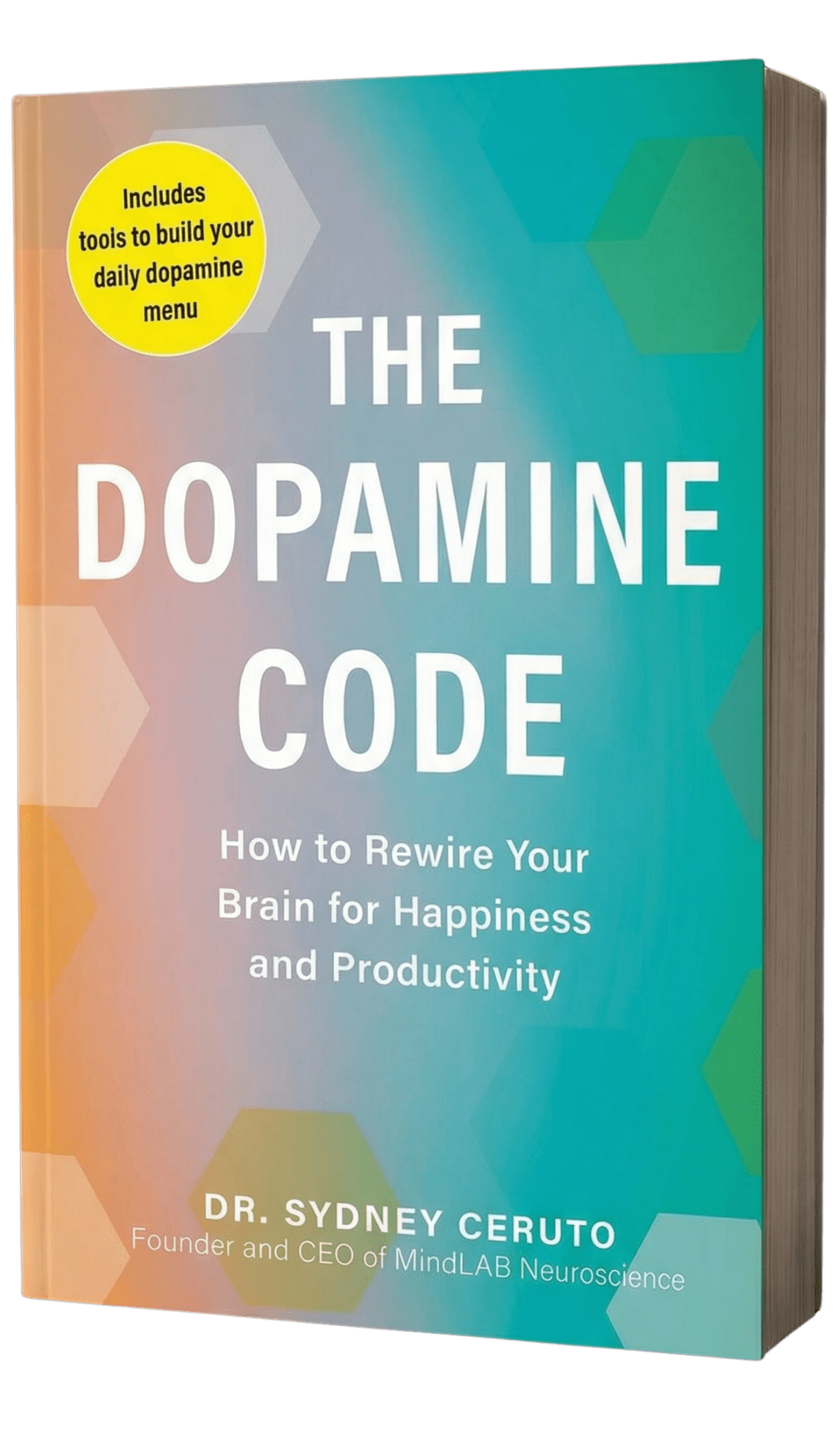
The Dopamine Code
Decode Your Drive
Why Your Brain Rewards the Wrong Things
Your brain's reward system runs every decision, every craving, every crash — and it was never designed for the life you're living. The Dopamine Code is Dr. Ceruto's framework for understanding the architecture behind what drives you, drains you, and keeps you locked in patterns that willpower alone will never fix.
Published by Simon & Schuster, The Dopamine Code is Dr. Ceruto's framework for building your own Dopamine Menu — a personalized system for motivation, focus, and enduring life satisfaction.
Order NowShips June 9, 2026