
Key Takeaways
- Alone and lonely differ neurologically: solitude can restore resources, loneliness activates threat and pain circuitry.
- The brain reads prolonged social disconnection as survival risk, generating hunger-like craving and physical-pain activation.
- Chronic loneliness raises mortality risk roughly 26 percent, comparable to other major lifestyle risk factors.
- Modern loneliness reflects high-volume, low-depth interaction that never activates bonding circuits, not lack of contact.
- Lowering standards to escape loneliness usually deepens it; self-esteem buffers neurologically, reducing dependence on validation.
Loneliness is not a character flaw or a sign that something is wrong with you. It is a neural signal, the brain’s equivalent of hunger or thirst, that fires when it detects a gap between the connection you have and the connection you need. That is why you can feel profoundly lonely in a crowded room and perfectly content alone on a quiet afternoon. The difference is not how many people are around you. It is whether your brain reads your social world as safe and sufficient, or as a threat to survival.

Feeling Alone Versus Feeling Lonely: Two Different Brain States
Feeling alone is a physical fact: you are by yourself. Feeling lonely is an emotional appraisal: your brain has judged your connection as inadequate. The two states run on different circuitry, which is why they so often come apart. Solitude, when it is chosen, recruits the brain’s reflective and restorative networks. People regularly seek time alone for creativity, recovery, and self-direction, and it leaves them replenished rather than depleted.
Loneliness does the opposite. It registers as a threat. In more than 26 years of practice, the people who come to me describing chronic loneliness are rarely short on social contact, and that is precisely the clue. Their nervous systems have learned to read interaction as performance rather than safety, so connection arrives but never lands. The signal keeps firing because the brain’s belonging threshold is never actually met.
The difference between solitude and loneliness is not how many people are around you. It is whether your brain reads your social world as safe and sufficient, or as a threat to survival.
Why Your Brain Treats Loneliness as a Survival Threat
For most of human history, exclusion from the group was a death sentence. Isolation meant exposure to predators, loss of shared food, and no protection. So the brain evolved loneliness as an alarm, an aversive state designed to push you back toward the safety of connection before the danger became fatal. The discomfort is the point: it is biology insisting that you reconnect.
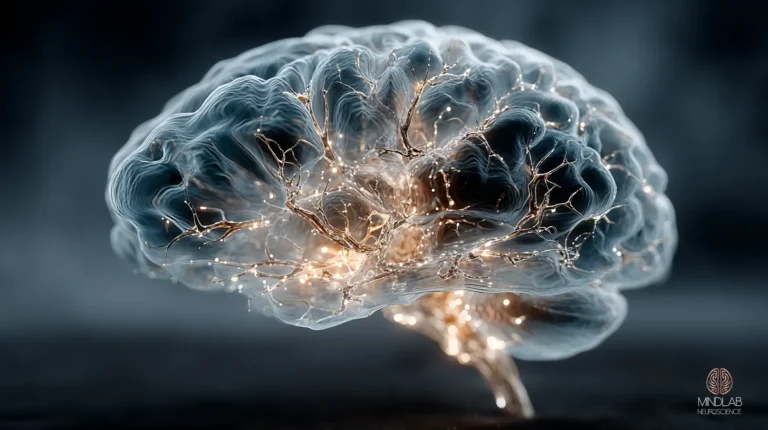
That alarm is not metaphorical. Research has shown that acute social isolation evokes a craving response in the same midbrain circuitry that signals hunger, meaning the brain processes a need for people much as it processes a need for food. At the same time, the experience of social disconnection recruits the dorsal anterior cingulate cortex and anterior insula, the regions that register physical pain. Loneliness genuinely hurts because, at the level of neural circuitry, the brain treats a broken bond like a bodily injury, the same threat machinery that drives the acute fear of being alone.
The consequences accumulate when the alarm never resolves. A large meta-analysis found that loneliness raises the risk of early mortality by roughly 26 percent, placing chronic social disconnection alongside other major lifestyle risk factors. This is not a reason for alarm so much as a reason to take the signal seriously: loneliness is information about an unmet biological need, not a personal failing to be ignored.

Why Modern Life Manufactures Loneliness
Loneliness has become more common even as digital connectivity has exploded, and the paradox resolves once you understand what the brain actually requires. Bonding circuits are activated by depth, attunement, and mutual presence, not by volume of contact. A feed full of acquaintances and a phone full of notifications can supply constant surface interaction while never triggering the deeper systems that register genuine belonging. The brain stays hungry in the middle of an apparent feast.
Several forces compound this. High-volume, low-depth digital interaction substitutes for face-to-face contact without delivering its neurological payload. Cultures that prize individual achievement over communal bonds leave fewer built-in relationships. Traditional community structures, from extended family to neighborhood ties, have thinned. And the fear of vulnerability keeps people in shallow exchanges precisely when depth is what their nervous system is asking for. The result is a society where many feel isolated while remaining constantly connected.
Why Connection Feels So Hard to Rebuild
One of the cruelest features of chronic loneliness is that it makes itself harder to escape. When the brain stays in a state of perceived social threat, it shifts toward hypervigilance: it scans interactions for signs of rejection, interprets neutral cues as negative, and primes withdrawal as a protective move. These are adaptive responses to genuine danger, but in ordinary social settings they quietly sabotage the very connections that would resolve the loneliness.
This creates a self-reinforcing loop. The lonelier a person becomes, the more their threat-detection systems distort incoming social signals, the more cautious and guarded they grow, and the fewer opportunities for genuine bonding survive contact. Two lonely people can stand beside each other, each braced for rejection, and never connect. The same loop often underlies the sense of feeling empty even in company. Recognizing this loop as neurology rather than personality is the first step toward interrupting it, because it relocates the problem from “what is wrong with me” to “what pattern is my brain running, and how do I change it.”

What Actually Works: A Neuroscience-Based Approach to Loneliness
Because loneliness is a calibration problem in the brain’s social-threat system, the work is to recalibrate that system rather than simply add more contact. At MindLAB Neuroscience, I use a Solitude Threat Assessment Matrix™ to map where a person’s brain has miscoded ordinary social situations as dangerous, and then to rebuild a more accurate appraisal through deliberate, repeated experiences of safe connection. The aim is not to manufacture a busier social calendar. It is to teach the nervous system that connection is available and survivable, so the alarm can finally stand down.
Several principles follow directly from the neuroscience. Invest in depth over breadth, because a few attuned relationships activate the bonding circuits that a hundred shallow contacts never will. Protect your standards rather than lowering them, since filling time with connections that fail to meet your brain’s belonging threshold leaves the loneliness signal firing while adding the corrosion of self-betrayal. Treat self-esteem as infrastructure, because a stronger internal sense of worth reduces dependence on external validation and lets you meet others from steadiness rather than need. And work with the threat loop directly, noticing when your brain is scanning for rejection and choosing to stay present anyway, which is how the underlying appraisal slowly updates. This is also where building genuine social resilience and connection becomes a trainable capacity rather than a matter of luck.
Self-awareness, self-compassion, meaningful activity, and steady real-world contact all help, not as motivational slogans but because each one feeds the brain the input it needs to recalibrate. Loneliness is common, it is biological, and it is changeable. The signal is doing its job. The work is learning to answer it well.
If loneliness has settled into a pattern that contact alone does not resolve, that is a sign the underlying social-threat appraisal needs direct attention, not more willpower. Understanding why your brain reads connection as risk is the first step toward changing it.
Why do people feel lonely even when surrounded by others?
Loneliness reflects a perceived gap between the connection you want and the connection you experience, not your physical proximity to people. The brain’s bonding circuits are activated by depth and attunement, so interactions that lack genuine understanding leave the loneliness signal firing even in a crowd. This is why someone can feel profoundly lonely at a busy party and at peace alone at home.
What is the neuroscience behind loneliness?
Loneliness recruits the brain’s threat and pain systems. Social disconnection activates the dorsal anterior cingulate cortex and anterior insula, the same regions that process physical pain, while acute isolation triggers a craving response in midbrain circuitry comparable to hunger. The brain treats a missing social bond as a survival problem, which is why loneliness feels urgent and genuinely uncomfortable rather than merely unpleasant.
What is the evolutionary purpose of loneliness?
Loneliness evolved as a social motivator. For our ancestors, belonging to a group was essential for survival, and isolation meant vulnerability, so the brain developed an aversive alarm that pushes us to seek reconnection, much as hunger pushes us to eat. In the modern world this ancient system is easily triggered by social comparison, displacement, and thin community ties, often without a clear path to resolution.
How can someone manage persistent feelings of loneliness?
Chronic loneliness is best addressed at both the behavioral and neurological levels. Practical steps include investing in a few deeper relationships rather than expanding a wide network, protecting rather than lowering your standards, strengthening self-esteem so you depend less on external validation, and noticing when your brain is scanning for rejection so you can stay present anyway. Each of these gives the nervous system repeated evidence that connection is safe, which is how the underlying social-threat appraisal recalibrates over time.
References
- Eisenberger, N. I., Lieberman, M. D., and Williams, K. D. (2003). Does rejection hurt? An fMRI study of social exclusion. Science, 302(5643), 290-292. https://doi.org/10.1126/science.1089134
- Holt-Lunstad, J., Smith, T. B., Baker, M., Harris, T., and Stephenson, D. (2015). Loneliness and social isolation as risk factors for mortality: A meta-analytic review. Perspectives on Psychological Science, 10(2), 227-237. https://doi.org/10.1177/1745691614568352
- Tomova, L., Wang, K. L., Thompson, T., Matthews, G. A., Takahashi, A., Tye, K. M., and Saxe, R. (2020). Acute social isolation evokes midbrain craving responses similar to hunger. Nature Neuroscience, 23(12), 1597-1605. https://doi.org/10.1038/s41593-020-00742-z
Crisis & mental-health support resources
If loneliness has turned into hopelessness or thoughts of harming yourself, support is available right now.
- 988 Suicide & Crisis Lifeline: call or text 988 (24/7, free, confidential).
- Crisis Text Line: text HOME to 741741.
- If you are in immediate danger, call 911 or go to your nearest emergency room.