
Key Takeaways
- Human behavior is the output of three systems: evolutionary (survival), emotional (limbic), and rational (prefrontal).
- Most behavior originates below conscious awareness: the brain decides 200-500ms before conscious registration.
- Gaps between intended and actual behavior are neurological: limbic and basal ganglia override prefrontal intentions.
- Behavioral patterns can be changed at any age through neuroplasticity targeting the specific circuit.
- Understanding behavior requires reading the neural circuit, not the narrative.
Unlocking the Mysteries of the Mind
In 26 years of applied neuroscience practice, I have watched hundreds of intelligent, self-aware people walk into my office unable to explain their own behavior. They know what they should do. They understand the logic. And they still act against their own interests, not because they lack willpower, but because the brain operates on automatic circuits that formed long before conscious intention.
| Driver | Brain System | Speed | Awareness | Example |
|---|---|---|---|---|
| Survival instinct | Amygdala + brainstem | <200ms | Unconscious | Flinching |
| Emotional response | Limbic system | 200-500ms | Felt but mislabeled | Snapping at partner |
| Habitual pattern | Basal ganglia | 500ms-1s | Automated | Reaching for phone |
| Deliberate choice | dlPFC | 1-3s | Conscious | Choosing calm response |
| Values-based action | vmPFC + DMN | Variable | Reflective | Career aligned with purpose |
What is Human Behavior?
When someone asks me to define human behavior, I resist the textbook answer. Behavior is the brain’s best attempt to solve a problem, often one the conscious mind does not recognize exists. It emerges from a complex interplay of biological, psychological, and social factors shaping how we think, feel, and act, and most of it runs on autopilot.
At its core, human behavior includes:
- Cognitive processes: How we perceive, think, reason, and make decisions, often with far less rational oversight than we believe.
- Emotional responses: Our feelings and how we express them, which I find are frequently mislabeled by the person experiencing them.
- Social interactions: How we communicate and relate to others, driven by mirror neuron systems we are rarely conscious of.
- Physical actions: Our observable movements and reactions, many of which complete before conscious awareness catches up.
- Habits and routines: Repetitive behaviors that become automated by the basal ganglia over time.
Comprehension of human behavior is crucial for various fields, including psychology, sociology, anthropology, and neuroscience. Such understanding helps us grasp why people act the way they do, predict future actions, and develop strategies for meaningful behavioral change.
In my experience, the factors that most consistently shape behavior include:
- Genetic predispositions that set the baseline for neural architecture
- Brain structure and function, which I assess before any intervention
- Personal experiences and learning that wire specific circuits
- Cultural and societal norms that shape which behaviors get reinforced
- Environmental conditions that activate or suppress specific neural pathways
By studying human behavior through a neuroscience lens, we can gain actionable insights into the mind, improve interpersonal relationships, and develop more effective approaches to education, emotional regulation and resilience, and social policy.

Evolution of Human Behavior
What fascinates me most about human behavior is how much of it was written millions of years before any of us were born. Our ancestral history shaped our cognitive abilities, emotional responses, and social interactions for environments that no longer exist, and that evolutionary mismatch is where many behavioral patterns I see in my practice originate. This connects directly to the Pattern Recognition & Cognitive Automation hub.
Key aspects include:
- Social cooperation: Humans evolved to be highly social creatures. Our ability to cooperate in large groups, share resources, and communicate complex ideas gave us a significant survival advantage, and that advantage is why social rejection still activates the same pain circuits as physical injury.
- Cognitive development: The expansion of the human brain, particularly the prefrontal cortex, allowed for more sophisticated problem-solving, planning, and abstract thinking. Many of the high-performers I work with have exceptional prefrontal function but still find their limbic systems overriding their best intentions.
- Language development: The evolution of complex language systems enabled more efficient information sharing and cultural transmission.
- Emotional complexity: Our emotions evolved as rapid response systems to environmental challenges, facilitating quick decision-making and social bonding. In my observation, the speed of emotional processing is precisely what makes it so difficult to interrupt maladaptive patterns without targeted intervention.
- Tool use and technological innovation: The ability to create and use tools set humans apart from other species, allowing us to modify our environment and extend our physical capabilities.
- Adaptability: Humans developed the capacity to adapt to a wide range of environments, from tropical forests to arctic tundras, through both biological and cultural evolution.
- Mate selection and parenting: Complex mating behaviors and extended childcare periods emerged, contributing to the transmission of both genetic and cultural information.
Understanding the evolutionary roots of social interactions provides valuable insights into why we act the way we do. Such knowledge helps explain many of our instincts, biases, and social structures. However, what I emphasize to every person who sits in my chair is that while our evolutionary history influences our behavior, it does not control it. The same neuroplasticity that allowed our species to adapt across millennia is available to each individual, right now.
By studying the evolution of personal patterns, we can better understand our predispositions and develop targeted approaches to align our evolved tendencies with the demands of modern life, promoting both individual well-being and societal progress.
The Neural Basis of Decision-Making
Decision-making is one of the areas where I see the most immediate impact in my practice. Our choices are not purely rational or conscious but heavily influenced by emotional and unconscious processes. The amygdala frequently overrides the prefrontal cortex, leading to impulsive decisions the person making them often cannot explain.
The amygdala, a small almond-shaped structure deep within the brain, significantly influences threat signal processing and triggering the fight-or-flight response. That emotional processing frequently overrides the more deliberative functions of the prefrontal cortex, leading to impulsive or suboptimal decisions, and the person making those decisions often has no awareness that the override occurred.
What I have found in 26 years of applied neuroscience work is that the brain can be trained to make better decisions by strengthening the connections between the prefrontal cortex and the limbic system. Approaches such as focused awareness training and targeted prefrontal-limbic integration protocols enhance emotional regulation and improve decision-making by creating a pause between the emotional impulse and the behavioral response. I use specific neural recalibration techniques in my practice to build this capacity: the results are measurable and often faster than people expect.

The Neuroscience of Habit Formation
Habit formation is another area where neuroscience has transformed my approach. Our brains are remarkably efficient at automating routine behaviors, conserving mental energy for more demanding tasks. The basal ganglia mediate this automation through reward processing and motor control circuits.
When we engage in an action repeatedly, the basal ganglia create strong neural connections that make the behavior more automatic and effortless over time. That wiring pattern is why habits can be so resistant to change: they are literally encoded into the brain’s architecture. What I tell my clients is that willpower alone will never overwrite a basal ganglia loop. You need a competing circuit that fires faster. Through targeted neuroplasticity protocols, I help people build exactly that: a new automatic response that intercepts the old pattern before it completes. By understanding the neural basis of habit formation, we can move beyond the willpower myth and create lasting behavioral change. For a deeper look, see the Cognitive Architecture pillar.
The Social Brain
One of the most significant insights from neuroscience is how deeply social the human brain is. Dedicated neural circuits process faces, emotions, and social hierarchies with remarkable speed. The mirror neuron system allows us to empathize by simulating the actions and emotions of others, and that mechanism can be either an asset or a vulnerability.
This social wiring has profound implications for the work I do. Such circuitry helps explain why people are so strongly influenced by their social contexts and why social support is so crucial for emotional resilience and neurological well-being. In my practice, I frequently see individuals whose behavioral patterns only make sense once you map the social circuit driving them: the pattern is not about the individual in isolation; it is about how their brain learned to respond to specific relational dynamics. By understanding the neural basis of social cognition, we can develop more effective interventions for individuals struggling with social difficulties, including those with heightened social anxiety or relational avoidance patterns.
The Plastic Brain
Perhaps the most important insight I bring to every client engagement is the remarkable plasticity of the brain. Contrary to the long-held belief that the brain becomes fixed after early childhood, neuroscience has demonstrated that neural networks remain adaptable throughout life. Neuroplasticity is the foundation of lasting behavioral change at any age.
By engaging in new experiences, taking on challenges, and practicing specific neural exercises, we can literally rewire the brain and strengthen the neural connections that support desired behaviors and cognitive abilities. What I have observed over 26 years is that targeted neuroplasticity work (not generic self-help approaches, but protocols designed for the specific circuit in question) produces changes that people describe as transformative. This knowledge has profound implications for education, rehabilitation, individual development, and building genuine self-discipline. We are not limited by our current patterns; the brain can be reshaped through intentional, informed effort.
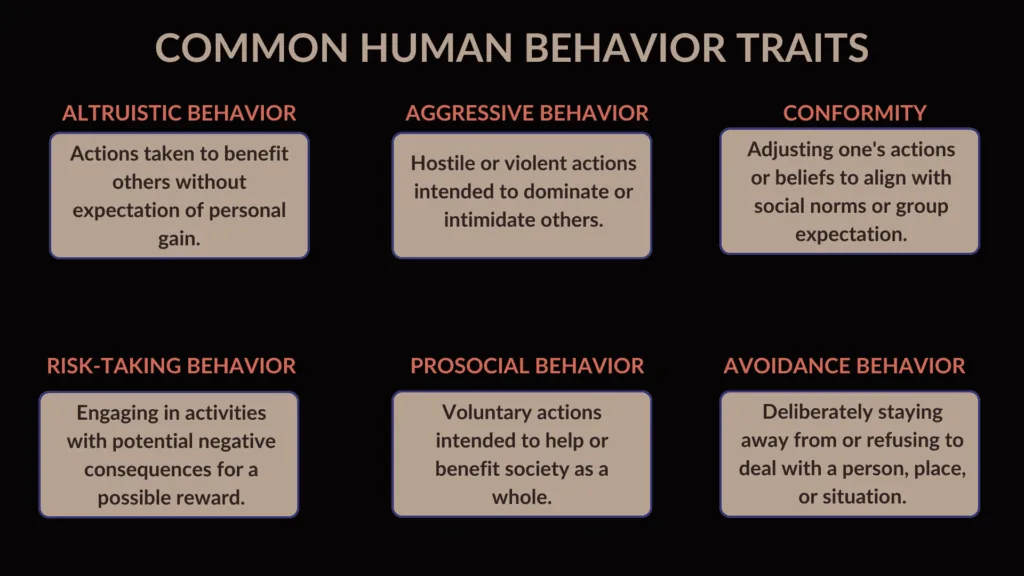
Harnessing the Power of Neuroscience for Personal Transformation
The neuroscience of human behavior is a rapidly evolving field. Insights from current research confirm what I have seen in practice for over two decades: by mapping neural mechanisms underlying thoughts, emotions, and actions, we move beyond guesswork into precision, identifying exactly which circuits need recalibration.
That precision approach is what drew me to applied neuroscience practice in the first place: the ability to translate brain science into real behavioral change. I am not interested in abstract theory. What drives my work is watching someone walk out of my practice with a fundamentally different relationship to the pattern that brought them in. The brain is capable of extraordinary change when you know which circuits to engage. That conviction is what I have built my entire practice around.
From My Chair: The Importance of Emotional Intelligence
Having founded my practice over two decades ago, I have observed firsthand the profound impact of emotional intelligence on individual conduct and interpersonal dynamics. Emotional intelligence (the ability to recognize, understand, and manage our own emotions while empathizing with others) is a cornerstone of effective social interaction and personal growth.
In my experience, individuals with high emotional intelligence tend to:
- Navigate complex social situations with greater ease
- Build stronger, more meaningful relationships
- Demonstrate enhanced leadership capabilities
- Show improved resilience in the face of challenges
- Make more balanced and thoughtful decisions
The beauty of emotional intelligence lies in its malleability. Unlike IQ, which remains relatively stable throughout life, emotional intelligence can be developed and honed through targeted practice. This capacity is one of the most promising areas I work in, helping high-performers develop the emotional circuitry that matches their cognitive capacity.
I have found that cultivating emotional intelligence is crucial for understanding not just our own actions, but also the motivations and feelings of those around us. That awareness allows us to respond to situations more adaptively, rather than reacting impulsively based on immediate emotional responses.
Moreover, in our increasingly interconnected world, the ability to empathize and communicate effectively across diverse cultures and perspectives is more important than ever. Emotional intelligence serves as a bridge, fostering understanding and cooperation in both personal and professional spheres.
As we continue to unravel the complexities of the human mind through neuroscience, the significance of emotional intelligence in shaping our interactions and decisions becomes increasingly clear. By focusing on developing this crucial capacity, we can not only improve our own lives but also contribute to creating more harmonious and productive social environments.
People do not behave irrationally. They behave neurologically. Every action that looks irrational from the outside is running on a circuit that made perfect sense when it was built.
Why do people act against their own interests?
The brain optimizes for short-term emotional regulation, not long-term planning. The limbic system prioritizes immediate threat reduction over future benefit because survival circuits evolved to respond in milliseconds. The prefrontal cortex, responsible for rational decision-making, operates more slowly and requires significant metabolic resources. When emotional arousal is high, the amygdala effectively hijacks the decision pathway, producing behavior that appears self-defeating but follows a coherent neurological logic rooted in immediate self-preservation.
Can you predict human behavior?
Individual actions cannot be predicted with certainty, but behavioral patterns are highly predictable once the underlying neural architecture is mapped. The basal ganglia encode habitual responses that fire in consistent sequences, and limbic activation follows measurable thresholds. By identifying which circuits dominate a person’s behavioral repertoire (survival, emotional, or deliberative) a practitioner can anticipate likely responses to specific environmental triggers with considerable accuracy.
Why do people repeat harmful behaviors?
Basal ganglia automation means the behavior fires before the prefrontal cortex can intervene, typically within 200 to 500 milliseconds. Once a neural pathway has been reinforced through repetition, the brain defaults to that route because it requires less metabolic energy than generating a new response. Breaking the pattern requires building a faster competing circuit through targeted neuroplasticity protocols that intercept the automated sequence at its initiation point.
How much behavior is conscious?
The majority of behavior is driven by non-conscious processing. Conscious deliberation is metabolically expensive, consuming significantly more glucose and oxygen than automated responses. The brain reserves conscious processing for novel or high-stakes situations where existing automated circuits lack a suitable response. Routine decisions, habitual actions, and most social interactions operate through subcortical pathways that bypass conscious awareness entirely.
Can understanding neuroscience change my behavior?
Understanding alone changes almost nothing at the neural circuit level. However, neuroscience-informed awareness identifies which specific circuit to target, eliminating the trial-and-error approach that makes most behavior change efforts fail. When paired with targeted neuroplasticity protocols designed for the identified circuit, knowledge becomes a precision tool. The combination of accurate neural mapping and structured intervention produces measurable changes in both brain activity and observable behavior.
What can neuroscience teach us about decoding human behavior?
Neuroscience reveals that most human behavior originates from unconscious brain processes, with the limbic system and prefrontal cortex working together to shape decisions, habits, and social interactions. Understanding these neural mechanisms helps explain why people often act in ways that seem irrational on the surface but follow predictable neurological patterns.
How do mirror neurons influence our understanding of others’ behavior?
Mirror neurons fire both when we perform an action and when we observe someone else performing it, creating an internal simulation that helps us understand others’ intentions and emotions. This neural mirroring system forms the biological basis for empathy and allows humans to decode social cues, body language, and emotional states in those around them.
Can understanding the neuroscience of behavior improve personal relationships?
When people understand that behavior is driven by neural processes rather than deliberate intent, they develop greater compassion and patience in their relationships. This neuroscience-informed perspective reduces personalization of others’ actions and creates space for more constructive responses to challenging interpersonal dynamics.
References
- Libet, B. (1985). Unconscious cerebral initiative. Behavioral and Brain Sciences, 8(4), 529-539.
- Kahneman, D. (2011). Thinking, fast and slow. Farrar, Straus and Giroux.
- Bargh, J. A., and Chartrand, T. L. (1999). The unbearable automaticity of being. American Psychologist, 54(7), 462-479.
- Damasio, A. (2021). Feeling and knowing: Making minds conscious. Pantheon Books.
- Graybiel, A. (2008). Habits, rituals, and the evaluative brain. Annual Review of Neuroscience, 31(1), 359-387.
- Voss, P. (2017). Dynamic brains and the changing rules of neuroplasticity. Frontiers in Psychology, 8, 1657.
From Reading to Rewiring
Human behavior originates in neural circuits shaped by evolution, experience, and neurochemistry, not conscious choice alone. The basal ganglia automate a large share of daily actions while the prefrontal cortex handles deliberate decisions under high cognitive load. Understanding these underlying systems reveals why behavior changes require structural neural rewiring, not simply stronger willpower or intention.
Schedule Your Strategy Call