The biology of connection. Dr. Sydney Ceruto decodes the neural mechanisms of trust, influence, and bonding—translating social neuroscience into protocols that deepen intimacy and optimize your ability to navigate complex human dynamics.
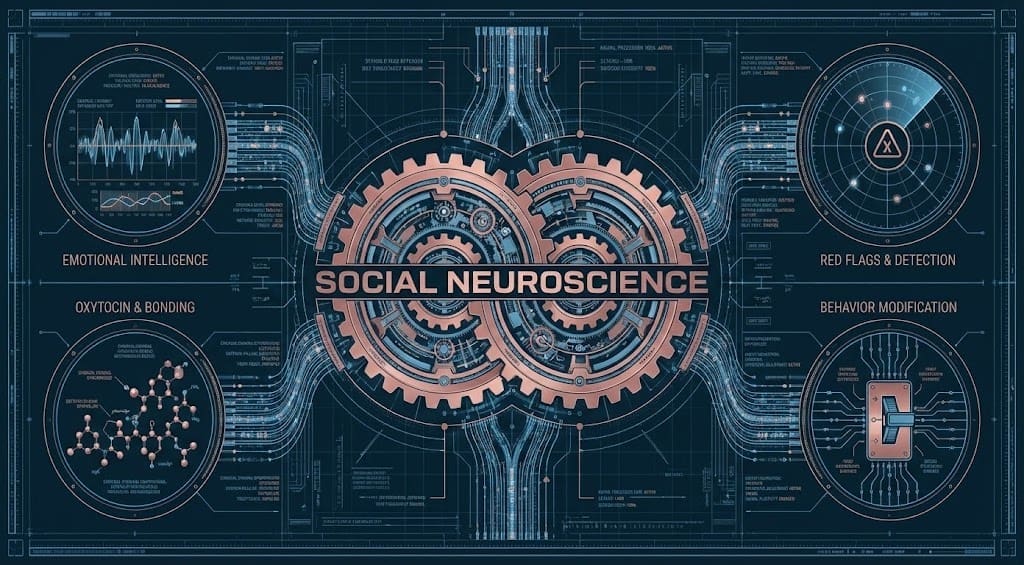
The Evolutionary Design
Humans are pack animals. We do not survive alone. Your brain treats isolation the same way it treats physical pain. It is a biological alarm system. Nature wired you to connect for protection. Safety exists in numbers. When you have a tribe, your stress hormones drop. This saves energy for survival. Your brain constantly scans for allies and threats. It needs social safety to function at high speed.
The Modern Analogy
Think of people as separate islands in a vast ocean. Relationships are the bridges that connect us. These structures allow resources and support to flow back and forth. Trust makes the bridge strong. It allows the connection to hold heavy weight. However, betrayal acts like a fracture in the concrete. It cracks the foundation. The path becomes unstable and dangerous. If you ignore the cracks, the bridge collapses. You become stranded and cut off from help.
The Upgrade Protocol
You must act as the chief engineer of your network. Inspect your bridges regularly. Do not ignore small fractures in communication. When damage occurs, stop the traffic and focus on the structure. Perform careful repairs to make it safe again. Reinforce the pylons with consistent action. Build new bridges to strong islands. A well-maintained network prevents isolation. It keeps your supply lines open and your territory secure.
Evolution did not design the human brain for isolation; it engineered our neural architecture for resonance. Social connection is not a sentimental preference, but a fundamental survival mechanism that shapes our physiological equilibrium. When we interact, we are not merely exchanging words; we are participating in a complex neurobiological exchange that influences amygdala activity, modulates stress responses, and impacts how safe or threatened our nervous systems feel. At MindLAB Neuroscience, I approach relationships through the lens of social neuroscience rather than generic personality labels.
Trust is a biological variable. It reflects measurable patterns of neural and physiological regulation that tend to lower threat reactivity and support prefrontal engagement, which in turn allows for higher-order collaboration, creativity, and influence. When trust is absent, the nervous system shifts toward defense and vigilance, narrowing cognitive flexibility. In my work, I use this understanding to decode the mechanics of influence, recognizing that meaningful authority emerges not from force, but from the consistent ability to help regulate the nervous systems of those around you. Legacy is not only what you accomplish; it is also the behavioral imprints—conscious and unconscious—you encode into your family, teams, and closest relationships.
In my coaching, I examine family and relational dynamics to reveal the synaptic blueprints formed by early attachment and intergenerational patterns. We carry neural echoes of our upbringing and, in some respects, of our ancestors’ adaptations. Neuroplasticity, however, gives you agency: by understanding the biological basis of bonding, conflict, and repair, I help clients move from reactive, primitive patterns toward more conscious, choiceful forms of connection that support both performance and genuine closeness.
The human brain is not designed for long-term isolation; it is a deeply social organ that treats prolonged disconnection as a potential threat. Neural circuits involved in processing social rejection or relational breakdown overlap with those involved in the affective components of physical pain, including regions such as the dorsal anterior cingulate cortex and anterior insula. When important relationships fracture, the nervous system does not register this as a minor inconvenience; it can shift into heightened vigilance, increasing activation of the hypothalamic–pituitary–adrenal (HPA) axis and elevating stress chemistry.
In my work at MindLAB Neuroscience, I do not reduce relationship struggles to simple incompatibilities or personality clashes. Instead, I view them as the output of neural feedback loops that may be misinterpreting relational friction as a biological emergency. Understanding this reframes conflict from “something wrong with me or them” to “something happening in our nervous systems that can be understood and reshaped.”
What is commonly described as “attachment style” reflects, in large part, long-standing neural adaptations to early relational environments. Through assessment, I look at how a client’s developmental history has shaped patterns of limbic activation and regulation. In more anxious attachment patterns, for example, threat circuits such as the amygdala may be especially sensitive to cues of distance or ambiguity, leading to heightened vigilance and difficulty tolerating uncertainty. In more avoidant patterns, prefrontal systems can over-engage to suppress or compartmentalize emotional signals, creating a protective numbing that reduces perceived risk at the cost of intimacy.
At MindLAB Neuroscience, I use this data to move beyond surface-level behavior change. In my Real-Time Neuroplasticity™ coaching protocol, I help clients repeatedly expose their nervous systems to safer forms of connection and autonomy, so the brain can update its models: intimacy does not automatically equal danger, and independence does not automatically equal abandonment. Over time, the synaptic weights governing these automatic reactions can shift, making healthier patterns feel more natural and less effortful.
Effective relational navigation requires a robust Theory of Mind—the ability to infer and track one’s own mental states and those of others. This capacity relies on a network that includes the temporoparietal junction, medial prefrontal cortex, and mirror neuron systems. Under relational stress, these circuits can become less available; defensive states consume metabolic resources, making it harder to accurately model another person’s perspective.
In my coaching, I help clients strengthen the linkage between emotional centers and executive networks so they can access cognitive empathy even when tensions rise. The goal is not to absorb other people’s emotions (emotional contagion), but to understand their internal logic while remaining grounded. This shift allows conflict to be de-escalated before fight-or-flight responses take over the interaction, preserving both clarity and connection.
My approach to relational change is grounded in principles of Long-Term Potentiation: neural pathways that are used together, strengthen together. Entrenched relational habits are essentially well-rehearsed circuits. Changing them requires both interrupting automatic responses and providing consistent, alternative patterns for the nervous system to practice. At MindLAB Neuroscience, I work with clients to recognize early signs of defensive activation and to deliberately recruit regulatory circuits—such as ventrolateral prefrontal regions—to stay engaged while emotions are rising.
Across repeated interactions, this conscious override begins to install a different default. Communication that once required immense effort starts to feel more accessible, and the brain’s resting assumptions about safety in relationship gradually update. In my Real-Time Neuroplasticity™ coaching protocol, relational neuroplasticity is not about pretending to feel differently; it is about training your nervous system, through repeated experiences, to actually respond differently—so healthy connection becomes a practiced reflex rather than a fragile exception.
Trust is not merely a sentimental abstraction or a moral virtue; it is a biological calculation rooted in survival. Across our evolutionary history, prolonged isolation often equated to danger, while reliable connection increased the chances of protection and resource sharing. As a result, the human brain evolved mechanisms to rapidly evaluate safety and to support bonding when conditions permit. In my work at MindLAB Neuroscience, I treat trust as a measurable physiological state—an alignment of neurochemistry and autonomic regulation that allows defensive systems to soften so cooperation and collaboration can emerge.
I frequently remind my clients that their capacity—or difficulty—with trust is rarely about simple “willpower.” It is about how their neural circuitry has learned to interpret people and environments. Key components of this circuitry involve the neuropeptide oxytocin and the tenth cranial nerve, the vagus. When this system is functioning well, it supports a felt sense of safety and connection; when shaped by trauma or chronic stress, it can bias the brain toward hyper-vigilance, reading neutral or even caring cues as potential threats. Understanding this biology is a central step in my Real-Time Neuroplasticity™ coaching protocol for helping anxious and guarded nervous systems gradually recalibrate.
Popular narratives often simplify oxytocin as the “love hormone,” but in clinical and neuroscientific terms, it is better understood as a modulator of social salience and fear reduction. Synthesized in the hypothalamus and released by the posterior pituitary, oxytocin does not manufacture affection on its own; it influences how the brain weighs and processes social information. One of its key roles in the context of trust is dampening activity in threat-sensitive regions such as the amygdala, thereby lowering baseline anxiety around connection and making engagement feel less risky.
Oxytocin also heightens the brain’s sensitivity to social cues—eye contact, tone of voice, and facial expressions become more noticeable and meaningful. Evolutionarily, this helped caregivers stay attuned to infants and group members stay attuned to one another. In states of chronic stress, however, elevated cortisol and other factors can affect how well oxytocin signaling is received. This can create situations where the chemistry that ordinarily supports bonding is less effective, leaving people feeling alone or wary even in objectively safe relationships. In my coaching, I help clients understand these dynamics so they can stop blaming themselves for “not trusting enough” and instead work with their biology more strategically.
While oxytocin influences how the brain evaluates social cues, the vagus nerve provides a bodily platform for the experience of safety. The myelinated ventral branch of the vagus, highlighted in polyvagal theory, is central to the social engagement system. It coordinates heart rate, breathing, and the muscles of the face and head so that calm, connection, and nuanced communication become possible. When this system is active, the heart rate can be gently regulated, the voice has more range and warmth, and facial expressions are more flexible—all of which signal safety to others.
Sustained trust is difficult to access when the nervous system is locked in sympathetic fight-or-flight or in dorsal collapse. If your body is preparing to run or shut down, the ventral vagal “brake” on the heart and stress systems is partially lifted, and your sensory priorities shift toward detecting danger rather than listening, reflecting, or bonding. Many clients intellectually want to trust a partner, team, or advisor, but their autonomic state is broadcasting “danger.” Until the ventral vagal system is better supported and toned, purely cognitive strategies for trust will feel fragile and effortful.
Deep bonding emerges from the interaction of these systems in a feedback loop. Warm eye contact, attuned voice, and appropriate touch can stimulate ventral vagal activity, which calms the body and sets the stage for social engagement. That state, in turn, is associated with conditions that support oxytocin release and reception. As oxytocin influences threat circuits and social salience, further cues of safety and connection are noticed, reinforcing the ventral vagal state. Over time, this loop becomes the biological foundation of what is often called secure attachment.
In ancestral contexts, this loop allowed humans to rest together, share resources, and raise offspring cooperatively. It shifted the nervous system from a solitary “me versus the world” stance toward a more collective “us” orientation. When I evaluate relational patterns in my coaching practice, disruptions in this loop—whether from early adversity, relational ruptures, or chronic stress—often help explain persistent difficulties with intimacy, trust, and social ease. The encouraging reality is that these systems remain plastic; with the right inputs, the loop can be strengthened again.
When trauma or repeated relational harm occurs, the biology of trust can adapt defensively. The brain learns that vulnerability equals risk, and the amygdala becomes quicker to flag social cues as dangerous. Oxytocin signaling may be overshadowed by stronger threat responses, and ventral vagal tone can diminish, leaving the body in a more chronic state of defense. People in this state may misread neutral expressions as hostile or interpret silence as rejection, not because they are irrational, but because their nervous system has recalibrated toward protection.
Because these systems are malleable, they can be rehabilitated. In my Real-Time Neuroplasticity™ coaching protocol at MindLAB Neuroscience, I work with clients to engage practices that support vagal regulation and to create repeated, structured experiences of safe connection. Over time, this helps re-sensitize the nervous system to cues of safety and connection, so trust becomes a more accessible physiological possibility, not just an abstract goal. We are not merely talking about trust; we are helping rebuild the neural infrastructure that allows trust to be felt and expressed.
In ultra-high-net-worth families, what looks like a financial or governance challenge is often, at its core, a clash of nervous systems shaped by very different realities. The first-generation wealth creator—the G1 Founder—typically has a distinct neurobiological profile. Their brain has been honed by years of uncertainty, risk, and intense problem-solving. Many Founders derive their deepest satisfaction from pursuit and conquest: starting companies, closing deals, navigating crises. Neurologically, this often reflects strong linkages between executive planning networks and reward systems that respond powerfully to challenge and progress.
This wiring can create a paradox within the family. The same vigilance, intensity, and drive that built the fortune can make it difficult for the Founder to relax into mentorship or shared authority. Love and stewardship may be expressed through pressure, critique, and constant testing, because those were the conditions under which the Founder’s own nervous system learned to thrive. For successors, living under that level of scrutiny can be experienced as relentless evaluation, keeping their stress systems activated around the very person who is supposed to be their primary source of security.
Second- and third-generation family members (G2 and G3) often inherit the spoils of a high-risk, high-effort life without having experienced the crucible that shaped the Founder’s brain. This can create a reward calibration problem. When survival is not at stake and basic needs are abundantly covered, it can be harder for the brain’s motivation and satisfaction systems to register everyday achievements as meaningful. What may be dismissed as “entitlement” is sometimes, in part, a neurobiological gap between the level of stimulation the nervous system expects and the challenges it actually encounters.
In parallel, the stress, deprivation, and relentless drive that characterized the Founder’s journey can leave biological traces. Patterns of heightened vigilance, reactivity, or compressed emotional expression can be modeled and, in some cases, reinforced across generations. Heirs may present with anxiety, restlessness, or difficulty feeling genuinely fulfilled despite growing up in materially secure environments. They carry a nervous system tuned for danger in a context of abundance, which can produce what I call dynastic dissonance: a mismatch between inherited wiring and current reality.
Much of the friction inside a Family Office can be traced to a breakdown in limbic resonance between generations. The Founder may interpret the Heir’s desire for balance, diversification, or philanthropic emphasis as a lack of grit or seriousness. The Heir, in turn, may experience the Founder’s ongoing intensity and control as a lack of trust or an inability to let go. Both perspectives are grounded in genuine nervous system responses to risk, identity, and belonging.
In my work with families at MindLAB Neuroscience, I approach these dynamics as a system problem rather than a character problem. For Founders, coaching may focus on recognizing when control and vigilance are no longer adaptive, and on building the capacity to experience delegation and succession as tolerable rather than threatening. For Heirs, the work often involves strengthening executive function and internal reward systems that are independent of parental approval, so effort feels intrinsically meaningful and leadership is owned rather than inherited by default.
True dynastic success requires acknowledging that the brain optimized to build an empire is not always the same brain best suited to steward it across generations. The aggression, risk tolerance, and singular focus that served G1 so well need to evolve into more integrative, collaborative cognitive styles in G2 and G3. This is not a downgrade; it is an adaptive shift that allows the family system to move from survival and accumulation into sustainability and contribution.
In my Real-Time Neuroplasticity™ coaching protocol, I treat the family as a living neural network with multiple nodes and feedback loops. By helping each generation understand their own wiring and the wiring of others, we can reduce misinterpretation and blame, and foster a shared language for risk, reward, and responsibility. The goal is to ensure that your legacy is not only measured in financial terms, but also in the robustness, adaptability, and emotional health of the people entrusted with carrying it forward.
Human beings do not exist in a social vacuum; we are, at a fundamental level, a hierarchical species. This is not just a sociological observation but a biological reality etched into our neural architecture. From an evolutionary standpoint, the ability to rapidly detect one’s position in a hierarchy was tied to access to resources, protection, and opportunity. While the modern context has shifted from hunting grounds to boardrooms, many of the same circuits that once tracked threats and advantages now track status, influence, and belonging.
When I work with clients who struggle with confidence, “imposter syndrome,” or chronic underestimation of their own value, what often emerges is a dysregulation in how their brain is reading status signals. The nervous system is continually asking, “Am I safe here? Am I leading, equal, or subordinate?” The answers shape posture, vocal patterns, and stress reactivity. Understanding the neuroscience of power dynamics gives you a lever to change how you show up within them rather than feeling at the mercy of invisible forces.
The detection and negotiation of social rank involve both limbic and cortical systems. The amygdala contributes to scanning for dominance cues in others—facial expressions, tone, body language—while medial prefrontal regions help map your role relative to those cues. When someone is perceived as substantially higher status, these systems can promote behavioral inhibition to reduce the likelihood of direct conflict. This is not weakness; it is an ancient risk-management strategy.
When the brain perceives that you are in a relatively empowered position, motivation and reward networks such as the ventral striatum can activate more strongly in response to success or recognition. Over time, positive experiences in higher-responsibility roles can reinforce those networks, making it easier to step into leadership again. In my Real-Time Neuroplasticity™ coaching work, I focus on helping clients gradually build experiences where their nervous system learns that visibility, influence, and authority are survivable—and even rewarding—rather than inherently dangerous.
Serotonin is one of the neuromodulators implicated in how organisms signal and maintain status across species. In humans, more stable serotonergic tone has been associated with calmer, more assertive presence, whereas dysregulated or lower levels can correlate with anxiety, mood challenges, and more collapsed body language. This forms a bidirectional loop: internal chemistry influences posture and expression, and posture and expression feed back on internal state.
Clients caught in a chronic “low-status” mindset often present with both psychological narratives of inadequacy and bodily patterns—slumped shoulders, restricted breathing, reduced eye contact—that perpetuate that narrative. The brain, reading these signals, can maintain elevated stress chemistry and heightened vigilance. In coaching, I work simultaneously with internal narratives and external signals, so as the nervous system becomes more regulated, posture and presence naturally shift, and those shifts in turn support healthier neurochemical balance.
Most power dynamics are negotiated through signals the brain processes faster than conscious awareness. People continuously, and often unconsciously, assess others on axes like competence and warmth. How you occupy space, how you modulate your voice, the timing of your responses, and your micro-expressions all contribute to the impression other nervous systems form about whether you are a stabilizing presence or a source of uncertainty.
Attempting to overlay confident behaviors on top of an unregulated nervous system often produces subtle mismatches that others detect as inauthenticity. The goal in my work is alignment: bringing internal state and external signaling into coherence. When your physiology is regulated and your self-perception is grounded, signals of steadiness and capability emerge naturally, and others’ brains are more likely to register you as a credible, trustworthy source of influence.
The encouraging reality is that your brain’s sensitivity to hierarchy and status is not fixed. Circuits in the medial prefrontal cortex and related networks can be trained to interpret high-visibility, high-responsibility situations as tolerable and even energizing rather than purely threatening. Exposure to progressively larger challenges, combined with deliberate regulation and reframing, allows the nervous system to update its predictions about what you can handle.
In my Real-Time Neuroplasticity™ coaching protocol at MindLAB Neuroscience, I guide clients through structured experiences that incrementally stretch their comfort zone while maintaining enough safety and support that the experiences are integrated rather than overwhelming. Over time, this process reshapes the internal map from “I don’t belong here” to “My brain and body know how to function at this level,” shifting you from defensive survival mode into a more expansive, leader-level stance.
Conflict often feels personal, but at the neural level it is frequently a clash between different processing speeds, threat sensitivities, and regulation capacities. Many models of “conflict resolution” focus on communication techniques, which are important, but they can fail when the brain is in a defensive state. From a neurobiological standpoint, meaningful de-escalation requires reducing limbic overactivation so that the prefrontal cortex can come back online and do its job.
Central to this is the amygdala, which acts as a rapid threat detector. It does not distinguish between a predator and a harsh tone in an email as cleanly as we might like; it flags anything that feels like danger, and it does so quickly. When conflict arises, the first priority is not to win an argument, but to recognize that a biological “alarm” is sounding and that higher reasoning will be limited until that alarm quiets.
Incoming information can travel through slower, more reflective pathways that involve cortical evaluation or through faster, more direct routes that prioritize immediate survival. In moments of perceived threat, the faster route to the amygdala can trigger stress responses before the prefrontal cortex has fully assessed the situation. This leads to activation of systems like the hypothalamic–pituitary–adrenal axis, releasing hormones that prepare the body for fight, flight, or freeze.
Under these conditions, blood flow and metabolic resources are shifted away from regions responsible for nuanced thinking, empathy, and self-control. When clients describe “losing it” or “not being able to think straight” in conflict, this is not a character flaw; it is a reflection of temporary cortical inhibition. Trying to reason your way through a heated moment without addressing this state is like trying to run complex software on a machine that has just been forced into emergency mode.
During acute or chronic conflict, the brain often shows patterns consistent with heightened arousal in threat-related regions and reduced calm-alert activity in regulatory regions. Functionally, this manifests as a system that is quick to perceive danger and slow to downshift once the immediate trigger has passed. Communication between emotional processing centers and language and reasoning centers can also become less efficient under sustained stress, which helps explain why it can be so hard to “find the right words” in the heat of an argument.
Recognizing these patterns is important because it reframes many conflict behaviors as the output of a dysregulated system rather than as proof of who someone “really is.” That shift opens the door to interventions that target state first—calming the system—before attempting to tackle content or long-term strategy.
In my conflict-focused coaching, I teach clients specific techniques to help their brains transition from reactive, limbic-driven processing back to more integrated, prefrontal-led functioning. One powerful tool is affect labeling: putting your emotional state into words in a precise, non-judgmental way. Research shows that naming an emotion can activate regions in the right ventrolateral prefrontal cortex, which in turn can help dampen amygdala activity. Simply articulating “I feel cornered right now” or “I’m noticing a lot of anger in me” can begin to reduce the intensity of the alarm.
In parallel, I use breathing and body-based strategies to engage the parasympathetic nervous system via the vagus nerve. Extending the exhale, for example, can signal the heart to slow slightly, which feeds back to the brainstem that immediate danger may be subsiding. Taken together, these tools create a physiological opening in which more constructive dialogue becomes possible, rather than trying to superimpose logic on a brain that is still in survival mode.
The long-term goal is not just to handle isolated conflicts better, but to alter the baseline way your brain responds to friction. Through repeated practice, the pathways linking regulatory regions and emotional centers can be strengthened, making it easier for the prefrontal cortex to stay engaged even when the amygdala is activated. Over time, situations that would have triggered a full-scale hijack begin to feel more manageable, and recovery becomes faster.
In my Real-Time Neuroplasticity™ coaching protocol at MindLAB Neuroscience, I combine this understanding of neural circuitry with targeted behavioral exercises so clients gradually shift from reflexive, defensive reactions toward more deliberate, principled responses. Conflict resolution, in this framework, is not about suppressing emotion; it is about integrating emotional signals into a larger network of cognition and values, so even difficult interactions become opportunities to strengthen, rather than damage, relationships and leadership capacity.
In the language of business, attachment theory is often treated as something relevant only to personal relationships or HR mediation. Neurobiologically, that is a missed opportunity. Attachment describes foundational patterns in how your nervous system processes safety, threat, autonomy, and closeness. These patterns shape how your prefrontal cortex regulates your amygdala under pressure, how you assess risk, and how you relate to power and responsibility. In the C-suite, where decisions carry amplified consequences, your attachment style functions like an underlying operating system for leadership.
At MindLAB Neuroscience, leadership “gaps” are not viewed as moral failings or fixed traits; they are understood as specific patterns of neural activation and regulation. When I work with high-functioning executives, what often emerges is that many of their boardroom reflexes were forged as early survival strategies in family systems. The modern organization is, in many ways, a sophisticated tribe, and senior leaders are the de facto chiefs. Understanding the neurobiology of attachment offers a precise lens for optimizing how you lead, decide, and connect at the highest levels.
The anxious-preoccupied leader operates from a nervous system tuned toward hyper-alertness to relational threat. Historically, this wiring may have helped someone stay closely attuned to others’ moods to avoid exclusion or conflict. In an executive role, it can manifest as micromanagement, difficulty delegating, and a persistent need for reassurance. Autonomy in others can feel, at a biological level, like a precursor to abandonment or loss of control, even when there is no real danger.
These leaders often rely heavily on external feedback—emails, approvals, praise—to stabilize their internal state. Decision-making can slow because consensus feels like a safety requirement rather than a strategic choice. In my Real-Time Neuroplasticity™ coaching protocol, I work with anxious-preoccupied leaders to strengthen internal regulation so they can tolerate uncertainty and disagreement without seeing it as a threat to belonging or identity. As their nervous system learns that others’ autonomy does not equal abandonment, their leadership naturally becomes less constricting and more empowering.
Dismissive-avoidant attachment shows up frequently in top leadership. This profile is marked by a tendency to downplay or suppress attachment needs. In early life, this may have developed as an adaptation to environments where emotional dependence felt unsafe or unrewarded. In the C-suite, it often presents as extreme self-reliance, a strong task focus, and a preference for data and strategy over emotional nuance. These leaders can appear calm, rational, and unflappable, especially under pressure.
The cost is that emotional signals from the team can be filtered out as background noise, and relational maintenance can feel extraneous rather than mission-critical. Over time, organizations led this way may experience high churn, brittle culture, and a sense that people are valued for output but not seen as humans. In coaching, I help dismissive-avoidant leaders incrementally integrate emotional and social information into their decision-making, not by abandoning rigor, but by recognizing that relationships and morale are also forms of data that affect performance and risk.
The fearful-avoidant, or disorganized, profile is the most internally conflicted. This pattern often arises when early caregivers were both a source of comfort and a source of fear or unpredictability. At the executive level, it can manifest as cycles of intense engagement and abrupt withdrawal: periods of high inspiration and closeness followed by sudden distance, criticism, or shutdown. Teams under this style learn to walk carefully, unsure which version of the leader will appear.
At the neural level, this pattern reflects a nervous system that struggles to find a stable response to connection. Both approach and avoidance circuits may fire in quick succession. These leaders can be extraordinarily creative and effective in chaos because it mirrors their internal state, but they may find it difficult to sustain the consistency required to scale systems and people. My work with fearful-avoidant leaders focuses on building internal safety and predictability first, so that the external environment no longer has to mirror internal volatility.
Secure attachment represents a highly efficient, resilient pattern of regulation. Securely attached leaders tend to have prefrontal systems that can effectively modulate amygdala responses. They do not experience disagreement as betrayal or emotional expression as a threat. Instead, they can use feedback, dissent, and emotion as information without losing their center. Their baseline state is more grounded, which leaves more bandwidth for strategic thinking and creative problem-solving.
In practice, secure leaders recover more quickly from shocks. They may experience stress like anyone else, but their nervous system returns to equilibrium faster, allowing them to respond instead of react. They are more likely to create cultures of psychological safety, where people feel safe to speak, experiment, and own mistakes. This, in turn, downregulates chronic threat responses across the organization and frees metabolic and cognitive resources for innovation and long-term thinking.
The most important implication of attachment science for leadership is that these patterns are not destiny; they are learned neural pathways. Through neuroplasticity, they can be reshaped. In my Real-Time Neuroplasticity™ coaching protocol at MindLAB Neuroscience, I help executives identify how their brains currently respond to relational stress, autonomy, feedback, and vulnerability—and then design targeted practices that repeatedly activate alternative, more adaptive responses.
Over time, this might look like learning to sit with tension without rushing to fix it, practicing transparent communication where withdrawal was once automatic, or building new experiences of safe collaboration that contradict older expectations of hurt or disappointment. As these experiences accumulate, the underlying circuitry shifts. The goal is not to erase your history, but to ensure that your leadership today is driven by current reality and conscious choice rather than by outdated survival strategies.
Charisma is often described in mystical terms—as an indefinable “it factor” or aura. From a neuroscience perspective, what is called charisma is better understood as social resonance: the ability of one nervous system to influence and synchronize with the states of others. When people say two individuals are “on the same wavelength,” they are intuitively describing a phenomenon that has real neural correlates in timing, rhythm, and shared patterns of activation.
In my work with leaders and performers, the focus is not on manufacturing a persona, but on tuning the underlying neural and physiological coherence that makes others’ brains more likely to align with yours. When your internal state is regulated, intentional, and consistent, the signals you send—through voice, expression, timing, and presence—become easier for other nervous systems to follow. What looks like effortless magnetism is often the downstream effect of well-regulated, well-integrated neural circuitry.
Social resonance exists because it served survival. Humans evolved in groups where coordination around threats, resources, and movement had to be rapid and often nonverbal. Brains that could quickly sense and align with a stable, competent leader had an advantage. The “charismatic” individual in ancestral terms was not simply charming; they were someone whose signals reliably indicated safety, direction, and competence.
In contemporary settings, this still holds. When a leader’s nervous system broadcasts coherence—steady timing, clear intention, emotional congruence—others expend less energy interpreting mixed signals. It becomes metabolically efficient to follow their lead. Conversely, when a leader is internally fragmented, anxious, or incongruent, followers’ brains must work harder to parse what is safe or true, which erodes trust and makes alignment fragile.
One of the mechanisms behind social resonance involves neural oscillations—the rhythmic patterns of electrical activity across networks of neurons. Studies show that during effective communication, aspects of the listener’s brain activity begin to track, and sometimes anticipate, patterns in the speaker’s activity. This phenomenon, often called neural coupling, reflects how deeply attention and understanding are shared.
For practical purposes, this means that the more internally coherent and present you are, the easier it is for others’ brains to lock onto your rhythm. High anxiety or scattered attention tends to produce more chaotic neural patterns, which can feel unsettling or hard to follow for others. In my Real-Time Neuroplasticity™ coaching, I help clients cultivate states of focused, grounded presence so that their neural signals are easier for others to synchronize with—turning “charisma” from a mysterious gift into a trainable capacity.
Anatomically, regions such as the insula and the anterior cingulate cortex (ACC) play central roles in social resonance. The insula supports interoception—your ability to sense your own internal states. People who are highly resonant often have finely tuned interoceptive awareness; they can feel their own emotions and bodily cues with precision, which allows them to adjust their expression in ways that are authentic and compelling.
The ACC helps integrate emotional signals with cognitive control and action selection. When connectivity between the insula, ACC, and prefrontal regions is strong, a leader can sense what they feel, understand what it means, and express it in a way that fits the context. When this network is underdeveloped or dysregulated, people may feel strongly but appear flat, or feel little but attempt to mimic emotional expression, which often falls flat. In coaching, a key aim is to strengthen these pathways so that internal experience, intention, and outward communication align—creating the kind of coherence that other nervous systems naturally respond to.
At MindLAB Neuroscience, I do not guess about your ability to connect; I assess it with precision. Using neuroscience-informed evaluations and structured observation, I look for patterns that suggest withdrawal, over-control, or difficulty adapting in real time. These patterns often reflect asymmetries in how frontal networks engage under social demand or signs of overactive, high-frequency processing that correlate with rigid, non-responsive communication. Put simply, I look for the biological “static” that makes it hard for your nervous system to send and receive a clear relational signal.
Many clients who describe themselves as lacking “presence” are, in fact, caught in internal overactivity. When the default mode network (DMN)—the network involved in self-referential thought and mind-wandering—is overly dominant or poorly coordinated, large amounts of neural bandwidth are consumed by internal commentary, prediction, and self-critique. In that state, there is limited capacity left to track the person in front of you. You cannot truly resonate with another nervous system if your own is locked in an internal tug-of-war.
Once the key inefficiencies are identified, I design a targeted coaching protocol to address them. This is where the work moves from insight to intervention. In my Real-Time Neuroplasticity™ coaching protocol, I use neuroplasticity-based practices to help your brain find and maintain more coherent, efficient states under pressure. The goal is not to bolt on a layer of “charismatic behavior,” but to remove the neural bottlenecks that keep your natural presence from emerging.
A central focus is strengthening vagal regulation and overall autonomic flexibility. When you can remain in a state of calm engagement—even in volatile, uncertain environments—your heart rate, breathing, and neural rhythms stay more coherent. That coherence is felt by others. In high-stakes rooms, the person whose nervous system is most stable often becomes the de facto anchor. Charisma, in this sense, is less about volume or theatrics and more about consistently embodying a strong, steady signal that other brains can safely synchronize with.
How does this differ from traditional psychotherapy?
Traditional psychotherapy often emphasizes exploring history and meaning to understand distress, which can be deeply valuable, especially in clinical contexts. My work at MindLAB Neuroscience is coaching-based and focuses on mechanism: how your brain is currently firing, and how those patterns can be trained. Instead of stopping at insight about your cognitive blocks, I guide you through neuroscience-informed practices that repeatedly engage alternative circuits, so the underlying pathways that sustain unhelpful habits weaken and more adaptive ones strengthen. The emphasis is on rewiring, not just coping.
Who is the ideal candidate for neurological re-engineering?
I work primarily with high-performing executives, founders, investors, and driven professionals who have already exhausted the limits of generic advice, standard coaching, or self-help. These are individuals with significant cognitive capacity who nonetheless find themselves constrained by entrenched patterns such as imposter feelings, catastrophic thinking, emotional reactivity, or decision paralysis. This process is active and demanding; it is designed for people who are ready to participate in a rigorous, structured evolution of how their brain operates, not for those seeking a passive or purely supportive experience.
Is the change permanent?
Changes supported by neuroplasticity can be long-lasting when they are reinforced sufficiently over time. When you consistently repeat new thought and behavior patterns, the synaptic connections that support them strengthen and can become the brain’s preferred routes, especially when they are aligned with your real environment and values. In my coaching, the aim is to move from short-lived shifts into durable defaults, where more effective responses feel natural rather than forced. As with any learned capability, continued use helps maintain and deepen these gains.
What is the role of MindLAB Neuroscience in this process?
MindLAB Neuroscience provides the structured, analytical framework for this work. Through detailed intake, assessment tools, and ongoing measurement, I build an objective picture of your cognitive and regulatory patterns so we are not relying on guesswork. That data informs the strategy, but data alone does not create change. My role is to interpret those findings, translate them into precise Real-Time Neuroplasticity™ interventions, and guide you through the execution. It is the integration of clear metrics with expert, individualized coaching that enables meaningful, sustainable transformation in how your brain performs under real-world conditions.
Dr. Sydney Ceruto is a Neuroscientist and Brain Performance Strategist specializing in neurological re-engineering for elite individuals navigating high-stakes environments. As the founder of MindLAB Neuroscience and the pioneer of Real-Time Neuroplasticity™, she translates clinical neurobiology into decisive competitive advantages for tech innovators, professional athletes, entertainers, and private families worldwide. Dr. Ceruto holds dual PhDs in Behavioral & Cognitive Neuroscience from New York University and dual Master’s degrees in Clinical Psychology and Business Psychology from Yale University. She is the author of The Dopamine Code, published by Simon & Schuster.
Join my inner circle for exclusive insights and breakthroughs to elevate your life.
Limited Availability
Your Journey to Unparalleled Personal and Professional Growth Starts Here
Limited Availability
A Truly Bespoke, One-on-One Journey with Dr. Sydney Ceruto
Download The Influence Within and discover how small shifts lead to big transformations.