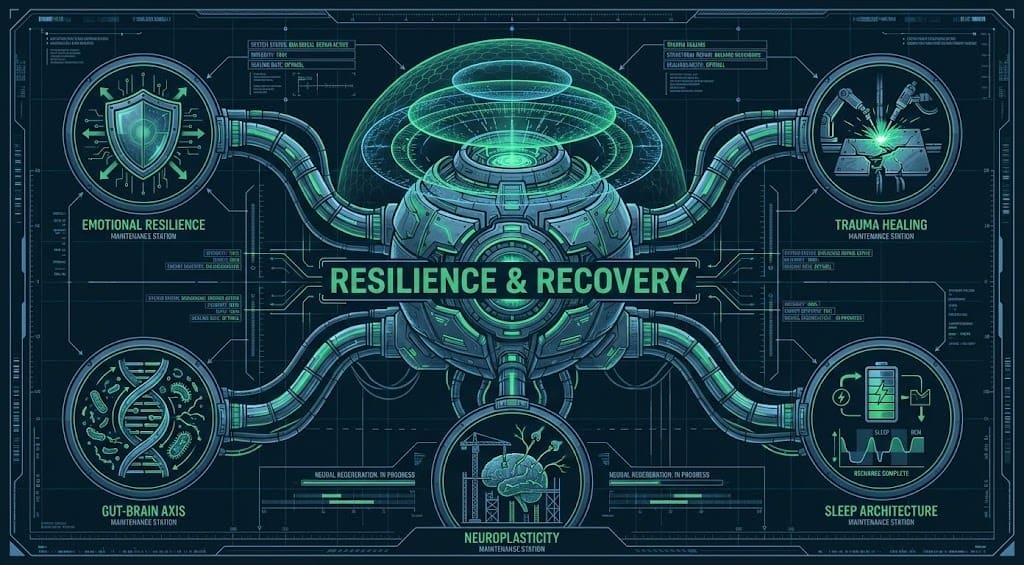
The Biological Engineering of the Anti-Fragile Mind
For decades, society has erroneously defined resilience as a measure of endurance—the stoic capacity to withstand prolonged psychological pressure. From a neuroscientific and evolutionary perspective, this definition is not only inaccurate but biologically hazardous, often contributing to allostatic overload and systemic burnout.
In my work, true resilience is not toughness; it is recovery speed. It is the measurable velocity at which your autonomic nervous system shifts from a state of high-alert sympathetic activation back to parasympathetic homeostasis following a stressor.
At MindLAB Neuroscience, I approach resilience as a tangible, engineerable dimension of brain function. I do not rely on abstract coping mechanisms; I use precision neuroscience to help reshape the neural circuitry responsible for emotional regulation.
By leveraging the principles of anti-fragility, I train the brain to use chaos and stress as catalysts for growth, so that its architecture becomes stronger and more efficient in response to volatility.
Through my Real-Time Neuroplasticity™ coaching protocol, my primary objective is to help your brain update its default response to adversity, shifting it from a primitive defense posture to a state of faster, more adaptive recovery. I work with clients to shorten the refractory period of emotional distress, effectively teaching the brain to process difficult experiences as information to be integrated rather than damage to be avoided.
This is the science of becoming harder to destabilize—not by numbing or hardening the mind, but by accelerating its ability to recalibrate.
The Neurobiology of Resilience
The Neurobiology of Fortitude
Resilience is frequently misidentified as a personality trait or a measure of sheer willpower. From my perspective as a neuroscientist and brain performance strategist, resilience is a neurological architecture—a reflection of the brain’s synaptic plasticity and its capacity to maintain functional stability amidst high-velocity stressors.
At MindLAB Neuroscience, I do not view resilience as a vague psychological concept; I approach it as a concrete biological imperative. Evolution designed the human brain to prioritize survival, often encoding trauma and threat-related memories deeply within the limbic system to prevent future danger.
While this was adaptive for our ancestors, in the modern world it can produce a hyper-reactive amygdala and an overtaxed prefrontal cortex. Through my Real-Time Neuroplasticity™ methodology, I focus on updating this maladaptive wiring to cultivate genuine structural fortitude in the circuits that govern perception, decision-making, and emotional regulation.
Understanding Allostatic Load
The foundation of this methodology lies in understanding Allostatic Load—the cumulative wear and tear on the body and brain caused by chronic exposure to fluctuating or heightened neural responses under repeated stress.
When I work with a client, an early objective is to interrupt the patterns that contribute to hippocampal atrophy and amygdala over-activation. Within my Real-Time Neuroplasticity™ coaching protocol, I use targeted, neuroscience-based strategies to help the brain shift from a state of constant “threat detection” toward a mode of more stable executive regulation.
In practical terms, I am teaching your nervous system to stand down from a war that is no longer occurring, so that biological resources can be reclaimed for recovery, creativity, and growth.
Cortical Strengthening and Cognitive Reframing
Once immediate limbic over-activation begins to settle, I guide clients through a process of cortical strengthening. This involves supporting increased efficiency and connectivity within the prefrontal cortex (PFC), the region responsible for logic, planning, and higher-order emotional regulation.
In a non-resilient brain, the communication pathway between the PFC and the amygdala is relatively weak, allowing emotional impulses to override rational evaluation. Through Real-Time Neuroplasticity™ exercises, I help reinforce this pathway so that the “thinking brain” can more consistently modulate the “feeling brain.”
This biological restructuring creates the conditions for authentic cognitive reframing. I do not ask clients to simply “look on the bright side,” because such platitudes do not engage the underlying neural mechanisms that generate perception and meaning.
Instead, I use specific cognitive and behavioral exercises that guide the brain to reinterpret adversity not as an existential threat, but as a complex challenge to be worked through. This can shift the neurochemical environment from a predominantly cortisol-driven state toward one more associated with focus, motivation, and goal-directed behavior.
By repeatedly activating and reinforcing these pathways in real time, we encourage the brain to adopt a more adaptive default response to stressors, which is the essence of engineered resilience.
Post-Traumatic Growth and Evolutionary Adaptation
The ultimate aim of my methodology is not merely to help you return to baseline, but to create conditions for Post-Traumatic Growth. From an evolutionary standpoint, an organism that successfully adapts to a challenge has the opportunity to emerge with enhanced capabilities relative to its previous state.
In my Real-Time Neuroplasticity™ work, I leverage this principle to make resilience more automatic. Through structured, repeated application of new patterns, I help encode updated responses into the brain’s habit circuits, so that resilient behaviors and interpretations become increasingly reflexive rather than effortful.
By combining precision neuroscience with an evolutionary lens, my goal is for recovery to become not just a temporary sense of relief, but a durable upgrade in how your brain processes complexity and pressure. I am not simply focused on helping you feel better in the moment; I am focused on helping your nervous system adapt so that you can operate more effectively in the demanding environments you choose to inhabit.
Allostatic Load: The Biological Cost of Ambition
In the lexicon of high performance, we often romanticize “the grind.” We view sleepless nights, hyper-vigilance, and relentless drive as badges of honor—metrics of a superior work ethic.
As a neuroscientist and brain performance strategist, I view these behaviors through a different lens: the lens of biological cost. Ambition is not free. Every surge of adrenaline, every suppressed emotional response, and every hour of cognitive overdrive generates a physiological invoice.
In the scientific community, the cumulative accumulation of this strain is called Allostatic Load. It is the price your body and brain pay for being pushed to adapt to chronic stress, and for the high achiever, it can quietly erode both longevity and cognitive precision.
Homeostasis vs. Allostasis: The Evolutionary Mismatch
To understand the damage, we must first distinguish between homeostasis and allostasis. Homeostasis is the maintenance of a relatively constant internal environment—oxygen levels, body temperature, pH balance. It is stabilizing and conservative.
Allostasis, conversely, is the process of achieving stability through change. It is the active, adaptive response of the brain and body as they anticipate and cope with challenges.
When you face a crisis, your brain initiates an allostatic response: the hypothalamic-pituitary-adrenal (HPA) axis activates, cortisol rises, and energy is mobilized to help you respond.
Evolutionarily, this system was designed for acute, physical threats—a predator on the savannah or a sudden scarcity of food. The threat appears, the system spikes, the threat resolves, and the system returns to baseline.
The modern ambitious brain, however, often exists in a state of perceived constant predation. The “predator” is no longer a lion; it is a quarterly earnings report, a volatile market, or a hostile board takeover.
Your neurobiology struggles to distinguish between a threat to your physical safety and a threat to your identity, status, or net worth. As a result, the allostatic response can remain partially engaged far longer than it was designed to.
The Neurobiology of Wear and Tear
When the allostatic response remains chronically activated, you move beyond transient stress into Allostatic Load. This is not merely feeling stressed; it reflects a broader pattern of dysregulation across multiple systems.
At MindLAB Neuroscience, I see this wear and tear expressed very clearly in the brain’s architecture. A primary contributor is the chronic elevation of glucocorticoids such as cortisol. While essential for short-term adaptation, prolonged exposure to high cortisol levels can impair neural function and alter structure.
In my Real-Time Neuroplasticity™ work with high-profile clients, I often see three distinct patterns. First, there is hypertrophy of the amygdala—the brain’s threat-detection center. You become more reactive, more anxious, and hyper-vigilant to threats that may not actually be present.
Second, I observe changes in the hippocampus, the region responsible for memory consolidation and context. This helps explain why stressed executives frequently struggle with recall, pattern recognition, or the ability to hold the “big picture” in mind.
Finally, and most critically for leadership, there can be a thinning or functional compromise of the prefrontal cortex—the seat of executive function, impulse control, and strategic planning. Over time, Allostatic Load can undermine the very cognitive machinery required to sustain high performance.
The Systemic Cascade: Beyond the Brain
The brain does not operate in isolation; it is the master regulator of the body’s physiology. When I assess a client dealing with high Allostatic Load, the consequences are rarely limited to their mental state.
Constant mobilization of energy can contribute to metabolic challenges, including tendencies toward insulin resistance and increased visceral fat. The immune system, repeatedly downregulated to conserve resources for “fight or flight,” can become dysregulated, and this chronic inflammatory state is associated with a wide range of long-term health risks.
The circadian rhythm is often disrupted as well. The natural cortisol awakening response can become blunted or inverted. You wake up exhausted and find yourself “wired and tired” late into the night.
This is not a discipline issue; it is a signaling issue. The body has begun to lose its ability to regulate the biological on/off switch for arousal and recovery.
Reversing the Damage: Neural Recalibration
The prevailing cultural narrative suggests that the antidote to this state is simply to “relax,” take a vacation, or unplug for a weekend. From a neurobiological perspective, this is insufficient once patterns of Allostatic Load are entrenched.
When stress exposure has already altered neural pathways, a few days off will not, by itself, restore hippocampal integrity or fully quiet an overactive amygdala. You cannot resolve a structural and functional pattern solely with temporary withdrawal from stress.
At MindLAB Neuroscience, I focus on what I call neural recalibration. Rather than teaching you to merely tolerate stress differently, my Real-Time Neuroplasticity™ coaching protocol is designed to help your brain update how it processes and categorizes stress in the first place.
By leveraging directed neuroplasticity, I work with you to support new neuronal growth where appropriate and to strengthen more adaptive synaptic networks in the prefrontal cortex and related circuits. In practice, this means interrupting the automaticity of your allostatic response and retraining your brain to distinguish between a genuine survival threat and a complex professional challenge.
Ambition is a powerful evolutionary driver, but it has to be metabolically sustainable. If your success is built on a foundation of unmanaged Allostatic Load, you are effectively borrowing against your future cognitive and physical reserves.
My goal is to help you move toward what I describe as Allostatic Success—high performance that is supported, rather than undermined, by your biology. Through Real-Time Neuroplasticity™, I work with you to evolve your brain’s response patterns so that your ambition and your nervous system are finally operating on the same team.
The Neuroscience of Trauma Recovery
The Biological Imprint: Trauma is Not All in Your Head
For decades, the prevailing wisdom in psychology treated trauma as a disorder of the mind—a narrative problem to be resolved through catharsis and conversation. As a neuroscientist and brain performance strategist, I must correct this misconception.
Trauma is not merely a memory of the past; it reflects a profound reordering of neural architecture. It leaves a physiological imprint; it is not a character flaw.
When I speak of the “trauma trace,” I am referring to the biological residue left behind by an overwhelming experience, a trace etched into synaptic connectivity in the brain and into the hormonal baselines of the body.
From an evolutionary perspective, this mechanism is brilliant, even if it can become maladaptive now. When our ancestors encountered a predator, the brain needed to encode that danger instantly and indelibly to ensure survival. The brain does not prioritize your happiness; it prioritizes your longevity.
In the modern context, however, this ancient survival mechanism can trap you in a loop of perpetual vigilance. In my work at MindLAB Neuroscience, I often see that the traumatized brain has difficulty distinguishing between the danger of the past and the relative safety of the present.
The Anatomy of Fear: When the Body Keeps the Score
The idea that “the body keeps the score” is not just a metaphor; it reflects a neurobiological reality. When trauma occurs, the amygdala—the brain’s threat detection center—tends to become hyperactive and, functionally, more dominant.
At the same time, the hippocampus, responsible for contextualizing memories and placing them in time, can shrink or become functionally compromised. This is why trauma survivors often relive an event as if it is happening now rather than recalling it as something that occurred then.
The memory is not stored as a smooth narrative; it is stored as fragmented sensory data and somatic sensations.
Furthermore, the connection between the prefrontal cortex (the rational, executive brain) and the amygdala is frequently weakened. This pattern is often described as “cortical inhibition.”
Under typical conditions, the prefrontal cortex can help dampen the fear response. In a traumatized brain, the “smoke detector” of the amygdala is effectively stuck in the “on” position, while the “watchtower” of the prefrontal cortex struggles to stay online.
As a result, the body is repeatedly flooded with stress chemistry, sustaining a state of high alert that, over time, exacts a significant cost on immune function, cardiovascular health, and overall resilience.
Understanding the Invisible Wound
One of the greatest challenges in addressing trauma is that the neurological impact is invisible to the naked eye. Neuroscience research has shown that trauma is associated with specific patterns of dysregulation in the brain.
For example, many studies describe heightened high-beta activity (linked with vigilance and anxiety) or alterations in how large-scale networks, such as the default mode network, communicate in individuals with trauma histories.
Understanding these neural correlates of fear and hypervigilance does not pathologize you; it removes guesswork. This knowledge is a crucial step in any recovery process, because it validates your experience and shifts the question from “What is wrong with me?” to “What happened to my nervous system, and how can it be supported to change?”
Rewiring Fear: The Mechanism of Neuroplasticity
One of the most hopeful insights of modern neuroscience is neuroplasticity—the brain’s ability to reorganize itself by forming new connections and modifying existing ones. Fear is learned at the biological level, which means it can also be updated.
However, this does not occur through logic alone. You cannot talk your midbrain out of a panic response, because the language centers can become less accessible during high stress. My approach focuses on engaging the brain’s bottom-up processing mechanisms, where these responses are generated.
To help the brain update fear responses, I work with a process known as “memory reconsolidation.” This involves safely activating the traumatic pathway while simultaneously introducing a new, incompatible experience of safety, control, or agency.
When done correctly, this can open a window in which the emotional tone associated with a memory is more malleable. Through my Real-Time Neuroplasticity™ coaching protocol, I guide clients through carefully structured experiences that help the brain uncouple specific triggers from the reflexive fight-or-flight response.
Moving Beyond Management to Resolution
Standard talk therapy can be helpful for many people, but it often falls short for trauma survivors when it relies primarily on insight and discussion. Trying to use the rational brain alone to reset the emotional brain is like trying to put out a fire with a spreadsheet.
My focus is on helping to calm and reorganize the systems driving the response in the first place, including the HPA axis (hypothalamic-pituitary-adrenal axis) and the circuits linked with vagal tone, which support the parasympathetic “rest and digest” system.
At MindLAB Neuroscience, I combine advanced, research-informed methodologies with my targeted brain-based coaching to support this neural updating process. The aim is to help restore more effective executive control from the prefrontal cortex so it can once again regulate the amygdala’s alarm signals.
The goal is not to erase the memory of what happened—that is neither realistic nor necessary. The goal is to reduce its ability to hijack your physiology in the present, so that what once felt like a present-tense terror can be experienced more as a difficult past event that no longer dictates your state.
Conclusion: Reclaiming the Biology of Safety
The trauma trace is a powerful adaptation, shaped over millions of years to keep you alive in a dangerous world. When that mechanism outlives its usefulness, though, it can feel like a prison.
You are not destined to remain in a state of chronic hyper-arousal or dissociation. The brain is dynamic, adaptable, and capable of significant change when given the right inputs and conditions.
Your reactions are not evidence of weakness; they are evidence that your brain and body have been working very hard to protect you, even if the strategy is no longer helpful in your current life.
Through the precise, real-time application of neuroscience and directed neuroplasticity in my Real-Time Neuroplasticity™ coaching protocol, I work with you to help your system learn that the “war” is over. When your nervous system begins to trust that truth, it becomes possible to reclaim a life defined more by agency, connection, and genuine safety than by ongoing defense.
Metabolic Sovereignty: The Foundation of Mental Toughness
The Biological Basis of Grit
We often discuss mental toughness as a purely psychological construct—a matter of mindset, discipline, or sheer will. As a neuroscientist and brain performance strategist, I challenge that incomplete narrative.
Willpower is not a ghostly virtue floating in the ether; it is a biological function dependent on energy availability. The brain is the most metabolically expensive organ in the body, consuming a disproportionate share of your total energy while comprising only a small percentage of your mass.
If the machinery responsible for generating that energy is compromised, your cognitive resilience will eventually falter. This is what I refer to as Metabolic Sovereignty: the biological capacity to fuel the brain efficiently, regardless of external stressors or shifts in caloric intake.
From an evolutionary standpoint, the human brain was forged in environments of scarcity. Our ancestors developed a metabolic flexibility that allowed them to hunt and make complex decisions with sharp focus even after days without food. They could switch between burning glucose and burning fat-derived ketones with relative ease.
Modern society, however, has trapped many people in a state of chronic glucose dependence. This metabolic rigidity can create a fragile brain that panics when blood sugar drops, triggering stress chemistry that erodes executive function and emotional stability.
At MindLAB Neuroscience, I view metabolic dysfunction not just as a risk factor for physical illness, but as a primary saboteur of mental toughness and sustained high performance.
Mitochondrial Efficiency: The Currency of Willpower
To understand the substrate of toughness, we have to examine the cellular level—specifically, the mitochondria. These organelles are the power plants of your neurons, converting nutrients into adenosine triphosphate (ATP), the energy currency of cellular life.
Every thought you generate, every impulse you resist, and every difficult decision you make consumes ATP. When mitochondrial function declines, often due to oxidative stress, inflammation, or lifestyle factors, the brain can find itself in a state of relative energy crisis.
In my Real-Time Neuroplasticity™ work, I see that clients who describe themselves as “burned out” or “unmotivated” are rarely suffering from a moral failure. Often, they are dealing with a mismatch between their cognitive demands and their brain’s energy supply.
When neurons cannot produce adequate energy, the brain tends to prioritize survival functions—fear, vigilance, reactivity—over higher-order processes such as emotional regulation, long-term planning, and creative problem-solving. You cannot simply “mindset” your way out of a persistent cellular energy deficit.
To build a truly resilient mind, I first help you construct a more robust metabolic engine, one capable of sustaining high-output cognitive demands without repeatedly crashing under the load.
Insulin Resistance and Cognitive Erosion
The modern diet, often dense in refined carbohydrates and eaten across long daily windows, has contributed to widespread insulin resistance. While this is frequently discussed in the context of physical health, its implications for the brain are profound.
Insulin influences many aspects of brain function, including pathways linked with motivation and reward. When the brain becomes resistant to insulin, the signaling that supports drive and sustained effort can be disrupted, making it harder to feel motivated or to tolerate discomfort in pursuit of a goal.
Chronically elevated blood glucose can also promote neuroinflammatory processes. This inflammation can affect regions such as the hippocampus—the hub of memory and emotional context—and the prefrontal cortex, which supports executive function and self-regulation.
When these regions are under metabolic and inflammatory pressure, you effectively lose Metabolic Sovereignty. You are pulled around by fluctuations in blood sugar, experiencing brain fog, irritability, and a collapse in follow-through.
At MindLAB Neuroscience, I pay close attention to how these metabolic patterns show up in cognition and behavior. Within my Real-Time Neuroplasticity™ coaching protocol, I help clients identify patterns that may be linked with energy crashes or erratic focus and then design strategies intended to support healthier insulin sensitivity and more stable cognitive output.
Ketosis and the Evolutionary Advantage
True Metabolic Sovereignty depends on restoring some degree of metabolic flexibility—the ability to utilize ketones, not just glucose, as a fuel source when appropriate. Ketones are an evolutionarily conserved, highly efficient fuel for the brain.
Compared to glucose, ketone metabolism tends to generate fewer reactive byproducts and is associated in the literature with upregulation of brain-derived neurotrophic factor (BDNF), a molecule that supports neuroplasticity and neuronal resilience.
When the brain has access to ketones, even partially, many people report a quieter internal noise level. The anxiety associated with rapid swings in blood sugar often diminishes. This pattern reflects what I call the biological state of the hunter: calm, alert, and resilient under pressure.
When I guide clients toward greater metabolic flexibility, I am not putting them on a fad diet. I am helping them re-align their neurobiology with an evolutionary design that favors stable energy and clear thinking. For many high performers, this substrate shift becomes an inflection point where a fragile mind begins to operate with far greater durability.
Reclaiming Your Biological Autonomy
Metabolic Sovereignty is the foundation upon which all other cognitive and emotional training rests. You cannot build a skyscraper on unstable ground.
If your blood sugar is erratic, your mitochondria are struggling, and your brain is inflamed, no amount of purely psychological reframing will make toughness effortless. You may push through for a time, but eventually the biological load will assert itself.
At MindLAB Neuroscience, I use a structured framework to help you understand how your current metabolic patterns relate to your cognitive performance, emotional stability, and decision-making. With that understanding, I design, within my Real-Time Neuroplasticity™ coaching protocol, a personalized lifestyle strategy that can include elements such as nutrient timing, substrate optimization, and carefully calibrated hormetic stressors.
The goal is not merely to “fuel the machine,” but to support meaningful upgrades in how your brain generates and uses energy. When you regain Metabolic Sovereignty, you gain a competitive edge that is felt in every domain: a mind that can endure pressure, maintain clarity, and continue performing long after others have exhausted their reserves.
Sleep Architecture: The Neuroscience of Recovery
The Evolutionary Paradox of Sleep
From a strictly evolutionary perspective, sleep appears paradoxical. For roughly a third of your life, you become unconscious, largely immobile, and more vulnerable.
During that time, you stop foraging, stop seeking mates, and stop defending territory. If sleep did not provide functions that were absolutely essential—functions that outweighed the risks—it would likely have been selected against long ago.
At MindLAB Neuroscience, I approach sleep not as passive rest, but as an active period of neurobiological maintenance and optimization. It is the price we pay for having a brain as complex and capable as ours.
Sleep architecture is not a uniform block; it is a cyclical progression through distinct neurochemical states. Two of the most critical components of this architecture are slow-wave sleep (often called Deep Sleep) and rapid eye movement (REM) sleep.
In my Real-Time Neuroplasticity™ work, I often see high performers trying to “hack” their sleep by cutting hours or compressing cycles. From a neuroscience perspective, these core stages are non-negotiable if you care about resilience, cognition, and long-term health.
Deep Sleep: The Glymphatic Wash and Cellular Repair
Deep sleep, sometimes categorized as NREM Stage 3, is dominated by slow, high-amplitude delta waves. This is the stage in which the brain is least responsive to external stimuli.
From an evolutionary standpoint, this is a vulnerable state, yet the brain prioritizes it early in the night. One reason is that this is when the glymphatic system becomes significantly more active, helping clear metabolic waste products associated with neurodegenerative risk.
Physiologically, Deep Sleep is an anabolic window. I explain to clients that during these stages, the body increases processes related to tissue repair, bone and muscle building, and immune system support.
This is also when synaptic downscaling occurs. During the day, your neurons form an enormous number of connections; if left unchecked, this “synaptic noise” would overwhelm the system. Deep Sleep helps prune less essential connections, preserving the signal-to-noise ratio required for learning and efficient processing.
Research consistently links inadequate slow-wave activity with symptoms such as chronic fatigue, brain fog, and accelerated markers of biological aging. When Deep Sleep is compromised, both mental and physical resilience suffer.
REM Sleep: Emotional Intelligence and Neuroplasticity
If Deep Sleep is where the hardware is maintained, REM sleep is where much of the “software” work occurs. REM is sometimes called “paradoxical sleep” because brain activity resembles that of wakefulness, yet the body experiences a form of protective paralysis.
This stage becomes more prominent in the second half of the night. From an evolutionary perspective, REM supports creativity, emotional regulation, and flexible thinking. During REM, the brain weaves new experiences into existing networks, building the associative patterns that underlie innovation and insight.
Clinically, I think of REM as a built-in emotional processing lab. It is one of the few times during the 24-hour cycle when certain stress-related neurotransmitters drop to very low levels, allowing the brain to revisit difficult material with less physiological reactivity.
When I work with clients experiencing high anxiety or trauma-related symptoms, we often find disrupted REM architecture. Without sufficient REM, the brain can remain in a chronically reactive state, struggling to differentiate between a stressful email and a genuine existential threat.
The Architecture of Imbalance
The challenge with modern sleep deprivation is that we do not lose these stages proportionally. Because Deep Sleep is front-loaded and REM is back-loaded within the night, trimming just a couple of hours can disproportionately eliminate REM.
For example, consistently waking much earlier than your natural pattern can mean sacrificing a large portion of your REM cycles. Alcohol intake can further suppress REM, while normal aging tends to reduce the depth and duration of delta activity, diminishing Deep Sleep.
We cannot fully “catch up” on sleep in a simple, linear way, because the brain allocates different stages based on circadian timing and prior need. After deprivation, it may prioritize certain stages over others, altering the usual architecture.
When core stages are repeatedly compromised, hormonal regulation can be affected, including hormones related to appetite and metabolism. Over time, this disrupted architecture is associated with weight gain, metabolic issues, and broader health challenges.
The body is an integrated system. When the architecture of sleep becomes unstable, the architecture of health and performance tends to follow.
Optimizing Sleep Quality
Effective approaches to restoring sleep quality go far beyond generic tips. When someone cannot access Deep Sleep reliably, it often indicates that their brain is locked in a state of sympathetic dominance—fast, vigilant brain activity that makes it difficult to descend into slower rhythms.
When REM is consistently fragmented or absent, it may reflect unresolved stress patterns, trauma-related circuitry, or other neurochemical imbalances that keep the nervous system on high alert.
Through targeted, Real-Time Neuroplasticity™ protocols, I help clients retrain their brains’ oscillatory patterns and improve the transitions between wakefulness, Deep Sleep, and REM. The goal is to teach the nervous system how to shift gears more fluidly.
In practice, this can include helping the prefrontal cortex release its grip so the brain can enter the restorative depth of Deep Sleep, and supporting a safer internal environment for the emotional integration that occurs during REM.
Sleep is not a luxury for high performers; it is a core biological discipline. Protecting and optimizing your sleep architecture is one of the most leveraged ways to enhance resilience, cognitive performance, and long-term health.
The Vagal Brake: Mastering Emotional Regulation
The Evolutionary Architecture of Composure
Emotional regulation is frequently misidentified as a psychological construct, a matter of willpower, or a byproduct of “positive thinking.” As a neuroscientist and brain performance strategist, I see emotional regulation first and foremost as a physiological capability rooted in the autonomic nervous system.
It is the ability to move between states of arousal and calm without becoming trapped in either extreme. This capacity is heavily influenced by the vagus nerve, particularly a mechanism known as the “vagal brake.”
When I work with clients experiencing anxiety, trauma, or emotional volatility, I am not only listening to their thoughts; I am examining the evolutionary hardware that determines how their bodies respond to cues of safety and threat.
To understand the vagal brake, we need to quickly revisit our evolutionary timeline. Early vertebrates relied on a primitive defense system—the unmyelinated vagus—that responded to overwhelming threat by immobilization or “freezing.”
As we evolved into mammals, the sympathetic nervous system emerged to support mobilization—fight or flight. The most recent development, present in humans, is the myelinated ventral vagus, which enables social engagement and calm by modulating sympathetic arousal. This is the biological foundation of what we experience as composure.
The Vagal Brake: The Pacemaker of Emotion
The vagal brake acts as a literal brake on the heart’s pacemaker, the sinoatrial node. When this brake is engaged and vagal tone is strong, heart rate slows and you tend to feel calmer, more focused, and more connected to others.
When the brake is released, heart rate accelerates to meet the demands of the moment—not only in response to stress, but also during excitement, exertion, or intense engagement.
In a healthy nervous system, the key is flexibility: the brake can be applied and released quickly as conditions change. In a dysregulated system, the brake is sluggish or ineffective, and the sympathetic nervous system can dominate, driving prolonged surges of stress chemistry.
In my Real-Time Neuroplasticity™ coaching work, I often see clients with what I describe as a “rusty” brake. Their nervous systems treat modern stressors—emails, traffic, performance reviews, social friction—as if they were life-threatening attacks. Because their vagal brake is not operating efficiently, they struggle to downshift out of high arousal.
Some live in chronic sympathetic overdrive; others repeatedly crash into a shutdown state that looks like exhaustion, numbness, or withdrawal. This is not a failure of character; it is a pattern in how the vagus nerve and associated circuits are functioning.
Heart Rate Variability: The Biomarker of Resilience
One way to understand the efficiency of this brake is through the concept of heart rate variability (HRV). HRV refers to the variation in time between heartbeats, not the overall rate itself.
Contrary to popular belief, a perfectly steady, metronomic heartbeat is not a sign of robustness. A healthy heart, under the influence of a responsive vagal brake, speeds up slightly as you inhale and slows down as you exhale.
This subtle oscillation reflects a nervous system that can adapt rapidly to internal and external demands. In my framework at MindLAB Neuroscience, low HRV is often interpreted as a signal of rigidity—emotional processing may be constrained, and the system may be less capable of adjusting to stress.
In that state, individuals are more prone to anxiety, shutdown, and difficulty recovering after emotional hits. Higher HRV, on the other hand, is associated with a more dynamic equilibrium—a system that can get activated when needed and return to baseline more efficiently.
Strengthening the Vagal Brake
The encouraging news is that the vagal brake can be trained. This is one of the key distinctions between simply coping with symptoms and actively reshaping the underlying response patterns.
Many traditional approaches attempt to use top-down rational strategies—telling yourself a different story—to control what is essentially a bottom-up physiological response. That can help to a degree, but it often leaves people feeling like they are fighting their own bodies.
In my Real-Time Neuroplasticity™ coaching protocol, I focus on retraining the nervous system more directly. Through specific breathing practices, cognitive drills, and somatic interventions, I help clients practice engaging and releasing the vagal brake in real time, under real conditions.
This is not mere “relaxation.” It is a deliberate workout for the pathways of the myelinated ventral vagus and related circuitry. Over time, these repetitions can support structural and functional changes, effectively widening the window of tolerance so that you can experience stressors without immediately cascading into fight, flight, or collapse.
Autonomic Regulation in Practice
At MindLAB Neuroscience, I do not rely solely on the question “Do you feel better?” as a success metric. I pay close attention to shifts in behavior, decision-making, and emotional recovery time that indicate improved autonomic regulation.
By combining Real-Time Neuroplasticity™ exercises with targeted cognitive and somatic strategies, I work to facilitate a durable physiological shift. The aim is to restore an evolutionary hierarchy in which the newest, most sophisticated regulatory systems can effectively modulate older defensive responses.
When I partner with a client to strengthen vagal tone, what ultimately changes is their lived experience. Emotional regulation gradually moves from being a constant, effortful mental task to something that is more naturally supported by their biology.
They are no longer simply “managing” anxiety or volatility; they begin to outgrow the patterns that produced those states in the first place. This is the power of aligning emotional work with the actual architecture of the nervous system.
Post-Traumatic Growth: Learning from Failure
The Evolutionary Cost of Failure
In the language of evolutionary biology, failure is not a moral verdict; it is a discrepancy between prediction and reality. The human brain is fundamentally a prediction engine, constantly modeling the future to keep you safe and effective.
When those models fail—when a company implodes, a relationship ends, or a long-held goal collapses—the brain often registers this not just as disappointment, but as a potential threat to stability and identity. The resulting neurochemical cascade can feel remarkably similar to physical pain.
Yet within that turbulence lies a powerful opportunity for what is known as Post-Traumatic Growth (PTG). I do not view failure as a final destination; I view it as a dense stream of information about how your internal model of the world needs to be updated.
To harness this, we first have to understand how the brain naturally reacts to failure. For our Paleolithic ancestors, failure in areas like resource acquisition or social standing could translate directly into danger. As a result, the amygdala is biased toward amplifying negative outcomes.
When you fail, your brain may release stress-related neurochemistry that temporarily hijacks the prefrontal cortex—the very system needed to analyze and learn from what happened. This is the “fight, flight, or freeze” response applied to modern scenarios.
If this state persists, it can lead to paralysis, rumination, and avoidance. The brain is trying to save energy and prevent further risk, but in the modern world, this protective strategy can block the very learning and experimentation needed to move forward.
Post-Traumatic Growth: Neuroplasticity in Action
Post-Traumatic Growth is not the same as resilience. Resilience refers to the ability to return to baseline; PTG involves using disruption as a catalyst to reach a more capable level of functioning than before.
Biologically, this process is driven by neuroplasticity under pressure. When your worldview is shaken by a major failure, existing neural networks that supported old assumptions become less stable, and the brain becomes more open to building new configurations.
I often tell clients that the discomfort they feel in the aftermath of failure is, in part, the sensation of the brain attempting to rewire itself. This can involve pruning outdated synaptic connections—those linked to strategies that no longer work—and reinforcing newer, more adaptive pathways.
This is not motivational rhetoric; it reflects underlying processes such as long-term potentiation and long-term depression in neural circuits. The key is to engage these processes intentionally rather than letting them be shaped solely by fear.
Turning Failure into Data: The Error-Prediction Signal
The core of transforming failure into growth lies in how the brain processes “prediction errors.” When reality does not match expectation, midbrain systems send an error signal to regions involved in conflict monitoring and learning.
If that signal is interpreted primarily through an emotional lens, the dominant experience is often shame or self-attack. If it is interpreted through a more analytical lens, it becomes information—data points about where the model was inaccurate.
Within my Real-Time Neuroplasticity™ coaching protocol at MindLAB Neuroscience, I guide clients to shift activity from purely limbic reactions toward more executive, analytical processing when they encounter setbacks.
By consciously framing failure as data acquisition, we can influence the accompanying neurochemistry. Instead of prolonged cortisol spikes that inhibit learning, we aim to cultivate states more conducive to curiosity, focus, and adaptation.
In practical terms, we are teaching the brain to say, “This is not proof that I am defective; this is a puzzle to be solved.” That shift opens space for problem-solving where there was previously only self-criticism.
Engineering Growth Through Failure
Left on its own, the brain tends to follow the path of least resistance after failure—retreating into avoidance, self-blame, or rigid risk aversion. To counter this, we need to work directly with the patterns that keep the system stuck.
Through careful observation of behavior and thought patterns, I help clients identify where their brains are looping the same unhelpful story or reaction. Once those loops are visible, we can begin to interrupt them in real time.
Together, we replace narratives like “I failed because I am inherently inadequate” with more accurate, evolution-informed interpretations such as “This strategy failed because certain assumptions or data were incomplete.”
This kind of cognitive reframing is not about denial; it is about reducing unnecessary limbic activation so the prefrontal cortex can come back online and do its job—updating models, adjusting strategies, and integrating lessons.
In the context of Real-Time Neuroplasticity™, each time you engage with failure from this stance, you are reinforcing neural pathways that support learning, creativity, and courage instead of pathways that support paralysis.
The Biological Imperative
Neuroplasticity is not a passive phenomenon; it responds to where you place your attention and how you respond to challenge. Failure provides a surge of energetic and emotional intensity. If that intensity is channeled into shame and withdrawal, it strengthens circuits of defeat.
If, instead, it is channeled into reflection, experimentation, and re-alignment, it strengthens circuits associated with adaptability and strategic thinking. In that sense, failure is not just something to survive; it is raw material for evolution.
My work at MindLAB Neuroscience—and especially within my Real-Time Neuroplasticity™ coaching protocol—is about helping you use that raw material wisely. The aim is not to romanticize failure, but to ensure that when it happens, your brain is equipped to emerge from it more informed, more capable, and more aligned with the future you are trying to build.
About Dr. Sydney Ceruto
Dr. Sydney Ceruto is a Neuroscientist and Brain Performance Strategist specializing in neurological re-engineering for elite individuals navigating high-stakes environments. As the founder of MindLAB Neuroscience and the pioneer of Real-Time Neuroplasticity™, she translates clinical neurobiology into decisive competitive advantages for tech innovators, professional athletes, entertainers, and private families worldwide. Dr. Ceruto holds dual PhDs in Behavioral & Cognitive Neuroscience from New York University and dual Master’s degrees in Clinical Psychology and Business Psychology from Yale University. She is the author of
The Dopamine Code, published by Simon & Schuster.
Frequently Asked Questions
How does your approach differ from traditional talk therapy?
Traditional therapy often operates within the realm of the mind, focusing on narratives, insight, and emotional processing. My work centers on how the brain itself is functioning and how its patterns can be updated.
Through my Real-Time Neuroplasticity™ coaching protocol at MindLAB Neuroscience, I treat anxiety, stress patterns, and performance blocks as physiological and cognitive loops that can be assessed and worked with directly. Rather than spending years talking about the same problems, we focus on structured, science-informed strategies designed to help your brain adopt more adaptive patterns over time.
What is the role of MindLAB in your approach?
MindLAB Neuroscience is the platform through which I deliver one-on-one, neuroscience-based coaching for executives, founders, and other high-achievers. It is the home of my Real-Time Neuroplasticity™ methodology.
Within this framework, I conduct detailed cognitive and behavioral assessments to identify your specific patterns—whether that involves reactivity, impaired focus, disrupted sleep, or difficulty regulating emotion under pressure. From there, I design personalized protocols that can include targeted neuroplasticity exercises, breathing and regulation tools, metabolic and sleep strategies, and cognitive restructuring, all aimed at helping your brain function more effectively in the environments that matter most to you.
Is neurological re-engineering permanent?
The work I do is grounded in neuroplasticity—the brain’s capacity to change its wiring in response to repeated experience. Just as skills like reading or driving, once deeply learned, tend to persist, the patterns we rehearse consistently can become more automatic over time.
That said, no responsible neuroscientist can promise permanent outcomes. What I can say is that Real-Time Neuroplasticity™ is designed to help you build durable, experience-based changes in how your brain responds to stress, complexity, and opportunity, so that more adaptive patterns become your default way of operating.
Who is the ideal candidate for this program?
I work primarily with high-performing individuals—executives, entrepreneurs, investors, creatives, and other leaders—who have strong cognitive capacities but feel constrained by specific patterns such as anxiety, burnout, emotional volatility, or difficulty sustaining focus and follow-through.
The ideal client values evidence, efficiency, and depth. If you are looking for a passive, open-ended conversation, this is not the right fit. If you are ready to engage in structured, neuroscience-based work to change how your brain responds in real time, my approach is designed for you.
Can this be done remotely?
Yes. My work with clients is delivered remotely and is specifically designed to be integrated into real-world conditions. Because Real-Time Neuroplasticity™ focuses on how your brain responds in the environments where you live and work, remote collaboration is often an advantage rather than a limitation.
Sessions and ongoing support take place via secure video and digital channels, allowing you to apply the tools and protocols directly in the contexts that trigger your patterns—boardrooms, home offices, studios, and everyday life—while we refine your protocol together.