Attachment Styles

The blueprint of how you connect. Decode the neuroscience of secure, anxious, and avoidant patterns to engineer healthier, more stable relationships.

Medical diagram of Attachment Styles visualizing neural pathways and limbic system responses.

Executive Neuro-Brief

The Evolutionary Design
Nature built this system for one reason. Survival. Human infants are helpless. Alone, they cannot survive the elements or predators. To solve this, the brain evolved a powerful chemical alarm. It demands proximity to a caregiver. When you connect, your nervous system calms down. This biological glue kept our ancestors safe. It is not just about emotions. It is a hardwired safety mechanism designed to keep you alive.

The Modern Analogy
Attachment styles are like different ways bridges are built between people—some are sturdy, some shaky, and some pull back the drawbridge at the first sign of danger. A secure brain builds a bridge of reinforced steel. Traffic flows both ways without fear. Anxious attachment builds a swaying rope bridge. It feels unstable in the wind. You constantly check the knots to ensure it does not snap. Avoidant attachment relies on the drawbridge. It looks strong, but it is defensive. When stress hits, the chains pull tight. The bridge lifts up. You stay safe in your tower, but no supplies can get in.

The Upgrade Protocol
You can rebuild your infrastructure. Your brain is plastic and can learn new patterns. To upgrade, you must reinforce the foundation. If your bridge is shaky, you add steady support beams by pausing before you react. You test the weight slowly. If you use a drawbridge, you practice keeping it down when you feel fear. You override the urge to lift the gate. With repetition, you replace rotting wood with solid concrete. You build a structure that stands firm even during a storm.

Woman with Borderline Personality Disorder experiencing splitting symptoms
Read More
Understanding Attachment Style
Read More
A person leaving their significant other carrying suitcase, Fear of Abandonment
Read More
a blurry image of a white background with red text spelling out the words love or limerence
Read More
Close-up of a tearful eye representing the emotional impact of childhood trauma on him as an adult..
Read More
Woman balancing glowing brain and heart illustrations representing emotional unavailability. A professional woman in a white shirt stands against a textured wall, balancing a glowing blue brain on one hand and a glowing golden heart on the other, symbolizing the balance between logical thinking and emotional intelligence.
Read More
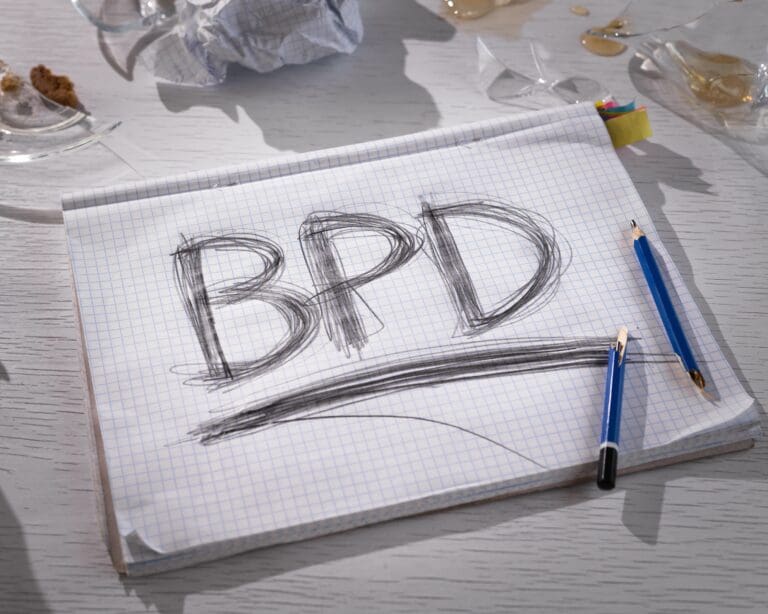
A handwritten note that reads "BPD" surrounded by broken pencils, symbolizing the emotional struggles associated with Borderline Personality Disorder.
Read More
A person in a denim shirt flexing their arm, symbolizing hyper independence and inner strength.
Read More
Couple embracing at sunset, symbolizing the emotional difference between wanting versus needing in relationships.
Read More
Man sitting alone on a rock at sunset, symbolizing feelings of isolation and fear of being alone linked to autophobic thoughts.
Read More

NEUROBIOLOGICAL CONTEXT

The Blueprint of Connection

Attachment styles are neural templates for how we relate to others, formed in early childhood. These templates are stored in implicit memory—meaning they operate automatically, below conscious awareness, driving who we pick and how we react in relationships.

The Three Main Architectures

  1. Secure: The brain views intimacy as safe. The nervous system regulates easily after conflict.

  2. Anxious (Preoccupied): The brain views distance as a threat. The amygdala is hyper-sensitive to signs of rejection, triggering “protest behavior” (texting, clinging) to re-establish contact.

  3. Avoidant (Dismissive): The brain views intimacy as a loss of autonomy. When emotions get too high, the parasympathetic nervous system engages a “shutdown” response, causing the person to pull away to regulate.

Earned Security

Neuroplasticity allows us to rewrite these maps.

  • Regulation Awareness: An anxious person must learn self-soothing (down-regulating the amygdala) without demanding it from a partner.

  • Safety Signaling: An avoidant person must learn that vulnerability does not equal engulfment.

  • The Goal: “Earned Security” is the process of building new neural pathways through safe, consistent relationships that overwrite the old, insecure templates.

The Executive Cost of Attachment Styles

In my work with elite performers, a consistent theme emerges regarding the profound, often unacknowledged, impact of attachment styles on high-level executive function. This is not merely a psychological overlay; it represents a significant metabolic and cognitive drain, directly eroding leadership efficacy and strategic acuity. The ancient blueprints governing our relational security continue to exert powerful, often detrimental, influence within complex organizational structures.

The Neurophysiological Burden

Attachment styles, whether secure, anxious, or avoidant, are rooted in fundamental neurobiological programming. Insecure styles, particularly, activate ancient threat detection systems in the brain, diverting critical neural resources away from executive functions. This creates a persistent, low-grade stress response, manifesting as elevated cortisol and impaired prefrontal cortex activity. The executive mind, designed for complex problem-solving and long-term strategic vision, becomes siphoned by internal relational anxieties. For leaders exhibiting an anxious attachment pattern, the drive for validation can translate into micromanagement, an inability to delegate effectively, or a pervasive fear of criticism. This neurophysiological state prioritizes immediate relational reassurance over the broader strategic landscape, creating bottlenecks and undermining team autonomy. The constant vigilance for perceived relational threats consumes cognitive bandwidth, leading to suboptimal decision matrices and reactive rather than proactive leadership. Conversely, an avoidant attachment style often manifests as emotional detachment, a reluctance to engage in collaborative processes, or a dismissive attitude towards feedback. While outwardly appearing resilient, this stance creates a significant barrier to authentic connection and trust within a team. From a biological perspective, this self-protective mechanism, an evolutionary anachronism in a modern leadership context, curtails vital information flow and stifles innovation that thrives on open exchange. The metabolic cost is a reduced capacity for empathy-driven decision-making and a diminished ability to foster psychological safety.

Strategic Erosion and Metabolic Debt

The aggregate effect of insecure attachment styles on executive performance is a continuous metabolic debt. The energy expended on managing internal anxieties or maintaining emotional distance is energy not allocated to critical thinking, foresight, or adaptive learning. This resource misallocation degrades strategic vision by narrowing perceptual fields and biasing risk assessment. Long-term planning becomes clouded by short-term relational dynamics, whether a perceived need for control or an aversion to interpersonal complexity. This isn’t merely a matter of personality; it’s a measurable impedance to peak cognitive function. The biological imperative to secure attachment, when unmanaged, becomes an invisible, yet formidable, barrier to elite performance. Understanding these foundational mechanisms is critical for any leader aiming to optimize their own output and cultivate a truly high-performing organizational culture.

Evolutionary Origins: Why Attachment Styles Exists

The Primal Imperative: Survival and Propagation

The architecture of attachment styles is not a psychological construct; it is a hardwired evolutionary mechanism. For early hominids, a defenseless infant’s survival depended entirely on consistent proximity and responsiveness from a primary caregiver. This biological programming ensured the child received immediate protection from predators and environmental hazards, consistent access to sustenance, and critical social learning necessary for navigating their precarious world. This fundamental system optimized genetic propagation across generations. Individuals predisposed to forming robust, adaptive bonds with caregivers were significantly more likely to survive infancy and reach reproductive age. The brain’s intricate reward circuitry became deeply linked with relational safety and secure proximity, effectively hardwiring the drive for connection as a foundational biological imperative, essential for both individual survival and species continuity.

Modern Mismatch: Ancient Blueprint in a New World

The inherent challenge arises when this ancient neural blueprint encounters the complex demands of contemporary human existence. Our attachment systems evolved over millennia in environments defined by immediate, tangible physical threats and small, highly interdependent tribal units. The innate “threat detection” circuitry, once acutely vigilant for starvation, tribal conflict, or apex predators, now activates with similar intensity in response to perceived social rejection, professional critique, or a delayed digital communication. This systemic misfiring manifests as maladaptive behavioral and neurochemical responses in modern relationships and professional spheres. An individual with an insecure attachment style, whose early environment necessitated hyper-vigilance for inconsistency or rigid self-reliance for emotional regulation, carries these historically adaptive strategies into adult life. What were once crucial coping mechanisms to navigate a suboptimal primal caregiving landscape become significant impediments to forming healthy adult bonds and achieving psychological well-being in contexts requiring vulnerability and genuine interdependence. The neurochemical cascade designed to prepare the body for existential physical danger is disproportionately triggered by abstract social threats or performance pressures. Our deeply ingrained drive for stable tribal belonging, once naturally met by a cohesive kin group, now contends with fragmented social networks, digital isolation, and the pervasive emphasis on extreme individualism. This profound mismatch generates chronic physiological stress, severely impacts executive function, and fundamentally undermines our capacity for optimal social engagement and sustained high performance.

Rewiring Attachment Styles with Real-Time Neuroplasticity™

Attachment styles, though often perceived as personality traits, are fundamentally neural algorithms. They represent deeply grooved patterns of synaptic firing, shaped by early relational experiences, designed to predict and manage social threats or opportunities. These archaic neural architectures, once potentially adaptive for primal survival, frequently become maladaptive in complex modern social and professional landscapes, dictating suboptimal responses.

The Real-Time Neuroplasticity™ Protocol

Dr. Ceruto’s Real-Time Neuroplasticity™ is a proprietary methodology engineered for cortical re-optimization. It is not a therapeutic process but a precision protocol for neural retraining, designed to consciously dismantle detrimental emotional and behavioral patterns embedded within these attachment algorithms. The focus is on instantaneous, self-directed neuro-regulation. This protocol initiates with the precise identification of an individual’s entrenched reactive patterns, often triggered by specific social cues. Rather than merely observing these responses, the methodology demands immediate, conscious interdiction. This top-down regulation, driven by the prefrontal cortex, disrupts the automatic cascade of limbic system activation that defines an ingrained attachment response.

Neural Retraining and Re-Regulation

The core mechanism involves leveraging the brain’s inherent neuroplasticity. When an archaic response is consciously interrupted, a neurological vacuum is created. Real-Time Neuroplasticity™ then guides the active construction of novel, adaptive neural pathways. This involves systematically overriding instinctual, often avoidant or anxious, reactions with strategically chosen, evolutionarily advanced responses that promote secure relating. Repeated, deliberate activation of these new pathways reinforces their synaptic strength, effectively diminishing the old, maladaptive circuits. This re-regulation process recalibrates the nervous system’s set point for social engagement and threat assessment. The individual learns to proactively sculpt their internal states, moving from a reactive, evolutionarily programmed stance to one of conscious, adaptive control. The ultimate objective is to elevate executive function within social contexts. By re-patterning these foundational neural algorithms, individuals gain superior control over their emotional regulatory systems. This directly translates into enhanced decision-making, authentic collaboration, and optimized performance in all high-stakes social and professional environments. The outcome is a fundamental upgrade in social operating capacity.

About Dr. Sydney Ceruto

Dr. Sydney Ceruto is a preeminent neuroscientist and elite performance coach, driving optimal human function across complex domains. As the visionary founder of MindLAB Neuroscience, she has established a global nexus for advanced brain-behavior research and application. Dr. Ceruto is widely recognized as the pioneer of Real-Time Neuroplasticity™, a proprietary methodology for accelerated cognitive and behavioral recalibration, directly influencing executive decision-making and performance resilience. Her seminal work, “The Dopamine Code,” published by Simon & Schuster, offers a definitive neurobiological framework for understanding and mastering motivation. Academically, Dr. Ceruto holds dual PhDs in Behavioral and Cognitive Neuroscience from NYU, complemented by dual Master’s degrees in Clinical Psychology and Business Psychology from Yale University. Her integrated clinical and evolutionary perspective provides unparalleled insights into the neural architecture governing human drive and interaction.

Selected Research on Attachment Styles

  • Insel, T. R., & Young, L. J. (2001). The neurobiology of attachment. Nature Reviews Neuroscience.
  • Young, L. J., & Wang, Z. (2004). The neurobiology of pair bonding. Nature Neuroscience.
  • Meaney, M. J. (2001). Maternal care, gene expression, and the transmission of individual differences in stress reactivity across generations. Annual Review of Neuroscience.
  • Gillath, O., Shaver, P. R., & Mikulincer, M. (2005). Patterns of brain activation during attachment-system functioning. Journal of Cognitive Neuroscience.
  • Strathearn, L., Fonagy, P., Amico, J., & Montague, P. R. (2009). Adult attachment predicts maternal brain response to infant cues. NeuroImage.
  • Kirsch, P., Schlinkert, M., Bermpohl, F., Rettich, T., Lieb, K., & Herpertz, S. C. (2010). Oxytocin enhances brain reward system responses in men viewing the face of their partner. Journal of Neuroscience.
  • Lupien, S. J., McEwen, B. S., Gunnar, M. R., & Heim, C. (2009). Effects of stress throughout the lifespan on the brain, behaviour and cognition. Nature Reviews Neuroscience.
×

SELECT PRE-ORDER CHANNEL

Unlock the Power of Your Mind!

Join my inner circle for exclusive insights and breakthroughs to elevate your life.

Ultimate Concierge Coaching Experience
Form

Exclusively for Those Who
Demand the Best

Limited Availability

Your Journey to Unparalleled Personal and Professional Growth Starts Here

One-on-One Exclusive Access
Form

Shape Your
Destiny

Limited Availability

A Truly Bespoke, One-on-One Journey with Dr. Sydney Ceruto

Instant Access!

Download The Influence Within and discover how small shifts lead to big transformations.