The Executive Cost of Attention Span
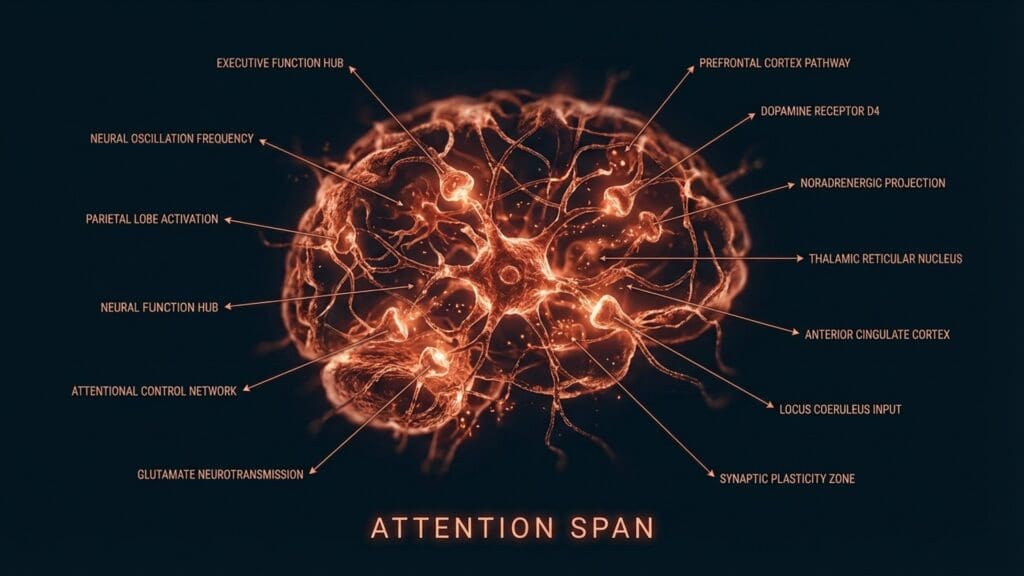
From her work with elite performers, Dr. Sydney Ceruto observes a critical erosion of sustained attention within leadership strata. This degradation is not merely a productivity inconvenience; it represents a fundamental threat to strategic integrity and organizational resilience. The inability to maintain prolonged cognitive focus directly correlates with diminished capacity for complex problem-solving and long-range foresight. At the executive level, compromised attention manifests as a pervasive inability to engage deeply with intricate data or anticipate multifaceted market shifts. Leaders become susceptible to superficial analysis, prioritizing immediate, often reactive, responses over deliberate, proactive strategies. This short-circuited processing impairs the development of robust organizational vision and undermines the coherent execution of strategic initiatives. Biologically, the modern environment constantly bombards the prefrontal cortex with novel stimuli, triggering an ancient, adaptive response designed for threat detection and rapid contextual shifts. While ancestrally beneficial for survival, this continuous scanning mechanism, when overstimulated, impedes the sustained, high-fidelity neural processing required for executive function. The brain metabolically prioritizes novelty, allocating glucose and oxygen away from deep work. This perpetual state of distributed attention induces a form of cognitive fragmentation. The brain’s energetic resources are scattered across numerous shallow engagements, rather than consolidated for profound analysis and synthesis. This inefficient metabolic allocation directly degrades the neural pathways essential for abstract reasoning, critical evaluation, and the synthesis of disparate information into cohesive strategies. The consequence for leadership is a pervasive strategic myopia. Long-term goals blur, replaced by a series of reactive sprints addressing immediate crises. This diminished capacity for sustained cognitive engagement erodes a leader’s ability to identify emergent patterns, forecast future challenges, and construct durable competitive advantages. The biological cost of fractured attention becomes an insurmountable organizational burden. Ultimately, the executive cost of a degraded attention span is the systematic dismantling of strategic optionality. When leaders cannot sustain focus, their capacity for deep thought, innovation, and resilient planning atrophies. This makes organizations brittle, prone to short-sighted decisions, and fundamentally unprepared for the complex, long-term challenges inherent in high-stakes environments.
Evolutionary Origins: Why Attention Span Exists
From an evolutionary standpoint, the capacity for attention is not merely a cognitive function; it is a fundamental survival mechanism. Our ancestral environment demanded a highly adaptive attentional system, capable of both rapid reorientation to immediate threats or opportunities and sustained focus for complex tasks. This dual imperative shaped the neural architecture responsible for how we allocate our cognitive resources.
The brain’s primary directive was survival and propagation. This necessitated an acute ability to detect changes in the environment: the rustle of leaves indicating a predator, the faint scent of prey, or the visual cue of a new water source. Such stimuli triggered an instantaneous shift in focus, prioritizing salient information to enable a fight, flight, or forage response. This mechanism, prioritizing external vigilance, was critical for immediate safety.
Simultaneously, survival often depended on sustained, deliberate engagement. Hunting required prolonged tracking and strategic planning. Tool creation demanded meticulous, undistracted focus. Resource gathering, particularly in complex terrains, necessitated sustained spatial awareness and memory. The evolutionary pressure thus favored individuals capable of both hyper-vigilance and deep concentration, adapting their attentional bandwidth to the demands of the moment.
Misfiring in the Modern Epoch
The dilemma of modern attention lies in the catastrophic mismatch between our ancient neural wiring and the contemporary information landscape. Our brain, exquisitely tuned for the scarcity of stimuli in the savanna, is now relentlessly barraged by an artificial abundance. Digital notifications, constant communication streams, and endless content feeds simulate perpetual, low-stakes threats and opportunities.
This relentless stimulation exploits our innate drive for novelty and reward. Each notification triggers a micro-release of dopamine, reinforcing the habit of attentional switching. The brain’s ancient system, designed to scan for infrequent, high-impact environmental changes, is now constantly activated by trivial digital pings. This keeps the “explore” function of our attention perpetually engaged, preventing the necessary deep “exploit” state required for sustained cognitive work.
The consequence is a brain trapped in a state of perpetual vigilance, leading to cognitive fragmentation rather than deep engagement. The constant context-switching incurred by these digital demands mimics a chronic stressor, elevating cortisol levels and impairing prefrontal cortex function. This evolutionary misfire directly undermines our capacity for sustained executive function, translating into demonstrable performance deficits in complex, knowledge-based tasks.
Rewiring Attention Span with Real-Time Neuroplasticity™
The contemporary fragmentation of attention is not a deficit of willpower, but a dysregulation within the brain’s fundamental neural architecture. Modern environments, saturated with stimuli, hijack our ancient reward systems, leading to maladaptive synaptic pruning and a diminished capacity for sustained cognitive engagement. My proprietary methodology, Real-Time Neuroplasticity™, directly addresses this by systematically re-establishing optimal neurocognitive regulation. This protocol initiates a targeted recalibration of key neural networks governing attention. We focus on strengthening the Prefrontal Cortex’s executive control over stimulus filtering and response inhibition, simultaneously downregulating the overactive Default Mode Network that often perpetuates internal distraction. This process is not about superficial behavioral modification, but profound neural restructuring. Real-Time Neuroplasticity™ leverages the brain’s inherent capacity for adaptive change through structured, iterative feedback loops. We employ precise interventions designed to guide neural pathways towards increased efficiency in attention allocation and maintenance. This involves conscious, sustained engagement with tasks calibrated to progressively extend focus duration and mitigate susceptibility to internal and external distractions. The methodology systematically re-establishes the functional integrity of attentional circuits, enhancing synaptic efficiency in areas critical for deep work and strategic thought. Participants learn to consciously detect and interdict attentional drift, fostering a robust internal mechanism for cognitive resilience. This re-regulation creates a neural environment conducive to sustained, high-fidelity processing. Ultimately, Real-Time Neuroplasticity™ enables individuals to reclaim their inherent capacity for singular focus—a critical evolutionary advantage now diminished by pervasive digital environments. By engineering a more resilient and efficient attentional system, we optimize executive function and liberate significant cognitive bandwidth. This foundational shift empowers individuals to transcend the limitations of fragmented attention and achieve peak cognitive performance.
About Dr. Sydney Ceruto
Dr. Sydney Ceruto is a foundational figure in neuroscience and elite performance, recognized globally for her incisive understanding of human cognitive architecture. As the esteemed Founder of MindLAB Neuroscience, she spearheads initiatives dedicated to unlocking peak mental states through scientifically rigorous methodologies. Dr. Ceruto is credited as the pioneer of Real-Time Neuroplasticity™, a groundbreaking framework that redefines our approach to adaptive brain function and sustained high performance. Her influence extends to authorship, with “The Dopamine Code” (Simon & Schuster) serving as a definitive text on motivation and neurochemical drive. Academically, Dr. Ceruto holds dual PhDs in Behavioral & Cognitive Neuroscience from NYU, complemented by dual Master’s degrees in Clinical Psychology and Business Psychology from Yale University. This robust academic foundation underpins her clinical perspective, offering a rare synthesis of evolutionary insights and actionable strategies for executive-level cognitive mastery. Her work is a testament to the brain’s profound capacity for directed adaptation.
Selected Research on Attention Span
- Corbetta, M., & Shulman, G. L. (2002). Control of goal-directed and stimulus-driven attention in the brain. *Nature Reviews Neuroscience*, 3(3), 201-215.
- Kastner, S., & Ungerleider, L. G. (2000). Mechanisms of visual attention in the human cortex. *Annual Review of Neuroscience*, 23(1), 315-341.
- Posner, M. I., & Petersen, S. E. (1990). The attention system of the human brain. *Annual Review of Neuroscience*, 13(1), 25-42.
- Gazzaley, A., & Nobre, A. C. (2012). Top-down modulation: bridging selective attention and working memory. *Trends in Cognitive Sciences*, 16(2), 129-135.
- Voytek, B., & Knight, R. T. (2015). Prefrontal cortex and the dynamic regulation of neural oscillations. *Trends in Neurosciences*, 38(7), 419-429.
- Harris, R. M., & Dux, P. E. (2021). The brain networks that support multitasking ability. *Journal of Neuroscience*, 41(3), 444-455.
- Duncan, J. (2006). Selective attention and the control of behavior. *Philosophical Transactions of the Royal Society B: Biological Sciences*, 361(1471), 1613-1620.
- Petersen, S. E., & Posner, M. I. (2012). The attention system of the human brain: 20 years after. *Annual Review of Neuroscience*, 35, 73-89.