The Encoded Survival Architecture
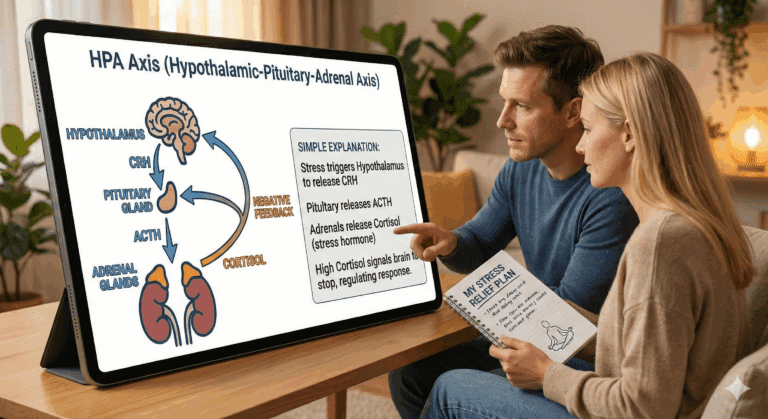
Childhood trauma is not merely a psychological memory; it is a structural adaptation of the developing nervous system. When a developing brain perceives chronic threat or instability, the amygdala (threat detection hub) becomes hypersensitive, wiring itself for rapid defense. Simultaneously, connectivity to the prefrontal cortex may be reduced. The brain effectively optimizes itself for a war that is no longer happening, perceiving neutral present-day events as survival threats.
The Window of Tolerance
These encoded patterns often narrow the nervous system’s “Window of Tolerance.” This leaves the individual toggling between Hyper-arousal (anxiety, mobilization) and Hypo-arousal (shutdown, freeze). In these states, the brain prioritizes primitive survival mechanisms over social engagement or complex executive function. “High performance” becomes biologically inaccessible because the system is allocating all energy to managing a phantom threat.
Pattern Interruption & Regulation
Because these responses are encoded in the subcortical (primitive) brain, standard cognitive strategies often fail to reach the root. MindLab protocols focus on bottom-up regulation—signaling safety to the nervous system directly. By identifying the specific triggers of dysregulation and intervening during the “labile window” of memory reconsolidation, we can gradually decouple the past survival reflex from present-day reality, restoring the capacity for calm.