Processing my own childhood trauma was the key to internal peace and genuine self-love. As a child, I suffered quite...
Read article : Addressing the Impact of Childhood TraumaChildhood Trauma
We map how early environments shape the threat-detection system, moving from encoded survival patterns to conscious nervous system regulation.
15 articlesThe Encoded Survival Architecture
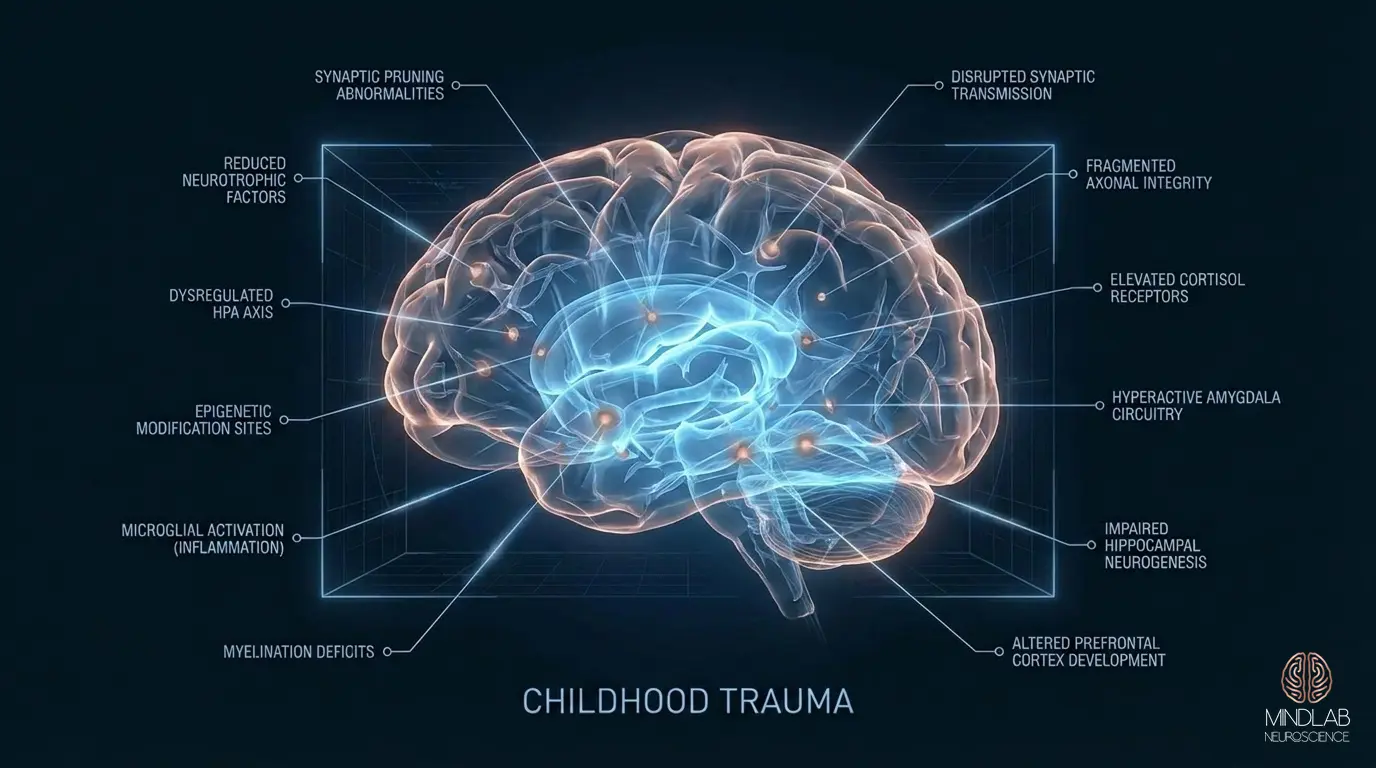
Childhood trauma is not merely a psychological memory; it is a structural adaptation of the developing nervous system. When a developing brain perceives chronic threat or instability, the amygdala (threat detection hub) becomes hypersensitive, wiring itself for rapid defense. Simultaneously, connectivity to the prefrontal cortex may be reduced. The brain effectively optimizes itself for a war that is no longer happening, perceiving neutral present-day events as survival threats.
The Window of Tolerance
These encoded patterns often narrow the nervous system’s “Window of Tolerance.” This leaves the individual toggling between Hyper-arousal (anxiety, mobilization) and Hypo-arousal (shutdown, freeze). In these states, the brain prioritizes primitive survival mechanisms over social engagement or complex executive function. “High performance” becomes biologically inaccessible because the system is allocating all energy to managing a phantom threat.
Pattern Interruption & Regulation
Because these responses are encoded in the subcortical (primitive) brain, standard cognitive strategies often fail to reach the root. MindLab protocols focus on bottom-up regulation—signaling safety to the nervous system directly. By identifying the specific triggers of dysregulation and intervening during the “labile window” of memory reconsolidation, we can gradually decouple the past survival reflex from present-day reality, restoring the capacity for calm.

Latest Articles
Attachment refers to the particular way in which you relate to other people. Your style of attachment was formed at...
Read article : Understanding Attachment StylesThe past can be so haunting. An awful thing happened and now there is a constant loop of the event...
Read article : Resolving Past Emotional WoundsWhen your nervous system has been primed by trauma, you can overreact to perceived “dangers” that aren’t life-threatening, like when...
Read article : Trauma Impact on Life: Understanding How Trauma Affects the BrainFinding help for dissociative disorders can be challenging, but there are options available. Learn more about the benefits of neuroscientific...
Read article : Optimizing Brain Function: Brain-based Coaching to Address Dissociative PatternsChildhood Trauma Effects Adults - Childhood trauma effects on adults go beyond memory - they reshape neural architecture. Neuroscience reveals...
Read article : The Lasting Impact of Childhood Trauma on Adults: Understanding and ResolvingDepersonalization is a dissociative experience that leaves people feeling disconnected from themselves. By understanding its root causes and neuroscience-based interventions,...
Read article : Depersonalization: Understanding and Overcoming Detachment Through NeuroscienceYour window of tolerance is the zone where you can feel stress and still think clearly. A neuroscientist explains why...
Read article : The Window of Tolerance: Building Emotional Regulation Through NeuroscienceHyper independence is often celebrated as strength, but neuroscience and psychology reveal it’s frequently rooted in trauma. Explore the hidden...
Read article : Hyper Independence: The Hidden Cost of Doing It All AloneExplore the neuroscience of anxiety through compelling stories, new research, and practical strategies from a neuropsychologist. This in-depth look reveals...
Read article : The Neuroscience of Anxiety: How Our Brains; Evolution; and Social Lives Shape the Anxious MindChildhood trauma rewires how your brain produces and processes dopamine, the neurotransmitter responsible for motivation, reward, and emotional resilience. When...
Read article : Dopamine and Trauma: Why You Are Stuck in Survival ModeEmotional validation in relationships activates neural trust circuits. Neuroscience-backed methods build deeper, authentic connections.
Read article : Emotional Validation in Relationships: A Neuroscience Guide to Optimizing Connection and Addressing Trauma