
Key Takeaways
- Early adversity rewires reward circuitry, shifting dopamine from motivation toward hypervigilance and survival.
- Childhood loss miscalibrates dopamine reward prediction: the brain stops expecting good outcomes, prioritizing threat detection.
- Standard dopamine strategies (exercise, sunlight, goal-setting) typically reinforce trauma-coded reward patterns rather than resolving them.
- Rewiring trauma-shaped dopamine requires nervous system stabilization, then reward-palette expansion, not willpower or positive thinking.
- Complex trauma compounds: each additional adverse experience narrows dopaminergic capacity for non-survival reward.
Childhood trauma rewires the brain’s dopamine system, shifting it away from steady, self-generated motivation toward fear-driven, achievement-based reward. Survivors often feel relentlessly driven yet hollow, capable in a crisis but unable to rest. This is not a character flaw. It is a measurable adaptation in the reward-prediction circuitry, and it can be retrained.
My Own Recovery Story
The moment I turned sixteen, I became an orphan. Both of my parents were gone. No warning. No goodbye. Just a world that suddenly demanded I function like nothing had changed, while every signal in my nervous system screamed that everything had.
For decades, I didn’t understand why I couldn’t simply “move forward.” I didn’t understand why motivation felt like a constant battle, why achievements brought no real joy, or why my body stayed locked in a state of perpetual readiness for the next disaster. I thought I was broken. I thought I was weak.
Early adversity recalibrates striatal dopamine function away from reward-seeking toward threat vigilance, fusing the neurochemical signal of motivation with the physiological signature of survival.
What I didn’t know then, but understand now after twenty-six years in neuroscience and practice, is that my brain wasn’t broken. It was working exactly as it was designed to work under those conditions. My dopamine system had been fundamentally rewired by early adversity, and that rewiring shaped how I would experience motivation, reward, and resilience for the next three decades of my life.
The neuroscience of dopamine and trauma comes down to this: early loss doesn’t just hurt emotionally. It changes the architecture of your brain’s reward circuitry in measurable, observable ways. What I discovered through my research changed how I approach every single client. And if you’re reading this because you, too, experienced childhood trauma, parental loss, or early adversity, this rewiring is likely the silent force shaping your life right now, influencing the decisions you make, the relationships you pursue, and how you experience everyday pleasure and pain.
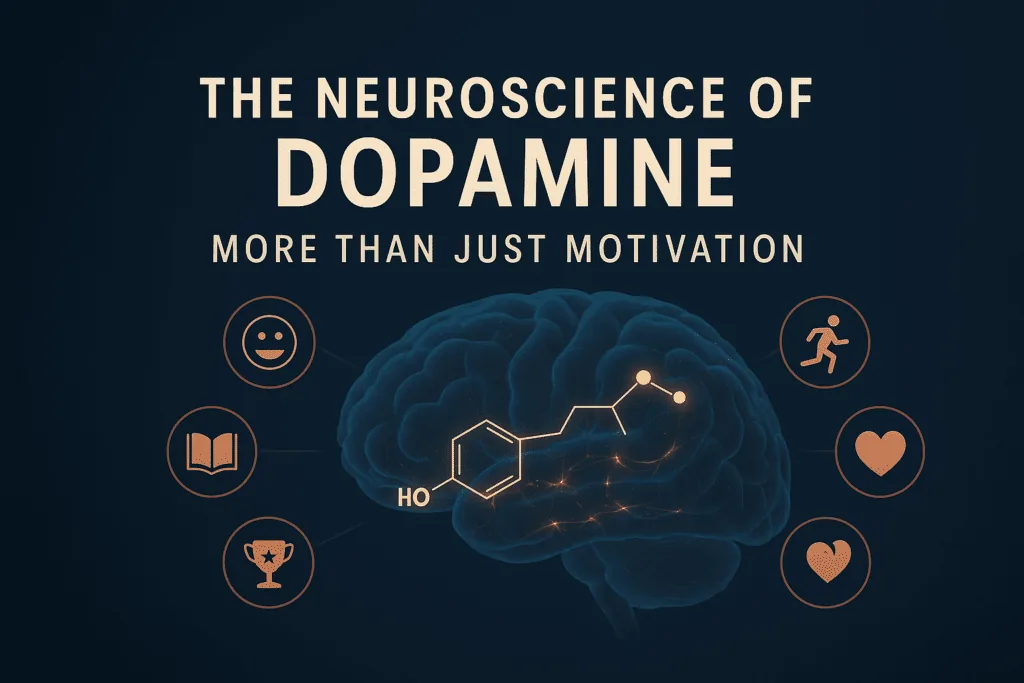
The Neuroscience of Dopamine: More Than Just Motivation
Before we can understand how trauma changes dopamine, we need to understand what dopamine actually does. Most people think dopamine is the “pleasure chemical,” the thing that makes you feel good. That common misconception misses the broader role of dopaminergic function across multiple brain circuits.
Dopamine is really about anticipation, motivation, and your brain’s prediction of reward, and its role in modulating the stress response is equally significant. The dopamine reward signal is what turns intention into action. It is the chemical that creates the pull toward something desirable. It is what makes you care about your goals. It is what makes effort feel worth it. Dopamine is the engine of desire and drive, and it is something far more nuanced than simple pleasure.
When your dopamine system is working normally, you experience a smooth cycle: you anticipate a reward, you take action toward it, you experience the reward, and your brain learns that the effort was worth the outcome. This pattern creates what neuroscientists call the reward prediction system. It is what drives you to pursue meaningful things, try new challenges, and invest energy in relationships and growth. This cycle is healthy. It is adaptive. It keeps you engaged with life. When trauma enters the picture, however, this healthy cycle becomes compromised.
But dopamine does something else equally crucial: it helps regulate your stress response. It works in partnership with other neurochemical systems to keep your nervous system balanced. When dopamine is healthy, you can experience stress without becoming overwhelmed. You can handle a threat without your entire system shutting down or spiraling into hypervigilance. Dopamine helps you recover from threat. It helps you return to baseline. It is part of the system that lets you feel safe again after fear.
This is where trauma enters and disrupts the entire system. Understanding the connection between dopamine and trauma is the key to understanding why you feel the way you do.

How Early Adversity Hijacks the Dopamine System
When a child experiences significant traumatic stress or prolonged adversity, their brain enters survival mode. The nervous system redirects resources toward threat detection and protection. Childhood trauma is one of the most potent disruptors of neural development, and it reflects a fundamental rewiring of how the brain categorizes reward and threat throughout development.
This is adaptive in the moment. If you are a child facing genuine danger or loss, your brain needs to prioritize survival over pleasure. It needs to be hypervigilant. It needs to anticipate threats. The dopamine system gets recalibrated to support that survival imperative, shifting from its normal function of motivating exploration and reward to instead fueling vigilance and readiness.
How Trauma Reshapes the Reward Prediction System
Childhood adversity dysregulates dopamine signaling in the striatum, the brain’s reward center, blunting responsiveness to everyday rewards while sensitizing the system to stress. The research on childhood trauma and ventral striatal dopamine function is unequivocal: the reward center of the brain is literally reshaped by what happens during the most vulnerable developmental years.
Your traumatic experiences during your most formative years fundamentally shaped your dopamine release capacity, the actual neurochemical ability of your brain’s receptors to produce dopamine in response to reward. This is precisely why generic dopamine supplements and strategies fail for trauma survivors. Rather than creating a balanced motivation system, elevated dopamine becomes tangled with chronic stress responses. Your brain begins to associate reward with survival, with achievement, and with proving your worth through what you produce and accomplish.
Pleasure becomes difficult to access because it signals that you can relax, and your nervous system, including the amygdala, learned early that relaxation is dangerous. Rest feels like danger. Stillness feels like death.
At the same time, the prefrontal cortex, the brain region responsible for rational thinking and emotional regulation, becomes dampened. The connection between your conscious goals and your reward system becomes fragmented. You can know intellectually that something is good for you, but your dopamine system won’t fire. You can achieve significant things and feel nothing. You can have moments of genuine peace, but your nervous system won’t let you stay there, because that peace triggers ancient warnings encoded in your cells. At the core of the problem, your brain’s thinking center stays offline while its survival center takes over.
The research is clear on this. Studies show that people who experienced childhood adversity have fundamentally altered dopaminergic systems, changed sensitivity profiles that shape how they process reward, including their dopamine sensitivity, and alter how they experience motivation and respond to stress throughout their entire lives. The dysregulation I see in my practice follows a predictable neurological pattern. The result isn’t permanent brain damage. But it is a reshaping of how your reward system operates, how your brain categorizes threat and safety, and which neurochemical responses get triggered in different situations.
And if your childhood survival strategy involved high achievement, perfectionism, or constant productivity to feel safe and worthy, your dopamine system became wired to fire most strongly in states of striving, urgency, and stress. Peace and rest began to feel dangerous, because they meant lowering your guard. The very thing that should bring pleasure and relaxation becomes a source of anxiety. Your nervous system learned that stopping means something bad will happen.

The Survival Patterns That Emerge
I see this pattern constantly in my practice, and I have lived it intimately. When your dopamine system becomes trauma-coded, specific behavioral and emotional patterns emerge that feel normal because they have been your baseline since childhood. You see them as personality traits, not survival strategies. This is why stopping feels impossible.
The Driven Achiever: When Reward Fuses With Survival
Every person who arrives with achievement addiction has the same story underneath. The driven achiever experienced early loss, often involving abuse or neglect, and unconsciously concluded that worth must be earned through accomplishment. Their dopamine fires most strongly when working and producing. Rest feels uncomfortable, downtime feels like failure, and breaks trigger anxiety because they disrupt the survival formula.
This wiring is why achievement never feels like enough. I was this person. After my parents died, I became the one who had it all together. The overachiever. I volunteered for everything, never asked for help, and prioritized everyone else’s well-being before my own. The pattern was so powerful it controlled my entire identity for decades. My dopamine system rewarded my actions relentlessly. Each accomplishment, each rescue of someone else, each task completed gave me a hit of motivation and purpose.
But genuine rest, genuine pleasure in simple things, and genuine connection without a goal attached remained almost inaccessible. I could accomplish anything. I could handle any crisis. I could be the person everyone relied on. But I couldn’t sit still without anxiety rising in my chest. I couldn’t enjoy success, because my nervous system was already preparing for the next threat.
The Emotional Controller and the Validation Seeker
The emotional controller is another pattern I see frequently. This person learned early that emotions were dangerous, and that losing control meant losing safety. Their dopamine system became wired to reward emotional suppression and the intellectual override of feeling. Dopamine fires when solving, analyzing, and managing, but authentic emotional experiences like grief, joy, and spontaneous laughter feel risky and foreign.
The connection creates different expressions in different people, but the root is always the same. Then there is the relentless pursuit of external validation. This person’s dopamine system became dependent on external markers of success and worth, because early loss taught them that internal worth wasn’t enough to keep people safe or loved. They achieved, got praised, and felt a dopamine spike. But the spike was always temporary. The achievement was never enough. The validation was never solid.
So they kept reaching, kept striving, kept looking outside themselves for the reassurance their trauma taught them they couldn’t trust from within. They are always performing, constantly trying to prove something, always vulnerable to the next criticism, because their dopamine system never learned to generate internal reward.
The Hypervigilant Protector: Dopamine and Threat Detection
The hypervigilant protector receives dopamine rewards for maintaining alertness and anticipating disasters. Their nervous system never truly settles. Dopamine reinforces the belief that relaxation is reckless, that vulnerability is weakness, and that letting go invites catastrophe. They are always monitoring, always on guard, their dopamine fused to threat detection instead of reward-seeking.
These aren’t four different people. They are four facets of the same dopamine dysregulation, the same survival wiring, the same neural response to early traumatic experience. And most people with early adversity carry combinations of all four. You might be a driven achiever in your professional life and an emotional controller in your relationships. You might be hypervigilant about physical safety while desperately seeking external validation. You might pursue achievement as your form of hypervigilance, driven by the constant need to prove that you are worthy of staying alive. Complex trauma amplifies this pattern, because each layer of adversity compounds the dopaminergic distortion, narrowing the reward palette further with each additional loss.
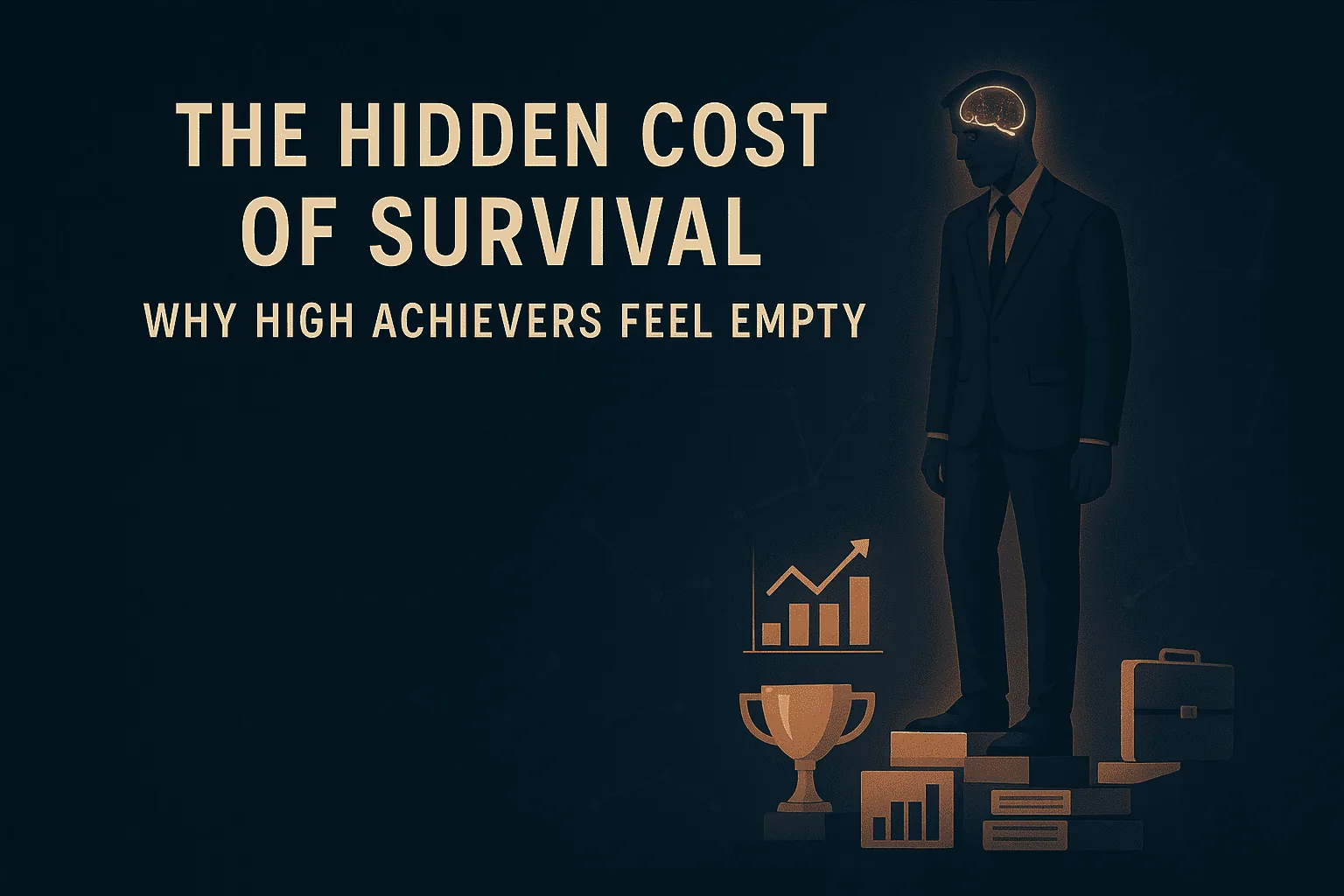
The Hidden Cost: Why High Achievers Feel Empty
The people who appear to have it all figured out often suffer most silently. Executives and entrepreneurs build careers on the exact survival pattern their trauma created. They share a profile that sabotages their happiness. Their dopamine reward circuitry has been channeled so exclusively toward achievement that ordinary pleasures register as neurochemically irrelevant.
Internally, they are exhausted, because the wiring keeps pulling them toward the next achievement, the next goal, the next proof that they matter. Understanding this specific link is what separates clients who transform from those who stay stuck. The wiring that once saved their lives in childhood now works against them, driving relentless striving in adult life.
How Psychosocial Stress Compounds Dopamine Dysregulation
The psychosocial stress of maintaining a high-performance identity while carrying unresolved trauma creates a neurochemical double bind. Your nervous system simultaneously demands peak output and cries for rest, producing catecholamine overload that blunts dopamine receptors and their sensitivity to stress signals, amplified by elevated cortisol. This sustained stress progressively degrades the prefrontal circuits responsible for distinguishing genuine threat from trauma memory.
This is the insidious trap of trauma-coded dopamine. The constant activation of your stress circuitry means your nervous system doesn’t register that you are no longer in danger. It doesn’t care that you have “made it” by every conventional measure. Your dopamine system is still operating under the ancient belief that you must produce, achieve, and prove your worth to deserve safety and belonging. And because achievement triggers dopamine, you keep getting rewarded for the very behaviors that keep you trapped in survival mode. Most high achievers don’t realize that their constant drive to accomplish more is a trauma response, not ambition.
The paradox is devastating: the very system that once kept you alive is now keeping you from truly living. You win. You achieve. You accomplish. And you still feel empty. When the wiring runs this deep, success becomes a prison. The bond is so powerful that even when external circumstances improve, the internal drive to prove worth never quiets. This is not a personal failing. This is neuroscience. This is what happens when childhood trauma and dopamine become intertwined in your nervous system’s reward architecture.
Why Standard Dopamine Strategies Fail for Trauma Survivors
If you experienced childhood trauma, most dopamine optimization advice online will not work for you, because long-term exposure to stress during development changes the neurochemical landscape entirely. That advice is designed for people whose dopamine systems were not fundamentally rewired by survival. The interaction between childhood trauma and your current dopamine system explains why some people respond to traditional motivation strategies while others stay stuck despite doing everything right.
This mismatch is why conventional productivity advice backfires so badly for trauma survivors. When someone recommends “increase dopamine naturally” through exercise, sunlight, and social connection, that is excellent advice for someone whose dopamine system is functioning normally but depleted. But if your dopamine system is trauma-coded, if it rewards urgency and punishes rest, if it is tangled with survival mechanisms, generic optimization doesn’t touch the root issue. Without targeted work on the underlying pathways, you can do all the right things and still feel stuck.
Here is why. You might start exercising more, and your trauma-coded dopamine system will reward the striving, the pushing, the intensity. You will feel motivated. You will feel driven. But you won’t feel genuinely rewarded. You won’t experience rest as restorative. You won’t access the deeper reward of simply feeling alive and safe in your body. The exercise becomes another achievement to accomplish, another way to prove your worth, another escape from stillness.
The same applies to productivity hacks, goal-setting frameworks, and motivation strategies. Many of them actually reinforce the trauma coding. They celebrate the striving. They reward the achievement. They reinforce the exact neural patterns shaped by your need to survive through accomplishment. They also ignore the ongoing psychosocial stress that maintains the pattern, the relational demands, identity pressures, and unacknowledged grief that keep the survival system activated. You read books about setting bigger goals, and your trauma-coded brain hears, “You haven’t achieved enough yet. Keep going. Never stop.” You implement a new productivity system, and your nervous system experiences it as, “You need to be doing more, faster, better.”
What you actually need is dopamine rewiring through targeted neurological work, not dopamine optimization. That is a fundamentally different process. Optimization assumes the system is working correctly and you are just trying to make it work better. Rewiring acknowledges that the system itself was fundamentally altered by trauma and needs to be gently recalibrated toward new patterns and new beliefs about what is safe and what brings genuine reward.
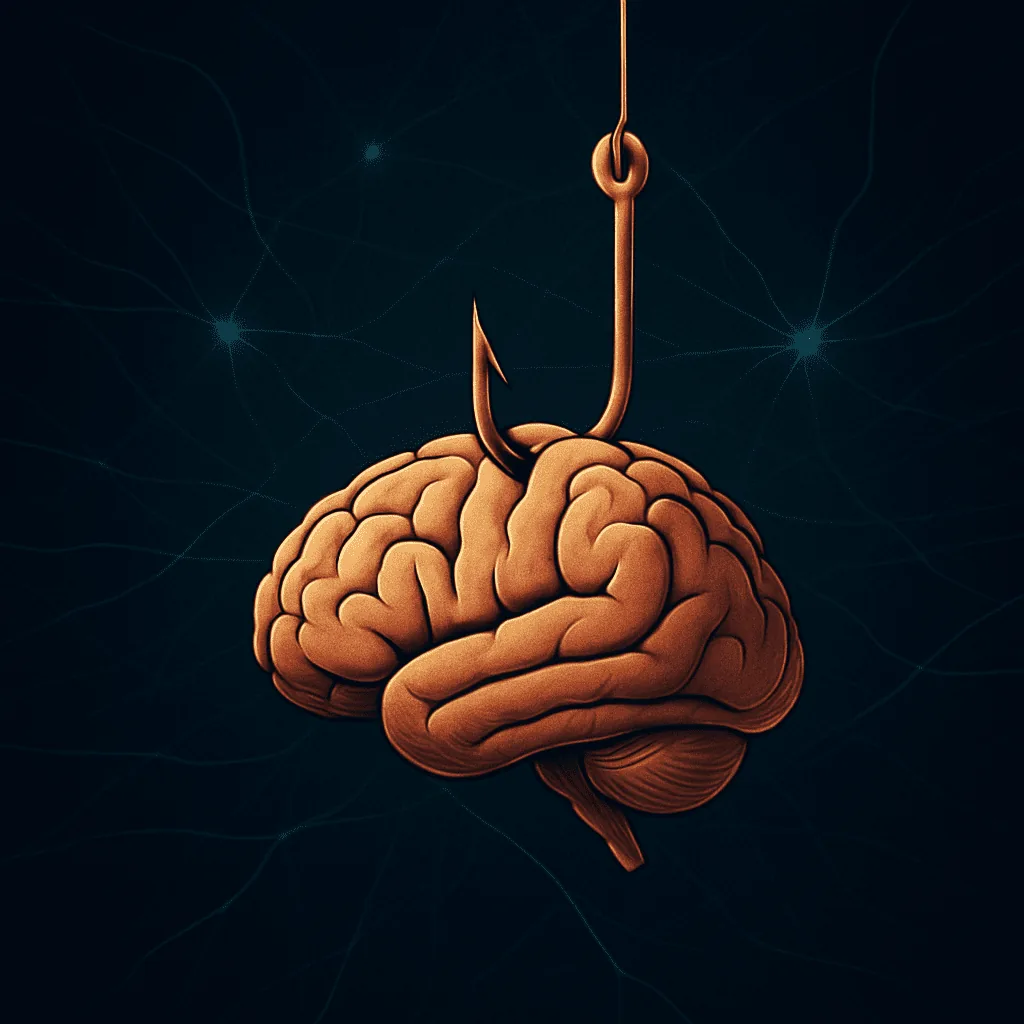
The Addiction You Don’t Recognize: How Trauma Hooked Your Brain on Stress
The addiction cycle is one of the most powerful neurobiological loops I encounter in my practice. You might not think of yourself as addicted, but if you experienced childhood trauma, your brain developed a genuine addiction to stress, urgency, and the neurochemical cascade that comes with it. People with PTSD have low levels of baseline dopamine reward signaling, which reinforces the cycle. This isn’t weakness. It is not a character flaw. It is biology.
When your dopamine system became trauma-coded, stress hormones like cortisol and adrenaline began firing alongside dopamine. Your brain learned to crave the combination. Your brain literally craves the very conditions that keep you trapped. Stress became familiar. Stress became home. Calm became foreign and terrifying, because it signaled danger. The danger came from the fact that your guard was lowered.
This is why rest feels impossible. This is why weekends trigger anxiety. This is why a vacation can make you feel more anxious than a hundred-hour work week. Your nervous system is literally addicted to the neurochemical state of threat. The pattern you have developed around stress is so deeply embedded that your brain perceives calm as a threat signal. You are not broken for feeling this way. You are caught in a biological loop that your trauma created, and that loop is incredibly powerful.
The good news? It can be rewired. But rewiring an addiction requires understanding it first. It requires acknowledging that the stress, the urgency, the constant doing are not personality traits you should celebrate. They are traumatic adaptations. They are survival mechanisms that outlived their usefulness. And the moment you see them clearly, the possibility of change emerges. Understanding how trauma created this addiction is the first step toward breaking free from the cycle.
The Neuroscience-Based Framework for Recovery
Over my twenty-six years of work with trauma survivors, and through my own recovery, I developed a framework for rewiring dopamine that addresses the specific neurobiology of trauma-shaped reward systems. It targets the exact intersection of dopamine and trauma that most practitioners miss entirely.
The specificity of trauma’s impact on your dopamine system cannot be overstated. Not all stress creates the same neurochemical changes, and not all dopamine dysregulation comes from the same type of adversity. The serotonergic system, for instance, responds differently to neglect than to abuse, and both interact with dopamine pathways in distinct ways. This framework runs on several principles that differ fundamentally from standard optimization.
The first principle is recognition without judgment. You must first identify the specific ways your dopamine system was trauma-coded. Where does your nervous system reward you most strongly? Which behaviors feel effortless because they activate dopamine? Which states feel impossible because they don’t? When do you feel most alive, and what survival strategy is being reinforced in those moments? This isn’t about fixing yourself. It is about understanding yourself with brutal honesty. Because the two are so deeply intertwined, naming the pattern is the first step to breaking it.
The pattern in your brain is discoverable, and once seen, it can be changed. Most people spend their entire lives running from their trauma patterns without ever naming them clearly. You can’t rewire what you don’t see.
Nervous System Stabilization: The Foundation of Recovery
The second principle is nervous system stabilization. Rewiring dopamine can only happen when your nervous system feels safe enough to experiment with new patterns. Creating genuine safety is non-negotiable for trauma survivors, because chronic stress conditions the nervous system to interpret calm as threat. Until your nervous system feels genuinely safe, no amount of dopamine work will produce lasting change.
This is why trauma-informed neurological work differs fundamentally from standard practice. We are not pushing you toward goals. We are helping your nervous system recognize that it can release survival mode without dying. We are teaching your brain that you are no longer the age you were when the trauma happened, and that the world isn’t as dangerous as your nervous system learned it was.
Expanding Your Dopamine Reward Palette
The third principle is gradually expanding your dopamine reward palette. Your trauma-coded system, shaped by developmental stress during your most neuroplastic years, reinforced specific survival behaviors for decades. Neuroplasticity means your brain can build new pathways through gentle, repeated exposure that teaches your nervous system a new truth: I can rest, I can be still, and I am safe.
Values-Based Motivation vs. Fear-Based Drive
The fourth principle is integrating motivation aligned with genuine values rather than survival strategies. Trauma-coded dopamine confuses authentic desire with fear-driven urgency. Learning to distinguish between “I want this because it matters” and “I’m terrified of what happens if I don’t” changes everything about how you experience effort and reward.
Reclaiming Emotional Reward: Addressing Numbness and Insensitivity
The fifth principle is addressing the emotional numbness and reward insensitivity that often accompany trauma-coded dopamine. Many trauma survivors can achieve but cannot feel genuine satisfaction. The reward circuitry has become so tangled with survival that pleasure feels dangerous. Rewiring this requires direct work with the neural circuits responsible for emotional experience, not just motivation.

What Recovery Actually Looks Like in Practice
I worked with an executive who came to me because, despite having achieved virtually everything he set out to accomplish, he felt empty. He had the career, the financial success, the respect. But he also had chronic anxiety fueled by unresolved stress, emotional numbness, and a terrible relationship with rest, continuously reaching for the next accomplishment because the current one brought no satisfaction.
His history: his father left when he was seven, an early abandonment that functioned as emotional abuse. His mother worked constantly to keep them afloat. Early on, he learned that his safety and his mother’s stability depended on him being no trouble, being impressive, and compensating for the loss through excellence. His dopamine system got wired to that mission. Achievement became the only reliable predictor of safety. The connection was forged in childhood, and he had been running his adult life on autopilot.
As an adult, his dopamine fired most powerfully when he was working, achieving, and impressing. Rest triggered anxiety, because rest felt like failure. Peace felt like danger. Genuine emotional connection felt like a waste of energy that should be directed toward the next goal. His relationships suffered, because his dopamine system couldn’t access reward from intimacy the way most people can. His success felt hollow, because his nervous system never internalized that he was safe enough to enjoy it.
Traditional dopamine optimization made him worse. Goal-setting frameworks made him worse. Productivity hacks made him worse. They all reinforced the underlying survival belief: if I stop achieving, something bad will happen. Every productivity book became another permission slip to work harder. Every goal-setting seminar became another deadline to meet to prove his worth.
What finally worked was understanding the specific pattern he had developed. The breakthrough came when he could finally see it clearly, without shame or judgment. This was his brain’s logical response to early loss. His dopamine system wasn’t broken. It was doing exactly what it was built to do. It was brilliant, actually, in its way. His nervous system had created a survival strategy that worked: achieve enough and you will never be abandoned again.
Then we worked on nervous system stabilization to reduce the accumulated stress load his body had carried for decades. He learned to recognize the difference between a threat and a feeling. He learned that anxiety arising in rest wasn’t a warning sign but a trauma memory. We created genuine safety in our work relationship, where he could experiment with not achieving, with simply being, without consequences. Once he understood how the two had become fused in his nervous system, everything shifted. He learned that I wouldn’t leave, that his worth wouldn’t disappear, and that rest didn’t mean disaster.
Then, slowly, we expanded his reward palette. Small acts of genuine rest. Moments of connection without agenda. Experiences of satisfaction that weren’t achievement-based. Each one taught his nervous system a micro-truth: I can do this and survive. A Sunday afternoon without work didn’t lead to catastrophe. A conversation with his partner about feelings rather than plans didn’t result in abandonment. These small experiences, repeated and reinforced, gradually rewired his dopamine system’s understanding of what brings genuine reward.
Within several months, something shifted. His dopamine began to fire more strongly in moments of authentic connection than in moments of stress-driven achievement. The connection had finally loosened its grip on his life. The rewiring was gradual but durable, and his nervous system had truly changed. He began to experience genuine pleasure in simple things. A dinner with his family. A walk without checking his phone. A day without productivity metrics. He didn’t stop being successful, but success stopped being the only thing that mattered. His dopamine system had learned a new truth, and his life began to transform.
This is what recovery looks like. It is not about forcing yourself to relax or beating yourself into rest. It is about helping your nervous system learn that you are safe enough to experience genuine reward in the present moment, rather than only in future achievement.
The Transformation: What Happens When You Stop Running on Survival Mode
Most people have never experienced what it feels like to have a dopamine system that isn’t wired to threat and stress. They have never known genuine rest, because their nervous system never trusted that stopping would be safe. Achievement always felt more valuable than presence, and the relief of not having to prove themselves stayed entirely out of reach.
When the wiring is no longer calling the shots, people report feeling genuinely alive for the first time since childhood. This is what becomes possible when you engage in real rewiring, and it is not theoretical. It is what happens when you work with someone who understands the neuroscience.
Not the toxic-positivity version where you just think positive thoughts. Not the self-help version where you white-knuckle your way to rest. The rewiring I facilitate with clients isn’t about positive thinking or willpower. It is about actual neurobiological change. Real rewiring is where your brain learns a new truth: you are safe, you are enough, and genuine reward lives in connection, presence, and being, rather than only in doing.
Your future doesn’t have to look like your past. Your dopamine system doesn’t have to stay hijacked by childhood trauma. Your nervous system can learn that the world isn’t as dangerous as it perceived when you were seven, ten, or sixteen. Imagine a life where your history no longer determines your future, where rest feels safe and achievement feels joyful. This shift changes everything: your relationships, your health, your sense of purpose, and your capacity for joy.
But this level of transformation requires more than blog posts and podcasts. It requires guided, professional support from someone who understands both the neuroscience and the trauma. It requires the kind of work that addresses not just your thoughts but the actual rewiring of your nervous system. The practice I provide goes beyond talk-based work to directly address the neurobiology of your survival wiring. This is where real change happens.

For a deeper exploration of how your brain’s reward architecture shapes every decision you make, explore how dopamine optimization supports recovery from prolonged stress.
Trauma’s impact on the reward system frequently shows up as mood instability long after the original event. Learn more about why dopamine disruption creates unpredictable emotional patterns.
How does trauma rewire the dopamine system?
Early adversity shifts the dopamine system from motivating exploration and pleasure toward survival operations. The ventral tegmental area recalibrates dopamine output to prioritize threat detection over reward anticipation. Childhood loss dysregulates dopamine activity in the striatum, fusing it with stress hormones like cortisol and adrenaline. The result is a brain that fires dopamine most intensely during urgency and crisis while producing minimal reward signal during rest or simple pleasure.
Can dopamine damage from trauma be reversed?
Yes. Neuroplasticity means trauma-shaped dopamine architecture is structurally changeable at any age. The process requires targeted intervention: nervous system stabilization first, then gradual expansion of the dopamine reward palette through repeated safe experiences. Sustained behavioral change can rebuild dopamine receptor density and restore anticipatory reward signaling over months of consistent work.
What is the connection between PTSD and dopamine dysfunction?
PTSD alters dopamine signaling in the mesolimbic pathway (reward and motivation) and the mesocortical pathway (executive function). The amygdala becomes hyperresponsive to perceived threat while the prefrontal cortex shows reduced dopamine-mediated activity. This pattern creates heightened reactivity to triggers combined with difficulty regulating emotional responses and experiencing reward from safe activities.
How does childhood trauma affect adult dopamine response?
Childhood trauma during critical developmental windows alters the dopamine system during its most neuroplastic period. The dopaminergic systems that form during childhood establish baseline receptor density and sensitivity thresholds that persist into adulthood. In adulthood, this manifests as difficulty experiencing pleasure from ordinary activities, reward signals that fire most intensely during stress or achievement, and chronic difficulty with rest and stillness.
What does dopamine-informed trauma recovery look like?
Dopamine-informed recovery targets the specific neurochemical architecture that trauma created. The process involves five phases: recognition of the dopamine-trauma pattern without judgment, nervous system stabilization to create genuine safety, gradual expansion of the reward palette, integration of values-based motivation to replace fear-driven striving, and direct work with emotional reward circuits to restore the capacity for felt satisfaction.
The Path Forward: From Survival Wiring to Genuine Motivation
If you experienced childhood trauma, parental loss, or significant early adversity, understanding that your dopamine system was rewired by those experiences is the beginning of freedom. Not because you are broken, but because now you understand why standard approaches to motivation and reward have not freed you. This pattern can be rewritten.
Your survival-coded dopamine isn’t your fault. Your nervous system did what it needed to do under stress. Your brain made the best adaptation it could, given what you experienced. But here is what changes everything: continuing to live according to those old survival formulas is a choice you can now make differently. The moment you recognize the patterns running your life, you reclaim the power to change them.
The neuroscience-based framework for recovery is not something you can do alone through self-help books or stillness apps. It requires professional guidance, specifically neuroscience-based work from someone who understands both the stress physiology and the trauma at a deep, neurological level. It requires someone who can help you tell the difference between a real threat and a trauma memory, who can help you gradually expand what your nervous system believes is possible, and who can help you build motivation from genuine values rather than from fear. This work is profound, deeply transformative, and absolutely possible for anyone willing to begin.
This is the work I do with my clients every single day. It transforms how they experience motivation, relationships, and joy in ways that standard approaches often miss. This is the framework I built my entire practice around, rooted in twenty-six years of neuroscience and personal recovery. This is what distinguishes neuroscience-based practice from standard approaches. We are not trying to help you think differently. We are helping your nervous system learn a new truth through direct experience. We are not asking you to override your survival instincts. We are helping you gradually update the programming that has been running your nervous system since you experienced loss or adversity.
What I provide is grounded in something most practitioners don’t offer: direct work with the actual neurobiology that keeps you trapped. This is what I explore deeply in my upcoming book on dopamine, because this intersection of trauma neuroscience and dopamine rewiring is where the actual transformation happens. This is where people move from surviving to thriving. This is where achievement becomes joy instead of desperation. This is where rest becomes possible instead of terrifying. This is where genuine reward replaces the exhausting chase for external validation. This is where you finally understand that you have always been enough, and your nervous system can learn that truth too.
You’re not stuck because you are lazy or weak or broken. You are potentially stuck because your dopamine system is still working overtime under stress to keep you safe inside an environment that is no longer dangerous the way it was when you were seven, ten, or sixteen. Your nervous system is trying to protect you from the loss that already happened, and that protection strategy, however understandable, is also keeping you from the life you actually want to live.
And that is exactly the place where rewiring becomes possible. That is where recovery begins. The work available to you now didn’t exist when I was struggling through my own recovery. The survival response that once shaped your life can be rewired into genuine thriving. The science is clear, the framework is proven, and the possibility is real.
References
- Schultz, W., Dayan, P., and Montague, P. R. (1997). A neural substrate of prediction and reward. Science, 275(5306), 1593-1599. https://doi.org/10.1126/science.275.5306.1593
- Berridge, K. C., and Robinson, T. E. (1998). What is the role of dopamine in reward: Hedonic impact, reward learning, or incentive salience? Brain Research Reviews, 28(3), 309-369. https://doi.org/10.1016/S0165-0173(98)00019-8
- Volkow, N. D., Wise, R. A., and Baler, R. (2017). The dopamine motive system: Implications for drug and food addiction. Nature Reviews Neuroscience, 18(12), 741-752. https://doi.org/10.1038/nrn.2017.130
- Phelps, E. A., and LeDoux, J. E. (2005). Contributions of the amygdala to emotion processing: From animal models to human behavior. Neuron, 48(2), 175-187. https://doi.org/10.1016/j.neuron.2005.09.025
- Milad, M. R., and Quirk, G. J. (2012). Fear extinction as a model for translational neuroscience: Ten years of progress. Annual Review of Psychology, 63, 129-151. https://doi.org/10.1146/annurev.psych.121208.131631
What the First Conversation Looks Like
When your dopamine system has been hijacked by trauma, understanding the science is only the first step. The patterns that keep you cycling between hypervigilance and emotional numbness have specific neural signatures, and each person’s disruption looks different depending on when the original wounding occurred and how the nervous system adapted to survive it.
In our first conversation, we map exactly how trauma has reshaped your reward circuitry. We identify which dopamine pathways are overactivated, which are suppressed, and where the greatest leverage points for rewiring exist. This isn’t a general overview or a questionnaire. It is a targeted neurobiological assessment that gives you a clear picture of what has been driving your stuck patterns and what specifically needs to change.
You leave that first session with a concrete understanding of your own trauma-dopamine profile and a framework for the neural restructuring work ahead. No guesswork. No generic advice. Just precise, neuroscience-grounded direction based on how your brain actually works right now.
For a deeper framework on retraining the brain’s reward system after trauma, explore The Dopamine Code.
If you are ready to understand your specific patterns and explore how rewiring might transform your life, I invite you to reach out. Let’s talk about what becomes possible when your nervous system finally learns it is safe to stop running. That is where you reclaim your reward system and your genuine motivation. That is where you stop running from your past and start moving toward your future with clarity, purpose, and joy.
Book a Strategy CallCrisis & mental-health support resources
If you are in crisis or thinking about harming yourself, support is available right now.
- 988 Suicide & Crisis Lifeline: call or text 988 (24/7, free, confidential).
- Crisis Text Line: text HOME to 741741.
- If you are in immediate danger, call 911 or go to your nearest emergency room.