Key Takeaways
- Dopamine drives pursuit of connection, not the experience: wanting and loving are separate circuits
- The most intense romantic “chemistry” often reflects prediction error exploitation, not genuine compatibility
- Satisfaction declines as dopamine habituates to a partner’s predictability: architecture, not falling out of love
- Anxious attachment produces elevated dopamine-seeking that feels like deep love but functions like addiction
- Sustained bonding shifts from dopamine-driven wanting to oxytocin-mediated attachment; that shift is not emotional failure
In 26 years of working with individuals whose relationship patterns cause them significant distress, I have observed a consistent evaluative error: people confuse dopamine intensity with emotional depth. The relationship that keeps them awake at night, that disrupts their concentration, that they cannot stop thinking about: they interpret this as evidence of profound connection. In most cases, what they are experiencing is a dopamine system in high-alert mode because the reward is unpredictable. The brain is not signaling love. It is signaling uncertainty. And those two experiences feel almost identical from the inside.
How Does Dopamine Actually Function in Romantic Relationships?
Dopamine operates as the brain’s wanting signal, distinct from the liking signal mediated by opioid receptors and the bonding signal mediated by oxytocin. The wanting-versus-liking distinction that explains relationship dissatisfaction maps why the system that drives pursuit is architecturally separate from the system that produces satisfaction, and why this separation is at the root of so much relational confusion. This distinction, established by Kent Berridge’s research at the University of Michigan, is the most clinically important insight in relationship neuroscience.
When you encounter a potential romantic partner, your ventral tegmental area releases dopamine through the mesolimbic pathway to the nucleus accumbens. This release does not produce satisfaction. It produces desire: a motivated state that orients attention, sharpens focus, and drives goal-directed behavior toward obtaining more contact with the stimulus. The subjective experience is craving, not contentment.
This is why the most intense phase of romantic involvement, what people call “falling in love”, is characterized by obsessive thinking, reduced appetite, disrupted sleep, and a narrowing of attention toward the love object. These are not signals of a deep bond forming. They are activation patterns of a dopamine system operating at high amplitude. According to Acevedo, the experience is neurologically closer to addiction than to mature attachment.
The critical mechanism is reward prediction error. Dopamine fires most intensely when reward exceeds expectation, and suppresses output when reward is reliably predicted. In early-stage romance, everything is unpredictable: will they text back? Did that date go well? Are they thinking about me? Each positive signal generates a dopamine spike because it was uncertain. As relationships stabilize and a partner becomes reliably present, prediction error diminishes. Dopamine output decreases. The intense wanting fades.
Most people interpret this transition as falling out of love. It is not. It is the reward prediction system accurately registering that the reward is now reliable, and redirecting neurochemical resources accordingly. The problem is that our cultural framework for romance equates intensity with depth, and when the intensity fades, people conclude the relationship has failed.
Why Do Unpredictable Partners Generate Stronger Romantic Feelings?
The partner who responds inconsistently (available one day, distant the next) generates more dopamine activity than the partner who is consistently present and emotionally reliable. This is not a perverse preference. It is the reward prediction system functioning exactly as designed.
Variable reinforcement schedules produce stronger conditioning than fixed reinforcement schedules. This principle, established in behavioral psychology decades ago, maps directly onto the dopamine prediction error system. Why the brain’s attraction system selects on prediction error rather than compatibility explains the three-tier neural evaluation that runs before any conscious judgment forms, and why the most neurochemically intense attraction is often the most architecturally misaligned. When a partner’s emotional availability is uncertain, every positive interaction generates a larger prediction error spike than the same interaction from a partner who is consistently warm. The brain codes the unreliable partner as more rewarding, not because they provide more reward, but because each reward unit is accompanied by greater surprise.
I consistently observe this pattern in clients who describe intense attraction to emotionally unavailable partners and relative indifference toward people who are genuinely interested in them. The available partner produces low prediction error and therefore low dopamine output. The available partner feels “boring” or “too easy.” The unavailable partner produces high prediction error and therefore high dopamine output. The unavailable partner feels “exciting” or “real.”
Dopamine does not signal who is good for you. It signals who is unpredictable. The brain codes uncertainty as importance, and people mistake neurochemical intensity for emotional truth.
This has profound implications for partner selection. If you select partners primarily based on the intensity of your felt attraction, on how much you “feel” for someone, you are selecting for prediction error, not compatibility. The person who generates the strongest neurochemical response is often the person whose behavior is most inconsistent. Understanding this mechanism does not eliminate the response, but it creates a cognitive layer that can inform decisions the dopamine system would otherwise make for you.
How Does Anxious Attachment Hijack the Dopamine System?
Anxious attachment (the attachment style characterized by hypervigilance about relationship security, difficulty tolerating partner absence, and persistent seeking of reassurance) produces a chronic state of elevated dopamine-seeking behavior that looks and feels like deep romantic love but functions neurologically like mild addiction. How anxious attachment converts dopamine-seeking into a substitute for secure connection traces the neural pathway from early relational conditioning to adult relationship patterns that feel like love but function like dependency.
The mechanism is specific. An anxiously attached individual’s baseline state when their partner is absent is one of elevated cortisol and unresolved reward prediction. The brain is in a persistent state of “something I need is missing.” When the partner returns (or responds to a text, or provides reassurance) cortisol drops and dopamine spikes. This relief signal is neurochemically intense and immediately reinforcing. The anxious individual learns, at the subcortical level, that proximity to this specific person resolves distress. The partner becomes both the source of the distress (through their unpredictable availability) and the resolution of it.
According to Feldman, this is the same stress-reward coupling that generates trauma bonds in abusive relationships, operating at lower intensity but through identical circuitry. The anxiously attached individual’s experience of “deep love” is substantially composed of dopamine-driven distress relief rather than oxytocin-mediated genuine bonding.
In my practice, I consistently find that clients with anxious attachment describe their romantic experiences in dopamine language without realizing it: “I can’t stop thinking about them.” “I feel alive when they’re around.” “No one else makes me feel this way.” These descriptions map precisely to a reward system in high-alert mode, not to secure attachment. Secure attachment feels calm, not consuming. It feels like home, not like need. The fundamental question I help these clients answer is: are you experiencing love, or are you experiencing your dopamine system in withdrawal?
Research by Helen Fisher’s team at Rutgers documented that the brain regions activated during intense romantic love, particularly the caudate nucleus and ventral tegmental area, overlap substantially with those activated during cocaine craving. This is not an analogy. It is the same circuitry.
What Happens to Dopamine When a Relationship Becomes Stable?
As a relationship transitions from the uncertain, high-prediction-error phase to stable partnership, dopamine output naturally decreases. This is not optional. It is the system recalibrating to reflect reduced uncertainty about the reward source.
The neurochemical baton passes from dopamine to oxytocin: the bonding hormone released through physical touch, eye contact, sexual intimacy, and sustained emotional closeness. The neurochemical transition from dopamine-driven pursuit to oxytocin-mediated attachment documents what this handoff requires from both partners and why misunderstanding it causes couples to abandon stable bonds in search of dopamine intensity they have already resolved. Oxytocin produces a qualitatively different experience: security rather than excitement, belonging rather than pursuit, trust rather than anticipation. This transition is the brain’s designed developmental sequence for pair bonding.
The problem I encounter is that many people cannot tolerate this transition. They have been conditioned (by their attachment history, by cultural narratives about romance, or by a dopamine system habituated to high-amplitude stimulation) to equate intensity with love. When the intensity diminishes, they conclude the love has diminished. They seek the dopamine spike through manufactured conflict (provoking a partner to create the uncertainty-resolution cycle), through external novelty (pursuing new relationships for the fresh prediction error), or through relationship termination (leaving a stable bond to chase the feeling of falling).
I have observed a pattern I describe to clients as the Dopamine Threshold Trap: the individual’s expectation of what love should feel like has been calibrated by their most intense dopamine experiences, usually from relationships that were high in prediction error and low in actual security. A healthy, stable relationship will never produce that intensity because that intensity was generated by dysfunction, not depth. The individual interprets the absence of dysfunction-driven intensity as the absence of love.
| Relationship Phase | Primary Neurochemistry | Subjective Experience | Duration |
|---|---|---|---|
| Initial attraction | Dopamine (prediction error) | Excitement, obsession, craving | 3-18 months |
| Bonding transition | Dopamine declining, oxytocin rising | Warmth, comfort, reduced urgency | 6-24 months |
| Stable attachment | Oxytocin dominant, periodic dopamine | Security, trust, deep belonging | Ongoing |
| Habituated (risk phase) | Low dopamine, moderate oxytocin | Flatness, “roommate” feeling | Variable |
Breaking the Dopamine Threshold Trap requires recalibrating expectations: understanding that stable love operates through a fundamentally different neurochemical system than infatuation, and that the absence of obsessive wanting is the signature of a relationship that has successfully progressed, not one that has failed.
Can You Rebuild Dopamine in a Long-Term Relationship Without Destabilizing It?
Yes, but it requires genuine novelty, not manufactured drama. The distinction is critical.
The dopamine system can be re-engaged within a stable relationship through experiences that produce authentic prediction error: new shared activities, unfamiliar environments, physical challenges, intellectual exploration, or sexual novelty negotiated within trust. Research by Arthur Aron demonstrated that couples who engage in novel, exciting shared activities report increased relationship satisfaction and reactivation of dopamine-associated brain regions: effects not produced by merely pleasant familiar activities.
The key is that the novelty must be genuine: actually uncertain in its outcome, actually requiring the brain to generate new predictions. Going to a new restaurant produces mild prediction error. Learning to rock climb together produces substantial prediction error. Traveling somewhere neither partner has been produces sustained prediction error across multiple domains. The brain registers real novelty and responds with real dopamine output.
What does not work, and what I consistently observe creating damage, is manufacturing dopamine through conflict, jealousy induction, or withdrawal. These strategies re-engage the dopamine system through stress-relief cycling, which bonds partners to the distress-resolution pattern rather than to each other. The relationship feels more “alive” because the stress hormones make every interaction more neurochemically intense. But the aliveness is generated by threat, not by connection.
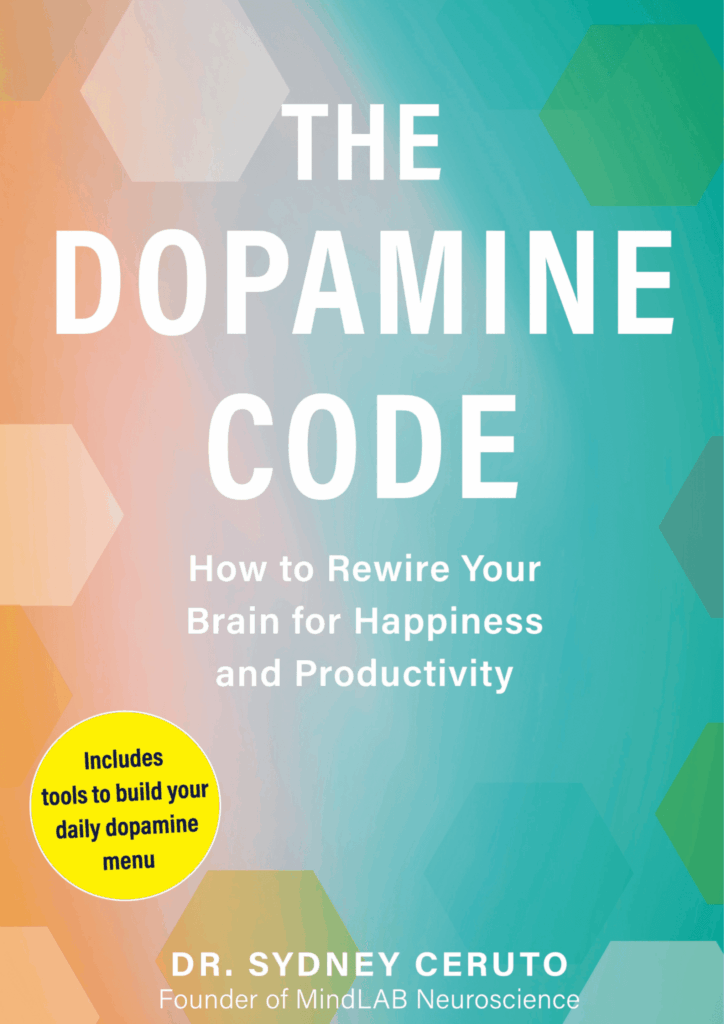
For a comprehensive framework on managing the dopamine system’s role in sustained motivation and satisfaction, including the architecture of reward system recalibration, the full science is covered in my book The Dopamine Code (Simon & Schuster, June 2026).
How Does Dopamine Affect Sexual Desire in Long-Term Partnerships?
Sexual desire follows the same dopamine trajectory as romantic intensity generally, declining as prediction error diminishes and the partner becomes a reliably predicted stimulus. This is not pathological. The partner has not become less attractive. The brain has completed its prediction model and is allocating less anticipatory neurochemistry accordingly.
I work with couples who interpret this decline as incompatibility when the actual mechanism is reward prediction completion. The intervention targets the neurochemical environment: introducing genuine novelty into the sexual relationship, maintaining physical intimacy through non-sexual touch (which sustains oxytocin), and understanding that desire in long-term relationships is more responsive than spontaneous, activated by context rather than arising unprompted. These adjustments work within the natural constraints of the dopamine system rather than against them.
This article is part of MindLAB’s Intimacy & Bonding hub, within the Relationship Intelligence pillar.
Understand Your Relationship Dopamine Architecture
Why do I lose interest in partners once they become available?
This pattern, intense pursuit followed by rapid disinterest once the partner commits, maps to a dopamine system calibrated for prediction error rather than sustained reward. When the partner is uncertain, prediction error is high and dopamine output is intense. Once they commit, prediction error collapses and the motivational signal drops. You interpret the neurochemical decline as lost interest. The pattern typically traces to early attachment environments where love was unpredictable, calibrating the reward system to equate uncertainty with value. Recalibrating requires working at the neural level during the moments when the impulse to withdraw fires.
Does dopamine explain why people cheat in otherwise happy relationships?
Dopamine drives novelty-seeking, and a new romantic interest produces massive prediction error: everything about them is unknown, uncertain, and therefore neurochemically intense. An affair generates the dopamine spike that a stable relationship, by architectural design, cannot sustain at the same amplitude. This does not excuse infidelity, but it explains the neurological pull. The person does not necessarily want to leave their partner. Their dopamine system has encountered a stimulus that generates the prediction error signal their long-term relationship no longer produces. Understanding this mechanism creates the possibility of intervention before the impulse becomes action.
How long does the dopamine “high” of a new relationship last?
The intense dopamine-driven phase of romantic attraction typically persists 12 to 18 months, though the range extends from as few as 3 months to as many as 36, depending on the degree of ongoing prediction error. Relationships with higher uncertainty sustain the dopamine phase longer, which is why the most neurochemically intense relationships are often the most unstable. When the dopamine phase concludes, the relationship either transitions successfully to oxytocin-mediated attachment or deteriorates as both partners interpret the neurochemical shift as diminishing love.
Can understanding dopamine actually change my relationship patterns?
Understanding the mechanism is necessary but not sufficient. Intellectual knowledge creates a cognitive override: a pause between the dopamine impulse and the behavioral response. But the impulse itself is generated subcortically, below the reach of conscious reasoning. In my practice, I use Real-Time Neuroplasticity™ to intervene during the live moments when the old pattern activates: when the available partner feels boring, when the unavailable one feels magnetic, when the impulse to withdraw from stability fires. Those moments are when the architecture is most plastic and most responsive to restructuring. The combination of understanding and neural-level intervention produces pattern changes that neither alone can achieve.
Is it possible to feel the “new relationship” dopamine again with a long-term partner?
Partially. You cannot replicate the full prediction error of encountering a completely unknown person with someone you know deeply. But you can re-engage the dopamine system through genuine shared novelty: new experiences, environments, physical challenges, and intellectual exploration. The dopamine will not match the early-relationship amplitude because substantial prediction error has been resolved. But it can be meaningfully reactivated, and when combined with the deep oxytocin bond of sustained attachment, the result is a relational experience that is different from new-relationship intensity, and, in my observation, substantially more satisfying.
References
- Acevedo BP, Aron A, Fisher HE, Brown LL (2012). Neural correlates of long-term intense romantic love. Social Cognitive and Affective Neuroscience.
- Walum H, Young LJ (2018). The neural mechanisms and circuitry of the pair bond. Nature Reviews Neuroscience.
- Fisher HE, Xu X, Aron A, Brown LL (2016). Intense, Passionate, Romantic Love: A Natural Addiction? How the Fields That Investigate Romance and Substance Abuse Can Inform Each Other. Frontiers in Psychology.
- Acevedo BP, Poulin MJ, Collins NL, Brown LL (2020). After the Honeymoon: Neural and Genetic Correlates of Romantic Love in Newlywed Marriages. Frontiers in Psychology. doi.org
- Feldman R (2017). The Neurobiology of Human Attachments. Trends in Cognitive Sciences. doi.org
If you recognize the patterns described here, attraction to unpredictability, loss of interest after commitment, or mistaking neurochemical intensity for emotional depth, a strategy call maps your specific reward architecture and attachment conditioning in one conversation. I identify which dopamine patterns are driving the cycle and what a targeted intervention looks like for your situation.
From Reading to Rewiring
Understand the neuroscience. Apply it to your life. Work directly with Dr. Sydney Ceruto to build a personalized strategy.
Schedule Your Strategy Call