
Key Takeaways
- The OFC evaluates social consequences of actions; when it hypoactivates, anticipating relational damage mid-argument fails
- The DLPFC holds the other person’s perspective in working memory; when it fails, empathy vanishes
- This dual-deficit compounds under emotional load, producing nonlinear impulse-control collapse disproportionate to the trigger
- Standard cognitive assessments miss the deficit: they test neutral conditions where both systems function normally
- Fronto-limbic imbalance, not poor character or effort, drives escalation that high-conflict individuals cannot voluntarily interrupt
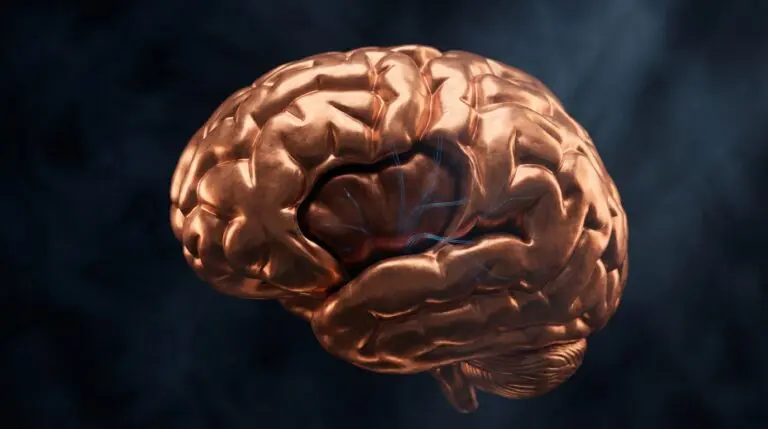
The prefrontal cortex contains two distinct braking systems, the orbitofrontal cortex (OFC) and the dorsolateral prefrontal cortex (DLPFC), that work together to regulate impulse during interpersonal conflict. When both systems hypoactivate simultaneously under emotional load, the result is a compound failure in top-down inhibitory control that standard cognitive assessments cannot detect.
Why can’t high-conflict people stop themselves in the middle of an argument?
High-conflict individuals cannot stop mid-argument because their prefrontal braking system experiences a compound failure under emotional load: the OFC stops calculating social consequences while the DLPFC simultaneously loses its grip on perspective-taking, and this dual collapse removes the neural infrastructure required to interrupt escalation before it becomes destructive. For the mechanism behind this, see the neuroscience of narcissist brain.
In my practice, I consistently observe a pattern that confounds the people closest to these individuals. A partner will describe someone who is thoughtful, measured, and considerate in every other context, but who transforms during disagreements into someone unrecognizable. The shift is not gradual. It is as if a circuit breaker trips the moment genuine emotional stakes enter the conversation.
What makes the dual-deficit model different from simple anger?
The distinction matters because anger is an emotional state; what I am describing is a structural deficit in prefrontal regulation. Simple anger activates the amygdala and raises arousal, but in most people, the prefrontal cortex compensates by maintaining inhibitory control. The OFC continues to calculate that saying a devastating thing will damage the relationship. The DLPFC continues to hold the other person’s emotional state in working memory.
What neuroimaging reveals about simultaneous failure
In high-conflict individuals, both systems fail simultaneously. Wang et al. synthesized 325 neuroimaging experiments involving over 16,000 participants and identified consistent hypoactivation in the lateral orbitofrontal cortex and anterior cingulate cortex during escalated aggression: precisely the regions responsible for evaluating social consequences and monitoring behavioral errors.
What does the dual-deficit look like in practice?
What the research doesn’t capture is the lived experience of this deficit. A young professional came to me describing her partner’s behavior during arguments: “He says things that would end friendships, damage careers: things no rational person would say out loud. And five minutes later, he genuinely doesn’t understand why I’m upset. It’s not an act. He looks confused.” That confusion is revealing: it is the signature of the dual-deficit. The prefrontal cortex conflict impulse control system was offline during the escalation. When it comes back online, the individual has no experiential memory of why they said what they said, because the evaluation system that would have flagged those words was not functioning.
“The confusion afterward is not performance: it is the signature of a prefrontal system that was genuinely offline during the escalation.”
What part of the brain controls impulse during conflict?
Two prefrontal regions share responsibility for impulse control during interpersonal conflict (the orbitofrontal cortex evaluates social consequences in real time, while the dorsolateral prefrontal cortex maintains the other person’s perspective in working memory) and their coordinated failure produces the escalation pattern that characterizes high-conflict behavior.
The OFC: social consequence evaluation
The orbitofrontal cortex operates as a real-time cost-benefit calculator for social behavior. Before you say something harsh, the OFC runs a rapid simulation: what will this statement cost me relationally? Will this person forgive this? Is the short-term relief of saying this worth the long-term damage? In individuals with intact OFC function, this calculation happens automatically and invisibly: they “decide” not to say the devastating thing without consciously deliberating.
When OFC function diminishes under emotional load, this calculation stops. The individual loses access to the neural system that anticipates relational consequences. They are not choosing to ignore consequences. The system that would present those consequences for consideration has gone quiet.
The DLPFC: perspective maintenance under pressure
The dorsolateral prefrontal cortex serves a different but complementary function: it holds the other person’s emotional and cognitive state in active working memory. During a disagreement, the DLPFC allows you to simultaneously argue your position while tracking how the other person is receiving it. When the DLPFC hypoactivates, this dual-track processing collapses into single-track. The individual can only process their own emotional state. The other person’s pain, fear, or confusion becomes invisible, not because of narcissism, but because the working memory system that would hold that information has shut down. This perspective-taking collapse under pressure is distinct from the broader emotional intelligence gap that high-achievers experience: in conflict, the failure is not a skill deficit but a hardware shutdown.
The ACC: error detection that fails to signal
The anterior cingulate cortex (ACC) functions as a conflict monitoring system: it detects the mismatch between what you intended to do and what you are actually doing. In healthy prefrontal function, the ACC fires when behavior deviates from goals: you wanted a productive conversation, but you are now yelling. That error signal triggers corrective action. When the ACC underperforms alongside the OFC and DLPFC, even this last-chance error detection fails. The individual has no internal signal that their behavior has deviated from their own intentions.
Is poor impulse control during arguments a brain problem?
Poor impulse control during arguments reflects a measurable fronto-limbic imbalance: the prefrontal regulatory system fails to suppress limbic activation specifically under emotional load, creating an emotion-contingent deficit that appears exclusively during interpersonal conflict while remaining invisible under neutral testing conditions.
This is the finding that changes everything about how we understand high-conflict behavior. The deficit is not global. It is conditional. A person with this pattern will pass every standard executive function assessment (the Wisconsin Card Sorting Test, the Stroop Task, the Tower of London) because these assessments are administered under calm, neutral conditions where the prefrontal cortex functions normally.
Why standard assessments miss the real deficit
The standard protocol recommends neuropsychological testing under controlled conditions. In 26 years of practice, I’ve found that this approach systematically misses the population I work with most frequently. The individual sitting across from the neuropsychologist demonstrates perfectly intact executive function. Their inhibitory control scores normal. Their working memory scores normal. Their cognitive flexibility scores normal.
Then they go home and say something so destructive during an argument that it takes weeks to repair, if it can be repaired at all.
Reactive versus proactive impulse control
The distinction between reactive and proactive impulse control explains this paradox. Proactive impulse control, the kind measured by standard tests, involves suppressing a prepotent response in a calm, low-stakes environment. Reactive impulse control, the kind that fails during conflict, involves suppressing a response while the limbic system is actively flooding the prefrontal cortex with threat signals. These are different neural operations, and testing one tells you nothing about the other.
How does the emotion-contingent deficit appear in relationships?
A spouse described this pattern to me with devastating clarity: “Every professional who has evaluated him says he’s fine: high IQ, no deficits, no red flags. But the moment we argue about something that actually matters, it is as if a completely different person takes over. He cannot hear me. He cannot stop himself. And afterward, he is genuinely bewildered by what he said.” That bewilderment is telling. It confirms that the prefrontal evaluation system was not merely overridden: it was absent.
Silbersweig et al. demonstrated through fMRI that individuals with high-conflict behavioral patterns show significant ventromedial prefrontal cortex dysfunction specifically during emotional processing tasks, while showing normal activation during neutral cognitive tasks. The deficit is real. It is measurable. And it only appears when emotional stakes are present.
“Every standard assessment says they are fine. The deficit only surfaces when genuine emotional stakes enter the conversation, which is precisely when it matters most.”
How does prefrontal cortex damage affect personality and conflict behavior?
Prefrontal cortex structural changes, including cortical thinning and reduced gray matter volume in the OFC, correlate directly with increased impulsivity and altered personality presentation during interpersonal stress, creating behavioral patterns that worsen progressively rather than remaining stable over time. This pattern is examined in the brain science of histrionic personality disorder relationships.
Structure is only half of the picture. How the prefrontal cortex functions under pressure matters just as much, and it is not theoretical. In a systematic review of impulse control across borderline personality disorder and ADHD, the two conditions most defined by impulsivity, Sebastian et al. documented a shared signature of prefrontal dysfunction: the inhibitory circuitry that should apply the brakes shows disturbed activity when it is called on to hold a response back. In the people who most struggle to stop themselves during conflict, the brain’s braking system does not engage the way it should.
When personality shifts signal structural change
What concerns me most in practice is the progressive nature of this pattern. A parent will describe an adult child whose personality has shifted over years, becoming more reactive, more impulsive in arguments, less capable of the self-regulation they once demonstrated. Standard cognitive assessments show nothing. The individual functions well professionally. But the family system absorbs escalating conflict that follows no rational pattern.
This progressive quality distinguishes the prefrontal cortex personality pattern from temporary emotional dysregulation. The OFC gray matter changes I am describing are structural: they reflect actual changes in cortical architecture. These are not bad days or stress responses. They represent a prefrontal braking system that has physically degraded, either through chronic stress exposure, developmental factors, or the neuroplastic consequences of years of unregulated emotional escalation.
The compounding cycle: failed impulse → relational damage → chronic stress → further cortical erosion
Each unregulated conflict episode generates a stress surge that further degrades the prefrontal architecture responsible for preventing the next episode. The individual is not simply failing to control impulses: they are actively eroding the neural hardware that would allow them to control impulses in the future. This is the compounding cycle that makes intervention timing critical.
The individual who shows conflict escalation driven by reward circuitry compounds their vulnerability when the prefrontal braking system simultaneously degrades. And for those whose amygdala threat calibration was recalibrated by early adversity, the combination of heightened bottom-up threat signaling with weakened top-down inhibitory control creates the behavioral pattern that appears most intractable in practice.
In 26 years, the pattern I find most actionable is this: the deficit is accessible for change only during the live emotional moment when it surfaces. The prefrontal failure that cannot be detected under calm conditions cannot be rewired under calm conditions either. Real-Time Neuroplasticity™ targets the exact window when the fronto-limbic imbalance is active, because that is the only moment when the faulty circuit is exposed and therefore available for restructuring.
References
Wang, L., Li, T., Gu, R., & Feng, C. (2024). Large-scale meta-analyses and network analyses of neural substrates underlying human escalated aggression. NeuroImage, 299, 120824. https://doi.org/10.1016/j.neuroimage.2024.120824
Silbersweig, D., Clarkin, J. F., Goldstein, M., et al. (2007). Failure of frontolimbic inhibitory function in the context of negative emotion in borderline personality disorder. American Journal of Psychiatry, 164(12), 1832–1841. https://doi.org/10.1176/appi.ajp.2007.06010126
Sebastian, A., Jung, P., Krause-Utz, A., et al. (2014). Frontal dysfunctions of impulse control: A systematic review in borderline personality disorder and attention-deficit/hyperactivity disorder. Frontiers in Human Neuroscience, 8, 698. https://doi.org/10.3389/fnhum.2014.00698
Blair, R. J. R. (2010). Neuroimaging of psychopathy and antisocial behavior: A targeted review. Current Psychiatry Reports, 12(1), 76–82. https://doi.org/10.1007/s11920-009-0086-x
Coccaro, E. F., Sripada, C. S., Yanowitch, R. N., & Phan, K. L. (2011). Corticolimbic function in impulsive aggressive behavior. Biological Psychiatry, 69(12), 1153–1159. https://doi.org/10.1016/j.biopsych.2011.02.032
What Does the First Conversation Look Like?
When someone reaches out about a partner, a family member, or themselves, describing a pattern where impulse control vanishes during conflict despite functioning normally everywhere else, the first conversation is about mapping the deficit precisely. I listen for the signatures: the bewilderment afterward, the contrast between calm competence and emotional collapse, the progressive worsening that no assessment has captured. Within the first conversation, we identify whether the pattern reflects an OFC evaluation failure, a DLPFC perspective-taking collapse, or the compound dual-deficit that makes standard approaches ineffective. From there, Real-Time Neuroplasticity™ targets the live moments when the prefrontal failure actually occurs, because the circuit that cannot be found under calm conditions cannot be rewired under calm conditions either.
Can someone have normal intelligence but poor impulse control only during arguments?
The prefrontal cortex impulse control system operates differently under emotional load than under neutral conditions, making it possible to score normally on every standard cognitive assessment while experiencing complete regulatory failure during interpersonal conflict. This emotion-contingent deficit reflects selective hypoactivation of the OFC and DLPFC: regions that function adequately during calm testing but fail when genuine emotional stakes activate the limbic system. Standard neuropsychological testing cannot detect this pattern because it does not replicate the emotional conditions that trigger the failure.
What is the orbitofrontal cortex’s role in controlling behavior during conflict?
The orbitofrontal cortex functions as a real-time social consequence calculator that simulates the relational cost of an action before it occurs, allowing individuals to suppress destructive statements by anticipating their impact. During emotional conflict, OFC hypoactivation eliminates this anticipatory function: the individual loses access to the neural system that would present consequences for consideration. Without the OFC’s cost-benefit computation running in the background, destructive words are released without the millisecond-level evaluation that would normally prevent them from being spoken.
Why does impulse control get worse over time in high-conflict relationships?
Each unregulated conflict episode generates a stress surge that accelerates prefrontal cortical thinning, progressively degrading the neural hardware responsible for impulse regulation and creating a compounding cycle of structural erosion. The OFC gray matter reduction and DLPFC hypoactivation worsen with repeated exposure to unmanaged emotional stress. This is not habituation or emotional exhaustion: it is measurable structural change in the prefrontal cortex that reduces the brain’s capacity to apply braking force during subsequent conflicts.
Is there a difference between reactive and proactive impulse control in the brain?
Proactive impulse control involves suppressing a prepotent response under calm conditions and relies on prefrontal circuits that function normally in most individuals, while reactive impulse control requires suppressing responses during active limbic flooding and depends on circuits that selectively fail under emotional load. Standard cognitive assessments measure proactive control exclusively, which is why individuals with reactive impulse control deficits consistently pass neuropsychological testing. The two processes engage overlapping but distinct neural pathways: performing well on one provides no guarantee of the other.
How does the anterior cingulate cortex contribute to conflict escalation?
The anterior cingulate cortex monitors the mismatch between behavioral intentions and actual behavior, functioning as an error-detection system that signals when actions deviate from goals during interpersonal interaction. When the ACC underperforms alongside the OFC and DLPFC, this error-detection fails: the individual receives no internal signal that their behavior has departed from their own intentions. The absence of this conflict-monitoring signal explains why high-conflict individuals often report genuine surprise at their own escalation, as if the behavior occurred without their awareness or consent.
Related: high-conflict personalities hub · relationship intelligence pillar.