
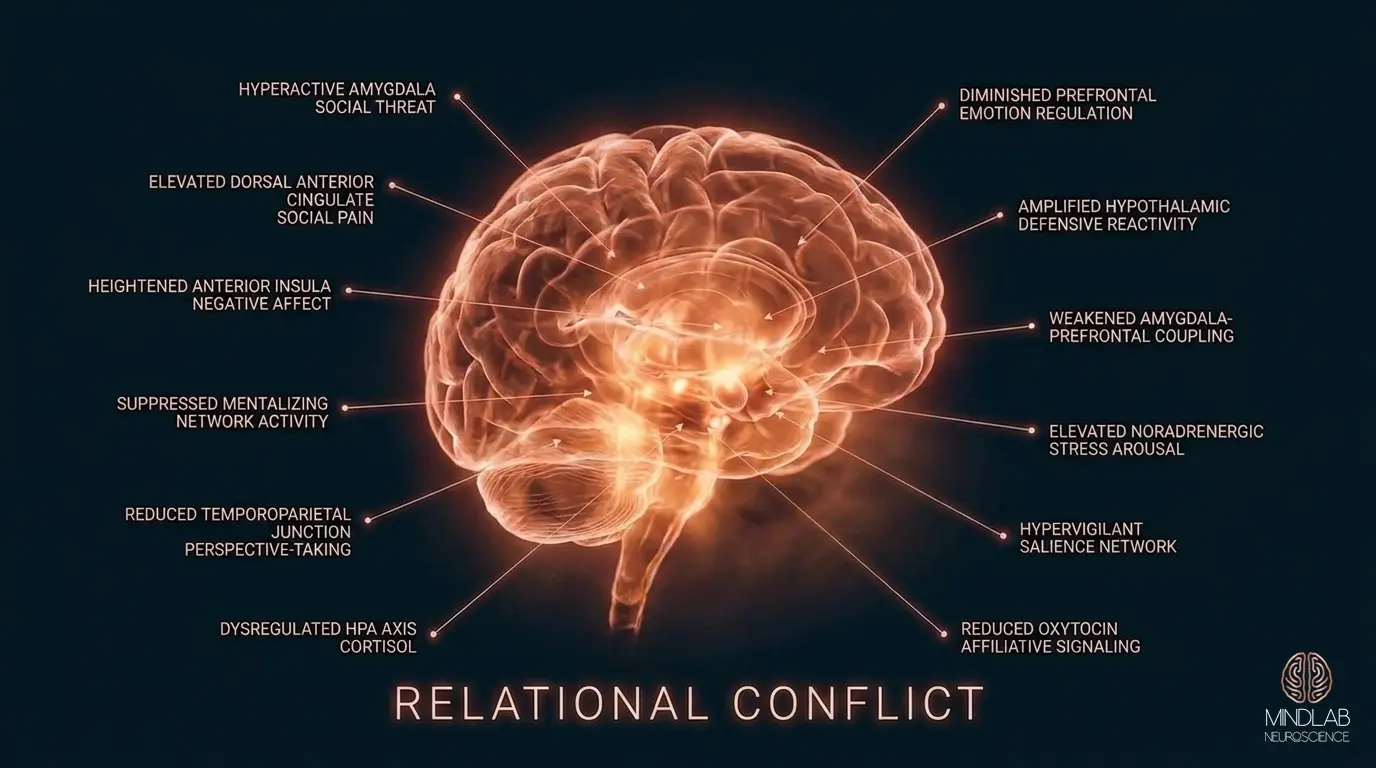
During conflict, the brain deactivates shared-processing circuits while selectively engaging perspective-taking regions. The hyperscanning evidence.
Read article : Brain Sync Loss in Conflict | MindLAB NeuroscienceRelational Conflict
7 articlesLatest Articles
Narcissistic behavior maps to a measurable salience-network switching failure, not a character choice. A neuroscientist explains the brain mechanism behind...
Read article : Narcissism and the Salience Network | MindLAB NeuroscienceLow-activity MAO-A alleles reduce serotonin availability in the prefrontal cortex, weakening the neural brake on impulsive aggression during conflict.
Read article : Serotonin, MAO-A, and the Genetics of Conflict EscalationThe prefrontal cortex braking system fails under emotional load: OFC and DLPFC hypoactivation explains why impulse control collapses during conflict.
Read article : Prefrontal Cortex Deficits in High-Conflict PersonalitiesAmygdala sensitization from early adversity recalibrates threat detection, creating conflict patterns that persist into adulthood. The neuroscience of why.
Read article : Amygdala Sensitization in High-Conflict AdultsChronic conflict triggers sustained cortisol that shrinks the hippocampus and rewires white matter to hardwire threat circuits. Structural neuroscience.
Read article : Cortisol Cascade in Chronic Conflict: How Sustained Stress Hormones Physically Reshape the High-Conflict BrainConflict activates the same dopamine reward circuitry that drives substance dependence. The ventral tegmental area fires anticipatory signals before an...
Read article : Conflict Addiction: Dopamine Reward Circuitry