Key Takeaways
- Early love is a ventral tegmental area dopamine state; its fading is normal, not failure.
- Lasting love migrates to oxytocin, vasopressin, and ventromedial prefrontal cortex circuitry: a quieter companionate bond.
- Two nervous systems co-regulate; conflict triggers amygdala flooding; repairing rupture, not avoiding it, builds earned security.
- Trusted partners dampen threat response (social baseline theory); chronic tension inverts that buffer into stress.
- The self-expansion model shows partners come to represent each other using the brain’s self-representation circuitry.
- Neuroplasticity that entrenches patterns can re-cut them: a richer year-twenty partnership is structural, not sentimental.
For couples who have been together a long time, a quiet worry tends to surface: the early electricity has faded, and they wonder whether something has gone wrong. The reassuring answer from neuroscience is that nothing has gone wrong at all. The brain that falls in love is not built to stay in that state, and the brain that stays in love is running a different, more durable program. Understanding the shift from one to the other changes how a long partnership feels from the inside.
Why the Spark Fades: The Passionate-to-Companionate Shift
Early romantic love is, neurologically, a high-arousal reward state. Brain-imaging research on people in the first months of romance shows heightened activity in the ventral tegmental area, a dopamine-rich hub deep in the midbrain that drives motivation, wanting, and goal-pursuit. The dopaminergic surge that accompanies a new partner is closely related to the brain’s response to novelty and reward in general. It narrows attention onto one person, floods the system with energy and focus, and can feel almost compulsive. It is also, by design, metabolically expensive and time-limited. No brain sustains that level of arousal indefinitely, and it was never meant to.
What replaces it is not a lesser thing. Over months and years, the neural signature of love migrates from the high-octane reward circuitry toward systems associated with deep attachment and calm: pathways involving oxytocin and vasopressin signaling, the ventromedial prefrontal cortex, and circuits that register safety and familiarity rather than novelty. Researchers describe the early state as passionate love and the later state as companionate love. The companionate brain is quieter, steadier, and in many ways more sophisticated. It is the difference between the charge of a stranger and the deep settling of the nervous system that happens in the presence of someone the brain has filed as safe.
This matters because couples often misread the fading of the early surge as the fading of love itself. More accurately, love changes its address in the brain. The chemistry of desire and bonding that powers both phases is a rich subject in its own right; the neurobiology of intimacy and bonding covers that ground in depth. Here the focus is the long arc: what a committed partnership becomes over years, and why that arc has a logic worth trusting.
Two Nervous Systems in One Relationship: Conflict and Co-Regulation
A long partnership is not two stable people occasionally interacting. It is two nervous systems that have learned to read and influence each other continuously, often below the level of awareness. This is most visible in conflict, and it is most powerful in repair.
When a disagreement turns sharp, the brain’s threat-detection machinery engages. The amygdala flags the moment as dangerous, the sympathetic branch of the nervous system mobilizes, heart rate climbs, and the prefrontal regions that handle perspective-taking and careful reasoning lose bandwidth. Relationship researchers call the saturated version of this state flooding: the point at which a partner is too physiologically aroused to listen, reason, or take in new information. Words spoken from a flooded state rarely land as intended, because the listening brain has narrowed to self-protection.
The counterforce is co-regulation. Human beings are wired to borrow calm from one another. A steady voice, an unhurried tone, a softened face, or a hand on the arm can engage the parasympathetic system and lift vagal tone, the activity of the vagus nerve that slows the heart and signals the body back toward safety. In a healthy partnership, one settled nervous system helps down-regulate the other. The capacity to do this is not a personality trait; it is a learnable physiological skill, and it is the quiet engine underneath couples who fight and recover well.
Repair is where the neuroscience becomes most encouraging. In my practice, the couples who endure are rarely the ones who argue least; they are the ones whose repairs are most reliable. No partnership avoids rupture: the brief breaks in connection that conflict, distraction, and ordinary friction produce. What distinguishes durable couples is not the absence of rupture but the reliability of repair: the return to attunement after a break. Each completed cycle of rupture and repair teaches both nervous systems that the bond can survive strain. Over time this builds something like earned security: a felt confidence, encoded in the brain’s threat and reward systems, that the relationship is a safe place to be imperfect.
The Relational Brain as a Stress Buffer
One of the most striking findings in relationship neuroscience is how directly a partner’s presence changes the brain’s response to stress. In studies using functional brain imaging, people anticipating a mild unpleasant stimulus showed markedly less activation in threat-related regions when holding the hand of a partner than when facing the same threat alone, and the calming effect was strongest in the most securely bonded couples. The brain regards a trusted partner almost as an extension of its own coping resources.
This is the heart of what researchers call social baseline theory. The human brain, the theory holds, does not assume it is facing the world alone. It expects proximity to others and quietly offloads part of the work of regulating effort, emotion, and risk onto trusted relationships. By that logic, a stable partnership is not merely pleasant: it is metabolically efficient. The brain spends less of its own energy on vigilance because it expects a reliable other to share the load. A securely partnered brain is, in a real sense, a more economical brain.
The implication runs in both directions. When a partnership is steady, it functions as a buffer that softens the cortisol load of daily stress and lets each person operate from a calmer baseline. When a partnership is chronically tense, the buffer inverts: the relationship itself becomes a recurring source of threat signaling, and the constant low-grade activation wears on attention, mood, sleep, and health. This is why long-term strain in a marriage is rarely just an emotional matter. It is a physiological one. Learning to recognize and regulate these states is closely tied to emotional intelligence, the capacity to notice what the body is doing before it hijacks the conversation.
How the Brain Rewires Around a Partner
Staying together changes the brain structurally, not just emotionally. The neuroscientist Arthur Aron and colleagues developed the self-expansion model, which describes how, in a close relationship, the boundary between self and other becomes neurologically blurred. The brain begins to represent a long-term partner using some of the same circuitry it uses to represent the self. A partner’s goals, perspectives, and resources are gradually incorporated into one’s own sense of identity. This overlap is part of why the loss of a long partnership feels like losing a piece of oneself, because in the brain’s map, it is.
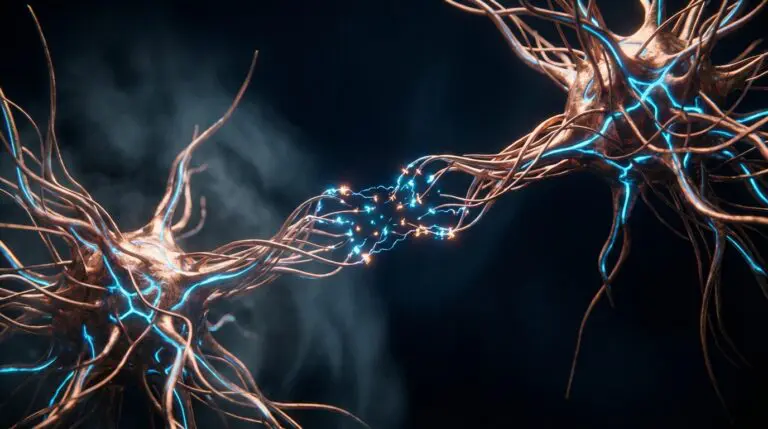
This is neuroplasticity at work in the most intimate domain. The brain is not fixed; it continually reshapes its connections around the experiences and relationships that recur. Years of shared meals, shared decisions, shared crises, and shared ordinary mornings lay down patterns that become the default architecture of two intertwined lives. The same plasticity that builds those patterns is what makes them changeable. Partnerships that have drifted into corrosive cycles (the reflexive criticism, the predictable flare and withdrawal) are running well-worn neural grooves, but grooves can be re-cut. Repeated, deliberate new responses gradually reshape the circuitry, and the relationship’s habitual patterns can be relearned.
None of this is automatic, and none of it is guaranteed. Plasticity is neutral; it entrenches whatever is practiced. A partnership left on autopilot tends to deepen whatever grooves already exist, for better or worse. A partnership approached with attention can lay down new ones. The science does not promise that any two people will thrive together, but it does establish something foundational: the long-term brain is built to bond deeply, to regulate alongside a trusted other, and to keep changing. The capacity for a richer partnership at year twenty than at year one is not sentimental. It is structural.
What This Means for a Long Partnership
Seen through neuroscience, a lasting marriage is less a single feeling to be preserved and more a set of nervous-system patterns that can be understood and shaped. The early dopaminergic rush gives way to a steadier attachment system. Conflict is a threat response that can be met with co-regulation. Stress is a load that a stable bond helps carry. And the whole arrangement is plastic, capable of being rebuilt long after the first spark has settled into something deeper. Couples who grasp this stop mourning the loss of an early state and start working with the durable one they actually have. MindLAB’s neuroscience-based programs apply these mechanisms (threat regulation, co-regulation, and the deliberate reshaping of entrenched patterns) to the specifics of an individual life.
This article explains the neuroscience underlying relationships and marriage. For personalized neurological assessment and intervention, contact MindLAB Neuroscience directly.
If you want to understand the patterns shaping your own relationship and how to work with them, you can schedule a strategy call with MindLAB to work directly with Dr. Sydney Ceruto.
Does losing the early spark mean a relationship is failing?
No. The intense early phase of romance is driven by high activity in the brain’s dopamine-rich reward circuitry, and that state is metabolically expensive and naturally time-limited. As a relationship matures, its neural signature shifts toward attachment and safety systems involving oxytocin, vasopressin, and the ventromedial prefrontal cortex. The spark is not lost so much as transformed into a steadier, more durable form of bonding.
What is happening in the brain during a couple’s argument?
During heated conflict, the amygdala flags the moment as a threat and the sympathetic nervous system mobilizes, raising heart rate and reducing access to the prefrontal regions that handle reasoning and perspective-taking. At high intensity this becomes flooding, a state in which a partner is too physiologically aroused to listen or absorb new information. Recognizing flooding helps explain why pausing to let the nervous system settle is often more productive than pressing on.
How do partners calm each other’s nervous systems?
Humans are wired to co-regulate, to borrow calm from one another. A steady voice, a softened expression, or physical touch can engage the parasympathetic system and raise vagal tone, the vagus-nerve activity that slows the heart and signals safety. In a secure partnership, one settled nervous system helps down-regulate the other, which is part of why repair after conflict restores not just the mood but the underlying physiology.
Can a long-term relationship actually reduce stress?
Yes. Brain-imaging research shows that the presence of a trusted partner dampens activation in threat-related brain regions, an effect strongest in securely bonded couples. Social baseline theory holds that the brain expects proximity to others and offloads part of the work of regulating stress onto trusted relationships, making a stable bond metabolically efficient. A chronically tense relationship, by contrast, can invert this buffer and become a recurring source of stress signaling.
Is it possible to rebuild a relationship after years of negative patterns?
The brain remains plastic throughout life, continually reshaping its connections around what is repeated. Entrenched relationship patterns are well-worn neural grooves, but grooves can be re-cut through deliberate, repeated new responses. The self-expansion model shows how deeply two long-term partners’ neural representations intertwine, and that same plasticity is what allows habitual patterns to be relearned. Change is not automatic, but the underlying capacity is real and structural.
References
- Aron, A., Fisher, H., Mashek, D. J., Strong, G., Li, H., and Brown, L. L. (2005). Reward, motivation, and emotion systems associated with early-stage intense romantic love. Journal of Neurophysiology, 94(1), 327-337. https://doi.org/10.1152/jn.00838.2004
- Coan, J. A., Schaefer, H. S., and Davidson, R. J. (2006). Lending a hand: social regulation of the neural response to threat. Psychological Science, 17(12), 1032-1039. https://doi.org/10.1111/j.1467-9280.2006.01832.x
- Coan, J. A., and Sbarra, D. A. (2015). Social baseline theory: the social regulation of risk and effort. Current Opinion in Psychology, 1, 87-91. https://doi.org/10.1016/j.copsyc.2014.12.021
- Aron, A., Aron, E. N., Tudor, M., and Nelson, G. (1991). Close relationships as including other in the self. Journal of Personality and Social Psychology, 60(2), 241-253. https://doi.org/10.1037/0022-3514.60.2.241
The same neuroplasticity that entrenches corrosive patterns can re-cut them, which is why the capacity for a richer partnership at year twenty than at year one is structural, not sentimental.