Key Takeaways
- Dopamine drives anticipation, pursuit, and reward prediction, not pleasure: the opioid system mediates that.
- Dopamine imbalance varies: depression blunts anticipation; anxiety, threat-reward conflict; ADHD, inconsistent regulation; addiction, receptor downregulation.
- Generic “boost your dopamine” advice often worsens the condition because it ignores which circuit failed.
- Anhedonia, the inability to generate motivational signal to pursue reward, is dopamine’s most significant signature.
- Dopamine-system neuroplasticity makes patterns changeable, but intervention must match the specific disruption, not dopamine generically.
Dopamine and Mental Health: What Your Reward System Is Actually Telling You
Your dopamine system is not broken. It is miscalibrated, and the distinction determines whether intervention works or fails. In 26 years of working with individuals whose dopamine mental health signals resisted standard approaches, I have found that the single most common error is treating dopamine as a volume knob: too high or too low. The clinical reality is that dopamine operates as a circuit, and the point in the circuit where disruption occurs determines the signal, the behavioral expression, and the intervention that will actually produce change.
Depression, anxiety, ADHD-pattern attention, and addiction all involve specific disruptions to the dopamine system, but each operates through a different architectural failure within the brain’s cognitive and reward architecture. Two people may both have “dopamine problems,” yet the nature of those problems and the required interventions are fundamentally different. Understanding dopamine mental health at the circuit level separates precision from guesswork.
How Dopamine Actually Works: Beyond the “Happiness Chemical” Myth
Dopamine functions as a motivational signal, not a happiness chemical: a distinction neuroscience has established across decades of receptor-mapping research. Dopamine drives anticipation and reward prediction; opioid receptors in the brain’s hedonic hotspots generate pleasure itself, while serotonin and oxytocin circuits mediate satisfaction through entirely separate pathways. Conflating these systems produces clinically misguided interventions. For a deeper look, see what the research reveals about dopamine architecture protocol.
What dopamine actually does is generate the signal that bridges the gap between knowing something is rewarding and moving toward it. When you think about calling a friend, the dopamine system generates a mild anticipatory signal, and you pick up the phone. When you consider going for a run, dopamine produces the motivational push that gets you off the couch. The molecule does not produce the enjoyment. It produces the pursuit.
This distinction rewrites everything about dopamine mental health. When a person says “I can’t enjoy anything anymore,” the clinical question is: are they unable to experience pleasure when it arrives (an opioid system problem), or are they unable to generate sufficient motivational signal to pursue the activity in the first place (a dopamine problem)? In my practice, the answer is almost always the latter. The experience circuit is frequently intact. The motivation circuit has failed.
Dopamine Mental Health Across Conditions: Where the Circuit Breaks
Depression and Dopamine: The Initiation Failure
Depression disrupts dopamine through blunted anticipatory reward signaling, not a global dopamine deficit. The ventral tegmental area produces insufficient dopamine in response to reward-predicting cues. Michael Treadway and David Zald demonstrated that depressed individuals show reduced effort-based motivation for rewards: the arrival of reward remains intact, but the anticipatory pursuit signal fails.
The result is not sadness. The result is anhedonia: the inability to feel motivated toward activities that previously generated interest. I see this distinction sharply in my practice. A client describes knowing that exercise would help, that calling a friend would feel good, that starting the project would produce satisfaction, and being completely unable to initiate any of these actions. The problem is not that reward does not feel good when experienced. The problem is that the dopamine bridge between knowing and doing has collapsed.
This has direct practical implications. Telling a depressed person to “do things that make you happy” targets the wrong part of the circuit. The intervention needs to address initiation, not experience.
Anxiety and Dopamine: When Threat Overrides Reward
Anxiety disrupts dopamine-driven reward pursuit by activating competing threat-detection circuitry. The amygdala drives the stress response, elevating cortisol, which chronically suppresses dopaminergic anticipatory signals in the nucleus accumbens. Anxious individuals retain goal awareness but cannot initiate approach behavior because amygdala hyperactivity, documented in many generalized anxiety cases, overrides mesolimbic reward processing before motivated action begins.
This override is consistent across anxiety subtypes. I work with clients who describe this precisely: “I know what I want. I can see it clearly. And I cannot move toward it.” Their dopamine system is functional: the wanting signal exists. But the amygdala’s threat signal drowns it before it can produce action. Every approach attempt triggers a defensive cascade that converts motivation into avoidance. The dopamine mental health failure in anxiety is not insufficient dopamine. It is dopamine being overridden by a louder system.
ADHD and Dopamine: The Calibration Problem
ADHD disrupts dopamine calibration, not dopamine volume. The dopamine system underproduces neurotransmitter signaling during routine, low-stimulation tasks and overproduces during novel, high-stimulation activities: a dysregulation pattern found across many ADHD presentations. This mismatch drives hyperfocus on novel tasks while blocking engagement with routine demands, independent of attention capacity itself.
Compulsive Behavior and Dopamine: The Prediction Error Trap
Compulsive behaviors hijack the brain’s dopamine prediction error system by exploiting variable reinforcement schedules, which generate stronger and more sustained dopamine surges than predictable rewards. Because the brain cannot form an accurate reward model, dopamine-driven wanting signals remain chronically elevated, decoupled from actual satisfaction, making behavioral cessation neurologically difficult even when pleasure has disappeared entirely.
This variable reinforcement loop is the primary mechanism sustaining compulsive engagement despite diminishing subjective reward.
Addiction and Dopamine: Receptor-Level Recalibration
Addiction downregulates D2 dopamine receptors, structurally reducing the brain’s sensitivity to reward signals. Neuroimaging studies show chronic substance users exhibit fewer D2 receptors in the striatum. This recalibration forces the dopamine system to require progressively higher stimulation thresholds, rendering natural rewards (social connection, movement, creative engagement) insufficient to generate adequate motivational response.
Dopamine Imbalance: What the Term Actually Means
| Condition | Dopamine Circuit Disruption | Primary Behavioral Expression | What Intervention Must Target |
|---|---|---|---|
| Depression | Blunted anticipatory signaling from VTA | Anhedonia: cannot initiate pursuit of known rewards | Rebuild initiation architecture through environmental scaffolding |
| Anxiety | Threat system (amygdala) overriding reward system | Avoidance despite clear identification of desired goals | Reduce threat signal dominance to allow dopamine-driven pursuit |
| ADHD | Inconsistent signal regulation across task types | Engagement varies by novelty rather than importance | Calibrate motivational output to task significance |
| Addiction | D2 receptor downregulation | Natural rewards feel neurochemically insufficient | Receptor sensitivity restoration through sustained recalibration |
| Compulsive behavior | Prediction error exploitation via variable reinforcement | Cannot stop despite diminishing satisfaction | Disrupt the variable reinforcement loop that sustains wanting |
The term “dopamine imbalance” is clinically useful only if it specifies where in the circuit the imbalance occurs. “Your dopamine is imbalanced” without circuit-level specificity is like saying “your car has an engine problem” without identifying whether the issue is fuel delivery, ignition, compression, or exhaust. The professional evaluation is technically accurate and practically useless.
Why “Boost Your Dopamine” Advice Usually Makes Things Worse
Popular dopamine-boosting strategies (cold showers, supplements, and social media detoxes) fail to correct the specific prefrontal-limbic circuit disruptions that drive disordered activation patterns. Generic dopamine interventions often miss the targeted neural mechanisms involved in clinically significant motivation and reward dysregulation, making symptom-level advice not only ineffective but potentially counterproductive.
Consider the person with depression-related anhedonia. Their dopamine system is underproducing anticipatory signals. The advice to exercise is sound at a molecular level: exercise does increase dopamine output. But the person cannot initiate exercise because the anticipatory signal that should motivate movement toward the gym is precisely what is blunted. You are asking the broken system to repair itself through the mechanism that is broken.
Consider the person with ADHD told to practice “dopamine fasting” by reducing stimulation. Their dopamine system already underproduces for routine stimulation. Reducing stimulation further creates profound under-engagement that is neurologically aversive. What the ADHD brain requires is not less stimulation but better-calibrated stimulation: novelty attached to important tasks, reward signals structured closer to effort, and environmental architecture that externalizes the executive function the dopamine system is not consistently providing.
In my practice, I consistently observe that clients who have tried generic dopamine interventions arrive more frustrated than those who tried nothing, because they did the “right things” and the neural signatures persisted or worsened. The failure was not effort. It was precision. A circuit-level problem requires a circuit-level intervention.
Anhedonia: The Most Important Dopamine Mental Health Signal
Anhedonia, the diminished capacity to anticipate pleasure or feel motivated toward reward, functions as the most clinically significant dopamine dysregulation marker across psychiatric conditions. Research identifies anhedonia in a substantial proportion of major depressive disorder cases and links it directly to reduced nucleus accumbens dopamine signaling, making accurate identification critical for effective intervention.
Most people who experience anhedonia describe it as “not being able to enjoy things.” The more precise description is that the brain’s anticipatory reward signal has become insufficient to motivate pursuit. When the activity is actually engaged (when someone manages to start exercising, accepts a social invitation, or begins a creative project) the experience is often more positive than the anhedonic state predicted. The deficit is not in the capacity for pleasure. It is in the motivational signal that should drive the person toward the activity.
I describe this to clients as the Motivation Gap: the distance between identifying a rewarding activity and actually initiating it. In neurotypical reward function, dopamine bridges this gap automatically. In anhedonic states, the gap widens until it becomes functionally impassable. The person can identify the activity, can remember enjoying it, may even intellectually understand it would help, and cannot move toward it.
“Anhedonia is not the inability to feel pleasure. It is the inability to generate sufficient anticipatory signal to pursue it. The experience circuit is often intact. The motivation circuit is the one that has failed.”
The intervention I use operates through what I call Dopamine Scaffolding: structurally reducing the initiation cost of rewarding activities until the dopamine system can begin generating its own anticipatory signal. Three layers working together. Environmental design lowers the barrier: running shoes by the door, guitar on a stand, not in its case. Social architecture externalizes the motivation: committing to a walk with a friend whose expectation you do not want to disappoint. Micro-dosing the activity collapses the initiation scale: five minutes of movement, not thirty.
I have observed this progression repeatedly. A client arrives unable to initiate physical activity. We start with environmental scaffolding. The first week produces minimal subjective improvement. By week three, the brain’s prediction error system has registered that the five-minute walk produces an outcome exceeding its blunted expectation. By week six, the impulse to move returns on its own. The scaffolding worked not by providing motivation but by reducing the initiation threshold until the dopamine system could restart its own anticipatory function.
How Chronic Stress Degrades the Dopamine System
Sustained stress directly degrades dopamine function through a mechanism that is well-documented but underappreciated in practice. Chronic stress, amplified by cortisol, suppresses dopamine production in the ventral tegmental area. More significantly, it reduces dopamine receptor density in the prefrontal cortex: the region responsible for goal-directed behavior and impulse regulation.
Research by Amy Arnsten at Yale documented that even moderate chronic stress impairs prefrontal function through catecholamine dysregulation, including dopamine, producing deficits in working memory, attention regulation, and decision-making functionally similar to ADHD presentations. This is not metaphor. Chronic stress literally produces the attentional and motivational indicators associated with dopamine system disruption.
In my observation, the most common pathway to dopamine mental health disruption is not genetic, pharmacological, or trauma-based. Though individual genetic dopamine profiles determine vulnerability thresholds, the most common pathway is environmental: It is environmental: sustained operation in high-cortisol conditions (demanding careers without recovery periods, unresolved relational conflict, chronic sleep restriction, persistent financial pressure) gradually degrades the dopamine system’s capacity to generate adequate motivational signals. The person notices declining motivation and engagement, attributes these changes to aging or burnout, and does not recognize that the dopamine system has been structurally altered by the chronic stress environment.
Dopamine Levels and the Daily Rhythm of Mental Health
Dopamine levels follow a circadian architecture. Morning cortisol peaks support dopamine-mediated alertness and motivation. By afternoon, both decline. For individuals whose dopamine system is already running at marginal capacity, the afternoon drop produces the familiar collapse: motivation evaporates, irritability rises, emotional reactivity increases.
The neurological implication is that dopamine mental health is not static across the day. The same person can feel motivated and emotionally regulated at 9 AM and functionally anhedonic at 3 PM, not because their circumstances changed, but because their neurochemistry shifted. Aligning behavioral architecture with this rhythm (protecting morning dopamine for consequential work, using physical movement to bridge the afternoon decline, reducing high-prediction-error inputs during vulnerable windows) produces meaningful improvement without any pharmacological intervention.
Can the Dopamine System Be Rehabilitated?
Yes. The dopamine system is subject to neuroplasticity. The circuits altered by chronic stress, addiction, or prolonged depression can be structurally rebuilt through sustained, targeted intervention. What separates effective intervention from well-intentioned failure is whether it targets the correct point in the circuit.
The approach I use through Real-Time Neuroplasticity™ intervenes at the moment the dopamine system fails: when the anticipatory signal should fire but does not, when the threat system overrides the reward system, when the compulsive loop begins. That moment is when the architecture is most plastic. Between episodes, the circuits are stable and resistant to change. During the live failure, they are open to restructuring.
The rehabilitation timeline I observe: measurable improvements in motivational signaling within 4-6 weeks of sustained intervention. Substantial circuit recalibration over 8-12 weeks. This is a biological timeline reflecting receptor upregulation rates and synaptic plasticity, not a motivational estimate.
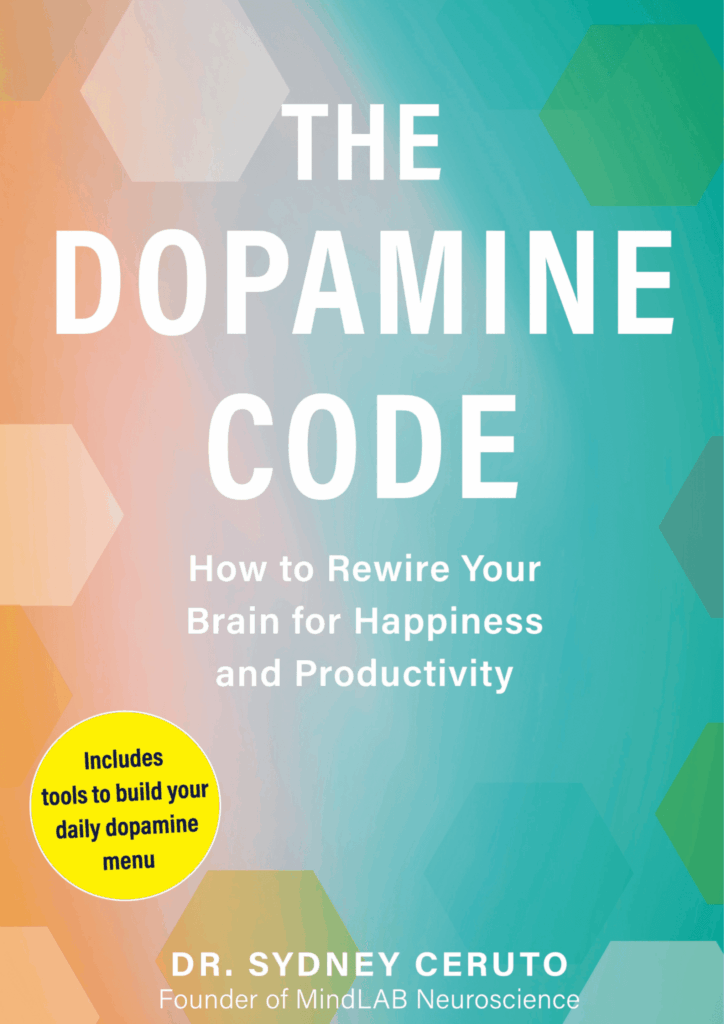
For the complete framework on dopamine system rehabilitation and reward architecture recalibration, the full science is covered in my book The Dopamine Code (Simon & Schuster, June 2026).
Map Your Dopamine Architecture
Dopamine architecture refers to the individualized pattern of dopaminergic circuit function that determines how motivation, reward anticipation, and goal-directed behavior operate across the prefrontal cortex, striatum, and ventral tegmental area. When shaped by adverse experience, the relationship between dopamine disruption and trauma becomes central. Disruptions in these circuits underlie persistent anhedonia and motivation deficits that resist standard approaches.
For a deeper exploration of how your brain’s reward architecture shapes every decision you make, explore optimizing dopamine pathways for emotional resilience and clarity.
Emotional stability depends on more than mindset: it depends on neurochemical consistency. Learn more about how dopamine fluctuations drive unexpected emotional shifts.
Is low dopamine the cause of depression?
No: “low dopamine” oversimplifies the mechanism. Depression involves blunted anticipatory reward signaling, not a global reduction. The ventral tegmental area underproduces dopamine in response to reward-predicting cues, producing anhedonia: the inability to feel motivated. Reward experience itself may remain intact. Framing depression as purely a dopamine problem leads to interventions that miss the circuit-specific disruption entirely.
Can you naturally restore dopamine function without medication?
For mild to moderate dopamine disruption, behavioral interventions produce meaningful restoration. Regular physical exercise increases dopamine receptor density. Sleep optimization restores normal dopamine cycling. Structured reward exposure rebuilds anticipatory signaling. Stress reduction lowers cortisol’s suppressive effect on dopamine production. Severe dysregulation, particularly in addiction or major depressive episodes, requires professional circuit mapping and sustained restructuring. The mechanism is changeable; precision required depends on severity.
Why does my motivation disappear in the afternoon?
Dopamine follows a circadian rhythm tied to cortisol cycling. Cortisol peaks in early morning, supporting dopamine-mediated alertness and motivation; as cortisol declines in the afternoon, dopamine production follows. For those with marginal dopamine capacity (due to chronic stress, sleep restriction, or subclinical depressive states) this afternoon drop falls below the threshold needed to sustain motivation. Structural fixes: schedule demanding work in the morning and use movement or novelty exposure to bridge the gap.
How long does it take to reset a disrupted dopamine system?
The timeline depends on the specific disruption. Mild reward system habituation from high-stimulation lifestyle factors can improve within 2-4 weeks of sustained behavioral change. Moderate dopamine dysregulation from chronic stress or mild depression typically requires 6-12 weeks of targeted intervention for meaningful circuit recalibration. Severe disruption from addiction or major depressive episodes may require 3-6 months, often with professional support. These are biological timelines reflecting receptor upregulation rates and synaptic plasticity, not motivational estimates.
What is the difference between dopamine imbalance and a mood disorder?
Dopamine imbalance describes a specific neurochemical disruption: measurable alterations in how the dopamine system generates, transmits, or receives motivational signals. A mood disorder is a clinical pattern of symptoms persisting over time and impairing function. Dopamine disruption can contribute to a mood disorder, but mood disorders involve broader dysregulation across serotonin, norepinephrine, cortisol, and inflammatory markers. Someone can have dopamine disruption without meeting mood disorder criteria.
References
- Schultz, W., Dayan, P., and Montague, P. R. (1997). A neural substrate of prediction and reward. Science, 275(5306), 1593-1599. https://doi.org/10.1126/science.275.5306.1593
- Berridge, K. C., and Robinson, T. E. (1998). What is the role of dopamine in reward: Hedonic impact, reward learning, or incentive salience? Brain Research Reviews, 28(3), 309-369. https://doi.org/10.1016/S0165-0173(98)00019-8
- Volkow, N. D., Wise, R. A., and Baler, R. (2017). The dopamine motive system: Implications for drug and food addiction. Nature Reviews Neuroscience, 18(12), 741-752. https://doi.org/10.1038/nrn.2017.130
- Wise, R. A. (2004). Dopamine, learning and motivation. Nature Reviews Neuroscience, 5(6), 483-494. https://doi.org/10.1038/nrn1406
- McEwen, B. S. (2007). Physiology and neurobiology of stress and adaptation: Central role of the brain. Physiological Reviews, 87(3), 873-904. https://doi.org/10.1152/physrev.00041.2006
- Arnsten, A. F. T. (2009). Stress signalling pathways that impair prefrontal cortex structure and function. Nature Reviews Neuroscience, 10(6), 410-422. https://doi.org/10.1038/nrn2648
Crisis & mental-health support resources
If you are in crisis or thinking about harming yourself, support is available right now.
- 988 Suicide & Crisis Lifeline: call or text 988 (24/7, free, confidential).
- Crisis Text Line: text HOME to 741741.
- If you are in immediate danger, call 911 or go to your nearest emergency room.
From Reading to Rewiring
Schedule Your Strategy Call