Dopamine & Motivation in Greenwich, CT

When the drive that built everything quietly stops working, the problem is neurological. Dr. Ceruto restores it at the source.

Dopamine is the molecular currency of motivation. It determines whether you pursue a goal, sustain effort toward it, and experience satisfaction when you arrive. When this system is functioning correctly, desire translates into action and action translates into reward. When it is dysregulated, the entire chain breaks — and what breaks first is almost never obvious to the person living inside it.

Book a Strategy Call
ForbesUSA TodayHuffPostNewsweekAssociated PressCosmopolitanBusiness InsiderForbesUSA TodayHuffPostNewsweekAssociated PressCosmopolitanBusiness Insider

Reward System Reset

The brain’s reward valuation system has recalibrated its baseline upward — things that once produced genuine satisfaction no longer register. Dr. Ceruto identifies the specific reward architecture maintaining the pattern and restores the system’s capacity to respond to the inputs that actually matter.

Learn more about Reward System Reset in Greenwich, CT →

Motivation Coaching

Motivation is not willpower — it is a dopamine-driven anticipatory signal that tells the brain a goal is worth pursuing. When that signal breaks down, the gap between intention and action becomes structural. Dr. Ceruto works at the level of the motivation architecture itself.

Learn more about Motivation Coaching in Greenwich, CT →

Achievement Anhedonia

The promotion arrives, the goal is reached, the milestone is hit — and the expected satisfaction does not follow. The reward system has learned to code anticipation as rewarding while progressively devaluing arrival. Dr. Ceruto addresses the architecture that makes achievement feel empty.

Learn more about Achievement Anhedonia in Greenwich, CT →

Dopamine Detox Coaching

Chronic exposure to high-dopamine inputs has downregulated the receptor system, requiring increasingly intense stimulation to produce the same signal. A true dopamine detox is not willpower — it is a structured protocol for allowing the system to recalibrate toward baseline sensitivity.

Learn more about Dopamine Detox Coaching in Greenwich, CT →

Digital Overstimulation

Digital platforms exploit the dopamine system’s prediction and reward architecture through variable-ratio reinforcement — the same mechanism behind slot machines. The brain adapts by downregulating sensitivity, degrading the capacity to derive reward from lower-intensity experiences.

Learn more about Digital Overstimulation in Greenwich, CT →

Procrastination & Avoidance

Procrastination is not laziness — it is the brain’s cost-benefit system consistently overweighting effort and underweighting reward. The dopamine signal that should make future reward feel present and motivating is absent, making the immediate discomfort of starting outweigh the distant benefit of finishing.

Learn more about Procrastination & Avoidance in Greenwich, CT →

Pleasure-Pain Rebalancing

The brain’s opponent-process system maintains a pleasure-pain balance — and chronic overstimulation has tipped it toward sustained discomfort as the baseline state. The stimulating input is needed just to feel normal. Dr. Ceruto works at the level of the balance mechanism itself.

Learn more about Pleasure-Pain Rebalancing in Greenwich, CT →

Why Dopamine & Motivation Take a Specific Shape in Greenwich, CT

Greenwich, CT is a natural laboratory for dopaminergic adaptation. The town’s concentration of hedge fund managers, PE principals, and financial executives creates a population whose reward-effort architecture has been calibrated to some of the most intense stimulation patterns available in professional life. The dopaminergic system that processed the first major carry, the first fund launch, the first nine-figure year — that system adapted. It recalibrated its baseline. And the reward signal that once drove extraordinary motivation became the new minimum threshold for engagement.

The motivation collapse that Greenwich professionals experience is not burnout in any conventional sense. It is dopaminergic tolerance — the same neurological mechanism that drives substance tolerance, operating through professional achievement instead of a chemical. The brain that requires a 40% annual return to generate the reward signal that a 15% return once produced is not unmotivated. Its motivation architecture has been structurally altered by its own success. The 53-minute Metro-North travel becomes a stretch of neurological flatness, the prefrontal system unable to generate engagement with tasks that fall below the adapted threshold.

Greenwich’s environmental wealth compounds the architecture. When Back Country estates, Belle Haven waterfront, and every material acquisition have been achieved, the external reward landscape is exhausted. The dopaminergic system that was designed to motivate pursuit has nothing left to pursue at a threshold it can register. Dr. Ceruto’s work maps the specific dopaminergic architecture of high-achievement populations in Greenwich, identifying how the reward-effort system can be neurologically recalibrated — not by lowering standards, but by restructuring the neural pathways through which motivation signals are generated and processed.


Dr. Sydney Ceruto, PhD — Founder, MindLAB Neuroscience

Dr. Sydney Ceruto, PhD — Founder & CEO, MindLAB Neuroscience

Dr. Ceruto holds a PhD in Behavioral & Cognitive Neuroscience from NYU and two Master’s degrees from Yale University. She lectures at the Wharton Executive Development Program at the University of Pennsylvania and has been an Executive Contributor to the Forbes Coaching Council since 2019. Dr. Ceruto is the author of The Dopamine Code (Simon & Schuster, June 2026). She founded MindLAB Neuroscience in 2000 and has spent over 26 years pioneering Real-Time Neuroplasticity™ — a methodology that permanently rewires the neural pathways driving behavior, decisions, and emotional responses.

References

Schultz, W. (2016). Dopamine reward prediction-error signalling: A two-component response. Nature Reviews Neuroscience, 17(3), 183–195. https://doi.org/10.1038/nrn.2015.26

Salamone, J. D., & Correa, M. (2012). The mysterious motivational functions of mesolimbic dopamine. Neuron, 76(3), 470–485. https://doi.org/10.1016/j.neuron.2012.10.021

Hare, T. A., Camerer, C. F., & Rangel, A. (2009). Self-control in decision-making involves modulation of the vmPFC valuation system. Science, 324(5927), 646–648. https://doi.org/10.1126/science.1168450

Success Stories

“Dr. Ceruto is a true professional with massive experience helping people get where they need to be. The important thing for me was understanding my strengths, developing ways to use them, and learning from the pitfalls that kept me from reaching my goals. She broke it all down and simplified the obstacles that had been painful blockers in my career, providing guidance and tools to conquer them. You will learn a lot about yourself and have a partner who works with you every step of the way.”

Michael S. — Real Estate Developer Boca Raton, FL

“Willpower, accountability systems, cutting up cards — none of it worked because none of it addressed what was actually driving the behavior. Dr. Ceruto identified the reward prediction error that had been running my purchasing decisions for over a decade. Once the loop was visible, it lost its power. The compulsion didn't fade — it stopped.”

Priya N. — Fashion Executive New York, NY

“Every metric was green and I felt nothing. Conventional approaches told me I was 'burned out' or needed gratitude practices — none of it touched the actual problem. Dr. Ceruto identified that my dopamine baseline had shifted so high from constant reward-chasing that normal achievement couldn't register anymore. She recalibrated the reward system itself. I didn't need more success. I needed my brain to actually experience the success I already had.”

Rafael G. — Screenwriter New York, NY

“After years of burnout, the dopamine optimization work helped me finally understand and balance my dopamine levels in a way nothing else had. The personalized plan made all the difference — I’m now motivated, focused, and performing at my best without the crashes that used to follow every productive stretch. The science behind this approach is real and the results are measurable. It gave me a daily framework I still rely on to stay consistent, sharp, and fully in control of my energy.”

Larz D. — Tech Founder Palo Alto, CA

“I could perform at the highest level professionally and still feel hijacked emotionally in my closest relationships — and no conventional approach had ever explained why those two realities coexisted. Dr. Ceruto identified the limbic imprint — an amygdala encoding from childhood that was running every intimate interaction I had. She didn't help me understand it better. She dismantled it. The reactivity isn't something I regulate anymore. The pattern that generated it is gone.”

Natasha K. — Art Advisor Beverly Hills, CA

“The dopamine optimization program is unlike anything I’ve tried before. The personalized assessments revealed insights about my brain I’d never considered, and the custom dopamine menu gave me practical, science-backed strategies that actually worked. My motivation and focus have never been higher — and what surprised me most is how sustainable it is, not just a temporary boost you lose after a few weeks. If you’ve tried other approaches and hit a wall, this is the one that finally delivers real, lasting results.”

Gloria F. — Physician Sydney, AU

Frequently Asked Questions About Dopamine and Motivation Optimization

Is dopamine really the brain's motivation chemical, or is that an oversimplification?

Dopamine's role is more precise than popular culture suggests. It is not the pleasure chemical — it is the prediction and motivation chemical. Dopamine neurons fire in response to rewards that exceed prediction, encoding the brain's assessment of which actions and pursuits are worth investing effort in. When this system is miscalibrated, motivation becomes unreliable — not because you lack drive, but because the brain's computation of what deserves drive has become inaccurate.

Can my dopamine system be recalibrated without medication?

Yes. The dopaminergic pathways governing motivation, reward prediction, and temporal discounting respond to targeted neural intervention that leverages neuroplasticity. While medication modulates dopamine availability chemically, Dr. Ceruto's approach restructures the circuits that process and deploy dopamine — producing architectural changes in how the motivation system computes priorities rather than simply providing more neurochemical fuel to unchanged circuits.

Why does my motivation come in intense bursts followed by periods of complete inaction?

Burst-and-crash motivation patterns reflect dopamine system calibration that responds to novelty and urgency rather than planned importance. The brain's reward system provides abundant dopamine for novel, exciting, or crisis-driven activities while generating insufficient drive for sustained, routine execution. This is an architecture pattern, not a discipline failure — the brain is allocating motivation according to its current calibration, not according to your conscious priorities.

How does Dr. Ceruto assess my specific dopamine system function?

The assessment maps your motivation patterns against the known dopaminergic mechanisms — reward prediction accuracy, temporal discounting rate, novelty-seeking calibration, and the relationship between your motivation architecture and your conscious goals. This identifies whether the challenge is insufficient baseline dopamine tone, miscalibrated reward prediction, excessive temporal discounting, or reward system hijacking by maladaptive stimuli.

Can dopamine optimization improve procrastination?

Procrastination is one of the most direct outputs of dopaminergic temporal discounting — the brain assigns disproportionate value to immediate comfort relative to future outcomes. When the temporal discounting rate is recalibrated, the brain's valuation of future rewards increases relative to immediate comfort, producing natural forward momentum toward planned goals without the effortful willpower that conventional anti-procrastination strategies require.

How does screen and social media use affect the dopamine system?

High-frequency digital stimulation — social media notifications, content feeds, messaging apps — provides rapid, variable dopamine hits that recalibrate the reward system toward constant micro-stimulation. Over time, this raises the threshold for what the dopamine system considers rewarding, making sustained effort on lower-stimulation tasks increasingly difficult. Dr. Ceruto addresses this recalibration by restructuring the reward system's sensitivity parameters.

What is the connection between dopamine and The Dopamine Code by Dr. Ceruto?

The Dopamine Code (Simon & Schuster, June 2026) presents the neuroscience of dopamine and motivation in a format accessible to a general audience. The book explores how the dopamine system shapes behavior, decision-making, and life satisfaction, and introduces frameworks for understanding your own neurochemical patterns. Dr. Ceruto's clinical work applies these principles at the individual neural architecture level with precision that a book format cannot provide.

What does the Strategy Call cover for motivation challenges?

The Strategy Call maps your specific dopaminergic architecture — identifying whether the motivation challenge traces to reward prediction errors, temporal discounting miscalibration, novelty-dependence, or reward system hijacking. You leave with a neurological understanding of why your motivation operates the way it does and which specific mechanisms can be targeted for recalibration.

Take the First Step

The Strategy Call is a focused conversation with Dr. Ceruto that maps the specific neural mechanisms driving your concerns and determines the right path forward.

Book a Strategy Call
MindLAB Neuroscience consultation room

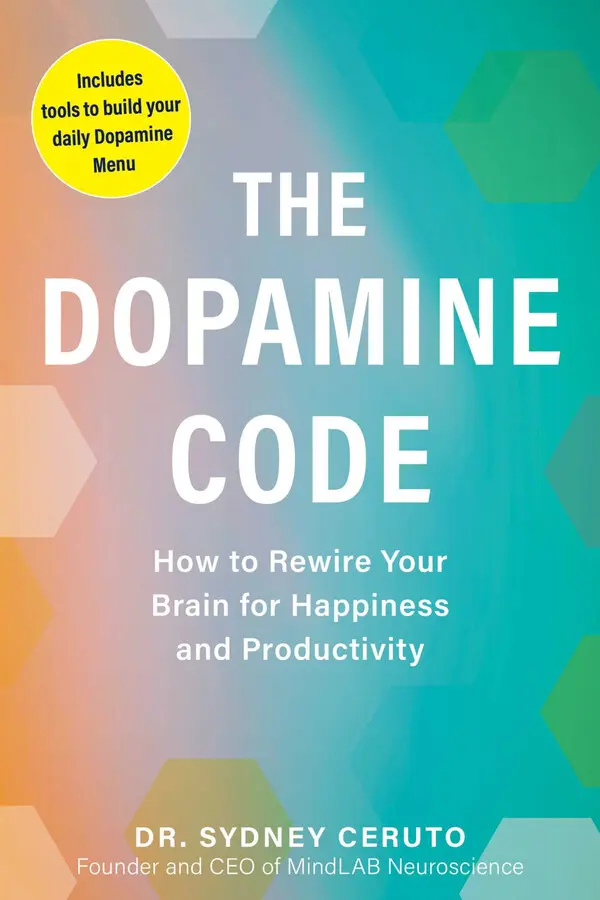
The Dopamine Code

Decode Your Drive

Why Your Brain Rewards the Wrong Things

Your brain's reward system runs every decision, every craving, every crash — and it was never designed for the life you're living. The Dopamine Code is Dr. Ceruto's framework for understanding the architecture behind what drives you, drains you, and keeps you locked in patterns that willpower alone will never fix.

Published by Simon & Schuster, The Dopamine Code is Dr. Ceruto's framework for building your own Dopamine Menu — a personalized system for motivation, focus, and enduring life satisfaction.

Order Now

Ships June 9, 2026

The Dopamine Code by Dr. Sydney Ceruto — Decode Your Drive
Locations

The Intelligence Brief

Neuroscience-backed analysis on how your brain drives what you feel, what you choose, and what you can’t seem to change — direct from Dr. Ceruto.