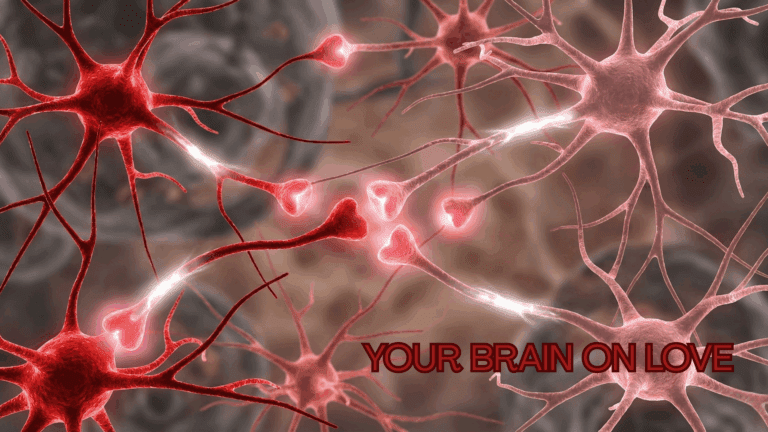
The brain’s painful process of re-mapping attachment. Understand the cognitive impact of loss and how to navigate the neurological adaptation without getting stuck.
The Evolutionary Design
Nature wired you for connection. Your survival once depended entirely on the tribe. When you lose a key member, your brain enters a state of shock. This is not a glitch. It is a heavy recalibration. Your neural map of the world is broken and needs to be redrawn. The pain ensures you pay attention to this critical update. It forces you to slow down and process the change so you can eventually move forward.
The Modern Analogy
The feeling is vast and heavy. Grief is like carrying a deep ocean inside you, where waves can suddenly rise up and knock you over even on a quiet day. You might feel steady one moment. Then, a small memory hits you. Your cortisol spikes. The emotional waters rush in. You lose your footing. It is unpredictable and powerful. It reminds you that your internal landscape has shifted permanently.
The Upgrade Protocol
You cannot drain the ocean. You must learn to swim in it. Do not fight the waves when they rise. Fighting causes panic and drowning. Let the wave hit you. Feel the cold. Then let it pass. It always recedes. With practice, you build endurance. You learn to predict the tides. You turn that heavy water into a source of depth and resilience.
NEUROBIOLOGICAL CONTEXT
Grief is the agonizing process of the brain attempting to reconcile a reality that no longer matches its internal map.
Attachment Mapping: The brain encodes our loved ones as “part of self.” When they are gone, the brain keeps “reaching out” via neural pathways to locate them. When the prediction fails, it triggers a massive stress response (panic/pain).
The Missing Resource: To the primitive brain, the loss of an attachment figure signals a survival threat, similar to withdrawal from a powerful drug.
Grief is a form of learning. The brain must physically re-wire its map of the world to understand “I am here, and they are not.”
Oscillation: Healthy grieving involves oscillating between Loss-Oriented (crying, remembering) and Restoration-Oriented (distraction, new tasks) activities.
Patience: This re-wiring takes substantial metabolic energy, which is why grief is physically exhausting (Grief Brain).

Join my inner circle for exclusive insights and breakthroughs to elevate your life.
Limited Availability
Your Journey to Unparalleled Personal and Professional Growth Starts Here
Limited Availability
A Truly Bespoke, One-on-One Journey with Dr. Sydney Ceruto
Download The Influence Within and discover how small shifts lead to big transformations.