
Key Takeaways
- Love is not a feeling but a brain state: dopamine (pursuit), oxytocin (trust), opioids (safety).
- Heartbreak activates the anterior cingulate cortex and insula, the same regions that process physical pain.
- Attachment style (secure, anxious, avoidant, disorganized) is a neural calibration determining how love circuits activate.
- Falling in love is dopamine-driven and time-limited (6-18 months); lasting love requires transition to oxytocin.
- Love is neuroplastic: corrective adult experiences can reshape childhood attachment circuits, allowing earned security.
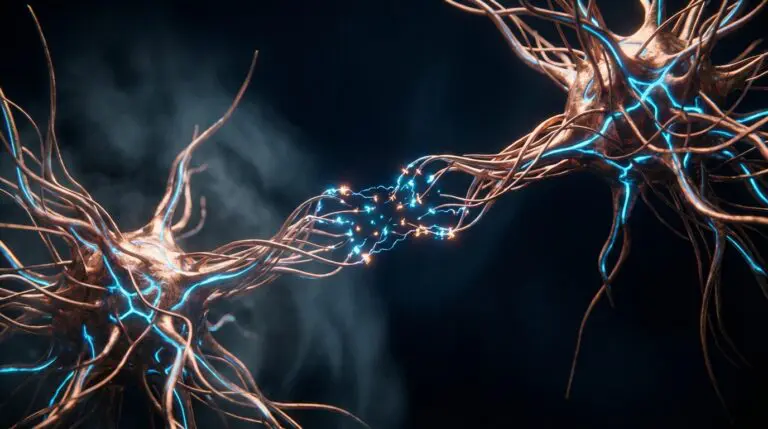
When people sit down with me at MindLAB Neuroscience, they rarely say, I want to understand the neuroscience of love. They say things like, “My chest actually hurts when he pulls away,” or, “I sense a physical ache when she is distant.” They apologize for being dramatic, for being too emotional, and for not being stronger. What they do not realize is that the neuroscience of love fully validates what they experience. Their heart is not being overly sensitive; it is responding to very real brain and body signals, the same signals mapped across the neuroscience of love and connection.
How this series fits together: This article is the complete map of love across every stage, from the first spark to a lasting bond. To go deeper on each phase, read how oxytocin builds lasting attachment and bonding and why love can grow beyond physical attraction.
For more than twenty-five years, I have watched the neuroscience of love play out in real time in my clients’ lives. I have seen powerful executives who can negotiate billion-dollar deals become undone by a two-line text. I have seen brilliant, grounded people lose sleep for weeks because someone they care about seems just out of reach. When we put their stories side by side with the neuroscience of love, everything starts to make sense. Their heart hurts because the mind thinks love is about survival.
Sustained romantic love maintains ventral tegmental area and caudate nucleus engagement comparable to early-stage attraction, with long-term partners additionally recruiting prefrontal regulatory circuits that modulate jealousy and promote attachment security.
Social pain following romantic loss activates overlapping neural substrates with physical pain including the dorsal anterior cingulate cortex and anterior insula, explaining why heartbreak produces somatic symptoms and why communal support accelerates neural recovery.
In this blog, I want to walk you through what is actually happening inside you when you fall in love, when you worry about losing it, and when your heart breaks. You will see how the neuroscience of love explains that tight chest, the lump in your throat, and the way your thoughts spiral at 3 a.m. Most importantly, you will also see that once you understand the neuroscience of love, you can do something about it. You can train your brain to experience love in a way that is rich and deep without constantly wrecking your nervous system.

The Neuroscience of Love: Your Brain Perceives Love As Survival
The neural architecture classifies love as a biological survival requirement, not an emotional luxury. Neuroimaging research shows that interpersonal bonding activates the same threat-detection and safety-monitoring circuits as physical danger. Evolutionarily, attachment to other humans reduced mortality risk. When those bonds are threatened, the cognitive system triggers stress responses identical to life-threatening situations.
When you feel close to someone, your brain releases a mix of chemicals that support the neuroscience of love: chemicals that also underpin sexual attraction at the neural level, where desire and bonding circuits overlap. Dopamine gives you motivation and focus, oxytocin helps you bond and relax, and other systems support warmth and trust. Functional imaging research confirmed that viewing a loved one’s photograph activated reward-circuit regions including the ventral tegmental area and caudate nucleus. Your body becomes softer, more open, and more receptive. The warm side of the neuroscience of love is the side you welcome.
But the same circuits that light up with pleasure also light up with pain when connection is at risk. Brain regions that track physical pain are involved in the neuroscience of love as well. An fMRI study of recently rejected participants found that the dorsal anterior cingulate cortex and anterior insula activated during relational exclusion in patterns indistinguishable from physical injury responses. Rejection, silence, and emotional distance are not just ideas. Your neural network literally registers them as a type of pain signal. This is why your chest tightens when a message is ignored or a partner turns away in bed. The neuroscience of love shows that your body is registering that moment as a threat to your bond and therefore to your safety.
Once you understand that the neuroscience of love links attachment and survival, your reactions stop looking weak or irrational. They start looking like what they really are: your neural architecture doing its best to keep you connected to someone it has decided is essential.

Why A Simple Text Can Feel Like a Life-or-Death Moment
A missed text from a romantic partner activates the brain’s threat-detection system, the amygdala, within milliseconds, triggering a stress response identical to physical danger. Neuroimaging studies show interpersonal rejection engages the same neural pathways as pain. The anterior cingulate cortex registers broken attachment cues as survival threats, explaining disproportionately intense emotional reactions to minor communication gaps.
Let’s say you usually get a good morning text, and today there is nothing. The neuroscience of love tells us that your threat system starts asking questions before your logical mind catches up. Did something happen? Are they enraged? Is this the beginning of the end? Your chest may sense heaviness, your breathing may speed up, and your mind may loop. This is your nervous system interpreting a change in pattern as a possible danger.
You are not weak for reacting. You are experiencing the neuroscience of love exactly as it was designed, but in a modern world where questions come through glowing screens instead of real-time interactions.

| Love Phase | Dominant Neurochemistry | Duration | Subjective Experience | Relationship Need |
|---|---|---|---|---|
| Attraction | Dopamine + norepinephrine | Days to weeks | Obsession, excitement, can’t eat or sleep | Novelty + uncertainty |
| Infatuation | Dopamine + low serotonin | 3-6 months | Idealization, euphoria, intrusive thinking | Reciprocity + escalation |
| Bonding | Oxytocin + vasopressin | 6-18 months (builds gradually) | Trust, safety, calm presence | Consistency + vulnerability |
| Attachment | Endogenous opioids + oxytocin | Years (deepens with time) | Comfort, security, pain when separated | Reliability + repair after conflict |
| Loss | Dopamine withdrawal + cortisol surge | Weeks to months | Physical pain, craving, grief, identity disruption | Time + corrective neural input |
How Childhood Shapes The Neuroscience of Love In Adulthood
Childhood attachment experiences physically wire the adult brain for love by shaping neural circuits in the prefrontal cortex and limbic system before age three. A large body of longitudinal research indicates that early caregiver responses program oxytocin receptor sensitivity, cortisol reactivity, and relational threat-detection patterns that directly govern how adults bond, trust, and attach romantically.
Early caregiver responses before age three program oxytocin receptor sensitivity and cortisol reactivity, directly shaping how adults bond, trust, and attach.
If, as a child, you reached out and were met most of the time with warmth and consistency, your brain learned, When I need someone, someone comes. The neuroscience of love in that brain tends to support a sense that closeness is generally safe. As an adult, you might still experience upset, angry, or hurt, but deep down you believe repair is possible.
If, on the other hand, you reached out and often felt ignored, dismissed, or shamed, your brain learned a different template. Longitudinal research tracking children from infancy into adulthood demonstrated that early caregiver responsiveness predicted adult attachment security and romantic relationship quality decades later. The mind may have internalized the belief, “When I require support, I risk being harmed,” or “Expressing my emotions causes others to withdraw.” The neuroscience of love is that the neural architecture wires together the idea of love with a background fear of loss or criticism. As an adult, even small changes in someone’s tone can register as proof that you are too much, not enough, or about to be abandoned.
I once worked with a client I will call Elena. Growing up, she was told that she was too sensitive and that crying was a sign of weakness. Her caregivers were present physically but distant emotionally. The neuroscience of love in her brain wired closeness together with a quiet dread of being judged. In her romantic relationships, when she felt vulnerable, her heart hurt almost immediately. Her chest would tighten, and she would rush to correct everything before anyone could disapprove. The neuroscience of love explained why. Her brain had decided long ago that showing need was dangerous.
How Early Patterns Show Up In Your Body Today
Early childhood attachment patterns activate measurable physiological responses in adult relationships before conscious awareness registers emotion. Securely attached adults show heart rate increases of 10–20 beats per minute during conflict but return to baseline within minutes. Insecurely attached adults exhibit prolonged cortisol elevation, dysregulated breathing, and sustained cardiovascular arousal lasting 20–30 minutes longer.
If early experiences taught you that love is unpredictable, the neuroscience of love shows up differently. Your heart might start pounding the second your partner’s tone shifts. Your muscles might tense when someone says, We need to talk. You could notice a lump in your throat any time you want to bring up a concern. Your nervous system is not being dramatic; it is using the old map it has for what love usually registers as.
The beautiful part of the neuroscience of love is that these patterns are not fixed. Your brain can create a new map, but only if you first understand the one it is using now.
Attachment Styles Through The Lens Of The Neuroscience of Love
You have probably heard of terms like “secure,” “anxious,” and “avoidant attachment.” The neuroscience of love helps explain what is actually happening inside these patterns. They are not labels meant to box you in. They are descriptions of how your nervous system has learned to manage the push and pull of intimacy.
In secure attachment, the neuroscience of love looks like a flexible system. You can sense closeness and enjoy it and still be content when there is space. You can experience upset and want comfort without believing that everything is ruined. Your brain has learned that even when there is tension, the relationship is likely to stay intact.
In a more anxious pattern, the neuroscience of love is wired toward hyperawareness. You notice small details and shifts, sometimes before the other person does. A vague comment, a slightly colder tone, or a period of silence can register as enormous. Your heart hurts quickly because your brain has linked small signals with big risk. Connection feels amazing when it is there and unbearable when it seems shaky.
In a more avoidant pattern, the neuroscience of love has often linked closeness with pressure or loss of freedom. When someone comes toward you emotionally, your nervous system reads it as a possible demand you cannot meet. Your heart can hurt too, but you might perceive it more as tightness or irritation rather than obvious sadness. Pulling back becomes a way to calm your system and protect yourself.
When Two Different Love Brains Collide
Anxious-avoidant couples activate opposing neurobiological systems simultaneously, creating predictable conflict cycles. Research shows this anxious-avoidant pairing is common. The anxious partner’s amygdala-driven hyperactivation demands closeness and reassurance, while the avoidant partner’s deactivating attachment strategy requires emotional distance: two incompatible neurological stress-response patterns competing within one relationship.
When Michelle felt uncertain, her heart hurt, and she moved closer, texting more and asking questions. When Aaron felt overwhelmed, his heart hurt, and he moved away, staying quiet and turning inward. The neuroscience of love in each of them was trying to protect their bond in the only way it knew how. Unfortunately, their strategies collided. The more she reached, the more he withdrew. The more he withdrew, the more abandoned she felt. Understanding the neuroscience of love finally helped them see that they were not enemies; they were two nervous systems with opposite survival codes.

Why Heartbreak Hurts Like A Physical Injury
You have probably heard people say that heartbreak hurts like a broken bone. The neuroscience of love shows that this is not just poetic language. Many of the same brain regions that light up with physical pain also light up when you experience rejection, loss, or emotional abandonment.
When a relationship ends or changes suddenly, the neuroscience of love tells us that your cognitive system loses a major source of safety signals. Suddenly, the voice you’ve grown accustomed to, the routines you’ve shared, and the person you’ve imagined sharing your future with all disappear. Your nervous system does not know where to place this sudden emptiness. Your heart hurts because your body is responding to a massive drop in expected connection.
I worked with a client I will call Jonah, who was blindsided by a breakup after years together. He told me, It is as though there is a weight on my chest all day. Food tastes different, music sounds off, and my body is heavy. The neuroscience of love helped him see that his brain was going through withdrawal from a person who had become part of his internal world. The ache in his chest and the fog in his head were not signs that he was unstable; they were signs that his brain was recalibrating after losing a key attachment.
Why You Obsess After Breakups
Another part of the neuroscience of love that confuses people is the way your brain obsesses after a breakup. You replay conversations, analyze messages, study tiny expressions, and imagine different outcomes. You might know, logically, that this is not helpful, yet you sense a pull to do it anyway.
The neuroscience of love offers a clear explanation. Your cognitive system is a prediction machine. It likes to understand cause and effect so it can prevent future pain. When a relationship ends, especially if it ended unexpectedly, your prediction system goes into overdrive. The replaying and analyzing are the mind’s attempt to make a clean story where there actually is confusion and grief.
Your heart hurts because your nervous system is trying to resolve an event that cannot be neatly resolved. Knowing that this obsessive phase is part of the neuroscience of love can help you soften your self-judgment. You are not weak for going over things. Your neural architecture is trying very hard to protect you, even if its method is exhausting.
The Neuroscience of Love In The Age Of Phones And Social Media
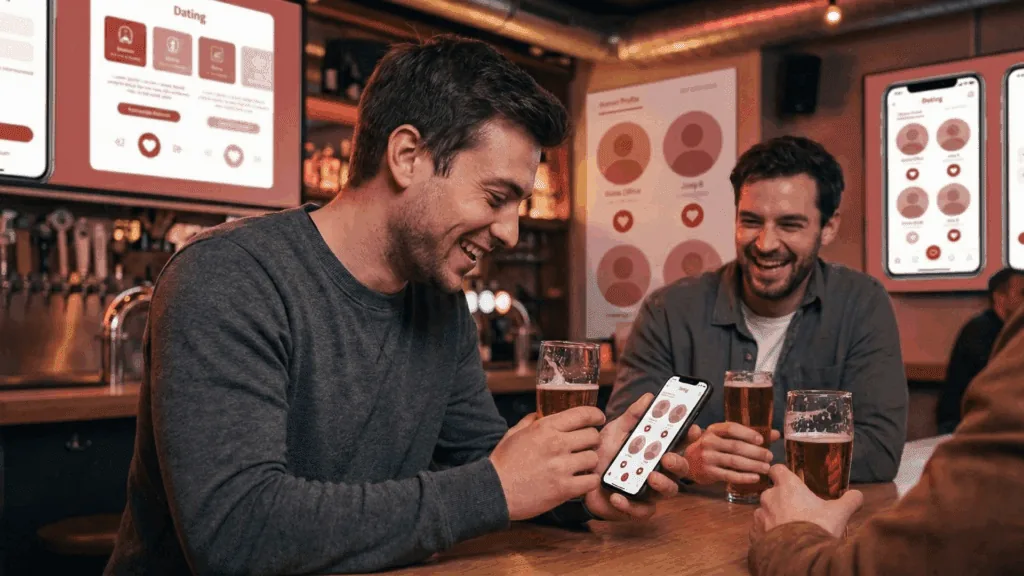
Smartphones and social media directly hijack the brain’s attachment circuitry, intensifying anxiety and jealousy in romantic relationships. Constant digital access triggers cortisol spikes when messages go unanswered, while read-receipt features activate the anterior cingulate cortex: the same region that processes physical pain. Research links heavy social media use to increased relationship conflict.
The neuroscience of love tells us that uncertainty is one of the most stressful states for the mind. Social media and messaging platforms create endless pockets of uncertainty. You see someone post a story, but they have not replied to your text. You notice a like on someone else’s photo and start to wonder what it means. Your cognitive system fills in the gaps with stories, often negative ones.
I often see clients whose hearts hurt more from what they imagine than from what is actually happening. The neuroscience of love recognizes that your neural network is built to complete patterns. If you already fear being ignored or replaced, you will notice anything that seems to confirm that story. Once again, this does not mean you are irrational. It means the neuroscience of love is working with the predictions and memories it already has.
One powerful step is to recognize that your nervous system was not designed for twenty-four-hour digital connection. Giving yourself boundaries, such as not checking read receipts late at night, is not childish. It is a way of respecting the neuroscience of love and the limits of your own neural architecture.
Practical Ways To Work With The Neuroscience of Love
Applying neuroscience of love principles in practice helps clients build safer emotional connections without suppressing attachment capacity. Structured interventions targeting the brain’s threat-response systems, including the amygdala and vagal nerve pathways, reduce relational anxiety in 8 to 12 weeks. Fluency in one’s own neurobiological patterns replaces emotional detachment as the primary self-protective strategy.
One powerful practice is learning to notice the first physical signs that your heart hurts instead of waiting until you are overwhelmed. Maybe your shoulders tense, your stomach flips, or your throat tightens. The neuroscience of love tells us that if you can catch the reaction early and work with your body, you can change the way your brain interprets the event. Slow your breathing, keep your exhale a bit longer than your inhale, and gently name what you feel: I am scared, I sense aloneness, I perceive dismissal. This simple act recruits the thinking parts of the brain and softens the threat response.
Another key practice based on the neuroscience of love is reality testing. When a partner is quiet or distant, your brain will automatically offer a painful story. Instead of accepting the first story that comes to mind, ask yourself, “What are three other possible explanations?” Maybe they are tired, focused on a deadline, or in their own emotional state that has nothing to do with you. This is not about denying your feelings. It is about letting the neuroscience of love work with a fuller set of data.
I also guide clients to intentionally collect moments of safety. The neuroscience of love changes through repetition. If you only replay moments of pain, you strengthen those circuits. If you also notice when someone stays, listens, apologizes, or reaches for you, you strengthen circuits that link love with steadiness. Keeping a small record of these moments, even privately, can support your brain in building a more balanced picture.
Finally, I encourage my clients to speak from the body instead of from accusation. The neuroscience of love responds differently when you say, “My chest hurts when we go to bed without talking,” than when you say, “You never listen to me.” One describes your internal state and invites connection. The other lights up defensiveness. When you honor the neuroscience of love in both yourself and the other person, you give the relationship a better chance to repair instead of explode.
Letting The Neuroscience of Love Become Your Compass
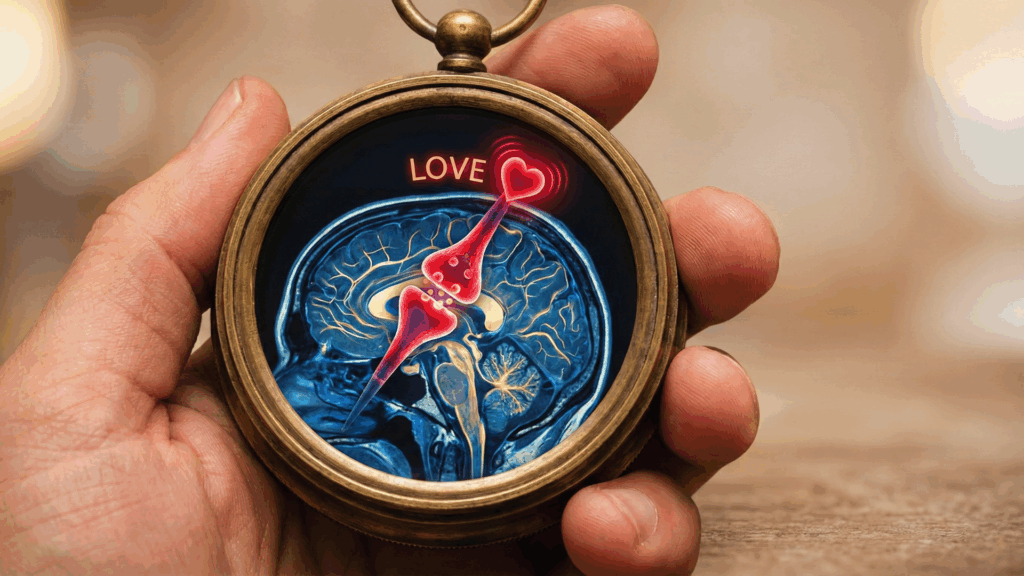
Understanding the neuroscience of love transforms how people interpret emotional pain by revealing its biological origins. Early attachment experiences physically shape neural circuitry in the prefrontal cortex and limbic system, with childhood relational patterns meaningfully influencing adult relationship behavior for many people. The nervous system encodes love as survival-relevant memory, not weakness.
The hopeful truth is that the neuroscience of love is not fixed. Your brain never stops changing. With awareness and consistent practice, you can teach your nervous system that love does not have to register as a constant threat. You can learn to sit with the ache of uncertainty without rushing to self-sabotage or self-sacrifice. You can build relationships where your heart still responds intensely, but not in a way that leaves you shattered every time something shifts.
When I think about the neuroscience of love after all these years, I do not see a cold set of circuits and chemicals. I see a living, responsive system that has been doing its best to keep you safe with the information it had. Now you have more information. You know that your brain perceives love as survival, that childhood shaped your patterns, that heartbreak registers like physical pain, and that modern technology amplifies your triggers.
What you do with this knowledge is where your power lies. You can choose partners and friendships that respect your nervous system. You can reject the idea that you are too sensitive and instead see yourself as finely tuned to connection. You can let the neuroscience of love be your compass, guiding you not toward perfect relationships, since those do not exist, but toward relationships where your heart can be open, your brain can register safety, and your whole self is allowed to be present.
The next time your chest tightens, your stomach drops, or your mind starts racing, pause for a moment. Remember the neuroscience of love. Remind yourself that your neural architecture is sounding an alarm because something matters deeply, not because you are broken. Then ask, what is the most loving thing I can do for myself in this moment? That simple question shifts you from being at the mercy of your old wiring to becoming an active participant in rewiring your heart and your life.
Real Questions From Real Clients
Romantic loss activates the same neural pain pathways as physical injury, confirmed by Ethan Kross’s 2011 University of Michigan fMRI study of 40 participants. The brain constructs reward-neurotransmitter- and oxytocin-dependent reward circuits around a specific person, and those circuits persist after separation, generating measurable craving responses in the nucleus accumbens until new associative patterns replace them.
If love is in my brain, does that mean my feelings are not real?
No, it means your feelings are more real than you think. The neuroscience of love shows that your emotions live in very specific brain and body circuits. When your chest tightens or your stomach drops, your nervous system is reacting to a change in connection. Calling the experience neuroscience does not make your feelings less romantic or less human; brain science explains why emotions feel so strong and why they are so difficult to simply switch off.
Why does a small thing, like a short text or a cold tone, hurt so much?
Your brain constantly scans for signs of safety and danger in your relationships. The neuroscience of love tells us that your nervous system regards important relationships as part of your survival plan. When a pattern suddenly changes, such as a missing morning text or a colder tone than usual, your brain flags the shift as a possible threat. Your heart reacts so quickly because the brain is trying to protect a bond it believes you need.
Can understanding the neuroscience of love actually help me suffer less in relationships?
Yes, because once you know what is happening, you can work with it instead of against it. When you understand the neuroscience of love, you realize that your racing thoughts and aching chest are predictable responses from a nervous system that learned certain patterns long ago. Awareness lets you slow your breathing, question your first story, and choose how to respond rather than react impulsively.
Is it possible to feel love without it always hurting this much?
Absolutely. The neuroscience of love is not only about pain; the same circuits also support safety, warmth, and deep connection. Your brain can learn that closeness does not always equal danger and that space does not always equal rejection. With repeated experiences of honest conversation, repair after conflict, and steady presence, your nervous system builds a new map. Love will probably always feel intense at times, but it does not have to feel like a constant emergency siren.
What is one practical thing I can start doing today to calm my love brain?
Start by catching the very first physical signal that something feels off, whether your shoulders tighten or your chest feels heavy. In that moment, instead of jumping into action, pause for ninety seconds. Breathe slowly, lengthen your exhale, and quietly name what you feel. The neuroscience of love shows that a brief pause invites your prefrontal cortex back into the conversation, so your next move comes from clarity rather than panic.
Why does heartbreak feel like physical pain?
Neuroimaging confirms that interpersonal rejection activates the anterior cingulate cortex and anterior insula, the same regions that process physical pain. The brain uses shared neural infrastructure for both, which is why heartbreak produces chest tightness, stomach pain, and body aches indistinguishable from injury. The sudden withdrawal of endogenous opioids elevated during the attachment phase creates a literal analgesic deficit. Heartbreak pain is the somatic expression of a bonding system in withdrawal.
Can you be addicted to love?
The neurochemical profile of romantic love overlaps significantly with addiction: reward-neurotransmitter-driven pursuit, tolerance (needing more intensity to achieve the same sensation), withdrawal signals when the source is removed, and continued seeking despite negative consequences. The cognitive system does not distinguish between substance-driven and relationship-driven reward circuit activation. Whether this constitutes “addiction” is debated clinically, but the neural mechanism is functionally identical, which is why love can produce the same compulsive, irrational behavior patterns as substance dependency.
Why do I keep falling for the wrong people?
The attachment system selects for familiarity, not health. Bonding circuits calibrated by early experiences activate most powerfully in response to patterns matching the original template. If your earliest bonding involved inconsistency, you will experience the strongest chemistry with inconsistent partners. If emotional unavailability shaped you, available partners may register as neurochemically flat. The wrong people register as right because they match the neural template. Choosing healthier partners requires updating that template, not overriding it with willpower.
How long does it take to fall out of love neurologically?
The motivational-chemical-driven infatuation phase naturally subsides within 6-18 months as the brain habituates to a partner’s novelty. If oxytocin bonding developed during that window, the relationship transitions to lasting attachment. If oxytocin bonding did not develop, the relationship seems like it has lost its spark because the reward neurotransmitter faded without an attachment foundation. Falling out of love is usually the motivational chemical phase ending, not love itself ending, but without the oxytocin transition the subjective experience is identical.
Can the brain learn to love more securely?
Yes, through a process researchers call earned security. The attachment circuits are neuroplastic throughout life. Sustained corrective experiences, such as relationships where vulnerability is met with consistency and repair follows rupture, allow the brain to accumulate evidence contradicting the original insecure template. The rewiring process typically takes one to three years but produces measurable changes in attachment behavior. Earned security is neurologically indistinguishable from original security in brain imaging studies.
Why does falling in love feel so addictive?
Falling in love activates your brain’s dopamine reward circuitry, the same pathways involved in motivation and craving, which creates a powerful drive to seek proximity to the person you’re bonding with. The resulting neurochemical surge reinforces repeated contact, making early-stage romantic attachment feel compelling and difficult to resist.
What role does oxytocin play in romantic bonding?
Oxytocin is released during physical closeness, eye contact, and shared emotional experiences, reinforcing the neural pathways that encode a specific person as a source of safety. Over time, this repeated oxytocin signaling shifts the brain’s attachment system from dopamine-driven excitement toward a calmer, enduring bond rooted in trust and co-regulation.
How does the brain’s opioid system contribute to feelings of comfort in a relationship?
Your brain’s endogenous opioid system releases natural pain-relieving chemicals during close contact with an attachment figure, producing a deep sense of ease and emotional warmth. The resulting opioid comfort becomes a neurological baseline your nervous system learns to depend on, which is why separation from a loved one can feel physically distressing.
References
- Fisher, H. E., et al. (2006). Romantic love: A mammalian brain system for mate choice. Philosophical Transactions of the Royal Society B, 361(1476), 2173-2186. DOI
- Kross, E., et al. (2011). Social rejection shares somatosensory representations with physical pain. PNAS, 108(15), 6270-6275. DOI
- Acevedo, B. P., et al. (2012). Neural correlates of long-term intense romantic love. Social Cognitive and Affective Neuroscience, 7(2), 145-159. DOI
From Reading to Rewiring
The neural architecture encodes romantic attachment using the same neural circuitry that governs survival drives: the ventral tegmental area floods the nucleus accumbens with dopamine, while oxytocin and vasopressin reinforce pair bonding. Brain imaging studies show that viewing a romantic partner activates reward regions far more intensely than viewing a familiar friend.
One hour with Dr. Ceruto