



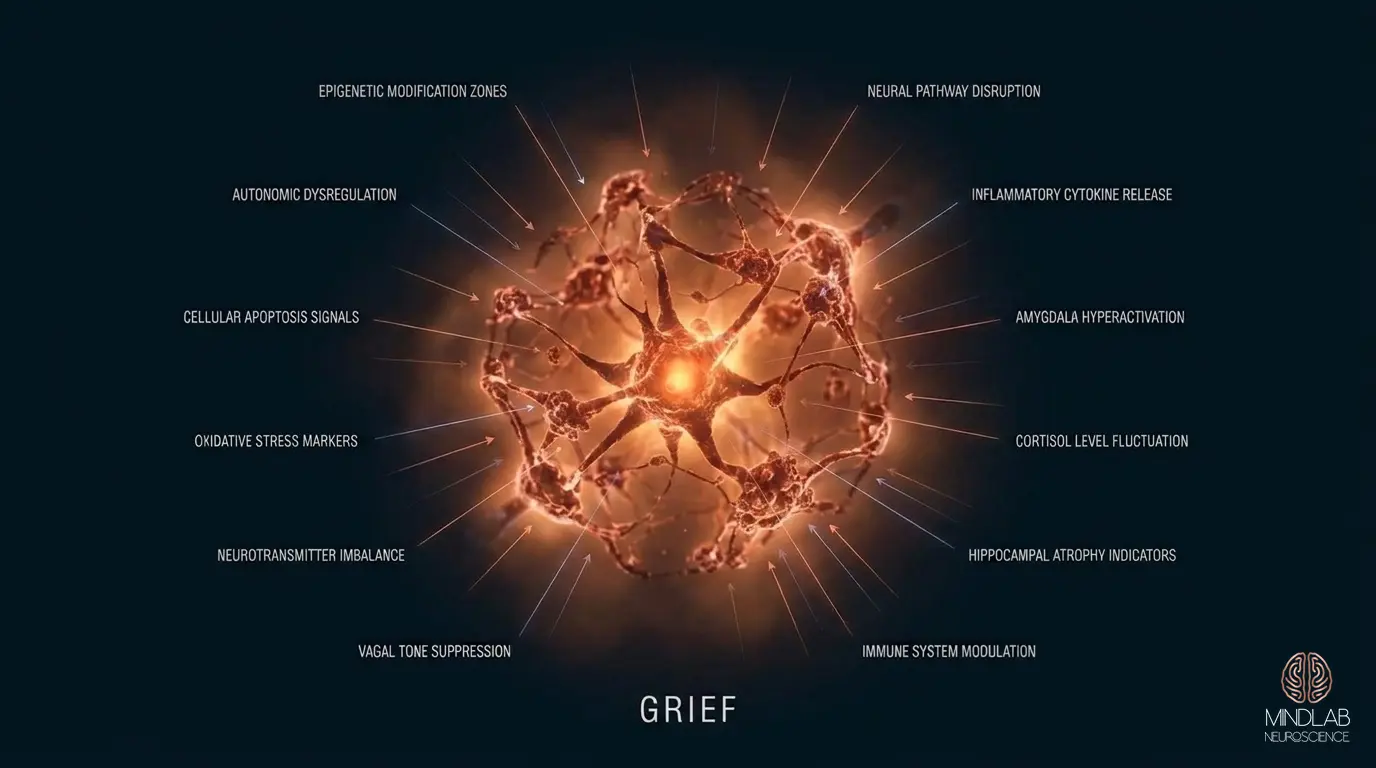
Grief
The brain's painful process of re-mapping attachment. Understand the cognitive impact of loss and how to navigate the neurological adaptation without getting stuck.
6 articlesThe Brain in Withdrawal
Grief is the agonizing process of the brain attempting to reconcile a reality that no longer matches its internal map.
-
Attachment Mapping: The brain encodes our loved ones as “part of self.” When they are gone, the brain keeps “reaching out” via neural pathways to locate them. When the prediction fails, it triggers a massive stress response (panic/pain).
-
The Missing Resource: To the primitive brain, the loss of an attachment figure signals a survival threat, similar to withdrawal from a powerful drug.
The Adaptation Process
Grief is a form of learning. The brain must physically re-wire its map of the world to understand “I am here, and they are not.”
-
Oscillation: Healthy grieving involves oscillating between Loss-Oriented (crying, remembering) and Restoration-Oriented (distraction, new tasks) activities.
-
Patience: This re-wiring takes substantial metabolic energy, which is why grief is physically exhausting (Grief Brain).
Latest Articles

Social Resilience & Connection
Rejection hurts because your brain registers social loss on the same pain circuits as physical injury: the dACC-insula social pain...
Read article : Why Does Rejection Hurt So Much? | MindLAB Neuroscience
The Neurobiology of Separation
Recovering from a break up can feel like emotional survival, but neuroscience shows it’s also a chance to rewire your...
Read article : Recovering From a Break Up: Brain-Based Emotional Resolution
Intimacy & Bonding
The neuroscience of love explains why your heart hurts so intensely in relationships and how your brain and nervous system...
Read article : The Neuroscience of Love: Why Your Heart Hurts
The Neurobiology of Separation
Ending a relationship is never easy, even when it's necessary. This comprehensive guide explores the emotional, psychological, and neurological aspects...
Read article : Navigating a Breakup: How to Optimize Your Well-being and Resolve Emotional Challenges
The Neurobiology of Separation
Breaking up with a partner is never an easy decision, and it's something that can cause significant emotional pain and...
Read article : Optimizing Emotional Resilience During Relationship Transitions: A Neuropsychology-Based Coaching Guide