In 'Understanding Mental Health Help Avoidance: Why Don't People Seek the Care They Need?', we delve into the complex reasons...
Read article : Why People Avoid Mental Health Help: The Neuroscience of Care AvoidanceSelf-Sabotage
The subconscious safety brake. Uncover the hidden protective mechanisms that cause you to undermine your own success, and release the brakes.
14 articlesThe Subconscious Safety Brake
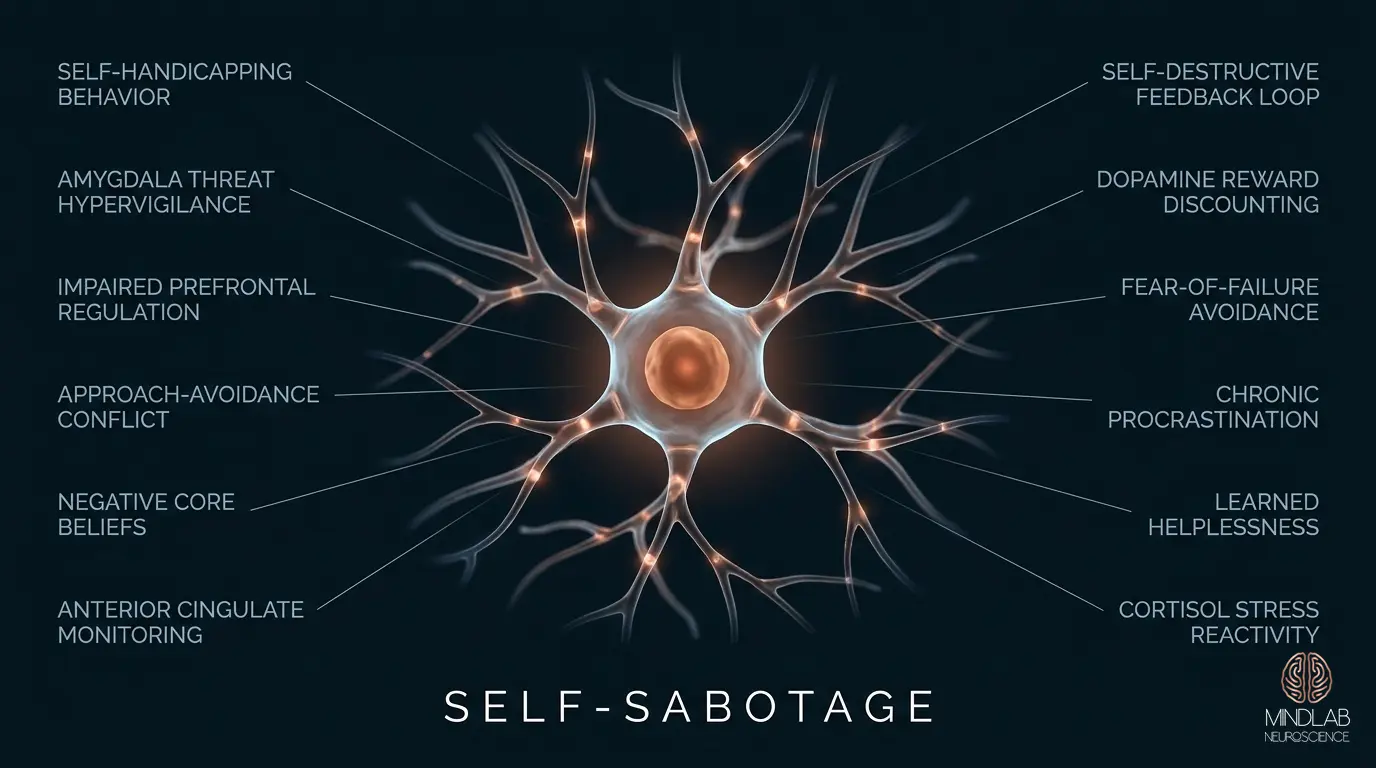
Self-sabotage occurs when your conscious goals (e.g., “I want a promotion”) conflict with your subconscious safety needs (e.g., “Visibility is dangerous”). The brain prioritizes safety over success. If success feels unfamiliar or threatening to your identity, the brain will engineer a failure to return you to your “baseline.”
Upper Limit Problems
Psychologist Gay Hendricks calls this the “Upper Limit Problem.” We each have an internal thermostat for how much success, love, or happiness we allow ourselves to feel. When we exceed that limit, we subconsciously trigger conflict, illness, or mistakes to bring us back down to the familiar zone.
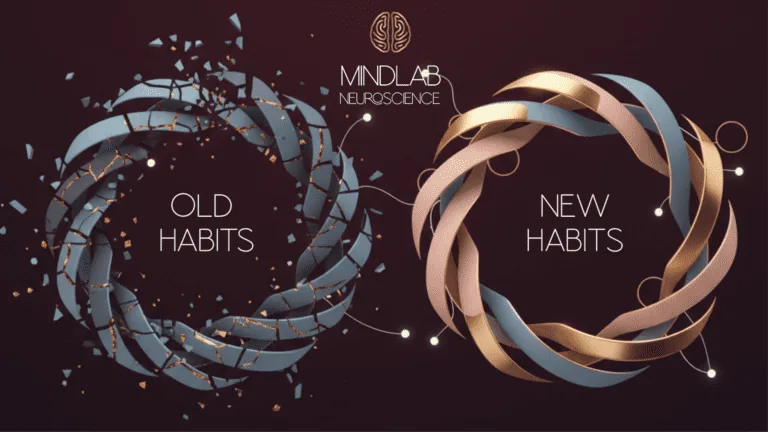
Rewiring the Thermostat
-
Awareness: Recognize the “pre-sabotage” feelings—usually anxiety or a sudden urge to withdraw right when things are going well.
-
Tolerance: Practice tolerating positive feelings without waiting for the other shoe to drop. You are expanding your nervous system’s capacity for success.

Latest Articles
Explore the complex phenomenon of mental health avoidance and discover why many people resist seeking help when they need it...
Read article : Addressing the Mental Health Avoidance Paradox: Strategies for Optimizing Support EngagementThe pursuit of greatness can lead to insecurity, narcissism, and decreased performance. Learn how to counter these trends and foster...
Read article : The Dark Side of Perfectionism: How the Pursuit of Greatness Can Lead to Insecurity and Decreased PerformanceAre you sacrificing your identity and well-being for your partner's happiness? Discover the neuroscience behind codependent relationships and learn proven...
Read article : Neuroscience to Resolve Codependent Relationships: Rewiring the Brain for Healthy ConnectionsSelf-defeating behaviors are patterns of thought and action that undermine our goals and well-being. In this comprehensive guide, we'll explore...
Read article : Overcoming Self-Defeating BehaviorsIn the battlefield of the mind, we often face an unexpected adversary – ourselves. Delve into the neuroscience behind self-sabotage,...
Read article : Self Sabotage: The Neural Circuits Behind Self Defeating BehaviorThe neuroscience of compulsivity explains why repetitive urges and habits feel so powerful, showing how brain circuits, evolution, and social...
Read article : The Neuroscience of Compulsivity: Unraveling the Brain’s Urge for ControlWe explore the evolutionary neuroscience of self-hatred to reveal why shame is not a flaw but a survival mechanism. From...
Read article : The Evolutionary Neuroscience of Self-Hatred: Why Your Brain Turns on YouHabit loops quietly train your brain every day. See how they form, why bad ones cling so tightly, and how...
Read article : Habit Loops: How to Break Bad Ones and Build Better OnesWillpower and self-control represent your brain's executive command system — specifically, the prefrontal cortex's ability to override impulses, delay gratification,...
Read article : Willpower and Self-Control: 10 Keys to Strengthening Your ResolveKey Takeaways
Read article : The Neuroscience of Self-Sabotage: Why We Are Our Own Worst EnemyIs your leadership unwittingly poisoning your team's potential? In the high-stakes arena of executive development, a silent killer lurks beneath...
Read article : Leadership and Cognitive Distortions: How They Sabotage Team Dynamics