Key Takeaways
- Compulsivity runs on ancient survival circuitry, not weak character: the urge-then-repeat loop outpaces conscious choice.
- The basal ganglia and striatum encode repetition into automatic habit loops: short-term relief, long-term cost.
- Mesolimbic dopamine tags the behavior worth repeating; reduced prefrontal control weakens the ability to interrupt.
- Repetition strengthens the loop: trying to stop rarely works, catching the trigger early is leverage.
- Neuroplasticity: the circuitry that built the compulsion can build a competing pathway through repeated practice.
- Adolescents are most vulnerable to compulsive wiring: prefrontal regulatory circuits mature only in the mid-twenties.
Compulsivity is not weak will. It is a reward circuit that has learned the loop so well that catching the trigger early becomes the only real point of leverage.
Wired for Repetition: The Core of Compulsivity
Beneath the surface of daily life, almost everyone runs into the same tension: the gap between intention and urge: a pull toward behaviors we repeat well past conscious preference. The science is reassuring on one point. That pull does not come from weakness. It comes from robust survival machinery built into some of the oldest networks in the brain’s cognitive architecture.
This is why so many “bad habits” feel good in the moment and so hard to break: these loops deliver short-term relief at a long-term cost. Everyone is wired to struggle with repetition to some degree. What matters is whether you become aware of the loop and build a new pathway forward. This sits within our Addiction and Reward Architecture work, and the dopamine reward loops behind it are explored in The Dopamine Code.
Biological Roots and Brain Pathways
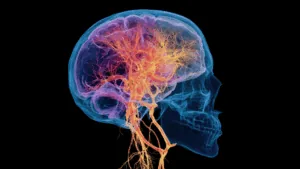
Decades of research have mapped the hardware of human habit with real precision. Structures such as the basal ganglia store and automate repeated actions, while the prefrontal cortex tries to regulate and suppress the routines you no longer need, and it is precisely that balance, between automation and override, that compulsivity tips out of equilibrium. The basal ganglia encode habitual and compulsive behaviors through dopamine-dependent “chunking,” which renders repeated routines increasingly automatic and increasingly resistant to prefrontal override.
Two shifts make a habit tip into a compulsion. The first is chemical: reduced serotonergic tone in the orbitofrontal cortex weakens the brain’s behavioral-switching brake. The second is anatomical: control migrates from the ventral striatum, which tracks goals and outcomes, to the dorsal striatum, which keeps a behavior running even after the outcome has turned unpleasant. That migration is the neural signature of doing something you no longer want to do.
Modern biomarker work shows that people prone to rigid, repetitive behavior often have altered patterns of brain-wave activity in the networks linked to compulsive action, with communication between the striatum, thalamus, and cortex disrupted enough that targeted neuromodulation is now being explored to help restore balance. The hopeful corollary is the one that matters most: powerful as the drive for repetition is, these brain circuits can adapt and change across an entire lifetime.
The Neurochemistry of Urge: Dopamine, Serotonin, and the Compulsive Brain
Behind every relentless urge sits an intricate exchange of brain chemicals working quietly but powerfully. Dopamine, often called the “motivation molecule”, is central: it fires up reward circuits and makes an anticipated action feel close to irresistible. Serotonin works more quietly, moderating mood and impulse control. When serotonin tone is healthy, resisting an urge gets easier; when stress, poor sleep, a disrupted circadian rhythm, or a depleted gut microbiome blunts its regulatory effect, compulsivity gets louder and those “itches” get harder to manage.
The brain’s chemical landscape is tied tightly to ordinary daily inputs: lack of movement, erratic eating, too little sunlight can each tip neurochemistry toward vulnerability. Research on the gut-brain axis adds a hopeful angle: the health of intestinal flora influences both dopamine and serotonin, which means consistent sleep, mindful eating, regular activity, and genuine social connection can help recalibrate urges before they overwhelm you. The goal is not to fight your chemistry but to understand and support it.
Evolution’s Logic: The Adaptive Side of Compulsive Drives
The earliest humans depended on routine and predictability for order and safety. Ancestors who stuck to proven foraging paths or built rituals around hunting and weather had stronger group cohesion and better survival odds. What we label compulsivity today may be a vestige of that ancient quest to control the unpredictable: small, repeated behaviors that sharpened a sense of cause and effect and helped anticipate danger or opportunity. Ritualized, repeated behavior shows up not only in humans but in great apes, certain birds, and other mammals, which suggests the drive to find order in chaos runs deep across the animal kingdom.
Repetition also did social work. As groups grew and communication advanced, shared repetitive practices enforced cooperation, built trust, and synchronized emotion, which is why synchronized acts like singing, dancing, or chanting still produce feelings of unity and safety. Seen this way, compulsive tendencies are not a flaw but a deeply ingrained urge to restore predictability, increase perceived control, and manage the stress of ambiguity. Stress, uncertainty, or rapid change can reawaken these old systems, making compulsion feel automatic, and understanding their origin tends to replace self-judgment with something more useful: compassion plus a plan.
Triggers and Temptations: What Sparks a Compulsive Cycle

Nothing about compulsivity is random. The brain encodes triggers (specific sounds, scents, colors, or emotions) into powerful cues through associative learning. Those cues activate reward circuits in the striatum and prefrontal cortex, firing a surge of motivation that can overwhelm self-restraint in milliseconds. Internal cues like boredom, fatigue, or emotional discomfort can be just as forceful as external ones, weaving a feedback loop that keeps the behavior running. For some, genetic differences make those connections especially “sticky,” which is a large part of why willpower alone rarely breaks the cycle.
Here is the part most people miss: positive routines (a morning run, making tea) light up the same circuits as the compulsions that cause distress. The difference between a habit and a compulsion is not the pathway but the purpose and the awareness behind it. A routine that brings satisfaction, energy, or meaningful structure supports growth; one that drives anxiety, avoidance, or shame is sliding toward compulsion. Mechanistically, this plays out as a balance between the brain’s “GO” circuits, which accelerate responses to cues, and its “STOP” circuits in the orbitofrontal and ventromedial prefrontal cortex, which hold impulses in check. When stress, sleep loss, or high emotion weakens the STOP networks, even well-intentioned routines can tip over.
Understanding this is not about banishing triggers: it is about anticipating and reframing them. In my practice, the people who make the fastest progress are the ones who stop treating a trigger as a moral test and start treating it as data: designing rituals that energize rather than exhaust, building in deliberate “pattern interrupts,” and meeting the earliest sign of an urge with curiosity instead of criticism. Addressed with insight and a brain-aware strategy, even entrenched cycles become far more workable than they feel.
Adolescence and the Growing Brain
Adolescents live at the crossroads of intense brain change. The teenage years are the peak period for craving novelty, social status, and immediate gratification, while impulse control and long-term thinking lag behind, because the prefrontal networks that govern executive control and self-regulation do not fully mature until the mid-twenties. Encouraging meaningful hobbies, protecting sleep, and modeling a pause before action all leverage neuroplasticity, laying down new blueprints for managing urges. Honest conversation about how these drives work lets young people see their experience as a normal part of development rather than a personal defect.
Modern Life: The Age of Digital Compulsivity
Technology has turbo-charged these ancient circuits. Always-on devices, platforms engineered for “likes,” and infinite novelty hijack the brain’s dopamine-forecast system, which is why a single notification can create a genuine itch and why the brain’s hunger for novelty makes short-form digital habits so deeply ingrained. Digital compulsivity also thrives because screens offer instant relief from discomfort or boredom, and the brain files those coping behaviors as “rewarding” despite their long-term cost. It is tied not only to dopamine spikes but to cognitive rigidity: the wiring that makes it hard to detach from online activity, especially under stress.
These patterns are not character flaws; they are the predictable result of environments carefully engineered to exploit reward drive and social need. The constant pull of screens can erode executive function, memory, and impulse control in even the most disciplined person, and it quietly destabilizes self-worth when likes and notifications start to dictate mood. The answer is rarely pure avoidance: it is redesigning routines and spaces to protect attention, restore offline connection, and put purposeful use back in charge of the technology.
The Shadow Side: Shame, Secrecy, and Internal Conflict
For many people, compulsivity is tangled with shame. Culture equates self-control with virtue, leaving anyone stuck in a compulsive pattern feeling broken or weak. But these loops are not moral failings: they are biological processes, sometimes intensified by trauma, genetics, or chronic stress. The cruel irony is that shame, instead of prompting change, usually drives the behavior further into secrecy, which feeds the cycle and makes reaching for support feel even more out of reach. Every urge, however troubling, is better read as a signal calling for curiosity than as evidence of a flaw, and recognizing the biological roots of these emotions is often the turning point.
Can Compulsivity Really Change?
Neuroplasticity is the genuine source of hope here. The brain is wired for repetition, but it is equally capable of profound change, and imaging confirms that even short, intentional pauses begin to weaken old neural patterns and strengthen healthier ones. At first the work is slow and effortful, with the old habit circuits pushing back. But through focused attention, repetition, and emotional safety, the brain lays down tracks for more adaptive routines, and each small success at resisting an urge gets rewarded by the very system that built the compulsion, which is what turns recovery into a process of rewiring rather than white-knuckling.
The Social Dimension: Connection, Comparison, and Pressure
Compulsivity never happens in isolation; it flourishes inside the real mess of social comparison and belonging. Social-media popularity contests, workplace performance demands, and family expectations all amplify urgency and anxiety, and social rejection or comparison activates the same neural circuits as physical pain, which is part of why it bites so hard. Naming those forces is the first move: once you can see how social pressure drives a specific behavior, you can protect your boundaries, curate a healthier environment, and challenge the comparisons that keep an old cycle alive.
Everyday Stories of Compulsivity

Compulsivity is rarely dramatic or visible. It shows up in the small rituals that pepper an ordinary day: the parent who double-checks a locked door each night, unable to rest until certainty is secured; the creative who cannot put down the brush or stop revising, driven by a fear of imperfection; the family routines around cleanliness or safety, from repeated handwashing to retracing steps to be sure nothing was left behind. Everyday compulsive behaviors also include:
- Rechecking emails and texts for mistakes, over and over, before hitting “send”
- Counting steps, cracks in the pavement, or objects
- Ritualistically arranging household items until they look or feel “right”
- Compulsive shopping, scrolling, or talking non-stop in moments where silence feels stressful
- Hoarding items or information, convinced that letting go will lead to regret or loss
- Following strict, self-imposed rules, unable to deviate without anxiety
- Seeking reassurance from loved ones repeatedly, even moments after being reassured
Naming these “minor” compulsions honestly, without shame or exaggeration, is what starts to dissolve the stigma and open the door to practical strategy. Often an everyday quirk points back to a deeper, ancient brain pattern, and the same brain-based approach to emotional recovery that helps after a loss can turn that quirk into an opportunity for growth rather than a source of guilt.
What I Learned From My Own Retail-Therapy Loop
Like so many people in a hyper-connected world, I once had a compulsivity of my own that crept in quietly: online shopping when I felt lonely, restless, or just in need of a “pick-me-up.” Knowing the mechanism did not make me immune to it. The urge was never really about weakness; it was my reward system in overdrive, and left unchecked it became automatic fast.
I noticed the habit strengthen alongside stress and during quiet weekends, when deals and targeted ads felt almost impossible to resist. Even knowing I didn’t need most of what I bought, the “order confirmed” screen seemed to fill some gap, and every repetition of that loop carved the pathway a little deeper. The real wake-up call came when I admitted I was shopping for relief from feelings I hadn’t named, not for anything I actually wanted.
Facing it with the same tools I use in my work (mindful pausing, labeling the emotion underneath, and setting planned digital boundaries) changed the pattern. I learned to catch the early signals (fatigue, loneliness, the “just one click” moment) and route that energy somewhere better: a call to a friend, ten minutes outside, a few lines in a journal. Over time the urge lost its grip, and a quieter kind of contentment became the new reward. The science stopped being only something I teach and became a personal map back to steadier ground.
Practical Strategies: Rewiring the Compulsive Brain
Translating this science into durable change is not about “trying harder” or relying on bursts of willpower. These strategies work because each one targets a specific neural mechanism that generates urges, builds habits, or exercises self-control.
- Mindful pausing: Even a three-second pause before acting gives the prefrontal cortex a window to interrupt an automatic behavior, turning a reaction into a choice. Pair it with one slow breath and simply notice the urge rise: that small disruption is the first building block of change.
- Structured routines: Stable, predictable routines keep the brain from defaulting into unwanted loops. Morning rituals, scheduled check-in times, and planned breaks redirect habitual energy and reduce the cognitive load that overwhelms self-control.
- Reward substitution: Rather than fighting an urge head-on, redirect it toward an immediate, healthy reward: a walk, a stretch, a few minutes of something creative. New habits stick best when the brain still gets a payoff.
- Emotional awareness and labeling: Compulsive behaviors are often attempts to avoid an uncomfortable feeling. Naming the emotion (“I feel tense,” “I notice anxiety”) engages the brain’s self-regulation networks and lowers the drive for instant self-soothing.
- Planning for triggers: Anticipate the contexts where urges usually arise and pre-decide your response. Concrete “if/then” plans (“if I get the urge to check my phone when anxious, then I take ten slow breaths”) short-circuit autopilot before it starts.
- Accountability and connection: Social feedback is genuinely load-bearing for lasting change. A friend, a community, or a professional you check in with helps you catch setbacks and mark wins, and knowing you’re not alone strengthens motivation directly.
- Self-compassion and reframing: Every attempt counts, not only the clean successes. When you treat a slip as information rather than failure, the brain learns flexibility, and each small pivot rewires the circuit a little further toward mastery.
What makes these work in combination is brain plasticity: small actions, predictable rewards, mindful awareness, and social reinforcement together don’t just manage compulsive behavior: over time they reshape the neural blueprints that generate it, helping you build authentic self-control and reclaim a calmer, more focused mind.
Understanding the circuitry behind your compulsive loops is genuinely useful, but turning that understanding into rewired routines that hold under stress takes individualized work. If the patterns in this article describe your experience, the next step is a focused conversation about the specific neural architecture driving them.
Compulsivity raises an obvious question: why do certain behaviors persist despite real, conscious effort to stop them? The answers below draw on current research into brain circuits, neurochemistry, and neuroplasticity to clarify how compulsive patterns form, what sustains them, and how evidence-based strategies reshape these deeply rooted pathways.
What causes compulsive behavior in the brain?
Compulsive behavior originates in a feedback loop between the basal ganglia, which stores automated behavioral sequences, and the brain’s dopamine reward system. When you perform a behavior that produces relief or reward, dopamine reinforces that circuit, making it more likely to fire again under similar conditions. Over time, the prefrontal cortex, which normally provides inhibitory control, loses its ability to override the loop because repeated activation strengthens the habitual pathway while weakening the executive override.
Is compulsive behavior the same as having poor self-control?
No, and this distinction matters enormously. Compulsive behavior is a neurological pattern, not a character flaw. Your basal ganglia automates repetitive behaviors so efficiently that they can bypass conscious decision-making entirely. The prefrontal cortex, which manages impulse regulation, has limited metabolic resources and can be overwhelmed by strong habit circuits, especially under stress when excessive catecholamine signaling, amplified by cortisol, further degrades executive function. Framing compulsivity as weak willpower ignores the biological architecture driving the behavior.
Can compulsive behaviors actually be rewired through neuroplasticity?
Yes, and the evidence is compelling. Neuroplasticity means your brain continuously reorganizes its synaptic connections based on experience. Compulsive circuits in the basal ganglia and cortico-striatal-thalamic loop are strengthened by repetition, but they can be weakened through deliberate disuse while building competing pathways. When you consistently interrupt a compulsive loop at the urge stage and redirect toward an alternative behavior, long-term potentiation strengthens the new circuit while synaptic pruning gradually weakens the old one.
Why does stress make compulsive behaviors worse?
Stress triggers excessive catecholamine signaling that undermines your prefrontal cortex’s ability to override habitual circuits, an effect amplified by cortisol from the hypothalamic-pituitary-adrenal axis. Under sustained stress, the amygdala amplifies threat signals and the brain shifts toward automated, familiar behaviors because they require less cognitive resources. The basal ganglia essentially takes over from the prefrontal cortex, prioritizing speed and certainty over flexible decision-making. Simultaneously, stress depletes serotonin, which normally helps the orbitofrontal cortex regulate behavioral switching.
How do digital devices and social media feed compulsive brain patterns?
Digital platforms are engineered to exploit your dopamine system through variable-ratio reinforcement, the same reward schedule that makes slot machines compelling. Each notification, like, or content refresh triggers a small dopamine release from the ventral tegmental area, training your basal ganglia to automate the checking behavior. Over time, your brain develops a compulsive loop: cue (boredom, anxiety, or a notification sound), routine (open the app), reward (dopamine hit from novelty).
References
- Graybiel, A. M. (2008). Habits, rituals, and the evaluative brain. Annual Review of Neuroscience, 31, 359-387.
- Dalley, J. W. and Robbins, T. W. (2017). Fractionating impulsivity: neuropsychiatric implications. Nature Reviews Neuroscience, 18(3), 158-171.
- Everitt, B. J. and Robbins, T. W. (2005). Neural systems of reinforcement for drug addiction: From actions to habits to compulsion. Nature Neuroscience, 8(11), 1481-1489.
Crisis & mental-health support resources
If you are in crisis or thinking about harming yourself, support is available right now.
- 988 Suicide & Crisis Lifeline: call or text 988 (24/7, free, confidential).
- Crisis Text Line: text HOME to 741741.
- If you are in immediate danger, call 911 or go to your nearest emergency room.