





Key Points
- Beverly Hills fuses professional and personal identity rather than partitioning them: both patterns prevent genuine integration.
- When every social context carries professional stakes, the brain never disengages the career operating system.
- Fusion looks like integration from the outside but produces disconnection and hollowness on the inside.
- Real-Time Neuroplasticity™ builds genuine independence between the professional and personal systems.
- The result is a person whose authenticity exists in every room, not just the ones without professional stakes.
| Marker | Traditional Approach | Neuroscience-Based Approach | Why It Matters |
|---|---|---|---|
Why Personal & Professional Integration Matters in Beverly Hills
Why Beverly Hills Creates a False Version of Integration
Most high-performance cities produce a clear partition between professional and personal life. Beverly Hills does something more complicated. It creates the appearance of integration, personal and professional domains blending seamlessly, while actually running a system where the professional identity has consumed the personal one entirely. The entertainment attorney at a Century City firm who hosts dinners at Spago is not integrating work and life. They are extending the professional performance into every personal context. The brain does not distinguish between genuine personal engagement and professional networking dressed in personal clothing.
The entertainment industry professionals who define Beverly Hills face the most visible version of this pattern. The producer whose professional reputation depends on relationships, and whose relationships are maintained through social contexts that look personal: the kids’ school fundraiser, the charity gala, the weekend at a colleague’s Malibu house. Every social occasion activates the professional operating system because every social occasion carries professional stakes. The brain cannot develop authentic personal depth in an environment where the professional system is always running. What develops instead is a sophisticated social performance that feels like a personal life but operates entirely on professional logic.
The wealth management and family office professionals along Wilshire Boulevard and in the Golden Triangle manage other people’s integration challenges all day while neglecting their own. The client is a celebrity whose personal and professional brand are inseparable. The advisor helps manage that fusion while their own neural architecture runs the same pattern unexamined. The daily practice of managing other people’s complexity absorbs the same cognitive resources that would be needed to examine and restructure their own architecture.
Beverly Hills’ real estate and luxury brand ecosystem adds a specific pressure. Property values, social standing, and professional credibility are publicly visible and constantly evaluated. The brain receives continuous status signals: from the zip code of the home to the membership at the club to the reservation at the right restaurant. Each of these signals reinforces the professional system because each carries reputational weight. A genuine personal moment (vulnerability with a friend, unstructured time without purpose, an activity that carries no status value) becomes neurally uncomfortable because the professional system registers it as a gap in the performance.
The tech executives and venture professionals who have established a growing presence in Beverly Hills and Bel Air bring a different integration challenge. Their professional identity was built in a culture that values disruption, speed, and scale. Beverly Hills adds a layer of social sophistication and aesthetic standards that the tech world did not prepare them for. The brain is now running three systems simultaneously: the professional operating system from the tech world, the social operating system required by Beverly Hills, and whatever remains for genuine personal life. Three systems sharing finite neural resources means all three are underfunded.
The non-working spouses and partners in Beverly Hills face a mirror-image version of the integration problem. Their identity architecture was organized around a professional career that was set aside, often for family, often for a partner’s career demands. The personal domain expanded to fill the available space, but it was shaped by Beverly Hills’ social expectations rather than genuine personal development. The result is a personal identity that is actually a social performance, structurally indistinguishable from the professional identity it was supposed to replace. The brain still runs on external validation. Only the domain changed.
Dr. Sydney Ceruto works with professionals and families across Beverly Hills who have recognized that what looks like an integrated life is actually a professional system that colonized every domain. Real-Time Neuroplasticity™ targets the architecture that maintains this pattern, building genuine integration where professional ambition and personal authenticity operate independently, neither consuming the other and neither dependent on the other for validation. A Strategy Call is a phone conversation: the starting point for mapping where the professional system ends and the authentic personal self begins.


Dr. Sydney Ceruto, PhD, Neuroscientist & Author, MindLAB Neuroscience
Dr. Ceruto holds a PhD in Behavioral & Cognitive Neuroscience from NYU and Master’s degrees in Clinical Psychology and Business Psychology from Yale University. She lectures at the Wharton Executive Development Program at the University of Pennsylvania and has been an Executive Contributor to the Forbes Coaching Council since 2019. Dr. Ceruto is the author of The Dopamine Code (Simon & Schuster, June 2026). She founded MindLAB Neuroscience in 2000 and has spent over 26 years leading it, pioneering Real-Time Neuroplasticity™, a methodology that durably rewires the neural pathways driving behavior, decisions, and emotional responses.
Frequently Asked Questions About Personal & Professional Integration in Beverly Hills
Also available in: Miami · Wall Street · Midtown Manhattan · Lisbon
Take the First Step
One hour with Dr. Sydney Ceruto. You leave knowing which neural pattern is actually driving this, and what to do about it.
Book a Strategy Call
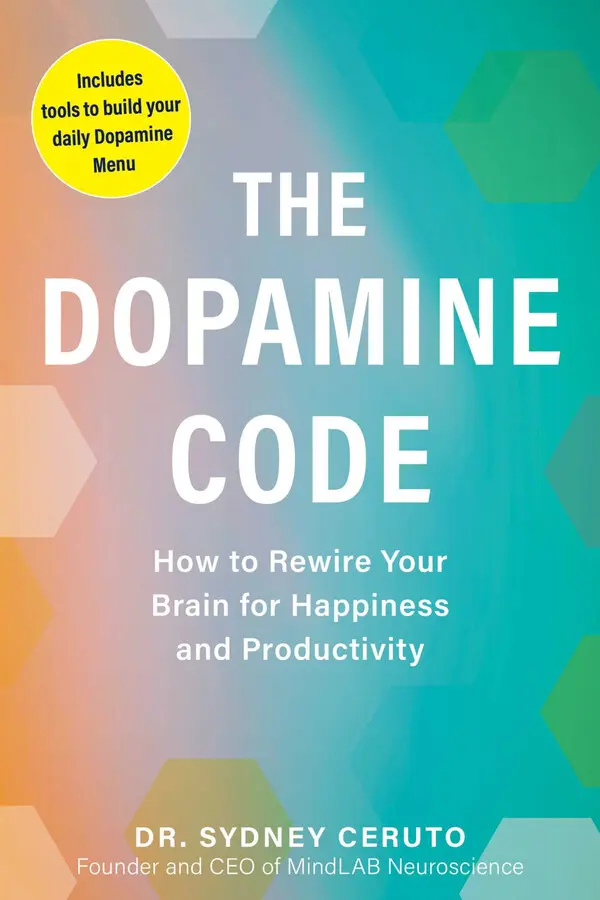
The Dopamine Code
Decode Your Drive
Why Your Brain Rewards the Wrong Things
Your brain's reward system runs every decision, every craving, every crash, and it was never designed for the life you're living. The Dopamine Code is Dr. Ceruto's framework for understanding the architecture behind what drives you, drains you, and keeps you locked in patterns that willpower alone will never fix.
Published by Simon & Schuster, The Dopamine Code is Dr. Ceruto's framework for building your own Dopamine Menu, a personalized system for motivation, focus, and enduring life satisfaction.
Order Now!Available now