







Key Points
- Relocation changes the environment but not the neural architecture that governed professional and personal life.
- Lisbon's pace and culture support integration, but the brain must be rewired to take advantage of it.
- Partition failure without a replacement architecture produces chronic partial engagement in both domains.
- Real-Time Neuroplasticity™ builds the integrated operating system the move to Lisbon was meant to create.
- The result is a person whose neural architecture matches the life they relocated to live.
Why Lisbon Exposes the Integration Problem That Other Cities Allowed You to Ignore
Lisbon has become the destination for professionals who decided that the traditional relationship between work and life was not sustainable. The British tech executive who relocated to Chiado. The American entrepreneur who moved operations to Principe Real. The German consultant who traded Frankfurt’s financial quarter for a Graça apartment with a river view. Each of them made a geographic decision driven by a neural problem: the architecture that governed their professional and personal lives was not producing a life they wanted to live.
The relocation reveals something that the previous city obscured. In London, the partition between work and life was environmentally maintained. The Tube ride between the City and Hackney provided a physical transition. The office walls marked a boundary. In Lisbon, where the British expat works from a sunlit apartment in Estrela while Portuguese life unfolds on the street below, there are no environmental cues to maintain the partition. And without those cues, the brain’s dual-system architecture becomes visible. The person sitting at the desk with the Tagus view is running the London operating system in a Lisbon environment. The city is integrated. The brain is not.
The digital nomad and remote-work population in Lisbon faces the most acute version of this mismatch. The entire premise of their relocation was integration: work and life blended in a city that supports both. But the brain that was trained in a high-intensity professional environment does not know how to blend. It knows how to partition. And a brain running a partition model in an environment without partitions produces a specific kind of confusion. The person checks email during a conversation at a miradouro. They take a call during lunch at a Bairro Alto tasca. They sit at Time Out Market and alternate between the laptop and the view, never fully in either mode. This is not integration. It is partition failure without a replacement architecture.
The Portuguese professionals in Lisbon’s own business districts (the Avenidas Novas, Parque das Nações) navigate a different version of the challenge. Portuguese culture carries an expectation of relational warmth and social presence that the professional world often contradicts. The banker in Saldanha is expected to perform at the international standard (the same metrics, the same pressure, the same output demands) while also maintaining the social and familial presence that Portuguese life requires. The brain is running two cultural operating systems in addition to the personal-professional split. The cognitive load is significant and largely unrecognized.
Lisbon’s startup ecosystem, concentrated around Beato and expanding into Santos, creates an integration paradox for founders. The city’s culture encourages long lunches, afternoon coffee, evening social life, all of which sounds like the integration the founder moved here for. But the startup’s demands do not operate on Lisbon time. The Silicon Valley investors expect Silicon Valley responsiveness. The European market expects European professionalism. The founder’s brain is caught between the neural architecture required by the business and the neural architecture that the city invites. Two signals, two operating modes, one set of circuits trying to serve both.
The retirement and semi-retirement population that has grown significantly in Lisbon (particularly in Cascais, Estoril, and the Algarve region) faces the integration challenge from the opposite direction. A career that consumed all available neural resources has ended, and the personal system that should fill the space was never built. The retired executive sitting in a Cascais café has the environment for personal life. They have the time. What they do not have is the neural architecture. The brain optimized for professional performance for thirty years. Retirement removed the demand but did not build the alternative. What remains is a person in a beautiful setting with no internal system equipped to inhabit it fully.
Dr. Sydney Ceruto works with professionals across Lisbon who made the move and discovered that geography does not resolve architecture. Real-Time Neuroplasticity™ targets the circuits that maintain the partitioned or legacy operating system, rebuilding the neural foundation so that the integrated life the person moved to Lisbon to create becomes structurally possible. A Strategy Call is a phone conversation: the starting point for mapping what your brain carried from the previous city and what genuine integration looks like at the neural level.


Dr. Sydney Ceruto, PhD, Neuroscientist & Author, MindLAB Neuroscience
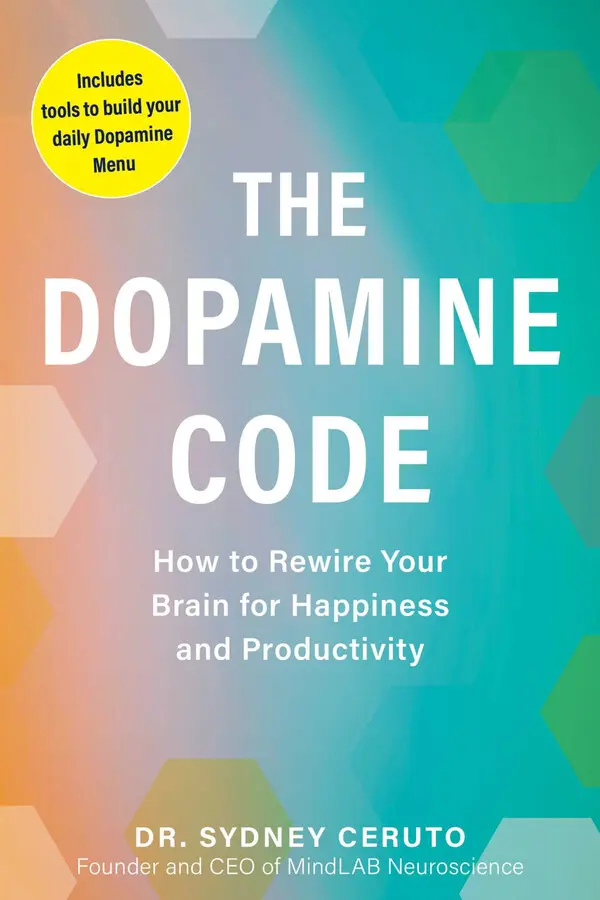
Dr. Ceruto holds a PhD in Behavioral & Cognitive Neuroscience from NYU and Master’s degrees in Clinical Psychology and Business Psychology from Yale University. She lectures at the Wharton Executive Development Program at the University of Pennsylvania and has been an Executive Contributor to the Forbes Coaching Council since 2019. Dr. Ceruto is the author of The Dopamine Code (Simon & Schuster, June 2026). She founded MindLAB Neuroscience in 2000 and has spent over 26 years leading it, pioneering Real-Time Neuroplasticity™, a methodology that durably rewires the neural pathways driving behavior, decisions, and emotional responses.
Also available in: Miami · Wall Street · Midtown Manhattan · Beverly Hills
Take the First Step
One hour with Dr. Sydney Ceruto. You leave knowing which neural pattern is actually driving this, and what to do about it.
Book a Strategy Call
The Dopamine Code
Decode Your Drive
Why Your Brain Rewards the Wrong Things
Your brain's reward system runs every decision, every craving, every crash, and it was never designed for the life you're living. The Dopamine Code is Dr. Ceruto's framework for understanding the architecture behind what drives you, drains you, and keeps you locked in patterns that willpower alone will never fix.
Published by Simon & Schuster, The Dopamine Code is Dr. Ceruto's framework for building your own Dopamine Menu, a personalized system for motivation, focus, and enduring life satisfaction.
Order Now!Available now