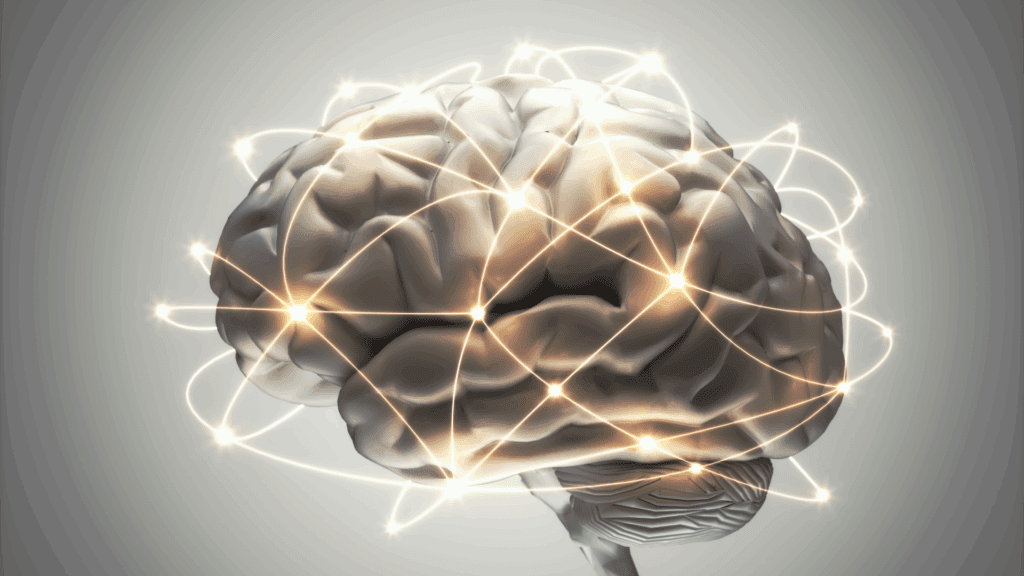
Neuroplasticity for personal growth involves systematically rewiring neural pathways to transform behavioral patterns, emotional responses, and cognitive habits that no longer serve you. Rather than forcing surface-level changes through willpower alone, neuroplasticity-based change targets the underlying brain circuits that drive automatic reactions, creating sustainable change at the neural level.
Key Takeaways
- Neuroplasticity allows you to rewire limiting patterns by creating new neural pathways through repeated practice during high-plasticity windows
- Real-time intervention during emotional or behavioral triggers maximizes the brain’s capacity for rewiring compared to retrospective approaches
- The prefrontal cortex can be strengthened to override automatic amygdala responses, improving emotional regulation and decision-making
- Structural brain changes occur within weeks of consistent neuroplasticity-based practices, not months or years
- Environmental design and deliberate exposure accelerate neural rewiring by providing controlled opportunities to practice new responses
Most people approach personal growth backwards. They try to change their behavior through conscious effort while their brain continues operating on the same neural pathways that created the original patterns. This is why willpower fails and why traditional approaches often produce temporary results followed by regression to baseline.
The brain’s neuroplasticity—its ability to reorganize itself by forming new neural connections—offers a different pathway. When you understand how to trigger neuroplastic changes intentionally, you can rewire the automatic patterns that drive your behavior, emotions, and cognitive responses. This isn’t about managing symptoms or developing coping strategies. It’s about changing the underlying neural architecture that generates those symptoms in the first place.
In my practice, I’ve observed that clients who achieve lasting change share a common pattern: they learned to intervene in real-time during the moments when their brain was most receptive to change. The difference between temporary improvement and permanent rewiring lies in timing—catching the brain during high-plasticity windows when neural pathways are most malleable.
The Neuroscience of Personal change
Personal growth occurs when the brain creates new neural pathways that override existing patterns. This process involves three key mechanisms: synaptic plasticity (strengthening connections between neurons), structural plasticity (physical changes in neural architecture), and functional plasticity (reassigning functions to different brain regions).
The brain’s default mode is efficiency—it automates responses to conserve energy. Your current behavioral patterns exist because they became neurally encoded through repetition. The prefrontal cortex, responsible for executive functions like planning and impulse control, gets overridden by faster, more automatic circuits in the limbic system during stress or high emotion.
Neuroplasticity research demonstrates that new neural pathways can form within days, but they require specific conditions to become dominant over existing circuits. The brain needs novelty, challenge, and emotional salience to trigger neuroplastic changes. Most importantly, it needs repetition during moments when the system is primed for learning.
Critical Plasticity Windows for Growth:
- Emotional arousal states – When stress hormones create heightened neuroplasticity
- Novel experiences – When the brain encounters unfamiliar situations requiring new responses
- Decision points – When conscious choice can override automatic patterns
- Post-exercise periods – When BDNF (brain-derived neurotrophic factor) peaks
- Focused attention states – When sustained concentration activates plasticity mechanisms
In my work with high-performance executives, I consistently observe that breakthrough moments occur during real-time interventions—when someone practices a new response while experiencing the actual trigger that would normally activate their old pattern. This timing maximizes the neuroplastic potential because the relevant neural circuits are already active and therefore more malleable.
Real-Time Neuroplasticity: The MindLAB Approach
Traditional personal development assumes you can think your way into new patterns. The neuroscience reveals why this fails: thinking about change activates different brain regions than implementing change during live situations. Real-Time Neuroplasticity™ targets the moment when old patterns would normally activate, creating a neurological interruption that allows new pathways to form.
The key insight is specificity—neural rewiring is context-dependent. If you want to respond differently during conflict, you must practice the new response during actual conflict, not in therapy sessions afterward. The brain encodes new patterns most effectively when they’re practiced in the same environmental and emotional context where they’ll be needed.
This approach differs fundamentally from cognitive-behavioral therapy, mindfulness practices, or traditional personal development. Instead of processing experiences retrospectively or preparing for future challenges, Real-Time Neuroplasticity™ intervenes during the actual neural activation sequence, redirecting it toward new outcomes.
The Four-Phase Rewiring Process:
| Phase | Neural Target | Intervention Method | Duration |
|---|---|---|---|
| Interruption | Automatic pattern recognition | Real-time awareness cues | Seconds |
| Redirection | Prefrontal cortex activation | Alternative response practice | Minutes |
| Reinforcement | New pathway strengthening | Immediate positive feedback | Hours |
| Integration | Default pattern replacement | Repeated real-world application | Weeks |
In practice, this might involve receiving a text message during a tense conversation with your partner—not to discuss what happened later, but to implement a new communication strategy in that exact moment when your old defensive patterns would normally engage. The brain rewires most efficiently when new responses are practiced within the original triggering context.
What the research doesn’t capture is how quickly this process can work when timing is optimized. I’ve seen clients shift decades-old patterns within weeks because they learned to catch their brain during high-plasticity moments and redirect it toward new responses. The conventional wisdom about change taking months or years reflects the limitations of retrospective approaches, not the brain’s actual capacity for rewiring.
Rewiring Emotional Regulation Systems
Emotional dysregulation stems from an overactive amygdala combined with insufficient prefrontal cortex modulation. When stress hormones flood your system, the amygdala hijacks decision-making processes, triggering fight-flight-freeze responses even when they’re counterproductive. Personal growth requires strengthening the neural pathways that allow conscious override of these automatic reactions.
The amygdala-prefrontal cortex relationship is neuroplastic—it can be rewired through specific practices that strengthen top-down emotional control. This doesn’t mean suppressing emotions; it means developing the neural capacity to choose your response rather than being controlled by automatic reactions.
Neuroplasticity-Based Emotional Regulation:
- HRV (Heart Rate Variability) training – Strengthens vagal tone and improves prefrontal-limbic communication
- Cognitive reappraisal practice – Builds neural pathways for reframing emotional triggers
- Exposure with response prevention – Weakens automatic fear responses through controlled activation
- Mindful labeling – Activates prefrontal regions that modulate emotional intensity
- Somatic regulation – Uses body awareness to interrupt escalating emotional states
The most effective emotional regulation training happens during actual emotional activation, not in calm states. When a client feels triggered during our work together, that’s when we practice new responses. The brain is already in a heightened plasticity state due to emotional arousal, making it more receptive to forming new neural pathways.
Traditional approaches often teach emotional regulation as a skill to use later. Neuroplasticity-based training embeds new regulation patterns directly into the triggering situations, so the brain learns to respond differently automatically. This creates lasting change because the new neural pathways become integrated into the actual contexts where emotional challenges arise.
One C-suite executive I worked with had explosive anger responses during board meetings. Instead of processing these experiences afterward, we developed real-time interventions—subtle cues and response strategies he could implement the moment he felt his anger beginning to escalate. Within six weeks, his neural pathways had rewired sufficiently that the anger response rarely activated at all during professional situations.
Transforming Cognitive Patterns and Mental Models
Your thinking patterns are neural habits encoded through repetition over years or decades. Cognitive biases, limiting beliefs, and automatic thought patterns exist as strengthened neural circuits that activate faster than conscious awareness. Personal growth requires identifying these circuits and systematically building alternative pathways that can compete with and eventually override them.
The brain’s confirmation bias serves an evolutionary function—it processes information efficiently by fitting new experiences into existing mental models. However, this same mechanism locks you into outdated patterns that may no longer serve your growth. Neuroplasticity allows you to intentionally disrupt confirmation bias by exposing yourself to information and experiences that challenge existing neural pathways.
Common Cognitive Patterns Amenable to Neuroplastic Rewiring:
- Catastrophic thinking – Amygdala hyperactivation creating worst-case scenario projections
- Perfectionism – Reward system dysfunction requiring external validation for dopamine release
- Impostor syndrome – Default mode network patterns of self-referential negative thinking
- Analysis paralysis – Overactive anterior cingulate cortex preventing decision closure
- Victim mentality – Learned helplessness circuits suppressing agency-related neural pathways
In my practice, I’ve found that cognitive rewiring requires both pattern recognition and alternative response installation. Clients first learn to catch their automatic thoughts in real-time, then practice generating alternative interpretations while the original thought pattern is still active. This creates competing neural pathways that gradually strengthen through repetition.
The key is specificity—you can’t rewire general “negative thinking.” You must target specific cognitive circuits: the neural pathway that generates “I’m not qualified” during professional challenges, or the pattern that interprets neutral social cues as rejection signals. Each limiting thought pattern represents a distinct neural circuit requiring targeted intervention.
Most cognitive restructuring happens too slowly to leverage neuroplasticity effectively. By the time you consciously recognize a limiting thought, the neural activation sequence has already completed. Real-time cognitive rewiring requires developing meta-cognitive awareness—the ability to observe your thinking patterns as they’re forming, not after they’ve already influenced your emotional state or behavior.
Building New Behavioral Patterns
Behavior change fails when people rely on willpower to override neural patterns that have been strengthened through years of repetition. Sustainable behavioral change requires building new neural pathways that can compete with existing automatic responses. This process involves understanding how habits form at the neural level and leveraging neuroplasticity to install new behavioral circuits.
Every habit involves a neural loop: cue recognition, routine execution, and reward processing. The basal ganglia automate this sequence to preserve cognitive resources for more complex tasks. Breaking unwanted habits requires disrupting this loop while simultaneously building alternative pathways that provide similar reward satisfaction.
Neuroplasticity-Based Habit Change Protocol:
| Stage | Neural Focus | Implementation Strategy |
|---|---|---|
| Cue Modification | Environmental triggers | Remove or alter situational prompts |
| Routine Replacement | Motor pattern networks | Practice alternative behaviors with same cues |
| Reward Substitution | Dopamine pathway training | Identify equivalent satisfaction sources |
| Context Switching | Hippocampal encoding | Change environments during transition periods |
| Stress Management | Cortisol regulation | Prevent stress-induced regression to old patterns |
The most effective approach combines environmental design with direct neural training. Instead of expecting willpower to overcome automated behavioral patterns, you systematically redesign your environment to support new behaviors while weakening the triggers for unwanted ones.
For example, if you want to establish a morning exercise routine, neuroplasticity principles suggest placing workout clothes next to your bed, removing barriers to gym access, and identifying the specific reward your brain receives from exercise (endorphin release, accomplishment feeling, energy boost). The goal is making the new behavior easier to execute than the old pattern.
In my work with clients breaking counterproductive patterns, I’ve observed that sustainable change requires addressing the underlying need the old behavior was meeting. If someone uses social media scrolling to regulate anxiety, simply removing the phone doesn’t address the anxiety regulation need. We must install alternative anxiety management behaviors that provide equivalent neurochemical rewards.
Environmental Design for Neural Change
Your environment shapes neural development through constant sensory input and behavioral reinforcement patterns. Neuroplasticity-based personal growth requires intentionally designing environments that support desired changes while minimizing triggers for unwanted patterns. This goes beyond organizing your physical space—it includes managing information diet, social connections, and daily routines.
The brain’s pattern recognition systems constantly scan the environment for familiar cues that trigger automated responses. If you want to change behavioral patterns, you must change environmental cues or your brain will keep defaulting to existing neural pathways. This is why geographic relocation often catalyzes personal change—new environments don’t contain the cues that activate old behavioral patterns.
Environmental Neuroplasticity Factors:
- Physical space organization – Visual cues that prompt desired behaviors
- Social environment curation – Relationships that reinforce growth-oriented patterns
- Information consumption patterns – Media and content that shape thought patterns
- Daily routine architecture – Structured sequences that support new neural pathways
- Sensory environment optimization – Lighting, sound, and aesthetic factors affecting mood and cognition
One of my clients struggled with procrastination patterns that were deeply embedded in his home office environment. Every visual cue—the placement of his desk, the organization of papers, even the lighting—triggered avoidance behaviors. We systematically redesigned his workspace to remove procrastination triggers and introduce cues that prompted focused work behaviors. Within three weeks, his productivity patterns had shifted dramatically because his environment was now supporting rather than undermining his desired neural pathways.
The principle applies to relationship environments as well. If your social circle reinforces limiting beliefs or counterproductive behaviors, changing those patterns requires either shifting relationship dynamics or expanding your social environment to include people who model the behaviors you want to develop. Mirror neurons ensure that you unconsciously absorb the behavioral patterns of people you spend time with regularly.
Neuroplasticity-Based Stress and Trauma Resolution
Trauma and chronic stress create rigid neural patterns designed for survival that become counterproductive in safe environments. These patterns involve hypervigilant threat detection, emotional numbing, or hyperarousal states that persist long after the original danger has passed. Neuroplasticity offers pathways for rewiring trauma responses by creating new neural circuits that can override survival-based patterns.
Traditional trauma therapy often focuses on processing memories and developing coping strategies. Neuroplasticity-based approaches target the underlying neural circuits directly, using the brain’s capacity for rewiring to create new response patterns that don’t require constant conscious management.
The key insight is that trauma responses are adaptive neural patterns that became maladaptive in new contexts. Rather than viewing trauma symptoms as psychological problems, neuroplasticity perspectives recognize them as neural circuits that can be rewired through specific interventions targeting brain plasticity.
Trauma-Responsive Neuroplasticity Interventions:
- Titrated graduated exposure techniques – Gradual reactivation of trauma circuits in safe contexts
- Somatic experiencing – Using body awareness to discharge trapped survival energy
- targeted reprocessing techniques integration – Bilateral stimulation to promote neural integration
- Neuromodulation techniques – Direct stimulation of plasticity-promoting brain regions
- Polyvagal-informed practices – Strengthening ventral vagal responses for social engagement
In my clinical experience, trauma resolution occurs most effectively when clients learn to recognize trauma activation in real-time and practice alternative responses during the activation sequence. This is different from talking about trauma experiences—it involves rewiring the actual neural circuits that generate trauma responses.
The nervous system’s capacity for healing through neuroplasticity is remarkable when approached systematically. I’ve worked with combat veterans whose hypervigilance patterns shifted within months of targeted neural rewiring work, and with sexual assault survivors who regained capacity for intimacy after their nervous systems learned to distinguish past danger from present safety.
The Role of Neurochemistry in Sustained Change
Personal growth involves optimizing neurochemical systems that drive motivation, learning, and behavioral reinforcement. Dopamine, serotonin, GABA, and other neurotransmitters create the internal conditions necessary for neuroplastic change. Understanding how to naturally regulate these systems accelerates change and prevents regression to old patterns.
Dopamine dysfunction underlies many stuck patterns—when reward circuits become dysregulated, people lose motivation for growth-oriented behaviors while remaining driven by counterproductive patterns that provide immediate neurochemical satisfaction. Sustainable personal growth requires recalibrating dopamine systems to find reward in behaviors that serve long-term wellbeing.
Neurochemical Optimization for Personal Growth:
| Neurotransmitter | Growth Function | Natural Regulation Methods |
|---|---|---|
| Dopamine | Motivation and reward learning | Goal completion, novel experiences, protein intake |
| Serotonin | Mood stability and impulse control | Social connection, tryptophan foods, sunlight exposure |
| GABA | Anxiety regulation and mental calm | Meditation, yoga, magnesium supplementation |
| Acetylcholine | Focus and learning enhancement | Quality sleep, choline sources, attention training |
| BDNF | Neuroplasticity promotion | Exercise, intermittent fasting, learning new skills |
Many clients come to me after trying multiple approaches to personal development that failed because they didn’t address underlying neurochemical imbalances. Someone with dopamine dysregulation will struggle with motivation regardless of their mindset or goal-setting strategies. Someone with chronically low GABA will find it difficult to maintain calm responses during stress, no matter how much they practice relaxation techniques.
The most effective personal growth protocols combine neuroplasticity training with neurochemical optimization. This might involve adjusting sleep patterns to support BDNF production, incorporating specific nutrients that support neurotransmitter synthesis, or timing learning activities to coincide with natural dopamine peaks throughout the day.
What many people don’t realize is how quickly neurochemical patterns can shift when approached systematically. Dopamine sensitivity can improve within days of removing overstimulating inputs and replacing them with naturally rewarding activities. Serotonin regulation often stabilizes within weeks of consistent social connection and circadian rhythm optimization.
Measuring Neuroplastic Progress
Unlike traditional personal development approaches that rely on subjective measures of progress, neuroplasticity-based change can be tracked through objective neural and physiological markers. This allows for precise adjustment of interventions and provides clear evidence of brain changes occurring before behavioral symptoms fully resolve.
Real progress in personal growth means observable changes in neural function, not just improved mood or better habits. When underlying neural patterns shift, multiple aspects of functioning improve simultaneously because the same brain circuits influence various behavioral and cognitive domains.
Neuroplasticity Progress Indicators:
- Heart Rate Variability (HRV) – Measures autonomic nervous system regulation and stress resilience
- Reaction Time Testing – Assesses prefrontal cortex efficiency and decision-making speed
- Sleep Architecture Analysis – Tracks neural recovery and memory consolidation improvements
- Attention Span Metrics – Evaluates focus capacity and cognitive flexibility gains
- Emotional Granularity Assessment – Measures sophistication of emotional recognition and regulation
In my practice, clients often notice functional improvements weeks before they recognize conscious changes in their thought patterns or emotional responses. Someone might report sleeping better, feeling more energetic, or making decisions more easily before they realize their anxiety levels have decreased or their relationship patterns have shifted.
This lag occurs because neuroplasticity creates structural brain changes that influence functioning across multiple domains. When neural efficiency improves, cognitive resources become available for higher-level functions. When stress response systems regulate better, energy previously consumed by vigilance can redirect toward creative and social activities.
Tracking objective measures prevents the common problem of underestimating progress during change. Many people abandon neuroplasticity-based approaches because they expect to feel dramatically different immediately. Understanding that neural changes precede conscious awareness helps maintain consistent practice during the weeks when restructuring is occurring below conscious awareness.
Common Obstacles to Neuroplastic Change
Despite the brain’s remarkable capacity for rewiring, several factors can impede neuroplastic change. Understanding these obstacles allows for proactive intervention and more realistic expectations about the change process. The most common barriers involve biological, psychological, and environmental factors that maintain existing neural patterns.
Biological Obstacles:
- Chronic inflammation – Reduces BDNF production and impairs synaptic plasticity
- Sleep disruption – Prevents memory consolidation and neural repair processes
- Nutritional deficiencies – Limits neurotransmitter synthesis and membrane health
- Hormonal imbalances – Affects motivation, mood regulation, and stress responses
- Medication effects – Some pharmaceuticals can inhibit neuroplastic mechanisms
Psychological Obstacles:
- Secondary gains – Unconscious benefits from maintaining current patterns
- Identity attachment – Resistance to changing self-concept and familiar roles
- Fear of success – Anxiety about responsibilities that come with growth
- Trauma activation – Survival responses that override growth-oriented behaviors
- Perfectionism – All-or-nothing thinking that prevents gradual progress
Environmental Obstacles:
- Social reinforcement of old patterns – Relationships that maintain familiar dynamics
- Stressful life circumstances – Overwhelming demands that promote regression
- Lack of environmental support – Absence of cues that trigger new behaviors
- Information overload – Excessive input that prevents focus on specific changes
- Cultural programming – Societal messages that conflict with desired growth
In my experience, the biggest obstacle is usually impatience with the neuroplastic timeline. Clients expect to see dramatic changes within days or weeks, when neural rewiring typically requires consistent practice over months to become fully integrated. This impatience leads to strategy-switching rather than allowing sufficient time for new pathways to strengthen and become automatic.
Integrating Neuroplasticity Into Daily Life
Sustainable personal growth requires embedding neuroplasticity principles into regular routines rather than treating them as special interventions. The brain changes continuously based on repeated experiences, so daily habits have more influence on neural development than occasional intensive efforts.
Morning Neuroplasticity Routine:
- Novelty integration – Try one new small behavior or route variation
- Learning activation – Spend 15-20 minutes on skill development or study
- Physical movement – Exercise to boost BDNF and promote neurogenesis
- Intention setting – Identify specific situations where you’ll practice new responses
- Mindful awareness – Brief meditation to strengthen attention and self-observation
Throughout the day:
- Pattern interruption – Catch yourself in automatic behaviors and consciously choose alternatives
- Real-time application – Practice new responses during actual challenging situations
- Environmental awareness – Notice how different spaces and people affect your mental state
- Micro-recoveries – Use brief breaks to reset your nervous system and maintain plasticity
Evening consolidation:
- Reflection practice – Review moments when you successfully implemented new patterns
- Learning integration – Connect new information or experiences to existing knowledge
- Preparation for tomorrow – Visualize upcoming situations where you’ll practice growth behaviors
- Sleep optimization – Create conditions for quality sleep to support memory consolidation
The goal is creating a lifestyle that naturally promotes neural flexibility rather than requiring special time or circumstances for personal growth. When neuroplasticity principles become integrated into daily routines, change occurs through accumulated small changes rather than dramatic interventions.
Most people dramatically underestimate the power of consistent small practices. A client might dismiss spending 10 minutes daily on focused attention training, but over months, this practice can significantly strengthen prefrontal cortex networks that improve decision-making, emotional regulation, and impulse control across all life domains.
Overthinking & Mental Clarity — MindLAB Locations
References
Barrett, L. F., & Simmons, W. K. (2015). Interoceptive predictions in the brain. Nature Reviews Neuroscience, 16(7), 419-429. https://doi.org/10.1038/nrn3950
Zatorre, R. J., Fields, R. D., & Johansen-Berg, H. (2012). Plasticity in gray and white: neurological research changes in brain structure during learning. Nature Neuroscience, 15(4), 528-536. https://doi.org/10.1038/nn.3045
Vago, D. R., & Silbersweig, D. A. (2012). Self-awareness, self-regulation, and self-transcendence (S-ART): a framework for understanding the neurobiological mechanisms of mindfulness. Frontiers in Human Neuroscience, 6, 296. https://doi.org/10.3389/fnhum.2012.00296
FAQ
How long does it take to see results from neuroplasticity-based personal growth?
Neural changes begin within days of consistent practice, but behavioral integration typically requires 6-12 weeks. Initial improvements in sleep, energy, and cognitive clarity often appear before conscious awareness of emotional or behavioral shifts. The timeline depends on the complexity of patterns being changed and consistency of application.
Can neuroplasticity help with deeply ingrained patterns from childhood?
Yes, the brain remains neuroplastic throughout life, allowing rewiring of patterns formed at any age. Childhood patterns may require longer to change because they’ve had more time to strengthen, but they respond to the same neuroplastic principles as patterns formed in adulthood. Early patterns often change more dramatically once rewiring begins.
What’s the difference between neuroplasticity-based growth and traditional therapy or coaching?
Neuroplasticity approaches target brain circuits directly through real-time intervention, while traditional methods focus on processing experiences retrospectively or preparing strategies for future use. The key difference is timing—neuroplastic rewiring happens most effectively during live activation of the patterns being changed, not before or after.
Is it possible to change personality traits through neuroplasticity?
Personality traits reflect stable neural patterns that can be modified through targeted neuroplastic interventions. However, the goal is usually optimizing trait expression rather than complete personality change. For example, someone can learn to channel perfectionist tendencies more productively while retaining high standards that serve them well.
Do I need special equipment or technology for neuroplasticity-based personal growth?
The most effective neuroplasticity interventions use your natural environment and existing life situations as training opportunities. While tools like HRV monitors or neural training protocols devices can provide helpful data, the core work involves practicing new responses during real-world situations where change is needed most.
This article is part of our Cognitive Flexibility & Thought Patterns collection. Explore the full series for deeper insights into cognitive flexibility & thought patterns.