The Neural Architecture of Self-Concept: Why Who You Think You Are Is a Program, Not a Fact
There is a particular kind of frustration that brings high-performing individuals to my practice: a frustration that conventional frameworks cannot adequately explain. They have the intelligence, the discipline, the resources. They can articulate exactly what they want to change. They have read the research, hired the advisors, committed to the work. And yet the change does not hold. The new behavior lasts weeks, sometimes months, and then collapses back into the old pattern with a precision that feels almost gravitational: a dynamic explored in depth in the neuroscience of self-defeating behavior.
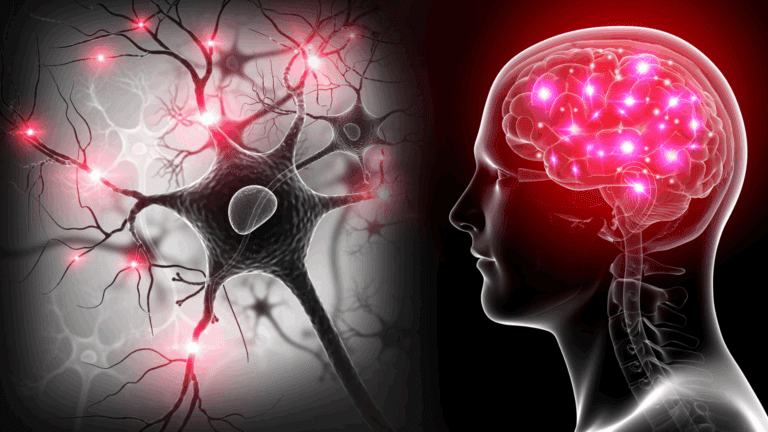
What I have observed consistently across 26 years of practice is that this gravitational pull is not a failure of motivation or insight. It is a self-concept problem, and the sense of self, at the neurological level, is not what most people believe it to be. Your self-model is not a fixed psychological fact. It is a continuously running program, maintained by specific circuits that rehearse and reinforce your personal framework thousands of times per day without your conscious participation. The default mode network, the primary self-referential processing system, generates this inner narrative automatically during every unoccupied moment: who you are, what you are capable of, what you deserve, what threatens you, and what is possible for you, constructing a core identity and self-perception framework that operates entirely below conscious awareness. This is not metaphor. Raichle et al. (2001) first identified this system’s role in self-referential processing, and subsequent research by Andrews-Hanna et al. (2014) mapped its subdivisions with precision: the medial temporal subsystem constructing autobiographical accounts, the dorsomedial subsystem running social evaluations, and the midline core integrating all of it into the felt sense of “me.”
The practical consequence of this architecture is that the self-concept operates as a filter on all incoming experience. This system does not passively store a self-model and then wait for you to consult it. It actively shapes perception, attention, and memory in real time. Information that confirms the existing model passes through efficiently. Information that contradicts it is attenuated, reframed, or discarded before it reaches conscious awareness. This is why two people can receive identical feedback and process it in entirely different ways: their default mode systems are running different programs, and those programs determine what the feedback means before the person has a chance to evaluate it rationally.
The implications are direct: if you are attempting behavioral change while your self-referential architecture remains unmodified, you are running new software on old hardware. The hardware will override the software every time the system is under load. This is why change collapses under stress. This is why a person can perform brilliantly in low-stakes environments and revert to old habits the moment real pressure arrives. The self-concept activates, the default mode system reinstates the familiar model, and the new behavior, which requires frontal cortex resources that are now occupied by the internal conflict, simply drops offline. Understanding neuroplasticity identity change at this level reveals why the mind resists transformation even when the person consciously pursues it.
The Default Mode Network and the Construction of Self
How This System Builds and Maintains Your Inner Story
The default mode network is not idle circuitry. It is among the most metabolically active systems in the cortex, consuming roughly 20% of the total energy budget even during apparent rest. Buckner, Andrews-Hanna, and Schacter (2008) demonstrated that this system activates preferentially during three categories of cognition: autobiographical memory retrieval, future simulation, and self-referential evaluation. In practical terms, this is the system that reminds you who you are, replays your past to confirm that account, and projects your future based on the self-concept it has already constructed.
What makes this system so powerful, and so resistant to change, is its automation. It operates below conscious threshold for most of its activity cycle. You do not decide to rehearse your self-referential patterns. You do not choose to evaluate incoming experience against your existing self-model. The system runs continuously, like background processes on a server, shaping perception before you are aware of perceiving. When someone gives you positive feedback that contradicts your self-concept, the system does not update the model. It reinterprets the feedback. When you achieve something that exceeds what the current program considers possible, the system generates explanations that preserve the original architecture: luck, timing, an anomaly. The program protects itself.
In my work with individuals navigating significant professional and personal transitions, I observe this protective function in its most sophisticated form. A person who has operated for decades as “the responsible one” or “the person who holds everything together” will unconsciously sabotage opportunities to share that burden, not because they enjoy it, but because their default mode system has encoded that role as core to who they are. Releasing it feels, at the neural level, like self-dissolution. The threat-detection systems, the amygdala and the anterior insula, respond to challenges against the sense of self with the same alarm architecture they deploy for physical danger. Eisenberger (2012) established that social threats to one’s self-concept activate the dorsal anterior cingulate cortex and anterior insula: the same regions that process physical pain. The implication is clear: the cortex does not distinguish between a threat to your body and a threat to your psychological structure. Both register as survival emergencies. This connection between the self-model and relational behavior is especially pronounced in intimate contexts: the sense of self a person carries shapes how self-concept drives partner selection patterns, often replicating familiar relational dynamics long after the underlying self-concept has been ready to shift.
Why insight alone cannot rewire this architecture. This neurobiology explains a phenomenon I encounter in virtually every engagement: the intelligent person who understands their pattern completely and cannot change it. Understanding is a prefrontal cortex function: a cognitive process that operates through language, logic, and conscious reasoning. The self-referential architecture it needs to modify operates in the default mode system: a deeper layer that communicates through automatic associations, emotional valence, and predictive models running below the threshold of deliberation. No amount of practice focused solely on awareness can talk this system into updating its model, any more than you can talk your immune system into ignoring an antigen. The systems speak different languages.
Brewer et al. (2011) provided some of the clearest neuroimaging evidence for this disconnection. Experienced practitioners with years of introspective training showed reduced default mode activation during self-referential tasks, but crucially, this reduction was not produced by cognitive effort or analytical insight. It was produced by thousands of hours of real-time experiential practice that gradually retrained the default firing patterns. The self-referential circuitry did not change because these individuals understood it better. It changed because they repeatedly engaged it under conditions that forced synaptic reorganization. The same principle applies across every domain of Neural Recalibration™, whether the target is anxiety-driven threat circuits or compulsive thought loops locked in repetitive firing, the neural mechanism of change operates through the same reconsolidation architecture.
Real-Time Neuroplasticity™ works at the moment the default mode system is active: when the self-referential program is running, when the old self-model is firing in response to a live challenge, because that is the only moment the architecture is accessible to modification. Retrospective analysis, however brilliant, arrives after the reconsolidation window has closed. The circuit has already re-stabilized by the time you are describing it.
The Rigidity-Flexibility Spectrum: What Locks the Self-Concept in Place
When efficiency becomes a cage. A rigid self-concept is not a character flaw. It is a neural efficiency strategy that has outlived its usefulness. The cortex consolidates frequently used self-referential patterns into automated circuits precisely because automation is metabolically efficient. A person who has built a successful career on being “the strategist” or “the decisive one” has a self-referential system that has optimized around that self-concept with extraordinary precision. Every decision, every social interaction, every internal evaluation runs through the filter of that self-model. The efficiency is genuine: it reduces cognitive load, speeds decision-making, and provides a stable platform for performance.
The cost becomes visible only when circumstances demand a different version of the person: when the situation requires precisely the brain adaptability that rigid consolidation has suppressed. A promotion that requires vulnerability instead of control. A relationship that requires receptivity instead of management. A life transition that requires letting go of the self-concept that produced every previous success. At this inflection point, the rigid sense of self becomes a cage: sometimes manifesting as a full self-identity crisis, not because the person lacks the capacity to change, but because the architecture that maintains the current self-model is precisely the architecture that resists modification. This is where identity inertia becomes most visible: the accumulated weight of decades of self-reinforcing beliefs and patterns creating resistance proportional to their prior success.
Spreng et al. (2010) showed that default mode activity increases during periods of self-continuity maintenance: the system works harder to maintain the existing self-model when it is under threat. This means that the moments when a person most needs cognitive flexibility are the moments when their architecture is most actively opposing it. The person sitting in my office who says “I know I need to change but something in me will not let me” is providing an accurate neurological report: the default mode network is running a self-preservation protocol that overrides conscious intention.
The impostor architecture: when performance and self-concept diverge. Impostor experience, the persistent conviction that your achievements do not reflect genuine capability, is not a confidence problem. It is a self-concept mismatch at the neural level. The default mode system maintains a self-model that was calibrated to an earlier version of the person: less accomplished, less capable, less deserving, a neural architecture rooted in the same circuits that sustain chronic insecurity and self-doubt. Meanwhile, the higher-order cortical systems driving actual performance have continued to develop and produce results that the self-model cannot integrate.
The experience is a form of neural lag. Performance has updated. The sense of self has not. The gap between them generates a specific kind of emotional distress that cognitive reframing cannot resolve, because the distress is not produced by a thought error. It is produced by a genuine discrepancy between two systems: one that knows what you can do and one that maintains a model of who you are that contradicts it.
In my practice, I consistently find that impostor experience resolves not when the person “believes in themselves more” (a prescription that fundamentally misunderstands the mechanism), but when the self-model maintained by this system is updated to incorporate the reality that the higher-order systems have already been operating from: a process that begins with the deceptively simple capacity to give yourself credit for what you have already demonstrated. This is a calibration problem. The performance data exists. The self-referential architecture simply has not been updated to reflect it. Real-Time Neuroplasticity™ addresses the update directly, at the circuit level, during the live moments when the mismatch is generating its signal.
How Self-Concept Restructuring Works: The Neuroscience of Becoming
Synaptic reconsolidation and the update window. Every time the cortex retrieves a self-referential memory or activates a pattern relevant to the sense of self, the synaptic connections maintaining that pattern enter a brief period of lability: a reconsolidation window during which the architecture is temporarily modifiable. Nader, Schafe, and Le Doux (2000) first demonstrated this principle in fear memories, showing that reactivated memories must be reconsolidated through new protein synthesis or they degrade. Subsequent research by Schiller et al. (2010) extended this to human emotional memories, establishing that introducing new sensory information during the reconsolidation window permanently alters the original memory trace.
The implications for reshaping one’s identity are significant. The self-model maintained by this system is not a monolithic structure. It is a collection of associated memory traces, emotional tags, and predictive patterns that are individually accessible during reconsolidation. When a specific self-referential pattern activates (“I am not the kind of person who can handle this level of responsibility”), the synaptic connections maintaining that specific self-assessment become temporarily fluid. This is the intervention window. This is where targeted restructuring produces results that no amount of retrospective discussion can match.
What makes this work neuroscientifically demanding is the precision required. The reconsolidation window is brief: research suggests approximately six hours after reactivation, with maximum lability in the first minutes. Missing the window means the circuit re-stabilizes in its original configuration. Arriving during the window with the right corrective experience means the circuit reconsolidates with the new information integrated. This is why I embed into my clients’ lives rather than confining the work to scheduled appointments. The self-referential patterns do not fire on a weekly schedule. They fire during a board meeting when a colleague challenges your competence. They fire during an intimate conversation when vulnerability becomes available and the self-concept says “not safe.” They fire at 2 a.m. when the self-referential system replays a version of you that no longer reflects reality. Those are the moments where the architecture is accessible. Those are the moments where Real-Time Neuroplasticity™ operates.
From rigid program to adaptive architecture. Restructuring the self-concept is not the destruction of who you are and its replacement with something new. That framing reflects a misunderstanding of how the self-referential system operates. The goal is not to dismantle the sense of self but to restore its flexibility: to shift a person from a rigid program that cannot incorporate new data to an adaptive architecture that maintains coherence while allowing updates: the core objective of The Self-Architecture Protocol™. This is the difference between a fixed self-concept and a flexible identity: one that can integrate new evidence without triggering a threat response.
Northoff et al. (2006), in their comprehensive meta-analysis of self-referential processing, identified that the medial prefrontal cortex serves as a gateway between external feedback and internal self-representation. In individuals with high adaptability, this gateway operates bidirectionally: the self-model informs perception, and perception informs the self-model. In individuals with cognitive rigidity, the gateway becomes unidirectional: the self-model filters perception, but perception cannot modify the self-model. External evidence that contradicts the existing self-concept is reinterpreted, minimized, or simply not encoded.
Restoring bidirectional flow at this gateway is the core mechanism of restructuring. In practical terms, this means creating conditions in which this system can receive and integrate corrective self-referential information without activating its threat-protection response. The Allostatic Reset Protocol, a component of the broader Real-Time Neuroplasticity™ methodology, works specifically on this: resetting the nervous system’s baseline state so that feedback relevant to the sense of self is processed as data rather than as danger. When the amygdala is not treating every self-concept challenge as a survival threat, the medial prefrontal cortex can do what it is designed to do: update the model based on current evidence. Reversal learning, the capacity to abandon a previously reinforced response when conditions change, depends on exactly this cortical circuitry, and restoring it is central to the science behind lasting personal change.
There is also a temporal dimension that most people underestimate. Neuroplasticity is the brain’s remarkable capacity to reorganize itself, but restructuring the self-concept does not happen in a single corrective event. It happens through the accumulation of many corrective events, each one slightly modifying the synaptic weighting of the self-referential circuitry. Bassett and Sporns (2017), in their foundational work on circuit-level neuroscience, demonstrated that neural systems reorganize through gradual shifts in connectivity strength, not through sudden architectural breaks. The old pattern weakens incrementally as its neural pathways are activated less frequently. The new pattern strengthens as its connections are activated more: a process supported by ongoing neurogenesis that provides fresh cellular substrate for the emerging architecture. These functional changes in connectivity are quiet, often imperceptible in the moment, and recognizable only in retrospect.
The documented observation that confirms this mechanism is consistent across my practice: clients who have achieved deep restructuring report not a sudden transformation but a gradual realization that they are already different. The self-referential system has been updating in the background, through accumulated real-time interventions, and the new self-model emerges not as a dramatic break but as a recognition that the old one simply no longer matches the data. “I used to be someone who could not tolerate uncertainty” becomes “I am not sure when that changed, but I notice I handle it differently now.” This is what successful recalibration sounds like. Not a story of conquest. A report from a nervous system that has quietly reorganized: evidence that neural plasticity, when directed with neuroscientific precision, can genuinely enhance how a person experiences themselves and change your life at its foundation.
The Twenty Articles in This Hub: What They Address
The articles within this hub examine the specific mechanisms, patterns, and intervention points relevant to how the sense of self can adapt and restructure. They cover the neuroscience of self-referential processing, the architecture of the default mode system, the documented patterns that emerge when the self-concept becomes rigid, and the neuroscience-informed research that informs targeted restructuring. Each article applies the Problem-Mechanism-Solution framework that governs all MindLAB content: identify the behavioral pattern, trace it to its neural substrate, and outline how that substrate can be modified.
Topics include how the cortex constructs and maintains self-referential patterns, why the self-concept resists change even when the person consciously desires it, the neural basis of impostor experience, how cognitive flexibility and adaptability are related at the circuit level, and what the neuroscience reveals about the conditions under which deep restructuring genuinely occurs. Several articles address specific populations: high-performing professionals whose competence-based self-model blocks delegation, individuals in career transitions whose previous self-concept no longer maps to their current trajectory, and people navigating relationship changes that demand a version of themselves their architecture has never had to produce.
What connects every article in this hub is a single premise: the sense of self is not discovered, it is constructed, and what was constructed by experience can be reconstructed through targeted intervention. The question is never whether the cortex can change. Neuroplasticity guarantees that it can. The question is whether the change is directed with precision or left to the same accidental reinforcement patterns that built the rigid architecture in the first place.
This is Pillar 5 content (Neural Recalibration™), and the work here addresses patterns at the level of their neural origin, not their behavioral surface.
Schedule a Strategy Call with Dr. Ceruto
If the self-concept you are operating from is producing outcomes you do not want, if you recognize that who you believe yourself to be is constraining who you are capable of becoming: the problem is not willpower, not insight, and not self-awareness. It is an architecture that has not yet been updated.
Identity Formation Across Neural Systems
The brain’s identity architecture connects to several cognitive and relational systems. Self-awareness and interoception provides the sensory foundation: the brain’s ability to detect and interpret its own internal signals is the raw material from which identity is continuously constructed. Cognitive flexibility determines whether identity remains rigid or adapts to new evidence and experience, a distinction that becomes critical during major life transitions. And the speed at which you can integrate new capabilities into your self-model depends on learning agility: the neural machinery that encodes new skills and transforms them from external effort into internalized competence.
Schedule a strategy call with Dr. Ceruto to explore how the self-referential patterns mapped in this hub apply to your specific situation and what targeted restructuring would look like for the changes you need to make.
About Dr. Sydney Ceruto
Founder & CEO of MindLAB Neuroscience, Dr. Sydney Ceruto is the pioneer of Real-Time Neuroplasticity™: a proprietary methodology that permanently rewires the neural pathways driving behavior, decisions, and emotional responses. Dr. Ceruto holds a PhD in Behavioral & Cognitive Neuroscience (NYU) and Master’s degrees in Clinical Psychology and Business Psychology (Yale University). Lecturer, Wharton Executive Development Program, University of Pennsylvania.
References
- Buckner, R. L., Andrews-Hanna, J. R., & Schacter, D. L. (2008). The brain’s default network: Anatomy, function, and relevance to disease. Annals of the New York Academy of Sciences, 1124(1), 1–38. https://doi.org/10.1196/annals.1440.011
- Andrews-Hanna, J. R., Smallwood, J., & Spreng, R. N. (2014). The default network and self-generated thought: Component processes, dynamic control, and clinical relevance. Annals of the New York Academy of Sciences, 1316(1), 29–52. https://doi.org/10.1111/nyas.12360
- Brewer, J. A., Worhunsky, P. D., Gray, J. R., Tang, Y. Y., Weber, J., & Kober, H. (2011). Meditation experience is associated with differences in default mode network activity and connectivity. Proceedings of the National Academy of Sciences, 108(50), 20254–20259. https://doi.org/10.1073/pnas.1112029108
- Northoff, G., Heinzel, A., de Greck, M., Bermpohl, F., Dobrowolny, H., & Panksepp, J. (2006). Self-referential processing in our brain: A meta-analysis of imaging studies on the self. NeuroImage, 31(1), 440–457. https://doi.org/10.1016/j.neuroimage.2005.12.002
- Raichle, M. E., MacLeod, A. M., Snyder, A. Z., Powers, W. J., Gusnard, D. A., & Shulman, G. L. (2001). A default mode of brain function. Proceedings of the National Academy of Sciences, 98(2), 676–682. https://doi.org/10.1073/pnas.98.2.676
- Schiller, D., Monfils, M. H., Raio, C. M., Johnson, D. C., LeDoux, J. E., & Phelps, E. A. (2010). Preventing the return of fear in humans using reconsolidation update mechanisms. Nature, 463(7277), 49–53. https://doi.org/10.1038/nature08637
- Eisenberger, N. I., Lieberman, M. D., & Williams, K. D. (2003). Does rejection hurt? An fMRI study of social exclusion. Science, 302(5643), 290–292. https://doi.org/10.1126/science.1089134
- Eisenberger, N. I. (2012). The neural bases of social pain: Evidence for shared representations with physical pain. Psychosomatic Medicine, 74(2), 126–135. https://doi.org/10.1097/PSY.0b013e3182464dd1
This article explains the neuroscience underlying how the sense of self adapts and restructures. For personalized neurological assessment and intervention, contact MindLAB Neuroscience directly.
Key Questions About Identity & Neural Flexibility
Why do I keep reverting to old patterns even when I understand exactly what needs to change?
Understanding is a prefrontal cortex function. The self-referential architecture that keeps pulling you back operates in the default mode system: a deeper layer that communicates through automatic associations and predictive models running below the threshold of deliberation. This system rehearses your inner story thousands of times daily without conscious participation (often in the form of persistent negative self-talk), filtering incoming experience through the existing self-model and discarding information that contradicts it. Insight cannot restructure this architecture because the two systems speak different languages. In my practice, I use Real-Time Neuroplasticity™ to intervene during the reconsolidation window, the brief moment when the self-referential pattern is actively firing and its synaptic connections become temporarily modifiable, because that is the only moment the architecture is accessible to genuine restructuring.
Why does change feel threatening even when I consciously want it?
Your threat-detection systems respond to challenges against the self-concept with the same alarm architecture they deploy for physical danger. Research by Eisenberger established that the dorsal anterior cingulate cortex and anterior insula, regions that process physical pain, activate identically in response to threats to your sense of self. When you attempt to shift who you are, the default mode system runs a self-preservation protocol that overrides conscious intention. The cortex does not distinguish between a threat to your body and a threat to your self-concept. Both register as survival emergencies. My methodology works specifically on resetting the nervous system’s baseline state so that feedback relevant to the sense of self is processed as data rather than as danger.
What is the difference between building confidence and restructuring the self-concept at the neural level?
Identity Formation Across Connected Neural Systems
The neural architecture of identity does not operate in isolation: it interfaces with several cognitive systems that shape how the self-model is constructed, maintained, and revised. Self-awareness and interoception provide the sensory foundation for identity, as the brain’s capacity to monitor its own internal states determines how accurately the self-concept reflects actual physiological and emotional reality. Cognitive flexibility governs whether the identity system can update in response to new evidence or remains locked into outdated self-representations despite contradictory data. The mechanisms underlying learning agility and skill acquisition reveal how new competencies either integrate into or conflict with the existing self-model: the default mode network must reclassify the individual as someone who possesses these capabilities. And pattern recognition determines which environmental cues the brain selects as identity-relevant, filtering experience through the lens of who the individual believes themselves to be.
Confidence is a frontal cortex evaluation: a conscious belief about your capabilities. The self-concept is a default mode program that shapes perception, attention, and memory before conscious evaluation begins. The individual experiencing impostor patterns does not have a confidence deficit. They have a self-concept mismatch: their higher-order systems have continued producing results that their default mode self-model cannot integrate. Through Real-Time Neuroplasticity™, I update the self-model to incorporate the performance reality the higher-order systems have already been operating from. The shift is not motivational: it is architectural. Clients report not a dramatic transformation but a quiet recognition that the old self-model simply no longer matches the data. This content is for educational performance optimization and does not constitute medical advice.