Key Takeaways
- Creative activity reduces amygdala reactivity and raises prefrontal engagement: threat-response architecture shifts, not temporary distraction.
- Sustained creative practice correlates with hippocampus and anterior cingulate cortex engagement: emotional regulation, stress recovery.
- Creative flow lowers cortisol while raising endorphins and neurotrophic factors, training engagement instead of rumination.
- Creativity releases dopamine and oxytocin, countering anxious withdrawal and isolation, building emotional literacy and resilience.
- Making engages sensory, motor, and emotional circuits words cannot reach, building limbic and sensory-cortex pathways.
Anxiety lives in circuits that words cannot reach, and making something with your hands, voice, or body reaches them directly. Talking about worry engages the brain’s language regions, but the threat itself sits deeper, in sensory, motor, and emotional networks. When you paint, move, or build, you engage those exact circuits, which is why creative work can quiet an anxious brain in a way analysis alone rarely does.
In more than 26 years of practice, I have watched people who had talked about their anxiety for years finally shift it the first time they worked with their hands instead of their explanations. That is not a coincidence, and it is not magic. It is mechanism. What follows is how making things reshapes the anxious brain, and how to use it deliberately rather than hoping it helps.
Anxiety lives in circuits that words cannot reach. Making something with your hands, voice, or body reaches them directly, where the feeling is actually stored.
Why does talking about anxiety so often fail to move it?
Because talking primarily engages language-based regions, while the anxiety itself is held in older, deeper circuits. Many people I work with have spent years analyzing their worry (narrating it, dissecting it, arguing with it) and find that the intellectual brain stays on high alert the whole time. Endless analysis can actually reinforce the pattern, keeping the threat-detection system rehearsing the very fear it is trying to resolve. Creative work is different because it bypasses the overthinking trap and addresses emotion at the embodied, root level. When experience becomes color, movement, or rhythm, the brain’s own mechanisms for emotional processing come online: pathways that ordinary verbal reasoning does not consistently access. That direct route to the limbic system, through sensory and motor engagement, is what gives making things its leverage over worry.
What actually happens in the brain when you make something?
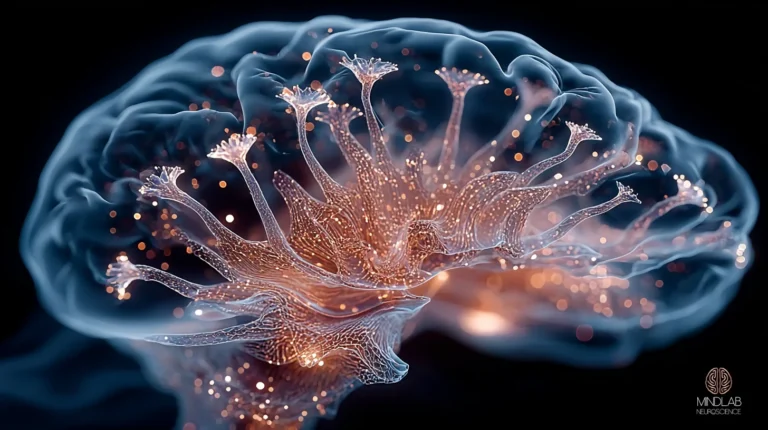
When a person genuinely engages in creative work, functional MRI studies reveal a decrease in amygdala reactivity, the region responsible for threat detection and panic, while the medial prefrontal cortex, which governs self-regulation, becomes more active. This is the core shift: the alarm quiets and the regulator strengthens. And it is not just a passing state. Creative tasks build new neural architecture for calm, increasing connectivity and remapping the circuits that encode emotional memory. People who make a regular practice of it report sharper clarity, steadier focus, and even relief from the kind of mental exhaustion that chronic anxiety produces. Recent work also links creative flow to higher levels of neurotrophic factors, proteins that support the growth and survival of neurons, so each genuine creative act becomes a step toward processing emotion at the neural level rather than around it.
The plasticity runs deeper still. When someone sketches, improvises music, or shapes a story, the connections between emotional-processing centers and higher-order thinking grow stronger, and sustained practice is associated with stronger functional engagement of the hippocampus, which handles learning and memory, and the anterior cingulate cortex, which supports emotional regulation. In effect, creative work establishes emotional rehearsal spaces in the brain, so that when real stress arrives, new response options are already available rather than having to be invented under pressure.
How does creative flow pull the brain out of rumination?
Flow is a neurological sweet spot where skill meets challenge, time seems to stretch, and anxiety recedes. The mechanism is specific: during absorbing creative activity, the default mode network, the source of self-referential worry and rumination, quiets through what researchers call transient hypofrontality. As that ruminative chatter drops, cortisol falls while endorphins and anandamide, sometimes called the bliss molecule, rise. The brain shifts from threat-scanning to open-ended processing. What I find most useful is that this does not require hours: even a few focused minutes a day, repeated, trains the brain to reach for constructive engagement instead of the worry loop. Done consistently, it lowers both the frequency and the intensity of anxious episodes by literally giving the rumination circuit something better to do.
Why does movement-based creativity reach anxiety that sitting still cannot?
Because the body stores stress in muscular tension and restricted breath, and movement-based creative work releases it through the same channels where it is held. Expressive dance, somatic improvisation, rhythmic drumming: these activate proprioceptors, the vestibular system, and the interoceptive networks that directly recalibrate the fight-or-flight response. When the body moves creatively, it sends the brain a powerful signal that change is possible and that the environment is safe. Recent imaging work shows that creative movement can modulate the vagus nerve, lowering heart rate and stabilizing mood: a brain-body loop in which emotional insight fuels further creativity and further creativity deepens regulation. For people whose anxiety is highly physical, this somatic route often does more than any amount of cognitive effort, because it works at the level where the stress actually lives, the same territory underlying how unresolved stress and trauma shape the body.
How creative work builds emotional literacy and lasting resilience
Creating something requires naming, externalizing, and transforming an internal state. When an emotion is molded into clay, sung aloud, or set down as a story, it takes on form without shame, and that act of giving feeling a shape changes how the brain stores it. The labeling of emotion through creative work alters the encoding of memory, reducing its power to trigger stress later. This is the foundation of the emotional literacy that lets you read and regulate feeling states: as people craft, paint, or perform, they discover nonverbal languages that enrich everyday communication and strengthen connection. The brain’s reward system reinforces the whole process: painting, singing, and writing stimulate natural pleasure circuits and release dopamine, while the social dimension of shared creativity adds oxytocin, countering exactly the isolation and disconnection that chronic anxiety tends to breed.
Not every creative modality reaches the same circuits. The table below maps the most useful forms to the neural mechanism each engages and the kind of anxiety it tends to help most.
| Creative modality | Primary neural mechanism | Best suited for |
|---|---|---|
| Visual art (painting, sketching, collage) | Lowers amygdala reactivity and engages medial prefrontal regulation | Rumination and intrusive worry |
| Movement (dance, somatic improvisation, drumming) | Activates proprioceptive, vestibular, and interoceptive networks and modulates the vagus nerve | Physical, body-held anxiety |
| Music and voice (singing, improvisation) | Quiets the default mode network through flow and raises endorphins | Spiraling self-referential thought |
| Writing and storytelling | Labels and externalizes emotion, altering how memory is encoded | Unprocessed or unnamed feeling |
How I help people use this deliberately
The most common mistake I see is treating creativity as something you either have or you don’t. You do not need to be an artist for any of this to work; the neurochemistry does not check your skill level. What matters is genuine, absorbed engagement: the focused state where self-monitoring drops and sensory processing rises. One composite from my practice makes this concrete. A high-achieving woman came to me after years of talk-based approaches that had given her a sophisticated vocabulary for her anxiety and almost no relief from it. We started small: ten minutes of unstructured drawing each morning, with no goal beyond moving the pen. Within a few weeks her own reports, and the steadiness in how she carried herself, told the story before any formal measure could. The point was never the drawings. It was that her nervous system was finally learning, through her hands, what it had never learned through her explanations. From there, the practices that tend to help most are simple and daily:
- Morning sketching to map the shape of a worry rather than narrate it
- Voice-recording spontaneous song or spoken-word reflection
- Mindful movement breaks that lean into playful, childlike motion
- Found-object collage to physically rework a current obstacle
- A short photography walk capturing moments of safety and beauty
- A few lines of poetry or a tiny story to narrate the present moment
None of these requires hours or perfectionism, only consistency and a genuine willingness to engage. Even brief, low-pressure creative exercises repeated daily can strengthen prefrontal regulation and reduce amygdala reactivity over a span of weeks, which is exactly why accessibility, not ambition, is the foundation of lasting change. It helps to give the practice a home, too: a designated corner with supplies, an instrument, or a movement mat lowers the activation energy and makes the daily return easier. These small practices accumulate into real flexibility where rigid, polarized thinking once dominated.

What real change looks like over time
Transformation through creative practice is rarely instant, but it is both measurable and durable. Consistent engagement produces visible changes in amygdala reactivity, cortisol regulation, and prefrontal connectivity over a span of weeks of sustained practice. What you tend to notice is concrete: fewer episodes of spiraling worry, easier access to calm and focus during genuinely hard stretches, greater comfort with ambiguity, and a steadier sense of agency. Those shifts are the felt signature of the brain rewiring itself in real time: concrete feedback that the practice is working. Made a lifelong habit, creative work keeps the brain’s capacity to reorganize itself switched on, which is associated with sharper executive function and focus, steadier memory, and a buffer against the emotional wear of chronic stress. It is not a luxury layered on top of mental health. For an anxious brain, it is one of the most biologically direct routes back to regulation there is, and a cornerstone of anxiety and threat calibration.
How does creative expression reduce anxiety at the neurological level?
Creative activities like painting, movement, and music activate sensory, motor, and emotional circuits at once: regions that verbal processing alone cannot reach. Functional neuroimaging shows that sustained creative engagement reduces amygdala reactivity while strengthening prefrontal regulation, shifting the brain’s threat-response architecture. This dual activation builds new pathways in the limbic system and sensory cortex, rerouting the neural patterns that maintain anxious states rather than simply suppressing them through cognitive effort.
What happens in the brain during a creative flow state?
During creative flow, the default mode network, responsible for rumination and self-referential worry, quiets significantly. Cortisol drops while endorphins and brain-derived neurotrophic factor rise, creating a neurochemical environment that supports calm focus. The prefrontal cortex shifts from threat-scanning to open-ended processing, and cross-hemispheric connectivity increases. With repeated practice, this trains the brain to favor constructive engagement over worry loops, building a measurable resilience buffer.
Can creative practice physically change brain structure over time?
Yes. Neuroplasticity research indicates that consistent creative practice is associated with stronger functional engagement of the hippocampus and anterior cingulate cortex: two regions directly involved in emotional regulation and stress recovery. Each session strengthens synaptic pathways and, over weeks and months, contributes to measurable changes in how these emotion-regulation networks function. This is not metaphorical: it is gradual, functional rewiring that accumulates with sustained engagement.
Why does movement-based creativity help with anxiety more than sitting still?
Movement-based creative work (expressive dance, somatic improvisation, rhythmic drumming) activates proprioceptors, the vestibular system, and interoceptive networks that recalibrate the fight-or-flight response at a physiological level. The body stores stress in muscular tension and restricted breath; when movement engages those stored patterns through creative action rather than analysis, it releases them through the same sensorimotor channels where they are held, producing a more complete nervous-system reset than cognitive approaches alone.
How often should someone practice for measurable anxiety reduction?
Research on neuroplasticity suggests that roughly 20 to 30 minutes of focused creative engagement, a few times a week, can produce measurable shifts in cortisol patterns and amygdala reactivity over a span of weeks. The decisive factor is immersive engagement: the brain has to enter a state of focused absorption where self-monitoring decreases and sensory processing increases. Brief, distracted creative activity does not produce the same neurochemical cascade.
References
- Gross, J. J. (2015). Emotion regulation: Current status and future prospects. Psychological Inquiry, 26(1), 1-26. https://doi.org/10.1080/1047840X.2014.940781
- Ochsner, K. N., and Gross, J. J. (2005). The cognitive control of emotion. Trends in Cognitive Sciences, 9(5), 242-249. https://doi.org/10.1016/j.tics.2005.03.010
- Davidson, R. J. (2000). Affective style, psychopathology, and resilience: Brain mechanisms and plasticity. American Psychologist, 55(11), 1196-1214. https://doi.org/10.1037/0003-066X.55.11.1196
- Etkin, A., Büchel, C., and Gross, J. J. (2015). The neural bases of emotion regulation. Nature Reviews Neuroscience, 16(11), 693-700. https://doi.org/10.1038/nrn4044
- McEwen, B. S. (2007). Physiology and neurobiology of stress and adaptation: Central role of the brain. Physiological Reviews, 87(3), 873-904. https://doi.org/10.1152/physrev.00041.2006
Reach the Anxiety Words Can’t
If you have talked about your anxiety for years and it still has the same grip, the issue may be that it lives where talk cannot reach. Dr. Sydney Ceruto works with the sensory and emotional circuits where anxiety is actually stored, using the science of neuroplasticity to retrain them. Schedule a strategy call to begin.
One hour with Dr. Ceruto