Life Coach NYC

New York City does not produce ordinary stress. It produces a particular kind — sustained, ambient, comparative — the kind that embeds itself into neural architecture and starts operating as background circuitry. The work of a life coach in NYC is, at its best, a dismantling of that architecture: not by managing your reaction to the city, but by identifying the specific circuits that the city has shaped and intervening at the structural level.

Dr. Sydney Ceruto, neuroscientist and founder of MindLAB Neuroscience, works with individuals across New York City — from Wall Street's financial corridor to Midtown's corporate and creative district — to address what conventional life coaching cannot: the neural patterns driving the decisions, the stagnation, and the cycles that no amount of motivation has been able to break.

Book a Strategy Call

Why New York City Demands a Different Kind of Work

Every city shapes its inhabitants, but New York operates at a different intensity. Eight million people in 302 square miles. The highest cost of living in the United States. A cultural narrative — “making it” — that functions less as aspiration and more as identity architecture. The city does not simply present challenges. It installs a lens through which every personal decision, every career move, every relationship gets filtered through a single question: am I keeping up?

That question, repeated daily across a decade or two, produces measurable changes in how the brain processes reward, threat, and self-worth. The prefrontal cortex — responsible for deliberate decision-making and long-term planning — becomes increasingly subordinated to threat-detection circuits running on hypervigilance inputs: the subway car that feels like sensory overload, the Midtown block where every other person looks like they are moving faster than you, the group chat where someone just closed a round or got a promotion or relocated to a bigger apartment. These are not feelings. They are neural events, and they compound.

The Problem With Conventional Life Coaching in NYC

New York has no shortage of life coaches. The city has also never had more people running in place — high-functioning, intelligent, motivated individuals who have tried the tools and remain stuck in the same patterns, cycling through the same relationship dynamics, the same career hesitations, the same internal narrative that more effort will eventually produce a different result.

The reason conventional life coaching frequently fails in this environment is structural: it targets the output without addressing the architecture producing it. Accountability frameworks, goal-setting systems, and motivational reframes operate at the level of conscious intention. They do not reach the neural circuits that govern automatic behavior, emotional reactivity, and the deep beliefs about self that were installed long before the client walked into the coach’s office.

When a finance professional at a Wall Street firm cannot detach their identity from their P&L — when their limbic system has fused the concept of “performance” with the concept of “worth” — telling them to reframe their relationship to success is not a solution. It is a surface intervention on a structural problem. The circuit runs deeper than the reframe can reach.

When a creative director in Midtown is watching their industry contract — the Omnicom-IPG merger cutting thousands of roles, AI absorbing tasks that defined their professional identity for fifteen years — the anxiety they are carrying is not simply about job security. It is about the neural architecture of identity itself. Who am I if the thing that defined me no longer exists? That question is not answered by a coaching framework. It requires structural intervention at the level where identity is actually constructed and maintained.

Life coaching and personal development — neural pathway restructuring with copper fragments dissolving as new connections form

What the MindLAB Methodology Actually Addresses

Dr. Ceruto’s approach — Real-Time Neuroplasticity™ — is built on a foundational premise that most approaches ignore: behavior is downstream of neural architecture, and the architecture can be directly changed.

This is not metaphor. The brain is physically plastic — its circuits strengthen with use and weaken with disuse, its connectivity patterns shift in response to targeted intervention, its reward pathways can be recalibrated when the conditions for recalibration are precisely created. The question is not whether the brain can change. The question is whether the intervention being applied is precise enough to produce the change that is actually needed.

For the Wall Street analyst who has spent a decade measuring self-worth in basis points, the work begins with mapping the specific neural pathways linking performance metrics to identity — the prefrontal-limbic circuits that activate threat responses when a bonus falls short or a competitor outperforms. The intervention does not tell the client to care less about performance. It restructures the circuit that has fused performance with survival.

For the creative professional navigating industry disruption, the work targets the identity architecture that was built around professional role — identifying the neural scaffolding that made “creative director” feel synonymous with “self” and beginning to reconstruct a more durable foundation that does not depend on market conditions to remain intact.

For the person who has been in New York for fifteen years and cannot understand why the life they built does not feel like the life they wanted — the work is diagnostic before it is anything else. What is the neural model that was operating when those choices were made? Where did the architecture diverge from the actual self? Where is it still diverging, and what is maintaining the gap?

The NYC Comparison Corridor

One of the most consistent neural patterns in New York clients is what might be called comparison architecture — a threat-detection system that has been trained, through years of urban density, to constantly scan for social positioning data. The subway car is a data input. The LinkedIn notification is a data input. The dinner party where someone mentions their co-op purchase is a data input. The brain is not wrong to process these signals. It is doing exactly what it was built to do: gather threat and status information from the environment and update the self-model accordingly.

Neuroscience consultation — rosewood table with crystal brain sculpture and branded journal for strategy call preparation

The problem is calibration. When the comparison system runs continuously on a city-scale input feed, the self-model it produces is chronically distorted — biased toward underestimating personal position, biased toward weighting others’ visible achievements over one’s own internal experience, biased toward interpreting ordinary plateaus as evidence of fundamental deficiency.

This is not low self-esteem in the conventional sense. Many of the people carrying this architecture are externally successful. They have the credentials, the titles, the address. What they cannot do is feel the stability that the external evidence should logically produce — because the neural system processing that evidence was calibrated in an environment designed to prevent satisfaction. That is not a character flaw. It is a predictable output of a specific neural architecture operating in a specific city.

The Relocation Wave and What It Reveals

Since 2020, New York has experienced significant outmigration — and significant return. The people who left and came back, or who left and did not, or who stayed and watched their social network scatter, frequently arrive at this work carrying a version of the same question: I thought leaving would solve it, or I thought staying would prove something, but neither produced what I expected.

This is one of the clearest demonstrations of the architectural nature of these patterns: they travel. The comparison circuit that activated every morning on the subway activated just as reliably in the quiet of a house in Connecticut or the calm of a smaller city. The neural architecture was not installed by the geography. The geography was the environment in which architecture that was already present became most visible.

Understanding what was already present — before New York, before the career, before the first version of the self that you brought to this city — is often where the most significant work is done.

Two NYC Offices. One Methodology.

Dr. Ceruto’s work is available at two locations in New York City, each serving the distinct pressures of their respective districts. The methodology is identical. The context — and the specific patterns that context tends to produce — differs enough to warrant its own entry point.

Our Locations

Wall Street

99 Wall St

646-640-0648

Finance operates on a feedback loop that the brain finds genuinely difficult to exit: performance produces reward, reward reinforces identity, identity demands performance. For professionals in the financial district u2014 where JPMorgan's five-day return-to-office mandate restored full floor occupancy and bonus culture resumed its function as a primary source of self-measurement u2014 the neural fusion of professional output and personal worth is not incidental. It is structural, and it requires structural intervention.

View services →

Midtown Manhattan

31 W 34th St 7th Floor

646-212-2738

Midtown's corporate and creative corridor is navigating an identity rupture that no motivational framework was designed to address: the Omnicom-IPG consolidation, WPP restructuring, agency contraction across the industry, and AI displacement of creative work have left professionals whose entire neural identity architecture was built around their craft facing a question the architecture was never designed to answer u2014 who am I if the work disappears?

View services →
Dr. Sydney Ceruto, PhD — Founder, MindLAB Neuroscience

Dr. Sydney Ceruto, PhD — Founder & CEO, MindLAB Neuroscience

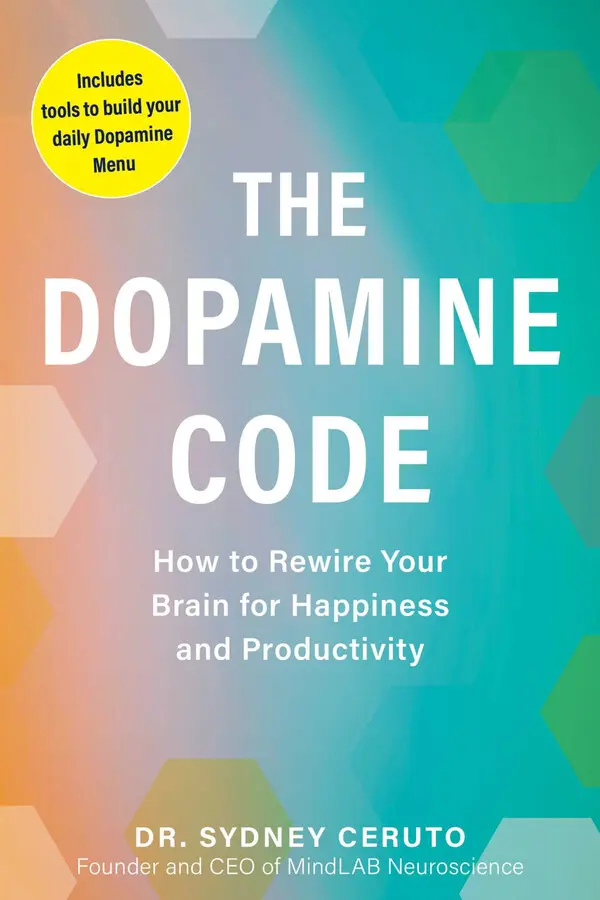
Dr. Ceruto holds a PhD in Behavioral & Cognitive Neuroscience from NYU and two Master’s degrees from Yale University. She lectures at the Wharton Executive Development Program at the University of Pennsylvania and has been an Executive Contributor to the Forbes Coaching Council since 2019. Dr. Ceruto is the author of The Dopamine Code (Simon & Schuster, June 2026). She founded MindLAB Neuroscience in 2000 and has spent over 26 years pioneering Real-Time Neuroplasticity™ — a methodology that permanently rewires the neural pathways driving behavior, decisions, and emotional responses.

References

Davidson, R. J., & McEwen, B. S. (2012). Social influences on neuroplasticity: Stress and interventions to promote well-being. *Nature Neuroscience*, 15(5), 689–695. https://doi.org/10.1038/nn.3093

Liston, C., McEwen, B. S., & Casey, B. J. (2009). Psychosocial stress reversibly disrupts prefrontal processing and attentional control. *Proceedings of the National Academy of Sciences*, 106(3), 912–917. https://doi.org/10.1073/pnas.0807041106

Draganski, B., & May, A. (2008). Training-induced structural changes in the adult human brain. *Behavioural Brain Research*, 192(1), 137–142. https://doi.org/10.1016/j.bbr.2008.02.015

Arnsten, A. F. T. (2009). Stress signalling pathways that impair prefrontal cortex structure and function. *Nature Reviews Neuroscience*, 10(6), 410–422. https://doi.org/10.1038/nrn2648

Success Stories

“My body had simply stopped knowing when to sleep. Crossing time zones weekly for over two years had broken something fundamental. Dr. Ceruto identified the disruption at the level of my suprachiasmatic nucleus and recalibrated the signaling pattern driving the dysfunction. Within weeks, my circadian rhythm locked back in. I sleep now. Consistently. Regardless of where I land.”

Jonathan K. — Diplomat Geneva, CH

“Every system, every supplement, every productivity method I tried collapsed within weeks — nothing addressed why my attention kept fragmenting. Dr. Ceruto identified the dopamine regulation pattern hijacking my prefrontal cortex. She restructured the architecture underneath. My brain holds now. That's not something I ever thought I'd be able to say.”

Derek S. — Film Producer Beverly Hills, CA

“I'd relocated internationally before, but this time my nervous system wouldn't settle. Everything unfamiliar registered as danger — new people, new routines, new sounds. Dr. Ceruto identified that my nervous system was coding unfamiliarity itself as threat and restructured the response at its source. The world stopped feeling hostile. I stopped bracing.”

Katarina L. — Gallerist Zurich, CH

“Dr. Ceruto's methodology took me from a founder on the verge of quitting to a leader capable of building the team and culture that drove Liquid IV's success. Her ability to restructure how I make decisions and lead under pressure changed the trajectory of the entire company. The company I built after working with her was fundamentally different — because I was fundamentally different.”

Brandin C. — Tech Founder Los Angeles, CA

“Anxiety and depression had been running my life for years. Dr. Ceruto helped me see them not as permanent conditions but as neural patterns with identifiable roots. Once I understood the architecture, I could change it. That level of clarity had never been available to me before. I don’t manage my anxiety anymore. It’s not there to manage.”

Emily M. — Physician Portland, OR

“My phone was the first thing I touched in the morning and the last thing I put down at night — every digital detox and willpower-based system I tried lasted less than a week. Dr. Ceruto identified the reinforcement loop that had hijacked my attention circuits and dismantled it. My phone is still in my pocket. The compulsion to reach for it isn't. That's a fundamentally different kind of fix.”

Tomás R. — Architect Lisbon, PT

Frequently Asked Questions About Life Coaching in NYC

What makes working with a life coach in NYC different from other cities?

The difference is not the practitioner — it is the architecture the city builds into the people who live here. New York's density, cost, competitive social landscape, and cultural narrative around success produce specific, identifiable neural patterns: chronic comparison activation, performance-identity fusion, hypervigilance calibrated to an urban threat environment that treats professional stagnation as existential risk. A methodology that does not account for the city's specific architectural output will miss what is actually driving the pattern. Dr. Ceruto's work begins with the neural patterns the environment has shaped, not with generic frameworks applied regardless of context.

How is neuroscience-based work different from conventional life coaching?

Conventional life coaching typically operates at the level of behavior and conscious intention — goal-setting, accountability, reframing, action planning. These tools are not without value, but they do not reach the neural architecture producing the behavior. Dr. Ceruto's methodology intervenes at the level of the circuit itself: identifying the specific neural patterns driving the decisions, the reactivity, and the cycles that conscious effort has not been able to shift, and creating the precise conditions for structural change in those circuits. The result is not a better strategy for managing the pattern. It is a dismantling of the pattern at its source.

Should I choose the Wall Street or Midtown Manhattan office?

The methodology is identical at both locations. Most people choose based on proximity to their workplace or home. If you are in or near the financial district — FiDi, TriBeCa, Battery Park — the Wall Street office at 99 Wall St is the natural entry point. If you work or live in Midtown, the Garment District, Chelsea, or anywhere along the Midtown corridor, the 31 W 34th St location is likely more convenient. If you are genuinely between the two, raise it during the Strategy Call and Dr. Ceruto will advise.

What is the Strategy Call and how does it work?

The Strategy Call is a 60-minute conversation conducted by phone — not video, not in-office. The phone format is intentional: eliminating visual input activates deeper processing and produces more accurate diagnostic data. The call is not a sales conversation or an intake form. It is a focused assessment where Dr. Ceruto maps the specific neural patterns driving your situation and determines whether this methodology is the right fit. By the end of the call, you will have clarity on what is happening, why it is happening, and what the path forward looks like. The fee is $250.

Why is the Strategy Call phone-only?

The decision to conduct Strategy Calls by phone rather than video is grounded in neuroscience. Visual input — especially face-to-face video — engages social performance circuits that can obscure the diagnostic signal. Phone conversation activates a different processing mode: more reflective, less self-monitoring, more accurate. Dr. Ceruto made this a permanent practice because the diagnostic quality of phone sessions consistently exceeds video. It is not a limitation of the format. It is a feature of it.

What does the program cost?

Program investment is discussed during the Strategy Call, once Dr. Ceruto has assessed your specific situation, the depth of the patterns involved, and the appropriate scope and structure of the work. The $250 Strategy Call fee does not apply toward program investment. What you will leave the call knowing is exactly what the work involves and whether it is the right fit — so any investment decision is fully informed.

Is this work available remotely?

Yes. Dr. Ceruto works with clients regardless of physical location. The methodology is designed to intervene in real-time, real-world moments — not confined to an office setting. Many New York clients who travel extensively, split time between cities, or have relocated but want to continue the work do so remotely without interruption. The Strategy Call is conducted by phone, and program delivery is structured around each client's actual life circumstances.

How long does it take to see results?

The initial diagnostic clarity — understanding exactly which neural patterns are driving your specific situation — typically emerges within the first one to two sessions. Structural change in the patterns themselves, the kind that produces measurable differences in automatic behavior and emotional reactivity, generally becomes apparent within the first 30 to 60 days of focused work. Neural patterns reinforced over years do not vanish in a session, but the architecture does begin to shift with precision intervention, and that shift tends to produce compounding effects over the months that follow.

Who is this work for?

People who arrive at this work share a recognition more than a demographic: they have tried the conventional approaches — therapy, coaching, self-help, behavioral change — and they remain in the same patterns. They are not lacking in intelligence, effort, or self-awareness. They are lacking an intervention that reaches the level where the pattern is actually maintained. This methodology is not calibrated to a specific profession or income level or life stage. It is calibrated to the person who has run out of conventional options and is ready to work at the structural level.

I have been in therapy for years. Is this different?

Yes, structurally. Therapy — particularly talk therapy — primarily works through insight and emotional processing: understanding the origin of patterns, developing language for experiences, processing past events. This is meaningful work. It does not, however, directly recalibrate the neural circuits that are running the pattern. Dr. Ceruto's methodology is not therapy and does not function as therapy. It intervenes at the level of neural architecture — changing the circuit, not the story about the circuit. Many people who come to this work have significant insight into why they are the way they are. What they cannot do is stop being that way. That is the problem this methodology is designed to solve.

Take the First Step

The Strategy Call is a focused conversation with Dr. Ceruto that maps the specific neural mechanisms driving your concerns and determines the right path forward.

Book a Strategy Call
MindLAB Neuroscience consultation room
Locations

The Intelligence Brief

Neuroscience-backed analysis on how your brain drives what you feel, what you choose, and what you can’t seem to change — direct from Dr. Ceruto.