Key Takeaways
- Procrastination is not laziness: a limbic-prefrontal conflict where emotion overrides planning to avoid short-term discomfort.
- Amygdala avoidance fires on threatening, unpleasant, or uncertain tasks faster than the prefrontal cortex intervenes.
- Dopamine depletion makes unrewarded tasks feel impossible to start: a neurochemical state, not willpower failure.
- Three procrastination types (arousal, avoidant, productive) involve different neural circuits and require different interventions.
- Neuroplasticity can rewire procrastination circuits: practiced initiation makes task onset read as reward, not threat.
Procrastination is not a character flaw or a time-management problem. It is a neurological conflict: when a task feels threatening, boring, or uncertain, your amygdala triggers avoidance faster than your prefrontal cortex can plan a response. The gap between knowing what you should do and actually doing it is a brain-state, not a willpower failure. Here is how that avoidance loop forms in the brain, and how to interrupt it.
Why Your Brain Procrastinates
Discomfort intolerance drives procrastination by activating the brain’s threat-detection circuitry. When a challenging task is perceived, the amygdala triggers anxiety responses that override prefrontal cortex planning functions, prompting avoidance. This limbic system hijack prioritizes short-term emotional comfort over goal completion, making the task feel neurologically threatening rather than merely difficult. Decades of procrastination research classify this as self-regulatory failure, not poor time management.
Procrastination in high-functioning adults is associated with hyperactivation of the limbic system in response to task-onset cues, and this emotional avoidance response is dissociable from working memory capacity, explaining why high-IQ individuals remain vulnerable. This pattern is examined in the Cognitive Architecture pillar overview.
Structured implementation intentions reduce task-onset amygdala activation and restore dorsolateral prefrontal engagement within two weeks, producing durable reductions in procrastinatory delay.
But is procrastination a habit? It can become one when the brain consistently reinforces avoidance behaviors through short-term relief, strengthening neural pathways associated with delay rather than action.
Additionally, a lack of interest in the task can lead to putting it off. Research from Sirois and Pychyl demonstrated that when our brain’s reward system doesn’t anticipate a satisfying outcome, motivation diminishes, making it harder to initiate action. Mental health challenges, such as low self-esteem or depression, can further exacerbate avoidance by affecting the prefrontal cortex’s ability to plan and execute tasks effectively.
To effectively address this behavior, it’s important to define procrastination properly. It often stems from emotional discomfort or a perception that certain tasks are too challenging or unpleasant to undertake.

The Four Types of Procrastination
Arousal Procrastination
| Procrastination Type | Neural Driver | Core Fear | Behavioral Pattern | Intervention |
|---|---|---|---|---|
| Arousal | Dopamine-seeking under deadline pressure | Boredom without urgency | Waits until last minute, performs under pressure | Create artificial urgency through structured accountability |
| Avoidant | Amygdala threat response to failure/judgment | Failure or being exposed as inadequate | Delays to protect self-image; avoids evaluation | Reduce task threat: smallest possible first step |
| Productive | Reward-substitution in dorsal striatum | Confronting the task that actually matters | Stays busy with low-priority tasks | Identify the avoided task explicitly; schedule it first |
| Decisional | Anterior cingulate cortex overload | Making the wrong choice | Freezes at decision points; researches endlessly | Time-box decisions; accept “good enough” threshold |
Some individuals delay tasks to experience the thrill of completing them under pressure. This last-minute rush can temporarily boost dopamine levels, providing a sense of excitement.
Avoidant Procrastination
Fear of failure or success leads to avoidance. The brain’s anterior cingulate cortex, involved in error detection, may become overactive, increasing anxiety and prompting hesitation.
Productive Procrastination
Engaging in less critical tasks to avoid addressing more important ones is common. While it may seem beneficial, it often serves as a distraction from pressing responsibilities.
What Chronic Procrastination Does to the Brain
Chronic procrastination elevates cortisol through sustained activation of the hypothalamic-pituitary-adrenal axis, progressively impairing hippocampal memory consolidation and amplifying the catecholamine signaling that erodes prefrontal concentration. Habitual delay correlates with higher reported stress levels, increased cardiovascular risk, diminished emotional regulation, and compounding avoidance cycles that erode both academic and occupational performance over time.
Moreover, deferral can negatively impact self-esteem and self-worth. Research suggests repeated failure to meet obligations may lead to self-criticism and a diminished sense of accomplishment. In professional settings, procrastination can result in missed opportunities, strained relationships, and decreased productivity.
What Is Temporal Discounting and How Does It Drive Procrastination?
Temporal discounting is the brain’s built-in tendency to dramatically devalue rewards that are distant in time while overweighting immediate comfort. This evolutionary inheritance makes high-stakes tasks with distant payoffs the most vulnerable to avoidance, because the brain’s internal economics consistently choose the option producing the strongest neurochemical payoff right now.
The neural basis involves the ventral striatum and the mesolimbic dopamine pathway. When an immediate reward is available, such as the dopamine hit from a notification or the comfort of avoiding an uncomfortable email, your ventral striatum lights up with the reward signaling that drives action. The future reward of completing the important project generates comparatively weak dopamine activation. What makes this insidious is that the higher the stakes of the task, the more the brain discounts its value: a project that could define the next chapter of your life triggers more anticipatory anxiety, so the emotional cost of engaging is higher, so the brain discounts the future reward more steeply. That is why you can spend an entire afternoon productively handling low-priority work while the one thing that actually matters sits untouched.
Zhang and Ma confirmed that temporal discounting predicts procrastination in real-world behavior, linking laboratory measures of delay preference to actual patterns of task avoidance in daily life. Le Bouc and Pessiglione reached a convergent conclusion through a neuro-computational model of procrastination, showing that delay arises when the effort cost of a task is overweighted relative to its reward value. Procrastination, in other words, is fundamentally an emotion-regulation problem, not a time-management problem.
How Does the Default Mode Network Create the Procrastination Loop?
The default mode network sustains procrastination by activating during task disengagement and generating self-referential rumination: self-critical narratives that increase emotional distress, strengthen the amygdala’s avoidance signal, and make re-engagement with the task neurologically harder with each cycle of the loop.
Here is how the loop works. You sit down to begin a difficult task. Your amygdala registers the discomfort and triggers avoidance. You disengage, and your default mode network activates. Instead of resting, it begins generating self-critical narratives such as “I should have started this weeks ago” or “I always do this,” which increase distress, strengthen the amygdala’s avoidance signal, and make returning to the task even harder. The longer you stay in the loop, the more entrenched it becomes. Most people experience procrastination as a single event, when in reality it is a self-reinforcing cycle involving at least three distinct brain networks operating in concert.
This is also where one of the most direct interventions lives. When you catch yourself in the rumination spiral, the most effective move is not to argue with the thoughts but to shift neural networks entirely. Physical movement, even sixty seconds of walking, activates the sensorimotor network and suppresses default mode activity. The rumination loop cannot maintain itself when the brain is busy processing motor coordination and spatial navigation. This is not a distraction technique; it is a network-level intervention that breaks the circuit sustaining avoidance.
The clients who overcome procrastination are not the ones who develop more discipline. They are the ones who understand which neural system is blocking initiation, and address the specific circuit rather than fighting themselves with willpower.
How Can We Break Procrastination Cycles?
Targeted neuroscience-based strategies break procrastination cycles by directly counteracting the brain’s resistance to initiating tasks. Research shows that implementation intentions, specific “when-then” planning statements, reduce task-avoidance behavior across multiple studies. Addressing dopamine dysregulation and prefrontal cortex activation simultaneously produces measurable reductions in chronic delay patterns within 4–6 weeks of consistent practice.
Understand Your Triggers
Start by identifying what makes you continually put things you know you should be doing, off. Is it fear of failure, perfectionism, or feeling overwhelmed? By understanding your specific triggers, you can address them with focused strategies.
Create Smaller Steps
Large tasks can overwhelm the brain’s ability to prioritize. Breaking tasks into smaller, manageable steps engages the prefrontal cortex without overloading it. This approach reduces anxiety and makes it easier to start.
Focus on Your Values
Aligning tasks with your intrinsic values activates the brain’s reward pathways, increasing motivation and commitment. Using dopamine anchoring to initiate action without willpower is one of the most direct applications of this principle. Ask yourself how the task contributes to your long-term goals or personal fulfillment.
Build New Neural Pathways
Consistently practicing new behaviors helps to rewire your brain. Neuroplasticity allows you to strengthen positive habits over time, making them easier to sustain.
Time Blocking
Schedule specific blocks of time for tasks and stick to them. This method trains your brain to focus within set periods, reducing distractions and increasing productivity.
Reframe Your Mindset
Shift from thinking, “I have to do this” to “I choose to do this because it benefits me.” This subtle change can reduce resistance and foster a sense of ownership over your actions.
Practice Self-Compassion
Be kind to yourself when you experience setbacks. Self-compassion reduces stress and helps you re-engage with your goals rather than spiraling into avoidance.
Seek Professional Guidance
A neuroscience-based approach can help you understand the root causes of procrastination and develop customized strategies to overcome it. By addressing both the mental and brain-based aspects, this process supports lasting change.

How Does Neuroscience Impact Persistent Avoidance?
Neuroscience reveals that persistent avoidance originates in measurable brain activity, particularly within the amygdala and prefrontal cortex, where threat-detection circuits override goal-directed motivation. Research shows avoidance behaviors activate the same neural pathways as physical pain responses. Identifying these mechanisms allows practitioners to design targeted interventions that reduce avoidance-driven procrastination by addressing its neurological root causes.
The Role of the Limbic System
The limbic system, responsible for emotional regulation and immediate gratification, often takes the lead in postponment type behaviors. When faced with an unpleasant or challenging task, the amygdala may trigger feelings of fear, anxiety, or discomfort. This emotional response prompts us to avoid the task to maintain emotional comfort.
The Prefrontal Cortex and Self-Control
The prefrontal cortex, located at the front of the brain, plays a critical role in planning, decision-making, and self-regulation. It allows us to prioritize long-term goals over immediate rewards. This is precisely why self-control is the foundation of sustained performance, and why its absence makes procrastination so difficult to overcome. Decision fatigue plays a central role in procrastination spirals. However, this part of the brain can become overwhelmed by competing demands or stress, reducing its ability to help us stay on task.
The Brain’s Reward System
Procrastination is also influenced by the brain’s reward system and dopamine-driven motivation, particularly the neurotransmitter dopamine. Tasks perceived as tedious or unrewarding fail to activate sufficient dopamine release, resulting in decreased motivation. Conversely, delaying and opting for immediate, pleasurable activities, like scrolling through social media, provides a quick dopamine hit, reinforcing avoidance behavior.
Neuroplasticity and Habit Formation
Neuroplasticity, the brain’s ability to form new neural connections, offers hope for overcoming procrastination. By consistently practicing new habits, such as starting tasks immediately or breaking them into smaller steps, we can rewire our brain to make productive behaviors more automatic.
What Are Examples of Procrastination Triggers?
Understanding common triggers can help you identify patterns and address procrastination more effectively.
Fear of Failure
The fear of not meeting expectations can lead to avoidance, as the brain seeks to protect itself from perceived disappointment.
Perfectionism
Setting excessively high standards can make tasks feel overwhelming and unachievable, leading to delays. Understanding how ego defense mechanisms fuel avoidance behavior reveals why perfectionism is so resistant to willpower alone.
Lack of Interest
When a task doesn’t engage the brain’s reward system, it feels unrewarding, resulting in hesitation.
Overwhelming Tasks
Large or complex projects can overload the brain’s processing capacity, making it difficult to start.
Poor Time Management
Without clear deadlines or schedules, tasks can feel directionless, leading to avoidance.

A Neuroscientist’s Perspective
In my experience, tackling procrastination begins with truly understanding its psychological and neurological roots. When we recognize how our brain influences avoidance behaviors, we can implement strategies that work with, not against, our natural tendencies. Addressing both the mental triggers and brain-based mechanisms of procrastination is the foundation for making meaningful progress.
The path to overcoming procrastination isn’t about perfection; it’s about taking small, deliberate steps that create momentum. Each step builds lasting confidence, reduces stress, and moves you closer to a more productive and fulfilling life.
Let’s work together to break these cycles and unlock your full potential, one intentional step at a time!
The pattern connecting procrastination to your daily experience formed through thousands of repetitions: each avoided task reinforced the avoidance circuit, each last-minute rush reinforced the arousal dependency. Reversing it requires the same mechanism operating in the opposite direction. Real-Time Neuroplasticity™ provides the framework: intervening in the live moment when the avoidance impulse fires, before the hand reaches for the distraction, building new neural evidence that the initiation system can activate without requiring threat as the trigger.
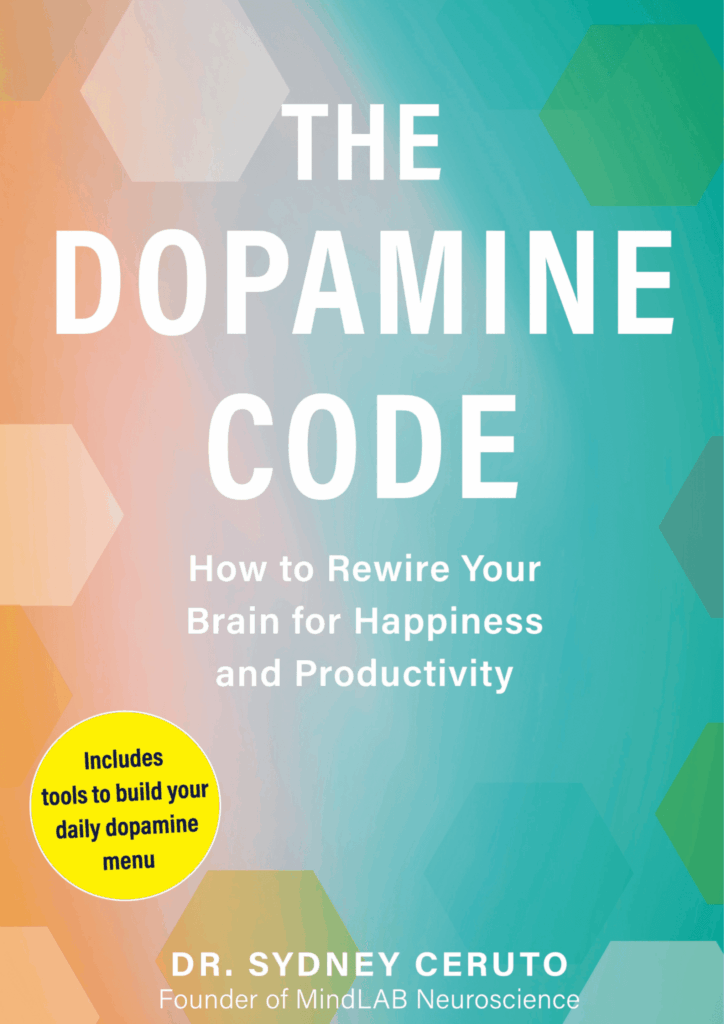
Building reliable activation energy begins with the three-layer Dopamine Menu, the central framework in The Dopamine Code, a clinically grounded system for overriding procrastination at the neurochemical level.
Is procrastination a sign of laziness or low intelligence?
No. Procrastination is unrelated to intelligence and is not laziness. It is an emotion-regulation response: the amygdala flags a task as threatening and the brain chooses short-term relief over long-term benefit. Highly capable, high-achieving people procrastinate just as often, because the avoidance circuit operates independently of working-memory capacity and raw ability.
Why do I procrastinate more on important tasks?
Important tasks trigger stronger avoidance because higher stakes activate the amygdala’s threat-detection system. When outcomes affect identity or career, the brain treats the task as dangerous: hence reorganizing a desk instead of writing one high-stakes email. The fix isn’t caring less; it’s decomposing the task into small enough steps that the amygdala no longer flags the first action as a threat.
Can procrastination be durably reduced?
Procrastination cannot be permanently eliminated because the amygdala-prefrontal tension driving it is a fundamental feature of human neurobiology. However, consistent practice substantially reduces procrastination’s impact. People who work on this regularly report episodes shrinking from hours of avoidance to minutes of hesitation. The goal is building a neural pathway where starting becomes easier than avoiding, not achieving perfection.
Does caffeine help with procrastination?
Caffeine increases norepinephrine and blocks adenosine receptors, which creates temporary alertness, but it does not address the underlying amygdala-driven avoidance that causes procrastination. If the barrier is low energy or fatigue, caffeine may help. If the barrier is fear of failure, perfectionism, or task overwhelm, caffeine will increase arousal without increasing initiation, producing a state of anxious non-productivity that often feels worse than the original procrastination.
Why does procrastination feel good in the moment but terrible afterward?
Procrastination feels good briefly because the brain’s amygdala interprets avoidance as threat removal, triggering anxiety relief that is neurochemically rewarding, reinforcing the pattern. The guilt afterward comes from the prefrontal cortex reasserting awareness of the unfinished task, combined with cortisol elevation from deadline pressure. This relief-to-dread trajectory reflects a limbic-prefrontal timing mismatch.
References
- Steel, P. (2007). The nature of procrastination: A meta-analytic and theoretical review of quintessential self-regulatory failure. Psychological Bulletin, 133(1), 65-94. DOI: 10.1037/0033-2909.133.1.65
- Sirois, F. M., & Pychyl, T. A. (2013). Procrastination and the priority of short-term mood regulation: Consequences for future self. Social and Personality Psychology Compass, 7(2), 115-127. DOI: 10.1111/spc3.12011
- Le Bouc, R., and Pessiglione, M. A neuro-computational account of procrastination behavior. https://pmc.ncbi.nlm.nih.gov/articles/PMC9513091/
- Zhang and Ma. Temporal discounting predicts procrastination in real-world behavior. https://pmc.ncbi.nlm.nih.gov/articles/PMC11199680/
From Reading to Rewiring
Schedule Your Strategy Call