Key Points
- Unwanted behaviors persist because they are wired into your brain’s automatic circuitry — not because you lack willpower or discipline.
- Real-Time Neuroplasticity™ targets the neural architecture sustaining the pattern, producing structural change rather than surface-level coping.
- Once a behavioral circuit is rewired, the old pattern no longer fires automatically — eliminating the need for constant self-monitoring.
- Dr. Ceruto maps your specific neural pattern during the Strategy Call to determine the precise approach for your situation.
- MindLAB's methodology does not require electronic devices, ongoing maintenance programs, or clinical referrals to begin.
| Marker | Traditional Approach | Neuroscience-Based Approach | Why It Matters |
|---|---|---|---|
| Target of Intervention | Surface behaviors and symptoms | Neural circuits driving the behavior | Root-cause change vs. symptom management |
| Primary Method | Talk-based awareness and coping tools | Real-Time Neuroplasticity™ rewiring | Structural brain change, not just insight |
| Duration of Results | Requires ongoing maintenance | Permanent neural pathway restructuring | Change that holds without constant effort |
| Approach to Relapse | Expected; managed with new strategies | Addressed by rewiring the trigger circuit | Eliminates the pattern, not just the episode |
| Role of Willpower | Central — client must resist urges | Minimal — the automatic circuit is recalibrated | Stops requiring you to fight yourself daily |
| Personalization | Standardized protocols and worksheets | Mapped to your specific neural architecture | Precision targeting for your exact pattern |
Why Neuroscience-Based Behavioral Change Matters in Miami
Neuroscience-Based Behavioral Change in Miami
Miami operates on a rhythm that makes behavioral patterns harder to see and even harder to break. The social velocity of Brickell and South Beach normalizes cycles of overcommitment and burnout. The entrepreneurial energy of Wynwood and the Design District rewards risk-taking — until the same impulsivity that launched a venture starts eroding relationships and judgment. In a city built on reinvention, people often discover that the behaviors driving their success have become the ones quietly dismantling it. The person who thrives in the energy of a Brickell rooftop networking event and then spirals privately at two in the morning is not living a contradiction. They are living with a neural circuit that serves them in one context and sabotages them in another.
What makes these patterns so persistent is their neurological depth. When a behavior has been repeated under emotional pressure — whether that is reactive decision-making in a high-stakes negotiation or avoidance that surfaces every time a difficult conversation approaches — it becomes encoded in the basal ganglia, the brain region responsible for automatic habits. The behavior stops requiring conscious thought. It runs on autopilot, which is precisely why willpower and good intentions fail to produce lasting change. A person in Coral Gables who has tried meditation, journaling, and three different coaches is not failing at self-improvement. They are using the wrong tools for the problem. The problem is architectural, and it requires an architectural solution.
MindLAB Neuroscience approaches behavioral change differently than conventional methods. Rather than managing symptoms or building coping strategies, Dr. Ceruto’s methodology targets the neural architecture that sustains the pattern. Real-Time Neuroplasticity™ works by recalibrating the circuits that fire automatically — the ones that produce the reaction before you have time to choose a different response. For someone managing a family business in Coconut Grove, or a creative professional in Little Havana whose procrastination has reached a breaking point, or a parent in Pinecrest whose temper surfaces only at home, the process addresses the source rather than the surface.
Miami’s culture of visible success creates additional pressure to perform rather than pause. People here are skilled at projecting control while privately struggling with patterns they cannot seem to override — emotional eating, self-sabotage before a breakthrough, compulsive behavior that only appears in private, a drinking pattern that has shifted from social to necessary. These are not character flaws. They are neural circuits operating exactly as they were built under conditions that may no longer exist. The brain does not spontaneously update its wiring when circumstances change. It continues running the circuit until something intervenes at the level where the circuit lives.
That intervention is what MindLAB provides. Dr. Ceruto has spent over 26 years developing a methodology that engages the brain’s own plasticity to restructure automatic behavioral pathways. The process does not require equipment, does not rely on ongoing maintenance, and does not ask you to talk through the story behind the behavior for months before anything shifts. It targets the mechanism. The initial Strategy Call maps your specific neural architecture and determines whether this approach fits your situation — a focused phone conversation that replaces guesswork with clarity about why the pattern has persisted and what it would actually take to end it.


Dr. Sydney Ceruto, PhD — Founder & CEO, MindLAB Neuroscience
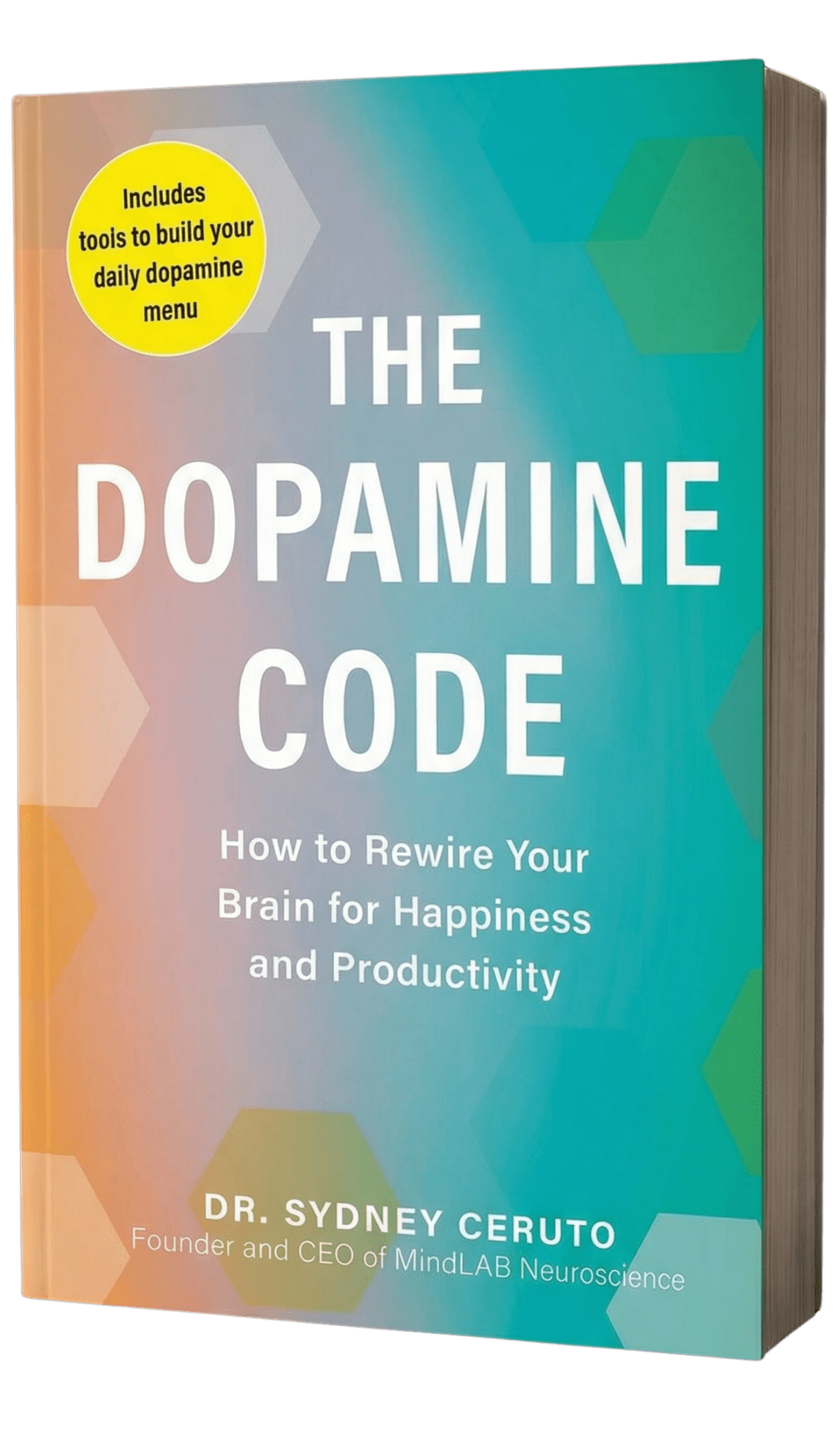
Dr. Ceruto holds a PhD in Behavioral & Cognitive Neuroscience from NYU and two Master’s degrees from Yale University. She lectures at the Wharton Executive Development Program at the University of Pennsylvania and has been an Executive Contributor to the Forbes Coaching Council since 2019. Dr. Ceruto is the author of The Dopamine Code (Simon & Schuster, June 2026). She founded MindLAB Neuroscience in 2000 and has spent over 26 years pioneering Real-Time Neuroplasticity™ — a methodology that permanently rewires the neural pathways driving behavior, decisions, and emotional responses.
Success Stories
“Every system, every supplement, every productivity method I tried collapsed within weeks — and nothing held because nothing addressed why my attention kept fragmenting. Dr. Ceruto identified the dopamine regulation pattern that was hijacking my prefrontal cortex every time I needed sustained focus. She didn't give me another workaround. She restructured the architecture underneath. My brain holds now. That's not something I ever thought I'd be able to say.”

Identifying details withheld to protect client confidentiality.
All outcomes represent genuine engagements with Dr. Ceruto.
Frequently Asked Questions About Neuroscience-Based Behavioral Change
Why do I keep repeating behaviors I know are harmful?
Repeated behaviors become encoded in the basal ganglia — the brain region that automates habitual actions. Once a pattern reaches this level of neural consolidation, it fires before your conscious mind has a chance to intervene. This is why insight alone rarely produces lasting change.
How is neuroscience-based behavioral change different from traditional approaches?
Traditional approaches focus on awareness, motivation, and coping strategies. MindLAB's methodology uses Real-Time Neuroplasticity™ to directly recalibrate the neural circuits sustaining the behavior. Instead of managing the pattern, we rewire its source architecture.
What types of behavioral patterns can this approach address?
Any persistent pattern that resists conscious effort — reactive anger, procrastination, self-sabotage, compulsive habits, avoidance, emotional eating, impulsive decision-making. If you have tried to stop and cannot, the behavior is likely neurologically automated.
How long does it take to see results from neuroscience-based behavioral change?
Many clients notice meaningful shifts within the first few weeks as the targeted neural circuits begin to recalibrate. The timeline varies depending on how deeply consolidated the pattern is and how long it has been active. Dr. Ceruto maps your specific situation during the Strategy Call.
Is this approach available to people in the Miami area?
Yes. MindLAB Neuroscience works with clients throughout Miami including Brickell, Coral Gables, Coconut Grove, South Beach, and the broader Dade County area. The initial Strategy Call is conducted by phone.
Do I need a referral to work with MindLAB on behavioral change?
No referral is required. MindLAB does not operate within a clinical framework. If you have a behavioral pattern that persists despite your best efforts to change it, that is sufficient to begin the conversation.
What happens during the Strategy Call for behavioral change?
The Strategy Call is a focused phone conversation with Dr. Ceruto. She maps the neural mechanisms driving your specific pattern and determines whether MindLAB's methodology is the right fit. The fee is $250 and the call typically lasts 45–60 minutes.
Can neuroscience-based methods help with stress-driven behaviors common in Miami's fast pace?
Absolutely. Miami's social and professional intensity creates conditions that reinforce stress-driven patterns — impulsive reactions, overcommitment, avoidance. These behaviors are neural responses to sustained pressure, and they respond precisely to the kind of targeted rewiring MindLAB provides.
Will I need to keep coming back to maintain the changes?
The goal of Real-Time Neuroplasticity™ is permanent structural change in the neural pathways, not ongoing management. Once a circuit is rewired, the old automatic pattern no longer fires the same way. Most clients do not require indefinite engagement.
How does MindLAB's approach work without electronic devices or brain scans?
Dr. Ceruto's methodology is built on 26 years of neuroscience expertise. She identifies neural patterns through detailed behavioral and cognitive assessment, then applies Real-Time Neuroplasticity™ techniques that directly engage the brain's capacity to restructure its own circuitry — no equipment required.
Also available in: Wall Street · Midtown Manhattan · Beverly Hills · Lisbon
Take the First Step
The Strategy Call is a focused conversation with Dr. Ceruto that maps the specific neural mechanisms driving your concerns and determines the right path forward.
Book a Strategy Call
The Dopamine Code
Decode Your Drive
Why Your Brain Rewards the Wrong Things
Your brain's reward system runs every decision, every craving, every crash — and it was never designed for the life you're living. The Dopamine Code is Dr. Ceruto's framework for understanding the architecture behind what drives you, drains you, and keeps you locked in patterns that willpower alone will never fix.
Published by Simon & Schuster, The Dopamine Code is Dr. Ceruto's framework for building your own Dopamine Menu — a personalized system for motivation, focus, and enduring life satisfaction.
Order NowShips June 9, 2026