







Key Points
- Unwanted behaviors persist because they are wired into your brain’s automatic circuitry, not because you lack willpower or discipline.
- Real-Time Neuroplasticity™ targets the neural architecture sustaining the pattern, producing structural change rather than surface-level coping.
- Once a behavioral circuit is rewired, the old pattern no longer fires automatically, eliminating the need for constant self-monitoring.
- Dr. Sydney Ceruto maps your specific neural pattern during the Strategy Call to determine the precise approach for your situation.
- MindLAB's methodology does not require electronic devices, ongoing maintenance programs, or clinical referrals to begin.
| Marker | Traditional Approach | Neuroscience-Based Approach | Why It Matters |
|---|---|---|---|
| Target of Intervention | Surface behaviors and symptoms | Neural circuits driving the behavior | Root-cause change vs. symptom management |
| Primary Method | Talk-based awareness and coping tools | Real-Time Neuroplasticity™ rewiring | Structural brain change, not just insight |
| Duration of Results | Requires ongoing maintenance | Durable neural pathway restructuring | Change that holds without constant effort |
| Approach to Relapse | Expected; managed with new strategies | Addressed by rewiring the trigger circuit | Eliminates the pattern, not just the episode |
| Role of Willpower | Central: client must resist urges | Minimal: the automatic circuit is recalibrated | Stops requiring you to fight yourself daily |
| Personalization | Standardized protocols and worksheets | Mapped to your specific neural architecture | Precision targeting for your exact pattern |
Why Neuroscience-Based Behavioral Change Matters in Midtown Manhattan
Midtown Manhattan compresses more ambition, pressure, and human complexity into a few square miles than almost anywhere on earth. From the media towers along Sixth Avenue to the law firms lining Park Avenue, from the garment district hustle to the quiet intensity of Murray Hill apartments at midnight: the people here carry enormous demands with visible composure. What is less visible is the behavioral pattern that runs underneath: the one that keeps repeating despite every effort to stop it. Midtown’s particular pressure is that it never relents. There is no off-season, no slow quarter, no natural break that would create space to address the pattern before it costs something irreplaceable.
That pattern might be a temper that surfaces only behind closed doors. It might be chronic procrastination that somehow coexists with relentless ambition. It might be a compulsive habit that only appears when the pressure finally lifts, or an avoidance response that kicks in precisely when the stakes are highest. These are not failures of character. They are the signature of a brain that automated a response under specific conditions and now runs that response whether the conditions call for it or not. A person in Hell’s Kitchen who has read every book on willpower and still cannot change the behavior is not lacking knowledge. They are facing a problem that operates below the level knowledge can reach.
MindLAB Neuroscience works with people across Midtown, Hell’s Kitchen, the Theater District, Tudor City, Kips Bay, and surrounding neighborhoods who have reached the limit of what insight and determination can accomplish. Dr. Ceruto’s Real-Time Neuroplasticity™ approach does not add another layer of strategy on top of the pattern. It restructures the neural circuitry that generates the behavior at its point of origin: the basal ganglia and associated networks that encode habitual action below the level of conscious choice. This is not a motivational framework. It is targeted intervention at the level where the behavior actually lives.
In a borough where people are accustomed to solving problems through sheer effort, the discovery that effort is the wrong tool can be disorienting. But it is also the beginning of real change. The parent in Murray Hill whose patience evaporates the moment they walk through the door. The attorney near Grand Central whose anxiety-driven avoidance has become a career threat. The performing artist in the Theater District whose self-sabotage activates within arm’s reach of every opportunity. Each of these patterns has a specific neural signature, a circuit that fires before the conscious mind can intervene, and each responds to precise, targeted rewiring.
When the circuit that drives the behavior is recalibrated, the daily battle simply stops. Not because you have learned to manage it better, but because the automatic response has been replaced at its source. That is what neuroscience-based behavioral change means in practice. Dr. Ceruto’s initial Strategy Call, a phone conversation that maps the specific mechanisms at work in your situation, is the first step toward understanding what you are actually dealing with and what it would take to change it durably. For people who have spent years trying and failing to override the pattern through effort alone, that clarity is often the most significant shift they have experienced.


Dr. Sydney Ceruto, PhD, Neuroscientist & Author, MindLAB Neuroscience
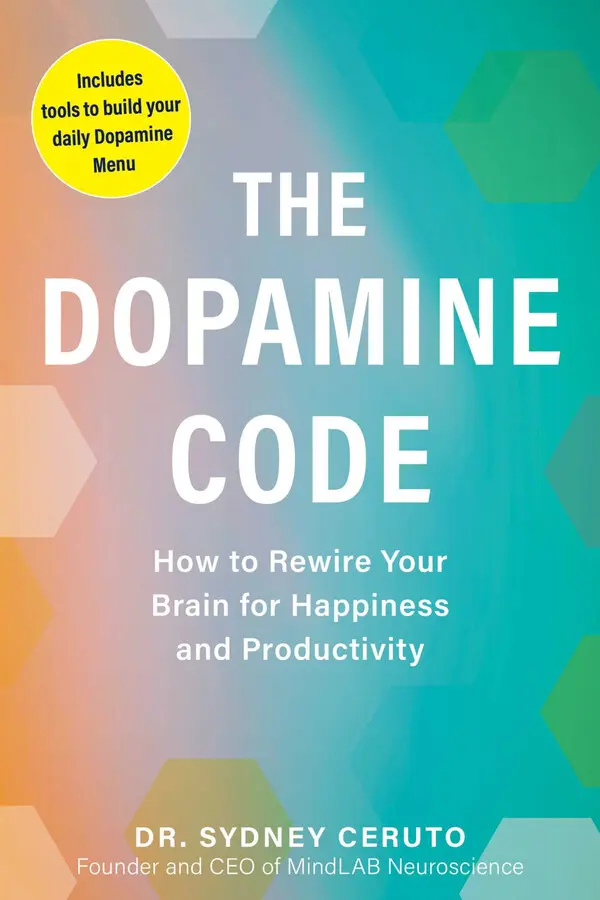
Dr. Ceruto holds a PhD in Behavioral & Cognitive Neuroscience from NYU and Master’s degrees in Clinical Psychology and Business Psychology from Yale University. She lectures at the Wharton Executive Development Program at the University of Pennsylvania and has been an Executive Contributor to the Forbes Coaching Council since 2019. Dr. Ceruto is the author of The Dopamine Code (Simon & Schuster, June 2026). She founded MindLAB Neuroscience in 2000 and has spent over 26 years leading it, pioneering Real-Time Neuroplasticity™, a methodology that durably rewires the neural pathways driving behavior, decisions, and emotional responses.
Frequently Asked Questions About Neuroscience-Based Behavioral Change
Why can I perform at a high level at work but not control my behavior at home?
Work provides structured external cues that keep the prefrontal cortex engaged. At home, those cues disappear and deeper automatic circuits take over. The behavioral pattern was always running: work just provided enough structure to mask it.
How does neuroscience-based behavioral change work without electronic equipment?
Dr. Ceruto identifies neural patterns through detailed behavioral and cognitive assessment refined over 26 years. Real-Time Neuroplasticity™ engages the brain's own capacity to restructure circuits: a process that requires precision expertise, not equipment.
What kind of behavioral patterns does MindLAB address?
Any persistent pattern that resists your conscious effort to change: reactive anger, procrastination, self-sabotage, compulsive behaviors, avoidance, emotional eating, impulsive decisions. If the pattern keeps winning despite your best intentions, it is neurologically consolidated.
Do you serve clients in the Midtown Manhattan area?
Yes. MindLAB works with clients throughout Midtown, Hell's Kitchen, Murray Hill, the Theater District, Turtle Bay, Kips Bay, and the broader Midtown Manhattan area. The Strategy Call is conducted by phone for convenient access.
How quickly will I see a change in my behavior?
Many clients notice shifts within the first few weeks as targeted circuits begin to recalibrate. The pace depends on the depth of the pattern and how long it has been active. Dr. Ceruto provides a specific framework during the Strategy Call.
Is this approach only for people with severe behavioral problems?
Not at all. Many clients are highly functional people whose lives are working well on the surface. They come to MindLAB because one persistent pattern (a reactive tendency, a compulsive habit, an avoidance loop) is costing them more than they are willing to keep paying.
What is the Strategy Call and what does it cost?
The Strategy Call is a phone conversation with Dr. Ceruto. She maps the neural mechanisms driving your behavioral pattern and determines whether MindLAB's methodology is the right fit. The fee is confirmed when you book your Strategy Call.
Can this help with self-sabotage patterns?
Self-sabotage is one of the most common patterns MindLAB addresses. It typically involves competing neural circuits: one driving you toward a goal, another triggering avoidance or disruption when success approaches. Rewiring the conflict circuit eliminates the pattern at its source.
Will I need ongoing sessions to maintain the change?
Real-Time Neuroplasticity™ produces structural changes in neural pathways. Once a circuit is rewired, the old automatic behavior no longer fires the same way. The goal is durable change, not a maintenance relationship.
How is this different from cognitive behavioral approaches?
Cognitive behavioral methods work at the level of thoughts and beliefs, teaching you to catch and reframe patterns. MindLAB works at the level of neural architecture, recalibrating the circuits that fire before conscious thought occurs. One manages from the top down; the other rewires from the source.
Also available in: Miami · Wall Street · Beverly Hills · Lisbon
Take the First Step
One hour with Dr. Sydney Ceruto. You leave knowing which neural pattern is actually driving this, and what to do about it.
One hour with Dr. Ceruto
The Dopamine Code
Decode Your Drive
Why Your Brain Rewards the Wrong Things
Your brain's reward system runs every decision, every craving, every crash, and it was never designed for the life you're living. The Dopamine Code is Dr. Ceruto's framework for understanding the architecture behind what drives you, drains you, and keeps you locked in patterns that willpower alone will never fix.
Published by Simon & Schuster, The Dopamine Code is Dr. Ceruto's framework for building your own Dopamine Menu, a personalized system for motivation, focus, and enduring life satisfaction.
Order Now!Available now