Key Takeaways
- Your brain predicts reality through predictive coding, not passive observation. Visualization updates those predictions.
- Detailed goal-setting programs the reticular activating system, which filters 2 million bits per second.
- Dopamine drives pursuit through anticipation, not pleasure: goals must be genuinely yours to engage it.
- Visualization without implementation architecture is fantasy: the prefrontal cortex needs a plan, not a destination.
- Goal misalignment is a dopamine system problem: borrowed ambition generates cortisol load without intrinsic reward.
Is the Law of Attraction Real? Integrating Neuroscience and Evidence
Manifestation has a neurological basis, but the “law of attraction” misrepresents the mechanism. The brain’s reticular activating system filters roughly 11 million bits of sensory input per second, surfacing only what matches defined goals. Dopamine encodes those goals as neurological priorities. Predictive coding then biases perception toward goal-relevant stimuli: a measurable neural process, not metaphysics. Harnessing it supports peak performance and flow.
In my practice, I see clients arrive having tried every visualization script and affirmation protocol available, and failing because they understood the practice as belief, not as brain architecture. Understanding the actual neuroscience changes everything about how you execute it.
What Is Predictive Coding, and Why Does It Explain Visualization?
Your brain doesn’t observe reality: it predicts it. Predictive coding is the framework neuroscientists use to describe how the brain generates experience. Rather than passively receiving sensory input, the brain constantly issues predictions about what it expects to encounter, then processes only the gap between prediction and reality: what researchers call prediction error.
The reticular activating system filters 11 million sensory bits per second, surfacing only stimuli matching dopamine-encoded goal priorities: a measurable neural process, not metaphysics.
Mental simulation of future positive outcomes activates the hippocampal-prefrontal constructive memory network, which in turn biases attentional salience toward goal-relevant environmental cues: the mechanism underlying the reticular activating system’s apparent role in manifestation.
Optimism-consistent predictive coding in the medial prefrontal cortex narrows the brain’s prediction error signal, making goal-congruent information more perceptually available and goal-incongruent information less emotionally impactful.
Karl Friston at University College London has spent two decades formalizing this framework, demonstrating that virtually all perception is a form of controlled hallucination: the brain’s best guess, updated by incoming data. The practical implication is profound. When you engage in consistent, detailed visualization of a goal state, you are literally changing your brain’s priors: the baseline predictions it uses to filter reality. A future state rehearsed vividly enough begins to function as an expected state. Your brain starts generating prediction errors when that state is absent.
This is not metaphor. In my work, I consistently observe that clients who practice structured mental rehearsal report a specific shift: they begin noticing opportunities they previously overlooked, not because the opportunities were new, but because their brains had been updated to flag them as prediction-relevant signals rather than noise. One client described it as “seeing doors I must have walked past a hundred times.” Those doors were always there. Her predictive model had changed what counted as worth attending to.
You are not pulling things toward you. You are expanding your capacity to notice what was already in range.
The difference between visualization that works and visualization that doesn’t comes down to one variable: specificity. Vague imagery produces vague priors. Detailed sensory simulation (what the goal looks like, feels like, sounds like) produces strong priors. The Neural Blueprint Protocol™ is built on this principle: creating visualization sequences with enough sensory resolution and situational detail that the brain encodes them as predicted future states rather than abstract aspirations. When the protocol is calibrated correctly, the reticular activating system updates its priority list accordingly, surfacing environmental signals that match the blueprint.
How Does the Reticular Activating System Relate to the Neuroscience of Manifestation?
The reticular activating system (RAS) functions as the brain’s primary attention filter and provides the neurological mechanism underlying Law of Attraction principles. Located in the brainstem, the RAS processes approximately 2 million sensory bits per second, yet conscious awareness receives only 126 bits, selected by survival relevance, emotional salience, and explicitly encoded personal goals.
When you set a clear intention, you are not sending a message to the universe. You are updating the RAS’s priority list. Research by Gabriele Oettingen at New York University, whose WOOP (Wish, Outcome, Obstacle, Plan) framework has been validated in over 20 years of studies, demonstrates that mental contrasting, vividly imagining a desired outcome alongside present obstacles, activates goal commitment at the neural level, measurably increasing goal-directed behavior compared to positive thinking or fantasy alone.
What the popular manifestation literature gets wrong is the passivity it implies. The RAS does not retrieve opportunities from thin air: it shifts what your existing environment presents to conscious attention. The job opportunities were already there. The relevant conversation was already happening nearby. Your RAS was filtering them out as irrelevant to your prior goal set. Change the goal set; change what surfaces into awareness.
In my work with clients, I frame this as attentional priming, not attraction. What I observe when we update the RAS through structured rehearsal is a measurable shift in what clients report noticing (conversations, resources, patterns) that were objectively present before the work began but were neurologically invisible because the filter had not been calibrated to flag them.
What Role Does Dopamine Play in Goal Pursuit, and Why Do the Wrong Goals Feel Exhausting?
Dopamine functions as the brain’s effort-allocation signal, not a pleasure chemical. Wolfram Schultz’s research at the University of Fribourg demonstrated that dopamine neurons fire in response to predicted rewards, not rewards themselves. Goals misaligned with intrinsic values suppress this predictive signaling, forcing cortical override that raises metabolic demand, which is part of why misaligned goals feel exhausting.
When a goal is encoded with high specificity and genuine personal relevance, the dopaminergic system allocates sustained motivational resources to that goal. Each progress signal, each small win that confirms the goal is achievable, triggers a dopamine release that reinforces the effort. This is not willpower. It is architecture. The brain has turned goal pursuit into a reward loop.
The failure mode I see most often in my practice is not a lack of ambition. It is goal misalignment. Clients are pursuing targets that were externally assigned (by family, by culture, by the metrics their industry uses to define success) and their dopaminergic systems are running at minimum engagement. They feel the effort without the intrinsic reward signal. They interpret this as motivational weakness. What they are actually experiencing is correct neurobiology: the brain is telling them this goal is not genuinely theirs.
The Dopamine Architecture Protocol™ provides the structured framework for encoding goals that generate genuine intrinsic reward rather than borrowed ambition. The protocol maps the difference between what a client is pursuing and what their nervous system actually responds to: a gap that, once identified, explains years of effort without satisfaction.
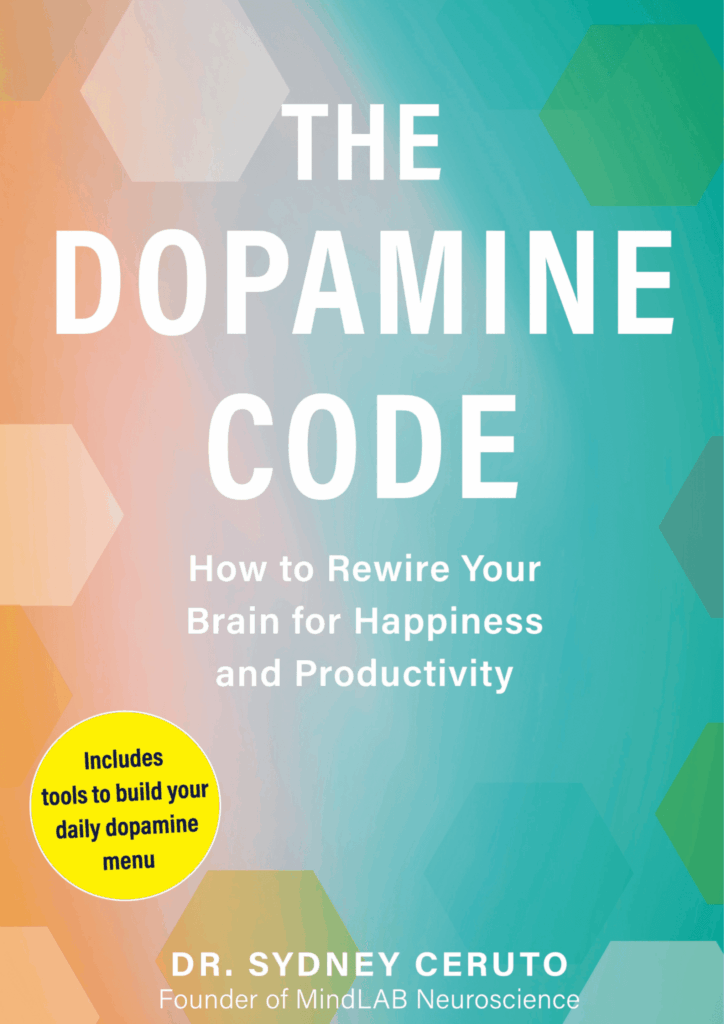
For the complete framework on how to design goals that engage the dopamine system rather than exhaust it, I cover the full science in my book The Dopamine Code (Simon & Schuster, June 2026). Learn more here.
The brain is not moved by aspiration. It responds to encoded prediction.
Properly encoded goals (goals that map to your actual values, articulated with specificity) produce measurably different neural responses than aspirational statements borrowed from someone else’s definition of success. In my practice, I can often identify the misalignment in the first session: clients describe their goals with precision but without any visible shift in affect. Their language is articulate. Their nervous system is uninvolved. The practice of clarifying what you actually want, as distinct from what you think you should want, is not soft psychology. It is dopamine system maintenance.
How Does the Prefrontal Cortex Connect Intention to Action?
The prefrontal cortex bridges intention and action by maintaining goal representations in working memory, suppressing competing impulses, and sequencing behavior toward desired outcomes. Chronic stress reduces PFC gray matter and impairs these executive functions. Without PFC engagement, visualization remains cognitive rehearsal rather than a driver of coordinated behavioral execution.
Research from Amy Arnsten at Yale Medical School demonstrates that even moderate psychological stress degrades PFC function: specifically the sustained attention and impulse control functions most relevant to goal execution. Chronic stress, the signature of unmanaged pressure, literally impairs the neural hardware you need to move forward on your intentions.
This is where the manifestation literature fails its audience most completely. It focuses almost entirely on the intention side (visualization, affirmation, belief) and treats action as a secondary step, “inspired action” that follows naturally from alignment. In practice, action capacity is the true bottleneck for most people, and action capacity is a function of PFC condition, sleep architecture, stress load, and the specificity of implementation planning.
This is also where Real-Time Neuroplasticity™ operates. The implementation intentions the research describes (specific plans for when, where, and how you will follow through) are the cognitive version of what RTN does in real time. When the moment arrives where intention meets resistance, RTN intervenes in that live moment, not retrospectively. The gap between “I know what I should do” and “I did it when it mattered” is precisely the gap RTN is designed to close.
What I give clients is an architecture for implementation, not just aspiration: when will you take the first step, where will you be, what will have to be true for you to follow through. This specificity, what Peter Gollwitzer at New York University calls “implementation intentions”, has been shown in controlled studies to roughly double goal completion rates compared to goal intention alone.
Why Does Gratitude Accelerate Goal Progress? Learn How the Dopamine Feedback Loop Works
Gratitude practice recalibrates the brain’s dopamine feedback system by correcting negativity bias, the documented tendency to weight losses approximately twice as heavily as equivalent gains. This miscalibration causes goal-directed individuals to chronically underestimate progress, suppressing the dopamine signals that sustain forward momentum. Accurate progress appraisal restores those signals and accelerates goal pursuit.
A structured gratitude practice (specific, concrete, tied to actual accomplishments) recalibrates this appraisal. When you accurately register what has moved, what has improved, what has responded to your effort, you restore the progress signal. The dopaminergic system responds to evidence of advancement. You are not manufacturing positivity. You are providing the brain with accurate data it was systematically discounting.
In my practice, I have clients track specific evidence of goal-relevant progress, not generic gratitude lists, because the more precisely the gratitude item maps to the goal, the stronger the calibration effect on the motivation system driving that goal. One client replaced a daily “three things I’m grateful for” practice with a daily “three signals that my specific goal is closer than it was yesterday” practice. The difference in sustained motivation was measurable within two weeks.
What Is the Difference Between Visualization and the Neuroscience of Manifestation?
Visualization and intention-setting are not wishing. They are neural programming practices that require specific inputs to produce measurable outputs. Based on over two decades of applied neuroscience observation and the convergent research across predictive coding, RAS, and dopamine systems, what works looks like this:
Specificity over positivity. The brain updates priors based on detail, not emotion. Visualize the specific outcome (sensory, situational, behavioral) not the feeling of success in the abstract.
Contrast, not fantasy. Gabriele Oettingen’s research is unambiguous: pure positive fantasy suppresses goal-directed behavior because it produces partial dopamine satisfaction without action. Mental contrasting, holding the goal alongside the obstacles between here and there, produces greater commitment and follow-through.
Implementation architecture. Specify when, where, and how you will follow through. The PFC needs a behavioral plan, not just a desired destination.
Progress tracking. Document specific evidence of advancement. The dopamine system runs on reinforcement signals. Without them, the motivation loop degrades.
What the “law of attraction” community correctly identified is that the direction of your focused attention shapes your experienced reality. That observation is real. The neural mechanism behind it is not mystical. It is the predictive brain, the attention-filtering RAS, and the dopamine system doing exactly what they evolved to do, steering you toward what you have encoded as important. The difference between the popular version and the neuroscience version is the difference between hoping and rewiring your brain, and that difference determines whether the practice produces results or just produces positive feelings that fade.
Does the law of attraction have any scientific basis?
The core observation, that focused attention biases perception and behavior toward desired outcomes, is neurologically supported. Predictive coding, the reticular activating system, and dopamine reward architecture all demonstrate that specific, sustained mental rehearsal changes what the brain notices, prioritizes, and pursues. What lacks scientific support is the mystical framing: the idea that thoughts emit frequencies that attract matching realities. The mechanism is neural, not metaphysical.
Why does visualization work for some people and not others?
The differentiating variable is specificity combined with implementation. Vague visualization produces vague neural priors. Detailed sensory rehearsal, combined with mental contrasting (imagining obstacles alongside outcomes) and explicit implementation plans, engages predictive coding, the RAS, and the dopaminergic system at full strength. People who visualize without building action architecture are providing the brain with a destination and no route.
Can positive thinking actually change your brain?
Positive thinking alone does not produce structural change. What produces structural change is sustained, specific, attention-driven practice, which may include positive mental rehearsal but must also include behavioral engagement. Neuroplasticity is driven by what you repeatedly do and attend to with emotional investment, not by what you passively believe.
What is the neuroscience behind goal-setting?
Goal-setting updates the reticular activating system’s priority filters, engages dopamine reward prediction circuits that sustain effort toward specific targets, and recruits prefrontal cortex planning functions that translate abstract desires into behavioral sequences. The more specific and personally meaningful the goal, the stronger each of these neural mechanisms engages.
How do you tell the difference between an aligned goal and a borrowed one?
An aligned goal generates intrinsic dopaminergic engagement: you feel drawn to the process, not just the outcome. A borrowed goal produces effort without internal reward. In my practice, the tell is consistent: clients describe aligned goals with visible affect shift: their energy changes when they talk about it. Borrowed goals are described with precision but without any nervous system involvement. The language is polished. The body is uninvolved.
References
- Friston, K. (2010). The free-energy principle: a unified brain theory? Nature Reviews Neuroscience, 11(2), 127-138. https://doi.org/10.1038/nrn2787
- Oettingen, G. (2012). Future thought and behaviour change. European Review of Social Psychology, 23(1), 1-63. https://doi.org/10.1080/10463283.2011.643698
- Gollwitzer, P. M. (1999). Implementation intentions: Strong effects of simple plans. American Psychologist, 54(7), 493-503. https://doi.org/10.1037/0003-066X.54.7.493
From Reading to Rewiring
The law of attraction has no peer-reviewed support, but the neural mechanisms it loosely describes do. Reticular activating system filtering biases attention toward goal-relevant stimuli, while prefrontal-limbic circuits strengthen motivational salience for repeatedly rehearsed outcomes. Expectation alters dopamine signaling, making intentional focus a genuine neurological lever, not a mystical one.
Schedule Your Strategy CallStrategy Call
If you have been pursuing goals that feel effortful without being rewarding, if the dopamine signal is telling you something your conscious mind has not acknowledged, a Schedule Your Strategy Call maps the gap between what you are pursuing and what your nervous system actually needs. That clarity is the starting point.