Key Takeaways
- Motivation is three systems: dopamine anticipation, prefrontal persistence, limbic threat assessment, each can fail alone.
- The 70 percent crash is architectural: dopamine desensitizes as goals become predictable, not willpower failure.
- The goals that matter most raise limbic threat, suppressing the reward circuitry needed to start.
- A motivation crash is a rewiring window: briefly lowering stimulation lets reward sensitivity recover.
- Environment is circuitry: social accountability recruits the reputation system and can lift follow-through beyond willpower.
This article is the practical how-to: what to do when motivation crashes near the finish line and how to sustain drive through the predictable drop-off. For the underlying picture of how the brain generates motivation in the first place, see the overview of how the brain drives motivation through its reward system.
Why Do Standard Motivation Strategies Fail Even When the Science Behind Them Is Sound?
Standard motivation strategies fail because they target behavior while ignoring the three neural systems that generate motivation: dopamine-driven anticipation, prefrontal persistence, and limbic threat assessment. When any one system becomes dysregulated, motivation reverses into active goal resistance. Advice like “set clear goals” assumes all three systems are functional: in chronic low-drive individuals, research indicates at least one is not.
When baseline dopamine drops during a motivational crash, reward circuitry enters heightened sensitivity, making new behavioral patterns more likely to consolidate.
In my practice, I consistently observe high-performing individuals who have mastered every productivity system available and still cycle through periods of intense drive followed by complete motivational collapse. They have read the books. They have implemented the frameworks. They blame willpower, discipline, or character when the collapse arrives again. The actual cause is neurological architecture that was never designed for the sustained goal pursuit modern life demands, and that no amount of strategy can override without addressing the underlying system failure.
Why Does Motivation Disappear at 70% Completion, Every Time?
Dopamine drives motivation by signaling prediction error, the measurable gap between expected and actual outcomes, not by evaluating a goal’s importance. As task completion approaches 70%, prediction error collapses because the brain has fully modeled the outcome, eliminating the neurochemical signal that sustains effort. No surprise remains, so dopamine release stops.
Research has found that anticipatory dopamine release in the ventral striatum scaled with goal proximity, explaining the motivational surge near completion and the paradoxical drop that follows achievement.
Social accountability partners can strengthen the neural incentive value of maintained effort, with regular check-ins reinforcing the reward signals tied to visible progress.
Wolfram Schultz’s landmark research demonstrated that when rewards become predictable, dopamine neuron firing decreases sharply within a few trials. This is not a metaphor. It is a measurable neurochemical event. As you make progress toward a goal, the brain adjusts its predictions upward. What once felt rewarding becomes expected. The diminishing returns are not psychological. They are architectural.
The 70% Phenomenon
Motivation follows a predictable arc that peaks during the first 30% of a significant undertaking, sustains through approximately 70% completion, then crashes in the final stretch. This pattern reflects dopamine desensitization, not character failure: as goal completion becomes probable, the brain reclassifies the target from “potential reward” to “expected outcome,” eliminating dopamine-driven drive.
The crash is not the failure. It is the architecture functioning exactly as designed. Your brain evolved to conserve energy once an outcome becomes predictable, allocating neurochemical resources to novel threats and opportunities rather than to a nearly certain outcome. The problem is not your motivation. The problem is that goal pursuit in the modern world requires sustained drive across timescales your reward prediction system was never built for.
The solution is not to fight the 70% wall. It is to redesign goal architecture to maintain prediction error throughout the entire pursuit: what I call Cascade Activation. Instead of one large goal producing diminishing dopamine returns, the structure introduces unpredictable micro-rewards at non-uniform intervals that keep the anticipatory system engaged. The unpredictability is essential. Predictable rewards at predictable intervals produce the same desensitization as the original goal. Understanding the full science of dopamine depletion makes this architectural solution much clearer.
Why Do the Most Important Goals Generate the Most Resistance?
High-stakes goals activate stronger threat responses in the prefrontal cortex and amygdala, generating proportionally greater psychological resistance. Research confirms that goals tied to core identity trigger defensive, self-protective neural patterns, making avoidance feel protective rather than self-defeating. Importance amplifies perceived risk, and perceived risk amplifies resistance.
The mechanism is limbic threat assessment. Even when the prefrontal cortex, the part of your brain responsible for planning and rational commitment, has fully committed to a goal, the amygdala may classify the sustained effort as threatening. Not physically threatening. Threatening to identity stability, social status, or resource security. The result is internal conflict that manifests as procrastination, avoidance, or sudden loss of interest in previously compelling objectives.
The Identity-Protection Override
A client pursuing a significant career transition (resourced, prepared, informed) found herself systematically sabotaging her own progress every time she approached a visible milestone. She would miss deadlines she was capable of meeting. She would introduce unnecessary complexity into simple next steps. She described it as “something in me pulling the emergency brake.”
What the research does not capture is how precisely this pattern tracks with the significance of the goal. Her limbic system had classified visible professional change as social exposure risk: the possibility of being seen differently by peers, family, and colleagues. The amygdala does not distinguish between physical danger and identity disruption. It overrode her conscious intentions with remarkable effectiveness.
Effective motivation architecture requires what I call limbic alignment: ensuring that the emotional brain recognizes goal pursuit as safe rather than threatening. This cannot be achieved through persuasion, affirmation, or motivation. The amygdala learns from experience, not from argument. The intervention is repeated, neurologically-paced exposure to goal-related activity in low-threat contexts until the safety signal overwrites the threat classification. This is also why overcoming the fear of change is a prerequisite for sustained motivation: the threat signal must be resolved at the neural level first.
Can You Actually Rewire Motivation During a Crash?
Neuroplasticity research confirms that dopamine system rewiring occurs most effectively during motivational crashes, not despite them. When baseline dopamine drops, the brain’s reward circuitry enters heightened sensitivity, making new behavioral patterns more likely to consolidate.
Most people avoid the motivation crash, distract from it, or try to push through it with more effort. The Real-Time Neuroplasticity™ approach treats the crash as the optimal intervention window. When motivation drops, the brain is actively reorganizing its reward predictions and goal-related neural pathways. Specific circuits become temporarily more plastic: the connections between prefrontal cortex and limbic system, the dopamine pathways linking anticipation to action, and the default mode network that generates self-referential thoughts about goal pursuit.
Research on error-driven learning demonstrates that the brain enters a heightened state of plasticity during failure: when existing strategies are not working, prediction error signals intensify, and the system becomes maximally receptive to alternative pathways . The neural changes that occur during these failure states are more durable than those produced during smooth, successful performance.
What I Do Differently During Client Crashes
When a client contacts me during a motivational collapse, I do not provide encouragement. I do not remind them of their goals. We use that exact moment to reprogram how their brain processes sustained goal pursuit. The intervention depends on which system has failed:
If dopamine prediction has flatlined: We restructure the reward architecture, introducing controlled unpredictability into the goal pursuit to restore the anticipatory signal. The 70% wall becomes a design problem, not a character problem.
If limbic threat assessment is active: We identify the specific threat classification (identity, status, resource, or social) and create targeted exposures that teach the amygdala the goal is safe. This cannot be rushed. The amygdala’s learning rate is measured in weeks, not hours.
If prefrontal persistence is depleted: We implement recovery protocols. The prefrontal cortex has finite regulatory capacity. Sustained decision-making depletes it on a predictable curve. The intervention is strategic withdrawal: not quitting, but deliberately offloading decisions to restore the executive system’s capacity for the work that matters.
Each successfully navigated crash strengthens the neural circuits required for future goal pursuit. The crashes become less severe. Recovery accelerates. The architecture becomes anti-fragile.
What Do the People Around You Have to Do With Your Motivation?
More than any strategy, habit, or framework you will ever implement.
Giacomo Rizzolatti’s research on mirror neuron systems established that these networks do not merely mimic observed actions: they mimic observed motivational states. The people in your proximity during goal pursuit literally shift your brain’s motivational baseline.
In my practice, I see this most clearly in divergent recovery trajectories. A client working to rebuild sustained focus after a period of dopamine-driven distraction made consistent progress through the first two phases of her program, then moved back in with a family member who spent every evening cycling between screens, never sustaining attention on any single activity for more than a few minutes. Within two weeks, her own attentional patterns began degrading. Her neurological progress was proceeding. Her mirror neuron system was receiving a constant signal that fragmented attention was normal.
When we restructured her evening environment (she began spending two evenings a week working in parallel with a friend engaged in a long-term creative project, not talking, just present) her progress accelerated in a way the protocol alone had not achieved. The mirror neuron system was not incidental to her recovery. It was load-bearing. This is closely related to why building emotional intelligence matters so much: our capacity to read and regulate in relation to others directly shapes the neurological environment our motivation lives in.
The Practical Architecture of Social Motivation
The brain’s limbic system interprets social norms as safety signals, permitting sustained effort when the surrounding environment normalizes that effort. Accountability partners and motivational peer groups produce surface-level results lasting approximately six weeks before novelty-driven dopamine dissipates. Structural proximity, arranging the physical environment so focused effort becomes the ambient signal, drives the mirror neuron system more reliably.
Why does motivation disappear even when I genuinely want to achieve my goal?
Motivation disappears because the brain runs on dopamine prediction error, not conscious desire. As the brain learns a goal is expected rather than novel, dopamine neuron firing drops sharply, even when the goal remains personally meaningful. Restoring novelty through structural changes to goal architecture rebuilds that neurochemical drive more reliably than willpower or motivational techniques.
How long does it take to rewire motivational patterns?
Real-Time Neuroplasticity™ interventions during motivation crashes can create immediate shifts in how the brain processes specific goal-related contexts. Sustainable rewiring of baseline motivational architecture typically requires 8-12 weeks of consistent implementation: the time needed for new default pathways to establish through activation, integration, optimization, and consolidation.
Why do some people seem naturally more motivated than others?
People who appear naturally motivated have typically structured their environments to sustain dopamine prediction error signaling, often without conscious awareness. Individual differences in dopamine D2 receptor density create varying motivational baselines, but behavioral architecture consistently outperforms baseline biology. Research indicates environmental design accounts for more motivational variance than receptor density alone.
Is constant high motivation a realistic goal?
Constant high motivation is not a realistic goal, and pursuing it actively degrades long-term motivational capacity. The brain requires deliberate recovery cycles to restore dopamine receptor sensitivity and prefrontal cortex function. Sustained high motivation without recovery triggers tolerance and depletion patterns identical to dopamine-driven burnout cycles. Sustainable motivational architecture works with natural neurological rhythms, not against them.
Why do I lose motivation right before finishing an important project?
Dopamine desensitization drives the 70% phenomenon. As completion approaches, the brain reclassifies the outcome from “potential reward” to “expected outcome,” and dopamine neuron firing decreases sharply. The brain conserves neurochemical resources once a result feels certain. The crash is not a character flaw: it is reward prediction architecture functioning exactly as evolved. Redesigning goal structure to introduce controlled unpredictability in the final stretch maintains the anticipatory signal.
What is the neuroscience behind procrastination on goals that matter most?
Limbic threat assessment, not laziness, drives procrastination on high-stakes goals. The amygdala classifies sustained effort toward meaningful objectives as a threat to identity stability, social standing, or the possibility of consequential failure. The resulting avoidance signal overrides prefrontal commitment, and the more important the goal, the stronger that signal. Repeated low-threat exposures to goal-related activity gradually update the amygdala’s safety classification, because argument and motivation strategies alone cannot override this mechanism.
How do I rebuild motivation after complete burnout?
Motivational burnout reflects prefrontal depletion and dopamine receptor downregulation: neither responds to rest alone or to trying harder. Recovery requires identifying which system failed (dopamine prediction, limbic threat, or prefrontal persistence), then applying targeted interventions. Dopamine depletion calls for structured withdrawal from high-stimulation inputs and rebuilding reward sensitivity through effort-based activities. Limbic threat activation calls for graduated re-exposure to goal pursuit in low-threat contexts. Recovery timelines run 8-12 weeks minimum.
Can your environment actually change your motivation levels?
Yes, more powerfully than most people realize. Mirror neuron systems continuously absorb the motivational states of people in your proximity, literally shifting your neurological baseline. Spending sustained time around people with fragmented attention patterns degrades your own attentional architecture. Conversely, proximity to people engaged in sustained, focused effort strengthens your own capacity for the same. Environment architecture, not willpower, is the most reliable lever for long-term motivational change.
What does neuroscience reveal about why motivation is so difficult to sustain?
The dopamine system responsible for motivation is designed to respond to novelty and diminishes its response to repeated stimuli through a process called habituation. This means that the same goal or routine will naturally produce less motivational drive over time unless you strategically introduce variation and progressive challenges.
How does sleep deprivation impact motivation at a neurological level?
Even mild sleep deprivation reduces dopamine receptor sensitivity and impairs prefrontal cortex function, creating a state where effort feels disproportionately costly relative to expected rewards. Prioritizing seven to nine hours of quality sleep is one of the most impactful yet overlooked strategies for maintaining consistent motivational drive.
Is it better to rely on discipline or motivation for achieving long-term goals?
Neuroscience supports building structured systems and environmental cues that reduce dependence on fluctuating motivational states, making discipline through automation the more reliable path. However, periodic motivational renewal through goal reconnection and progress celebration provides the emotional fuel that keeps disciplined systems from feeling hollow.
What is the role of social accountability in maintaining motivation over time?
Social commitment activates the brain’s reputation management circuits, adding a powerful layer of motivation beyond personal desire because humans are neurologically wired to maintain consistency in the eyes of others. Sharing specific goals with even one accountability partner has been shown to increase follow-through rates substantially.
References
- Berridge, K. and Robinson, T. (2016). Liking, wanting, and the incentive-sensitization theory of addiction. American Psychologist, 71(8), 670-679. doi.org
- Deci, E. and Ryan, R. (2000). The what and why of goal pursuits: Human needs and the self-determination of behavior. Psychological Inquiry, 11(4), 227-268. doi.org
Understand Your Motivation Architecture
Motivation architecture is the individual configuration of three distinct neural systems: dopaminergic drive from the ventral tegmental area, goal-maintenance circuitry in the prefrontal cortex, and energy regulation governed by the anterior cingulate. Identifying which system is underperforming explains why generic productivity advice fails: each system requires targeted activation strategies to restore sustained drive.
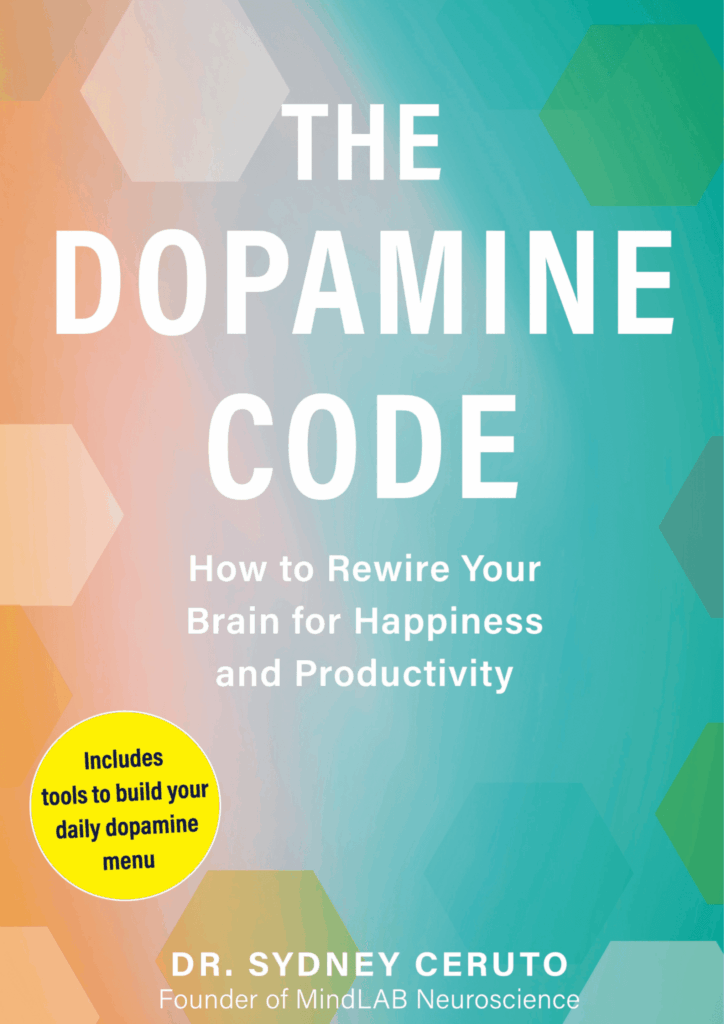
For a complete framework on dopamine prediction, the four motivation phases, and the Cascade Activation protocol, I cover the full science in my book The Dopamine Code (Simon and Schuster, June 2026).
From Reading to Rewiring
Understand the neuroscience. Apply it to your life. Work directly with Dr. Sydney Ceruto to build a personalized strategy.
Schedule Your Strategy Call