Neuroplasticity and The HPA Axis: Calm Your Brain
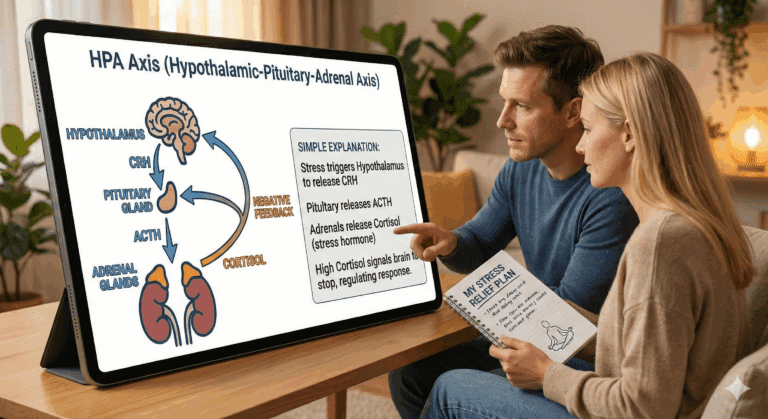
Neuroplasticity and the HPA Axis sit at the center of how your brain handles stress. I break down what that...
Read article : Neuroplasticity and The HPA Axis: Calm Your Brain

A malfunction of the threat detection system. We analyze the neural loops between the amygdala and prefrontal cortex, and the physiological protocols required to manually down-regulate the stress response.
87 articlesAnxiety is not nervousness, and it is not a personality flaw. It is the product of a threat-detection system that has lost its calibration. The amygdala, which evaluates incoming sensory data for potential danger, operates on a simple computational principle: when uncertain, default to threat. This bias was adaptive in environments where the cost of missing a predator was death and the cost of a false alarm was merely wasted energy. In modern environments — where the threats are reputational, financial, relational, and chronic rather than acute — the same circuitry generates sustained defensive activation without a corresponding resolution. The hypothalamic-pituitary-adrenal axis releases cortisol in preparation for a physical threat that never materializes. The locus coeruleus floods the cortex with norepinephrine, narrowing attention to potential dangers while impairing the flexible, creative processing needed to actually solve the problems generating the anxiety. The ventromedial prefrontal cortex, which should be dampening amygdala reactivity by providing contextual reassurance that the situation is manageable, loses its regulatory grip — either because the threat signal is too strong or because chronic stress has degraded the prefrontal circuits themselves.
Etkin’s neuroimaging research identified the specific breakdown in the amygdala-prefrontal regulatory circuit that characterizes pathological anxiety: reduced functional connectivity between the ventromedial prefrontal cortex and the amygdala, meaning the brain’s own internal “safety signal” fails to reach the threat-detection system. Grillon’s work at the National Institute of Mental Health distinguished between fear (a phasic response to a specific identifiable threat) and anxiety (a sustained response to uncertain, diffuse, or anticipated threat), showing that these are mediated by partially distinct neural circuits — a distinction that explains why anxiety is so resistant to rational reassurance. Bishop’s research demonstrated that anxiety fundamentally alters attentional processing, biasing perception toward threat-relevant stimuli and making it neurologically difficult for an anxious person to disengage from potential danger signals even when they consciously recognize the signals are benign. Ressler’s translational work on the neurobiology of fear learning and extinction has mapped the molecular mechanisms through which threat associations become consolidated and, critically, the conditions under which they can be updated — finding that extinction does not erase the original fear memory but creates a competing safety memory that must be stronger than the threat signal to prevail.
The conventional approach to anxiety typically involves one of two strategies: medication that alters the neurochemical environment globally (SSRIs increase serotonin availability across the entire brain, benzodiazepines enhance GABA inhibition broadly) or cognitive-behavioral protocols that train the prefrontal cortex to reappraise threat-relevant thoughts. Both have documented utility, but neither addresses the core problem. Pharmacological approaches modulate the chemical context without reorganizing the circuits that generate the anxiety. Cognitive approaches work through the prefrontal cortex — the very structure whose regulatory capacity is compromised by the anxiety itself. The person is asked to think their way out of a state that is, by definition, a failure of thinking to override subcortical alarm signals. When the intervention is removed — when the medication stops or the structured practice lapses — the underlying circuitry remains calibrated to threat, and the anxiety returns.
At MindLAB Neuroscience, Dr. Sydney Ceruto works with the threat-calibration system directly. Her approach through Real-Time Neuroplasticity™ does not teach management of anxiety symptoms — it targets the predictive models that generate the anxiety in the first place. By identifying the specific contexts, relational configurations, and decision environments in which the amygdala-prefrontal regulatory circuit breaks down for a given individual, and intervening during those live moments when the threat circuitry is active and in a plastic state, genuine recalibration becomes possible. The brain can learn that a situation it has been coding as dangerous is in fact navigable — but only when that learning occurs at the circuit level, not the narrative level. A strategy call is the first step toward understanding what your anxiety circuitry is actually responding to and what it would take to retrain it. The articles below examine the neuroscience of threat processing, stress reactivity, and the mechanisms that determine whether the brain’s alarm system serves as protection or as a source of chronic suffering.
Neuroplasticity and the HPA Axis sit at the center of how your brain handles stress. I break down what that...
Read article : Neuroplasticity and The HPA Axis: Calm Your BrainExplore the neuroscience of rumination, why your brain gets stuck in negative thought loops, and how to retrain it for...
Read article : The Neuroscience of Rumination: Why Your Brain Gets StuckThe neuroscience of love explains why your heart hurts so intensely in relationships and how your brain and nervous system...
Read article : The Neuroscience of Love: Why Your Heart HurtsThe neuroscience of obsession explains why your brain locks onto thoughts and refuses to let go. Learn how anxiety, PTSD,...
Read article : Neuroscience of Obsession: Optimizing Brain Circuits to Resolve Persistent Thought PatternsI share the neuroplasticity exercises I use with clients to turn anxiety, perfectionism, self-doubt, and burnout into clarity, confidence, and...
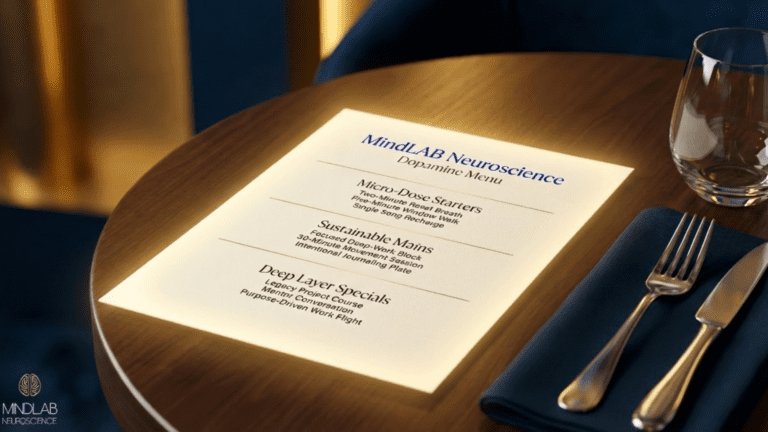
Read article : Neuroplasticity Exercises: How I Rewire the Brain for Positive ChangeDiscover how to design a dopamine menu that rewires your reward system and creates sustained happiness, not temporary highs. Clinical...
Read article : Build Your Dopamine Menu: Optimize Your Brain for Sustained HappinessBrain optimization is not a buzzword; it’s a practical way to retrain your nervous system so PTSD, depression, anxiety, and...
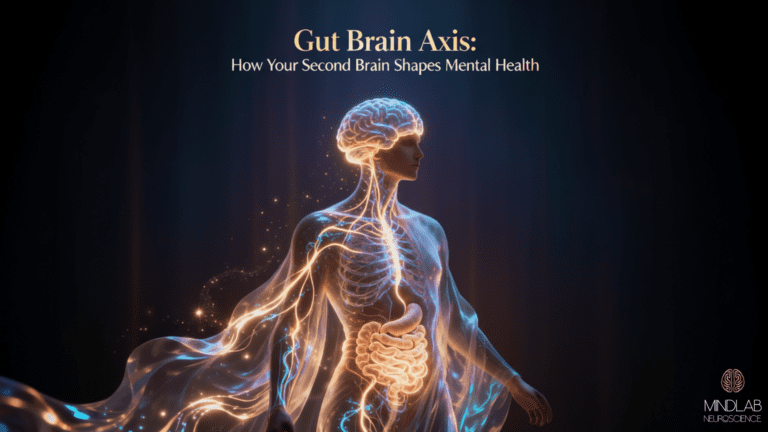
Read article : Brain Optimization: Rewiring PTSD; Depression; Anxiety; ADHDThe gut brain axis is not just about digestion; it is a powerful control center for mood, focus, and resilience...
Read article : Gut Brain Axis: How Your Second Brain Shapes Mental HealthWhen feedback hits like a threat, RSD at work can hijack your day. Here’s a neuroscience-based reset to stay grounded...
Read article : Rejection Sensitive Dysphoria (RSD) at work: How to Stay Grounded When Feedback Hits HardWhen the noise stops after a win, a capable brain can turn on you. This letter-style story follows a high...
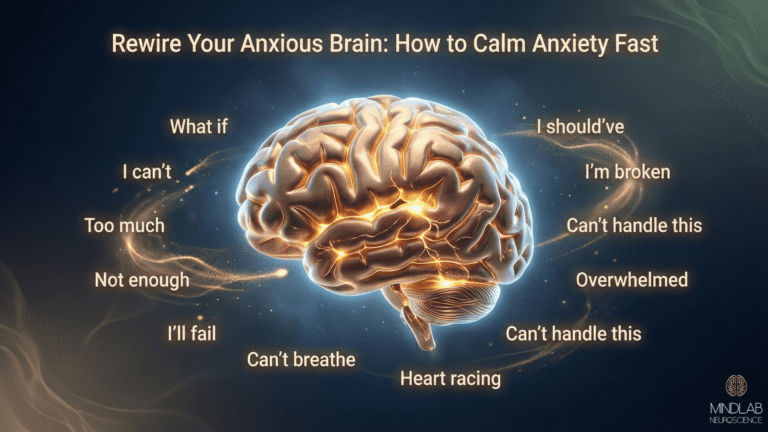
Read article : Impostor Feelings in the Quiet: A Letter for the Successful Client Who Still Feels Like a FraudIf your brain feels stuck in fear, this is your guide to rewiring it. You’ll learn what an anxious brain...
Read article : Rewire Your Anxious Brain: How to Calm Anxiety FastA practical neuroscience guide on how to rewire your brain for habits, focus, and emotional stability using real-world protocols that...
Read article : How To Rewire Your Brain: A Neuroscience-Based Guide That Actually Works