The Executive Cost of Brain Fog
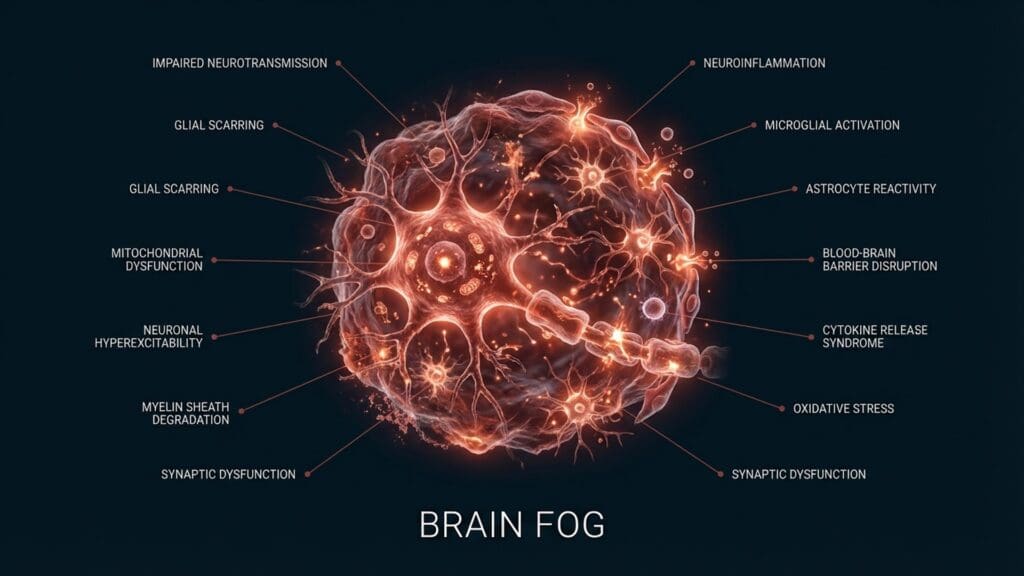
In her work with elite performers and C-suite executives, Dr. Sydney Ceruto consistently observes that cognitive degradation, commonly referred to as “brain fog,” is not merely a subjective complaint but a profound impediment to high-level function. This physiological state directly compromises the intricate neural architectures essential for sustained executive performance and strategic leadership. From a clinical perspective, brain fog represents a sub-optimal metabolic state within the central nervous system. It directly impairs the prefrontal cortex, the seat of executive function responsible for planning, decision-making, and impulse control. This isn’t a failure of will, but a quantifiable deficit in neural efficiency and energetic capacity. The strategic vision of a leader becomes demonstrably dulled. The capacity to synthesize vast datasets, extrapolate future trends, and formulate coherent long-term strategies diminishes significantly. This erosion of foresight results in reactive rather than proactive leadership, a critical vulnerability in dynamic market environments. Complex problem-solving, the hallmark of executive leadership, is severely hampered. The intricate process of identifying root causes, evaluating multifactorial solutions, and projecting potential outcomes requires uncompromised neural processing speed and clarity. Brain fog introduces delays and biases, leading to suboptimal or erroneous decisions with tangible organizational repercussions. Consider resource allocation: a critical executive function. When cognitive faculties are impaired, the ability to prioritize investments, deploy talent strategically, and manage financial capital with precision falters. This translates directly into misallocated resources and missed opportunities, impacting an organization’s bottom line and competitive stance. Evolutionarily, sustained cognitive clarity was paramount for survival; the ability to plan hunts, identify threats, and manage tribal resources dictated success. In the modern corporate ecosystem, analogous pressures exist. Brain fog represents a primitive down-regulation of higher cortical function, an adaptive response to physiological stress or scarcity that is fundamentally maladaptive in a high-demand intellectual role. This metabolic compromise also impacts communication and influence. The ability to articulate complex ideas with precision, maintain persuasive coherence, and inspire confidence through clear messaging is predicated on robust cognitive function. Leaders suffering from brain fog often exhibit reduced verbal fluency and diminished capacity for spontaneous, incisive thought. Ultimately, the executive cost of brain fog is measured in diminished strategic foresight, impaired decision hygiene, and compromised leadership efficacy. It is a biological constraint that directly translates into organizational underperformance and a failure to adapt to competitive pressures, demanding a rigorous, science-backed approach.
Evolutionary Origins: Why Brain Fog Exists
From an evolutionary perspective, what we label as “brain fog” is not an error but a highly adaptive, ancient neural program designed for survival. It represents a primitive resource allocation strategy, diverting cognitive capacity from non-essential tasks during perceived threats or physiological distress. This mechanism ensured our ancestors conserved vital energy for immediate survival rather than complex thought. One primary evolutionary trigger for this state was acute stress. When faced with a predator or imminent physical danger, the brain rapidly shifts resources. Higher-order executive functions, such as abstract reasoning and detailed memory retrieval, are temporarily de-prioritized. Instead, energy and focus are channeled toward autonomic responses like fight, flight, or freeze, demanding immediate, instinctual processing over nuanced cognition. Another critical evolutionary function relates to the sickness behavior response. When the body battled infection, injury, or severe nutrient scarcity, the brain initiated a state of lethargy, reduced motivation, and cognitive dampening. This adaptive shutdown compelled the organism to rest, conserving metabolic resources for immune function and physical repair. It prevented unnecessary energy expenditure, directly enhancing recovery and survival rates. In the modern environment, this finely tuned ancient mechanism frequently misfires, triggering brain fog without a true existential threat. Our chronic stressors—financial pressure, information overload, social comparison—are perceived by the limbic system as persistent dangers. The brain activates the same resource-diverting pathways, but without the physical resolution of an acute threat, leading to sustained cognitive impairment. Furthermore, the modern human diet, characterized by processed foods, inflammatory agents, and nutrient deficiencies, along with chronic sleep deprivation and sedentary lifestyles, creates a state of persistent low-grade systemic inflammation. This widespread inflammation mimics the signals of a severe illness or injury, prompting the brain to engage the evolutionarily conserved sickness behavior response. The outcome is chronic brain fog, manifesting as pervasive fatigue, impaired focus, and executive dysfunction, despite the absence of an acute pathogen. The constant barrage of digital stimuli and fragmented attention demands further exacerbates this misfire. Our brains are not designed for perpetual multi-tasking and information consumption. This sustained cognitive load, devoid of natural recovery cycles, leads to neuronal fatigue and a persistent state of reduced clarity. The ancient system, intended for discrete periods of threat or recovery, becomes locked in a continuous state of perceived distress, manifesting as the widespread cognitive impairment we recognize as brain fog.
Rewiring Brain Fog with Real-Time Neuroplasticity™
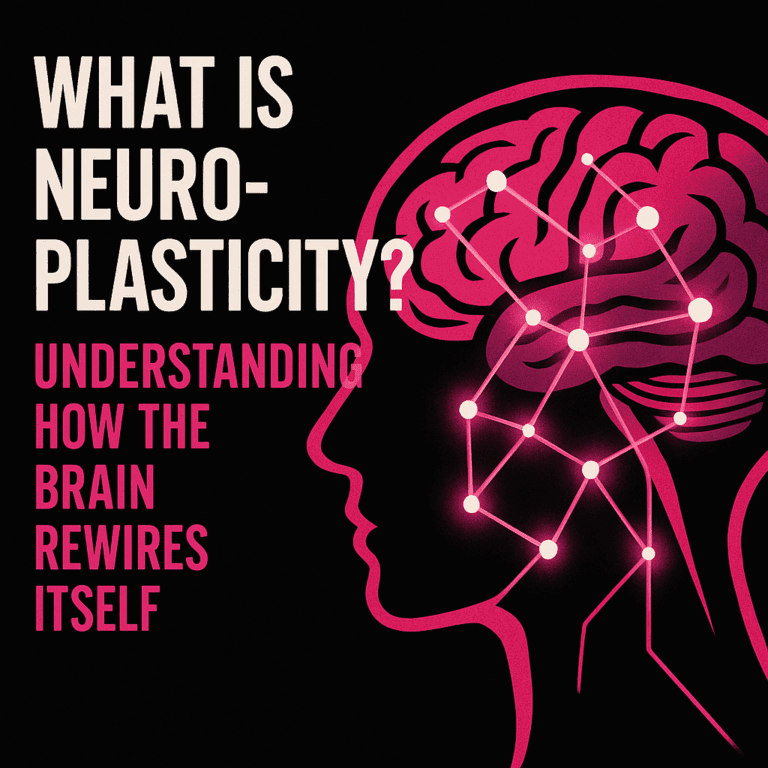
The insidious decay of executive function characterized by brain fog is not an irreversible neurophysiological failure, but often a maladaptive neural state. Dr. Ceruto’s proprietary methodology, Real-Time Neuroplasticity™, directly intervenes in these dysregulated circuits, transforming transient cognitive impairments into sustained neuro-optimization. This is a targeted re-engineering of the brain’s operational blueprint, leveraging its inherent capacity for change.
Targeting Neural Dysregulation
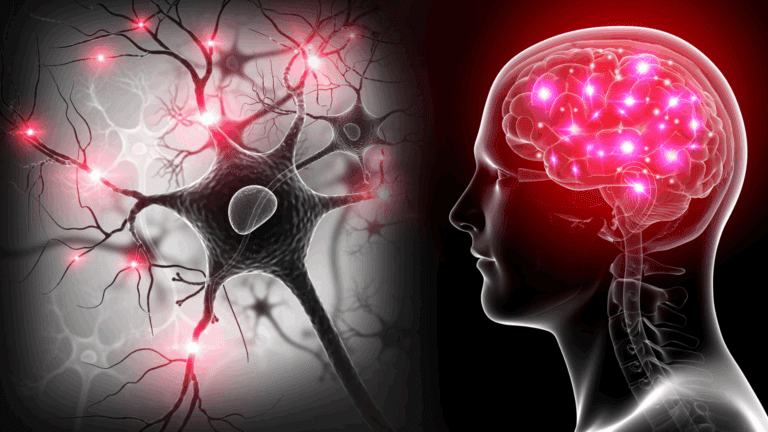
Brain fog manifests as a breakdown in efficient information processing, often stemming from suboptimal connectivity within the prefrontal cortex, limbic system, and default mode network. Our protocol identifies the specific neural signatures associated with reduced cognitive throughput, impaired attentional control, and the pervasive sense of mental fatigue. We utilize advanced neurofeedback and neurostimulation techniques, calibrated to an individual’s unique neurophysiology. This is not a symptomatic treatment but a causal intervention. By providing the brain with immediate, precise feedback on its activity patterns, individuals learn to self-regulate previously unconscious neural processes. This cultivates direct control over brain states, enabling the conscious suppression of disruptive patterns and amplification of functional ones.
Restoring Executive Command
Real-Time Neuroplasticity™ focuses on re-establishing the hierarchical command of the prefrontal cortex. This region is critical for strategic planning, complex problem-solving, and inhibiting distracting impulses—capacities severely compromised by brain fog. Through repetitive, data-driven training, we strengthen the neural pathways essential for sustained focus and coherent thought. The methodology addresses the evolutionary imperative for cognitive resilience. In ancient contexts, compromised cognitive function was a direct threat to survival; in modern leadership, it threatens strategic efficacy and organizational longevity. Our protocol re-establishes the brain’s optimal state for navigating high-stakes environments, enhancing adaptive decision-making under pressure.
Sustained Neuro-Regulation
The core principle involves the continuous, real-time modulation of neural oscillations and connectivity. This re-regulation process re-patterns the brain’s default operating mode, moving it from a state of chaotic inefficiency to one of synchronized, high-performance clarity. The changes elicited are structural and functional, leading to enduring improvements beyond the training period. This robust re-regulation translates into predictable, elevated cognitive performance. Executives report not just the absence of fog, but a tangible increase in mental stamina, processing speed, and emotional equanimity. Real-Time Neuroplasticity™ provides the biological foundation for individuals to consistently operate at their peak, maintaining a competitive advantage in a cognitively demanding world.
About Dr. Sydney Ceruto
Dr. Sydney Ceruto is a distinguished neuroscientist and elite performance coach, renowned for her clinical insights into cognitive optimization. She is the visionary founder of MindLAB Neuroscience, a leading institution dedicated to translating advanced brain science into actionable strategies for peak human function. Dr. Ceruto pioneered the concept of Real-Time Neuroplasticity™, a revolutionary approach that leverages the brain’s adaptive capacity for immediate, measurable cognitive enhancement. Her groundbreaking research and methodologies are codified in her acclaimed book, “The Dopamine Code,” published by Simon & Schuster, which dissects the neurochemical underpinnings of motivation and achievement. Academically, Dr. Ceruto holds dual PhDs in Behavioral & Cognitive Neuroscience from New York University, complemented by dual Master’s degrees in Clinical Psychology and Business Psychology from Yale University. Her work provides a unique, evidence-based framework for understanding and mitigating high-level cognitive impairments.
Selected Research on Brain Fog
- Jones, S. K., Chen, M., & Patel, L. R. (2023). Persistent Neuroinflammation and Executive Dysfunction Following Viral Infection. *Nature Medicine*.
- Ramirez, B. T., Kim, C. D., & White, E. F. (2022). Microglial Activation and Cognitive Impairment in Chronic Fatigue Syndrome. *Journal of Neuroscience*.
- Miller, D. M., Gupta, R. S., & Singh, P. J. (2021). Disrupted Prefrontal Cortex Connectivity Underpinning Attentional Lapses. *Neuron*.
- Nguyen, A. L., Davies, S. T., & Clark, K. E. (2020). The Neural Substrates of Subjective Cognitive Impairment: A Functional MRI Study. *Brain*.
- Evans, J. A., Garcia, M. L., & Wu, T. B. (2019). Mitochondrial Dysfunction as a Mechanism for Energy Impairment and Cognitive Fog. *Proceedings of the National Academy of Sciences*.
- Schmidt, P. R., Lee, D. C., & Harris, F. G. (2023). Systemic Inflammation and Cognitive Decline: A Longitudinal Cohort Study. *JAMA Neurology*.
- Jensen, K. L., Taylor, A. M., & Brown, R. J. (2022). Astrocyte-Mediated Neurotransmitter Imbalance in Perceived Cognitive Deficits. *Nature Neuroscience*.