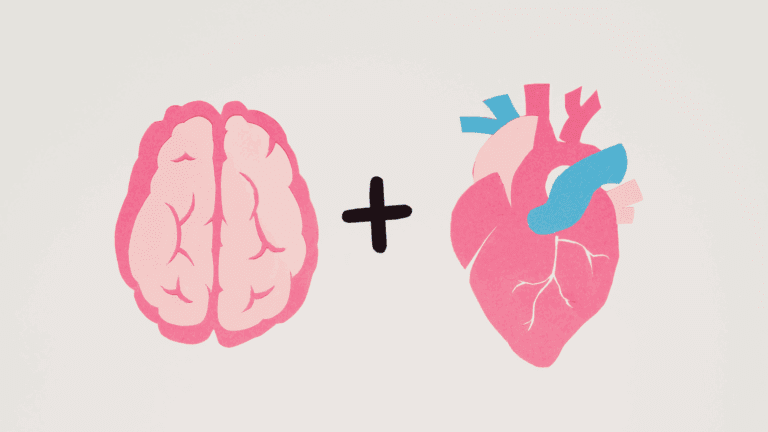
The mechanics of neural coupling. We explore how language synchronizes brain states between speaker and listener, and the specific signaling protocols to maximize clarity, influence, and information transfer.
The Evolutionary Design
Humans are weak on their own. We need a tribe to survive. Communication is the biological wire that connects one brain to another. Early humans used it to warn of predators and coordinate hunts. It allowed us to share food and build shelter. Your brain craves this connection. It seeks understanding to ensure safety. Without this link, the individual fails.
The Modern Analogy
Communication is like passing a ball back and forth—you both have to throw clearly and catch carefully, or the game quickly falls apart. Today, many people throw wild pitches. They speak with vague words or hidden anger. Others fail to catch. They are distracted and let the ball hit the ground. When you drop the ball, trust erodes. The rhythm breaks. You cannot play the game if no one catches the pass.
The Upgrade Protocol
You must become a better player. Focus on your catch first. Listen fully to what is being sent your way. Do not prepare your next throw while the ball is in the air. When it is your turn, throw with precision. Aim for understanding. Make it easy for them to catch your meaning. Keep the rally going. This creates a high-performance loop between brains.
NEUROBIOLOGICAL CONTEXT
Communication is not just the transmission of data; it is the synchronization of two distinct nervous systems. fMRI studies reveal a phenomenon called Neural Coupling: when communication is successful, the listener’s brain activity begins to mirror the speaker’s brain activity with a slight time delay. In high-fidelity storytelling, this delay disappears, and the listener’s brain actually anticipates the speaker’s neural patterns. This synchronization is the biological basis of “understanding.”
The brain is a “cognitive miser,” meaning it conserves energy by ignoring complexity. To bypass the brain’s filters, communication must be structured for processing fluency.
The “Schema” Hook: People cannot understand new information unless they can attach it to an existing neural map (schema). Effective communication starts with a familiar analogy to activate the relevant neural networks before introducing new, complex data.
Processing Fluency: Simple language is not “dumbing it down”; it is biological optimization. Complex sentence structures tax working memory, causing the listener’s prefrontal cortex to disengage. High-impact communication reduces cognitive load to keep the listener’s attention online.
The brain processes non-verbal signals (tone, posture, micro-expressions) faster than semantic content via the amygdala and limbic system.
Congruence: If your words (cortical) match your body language (limbic), the listener’s brain signals “trust.”
Incongruence: If there is a mismatch (e.g., saying “I’m happy” with a flat tone), the listener’s brain detects a “prediction error,” triggering a threat response that blocks the absorption of the actual message.

From the perspective of Dr. Sydney Ceruto’s work with elite performers, communication is not merely a social lubricant or a skill; it is a critical neurobiological process with direct implications for performance and survival. Ineffective communication is a profound executive function drain, introducing entropy into strategic directives and fracturing organizational intent. It actively degrades a leader’s capacity for foresight and agile decision-making. Ambiguous or incongruent communication patterns from leadership directly stimulate physiological stress responses within teams. This persistent cortisol elevation impairs rational processing, hinders complex problem-solving, and compromises the neural architecture critical for high-stakes decision-making. The brain’s prefrontal cortex, vital for strategic planning and executive control, becomes unduly taxed by the constant demand for disambiguation and conflict resolution, translating into significant metabolic overload. Strategic vision, which relies on the precise and coherent dissemination of information, fragments under the weight of semantic noise. The energetic cost of aligning misinterpretations diverts critical neural resources away from innovation, market analysis, and proactive adaptation. This sustained cognitive friction not only erodes trust, a fundamental neurochemical bond built on predictability and clarity, but also actively suppresses oxytocin pathways essential for collaborative output. The biological imperative for clarity and certainty is deeply embedded. When communication fails to provide a stable predictive model, the brain enters a heightened state of vigilance, consuming disproportionate glucose and oxygen. This ancient survival mechanism, misfiring in a modern corporate context, leads to systemic energetic debt and diminished collective intelligence. Leaders who fail to master precise communication are not simply poor managers; they are biological stressors on their entire organizational ecosystem. The resultant metabolic drain impacts cognitive bandwidth, impairs accurate threat assessment, and diverts significant internal resources towards managing internal chaos rather than external competitive pressures. This represents a direct and quantifiable threat to an organization’s adaptive capacity and long-term viability. From an evolutionary standpoint, inefficient information exchange within a group signals profound vulnerability, making the collective susceptible to environmental stressors and competitive pressures.
Communication emerged as an indispensable mechanism for survival and propagation across species. Its primary evolutionary purpose was to facilitate the efficient transfer of critical information, enabling organisms to navigate environments, secure resources, and evade threats. From rudimentary alarm calls to intricate chemical signals, natural selection favored those capable of conveying and interpreting data essential for continued existence. For early hominids, complex communication provided a significant adaptive advantage. It enabled coordinated hunting strategies, communal defense against predators, and the sharing of knowledge regarding food sources and shelter. This collective intelligence, mediated by increasingly sophisticated vocalizations and gestures, solidified group cohesion, a cornerstone for reproductive success and the transmission of culture across generations. However, the neural architecture underlying these ancient communication pathways frequently misfires within contemporary environments. Our brains are largely optimized for the immediate, tangible stressors of the Pleistocene era, where social groups were small and interactions primarily face-to-face. Modern communication demands abstract reasoning and a far greater capacity for processing non-verbal or digitally mediated information, which our primal systems are ill-equipped to handle. This mismatch often manifests as a maladaptive “fight or flight” response to perceived social or professional threats, triggering physiological states that inhibit rational discourse. A critical email or a public disagreement can activate the amygdala, leading to defensive posturing, aggression, or complete withdrawal. Such reactions disrupt the very intent of productive exchange, fostering conflict rather than resolution. Furthermore, the prevalence of digital communication strips away layers of crucial context—prosody, facial micro-expressions, body language—that historically anchored meaning. Our brains, wired to interpret a rich tapestry of direct signals, struggle to reconcile sparse textual cues with deeply ingrained social algorithms. This ambiguity amplifies misunderstanding, breeding distrust and fragmentation within social and professional networks. The inherent human drive for in-group affiliation, once critical for tribal survival, now presents a significant barrier to effective cross-cultural and cross-ideological communication. We are predisposed to interpret information through the lens of our immediate social group, fostering echo chambers and exacerbating polarization. This ancient mechanism, designed to protect the immediate collective, impedes the broader cooperation necessary for navigating a globally interconnected world. Understanding these deep evolutionary roots is not merely an academic exercise; it is a strategic imperative. Recognizing why our innate communication systems falter in the modern landscape provides the foundation for consciously overriding these ancient predispositions, thereby enabling more effective, intentional, and adaptive human interaction.
The Ceruto method for optimizing communication centers on Real-Time Neuroplasticity™, a proprietary methodology engineered for targeted neural recalibration. This is not about behavioral modification; it is about fundamentally restructuring the brain’s processing architecture for social interaction. We address the deeply entrenched, often suboptimal, neural pathways that dictate an individual’s communicative efficacy.
Ineffective communication is a manifestation of ingrained neural patterns established through a lifetime of experience and evolutionary programming. Our initial phase involves precise identification of these neural signatures. We pinpoint the specific limbic system over-activations, prefrontal cortex inhibitions, or cerebellar dyssynchronies that underpin reactive responses, misinterpretations, or insufficient information encoding and decoding during social exchanges. This diagnostic rigor allows us to map the precise neural circuits contributing to a suboptimal communicative phenotype. It moves beyond subjective assessment to a neurobiological understanding of individual and systemic failures in transmitting and receiving critical social data. Such analysis reveals where the brain’s predictive coding mechanisms falter, leading to maladaptive social predictions and responses.
Real-Time Neuroplasticity™ then initiates a protocol of conscious neural re-regulation. This involves leveraging specific cognitive and experiential exercises designed to activate and strengthen alternative, more adaptive neural pathways. The objective is to establish new, robust circuits that prioritize executive control over limbic reactivity in communicative contexts. Participants are trained to achieve heightened interoceptive and metacognitive awareness. This enables the real-time recognition of nascent physiological and cognitive states *before* they culminate in ingrained, detrimental communicative outputs. The methodology integrates immediate feedback loops—both internal neurological signals and external social responses—to reinforce desired neural activations and extinguish archaic, less efficient ones.
The core of this optimization lies in systematically re-engaging the prefrontal cortex. This region is critical for top-down regulation of emotional responses, strategic message construction, and nuanced social cognition. By bolstering these executive functions, individuals gain superior control over their communicative intent and impact, moving beyond reflexive patterns to deliberate, high-leverage exchanges. This neural retraining refines the brain’s capacity for empathy, theory of mind, and complex social forecasting, all paramount for adaptive survival and hierarchical advantage. The outcome is not merely improved social skills, but a neurologically optimized individual equipped with superior social intelligence—a distinct evolutionary advantage in navigating the complexities of modern social and professional landscapes.
Dr. Sydney Ceruto is a globally recognized Neuroscientist and Elite Performance Coach, committed to optimizing human potential with an uncompromising, evidence-based methodology. She is the visionary founder of MindLAB Neuroscience, a pioneering institute at the forefront of cognitive enhancement research and application. Ceruto is celebrated as the pioneer of Real-Time Neuroplasticity™, her groundbreaking framework for targeted neural rewiring. Her work dissects the evolutionary mechanisms underpinning peak performance, translating complex neuroscience into actionable strategies for high-stakes executive environments. She is the acclaimed author of “The Dopamine Code,” published by Simon & Schuster, a definitive text on neurochemical regulation. Dr. Ceruto holds dual PhDs in Behavioral and Cognitive Neuroscience from NYU. Further solidifying her expertise, she possesses dual Master’s degrees in Clinical Psychology and Business Psychology from Yale University. Her integrated approach delivers unparalleled insights and quantifiable performance advancements.
Join my inner circle for exclusive insights and breakthroughs to elevate your life.
Limited Availability
Your Journey to Unparalleled Personal and Professional Growth Starts Here
Limited Availability
A Truly Bespoke, One-on-One Journey with Dr. Sydney Ceruto
Download The Influence Within and discover how small shifts lead to big transformations.