Emotional Resilience
The nervous system capacity to absorb, adapt to, and recover from acute stressors without sustained dysregulation. We examine HPA-axis function, vagal tone, and the evidence-based protocols that expand the biological window of tolerance.
12 articlesEmotional resilience is not about being unaffected by difficulty. It is about how quickly and completely the brain restores itself to functional baseline after a disruptive event. This is a measurable neural process: the speed at which the ventromedial prefrontal cortex re-establishes regulatory control over amygdala activation, the efficiency with which the anterior cingulate cortex resolves the conflict between emotional reactivity and goal-directed behavior, and the degree to which the hippocampus can contextualize a stressor as bounded rather than existential. Resilience, at the circuit level, is recovery speed.
Davidson’s research at the University of Wisconsin demonstrated that resilient individuals show a specific neural signature: rapid prefrontal recovery following amygdala activation. The amygdala fires in both resilient and non-resilient individuals — the initial threat response is identical. The difference is what happens next. In resilient circuitry, the prefrontal cortex reasserts top-down regulation within seconds. In less resilient circuitry, the amygdala maintains elevated activation for minutes, hours, or — in chronic stress — indefinitely. Southwick and Charney’s longitudinal studies of resilience under extreme conditions confirmed that this recovery capacity is not genetically fixed. It is shaped by experience and can be deliberately strengthened through targeted neural intervention.
What most resilience-building approaches miss is that the circuitry in question does not respond well to cognitive strategies applied after the fact. Telling yourself to reframe a stressor while your cortisol is already elevated and your prefrontal cortex is partially offline is the neurological equivalent of trying to steer a car after the tires have left the road. The window for effective intervention is narrower and more specific than popular psychology suggests — it requires engaging the regulatory circuits at the precise moment they are being challenged, which is when they are most available for strengthening.
Dr. Sydney Ceruto’s practice at MindLAB Neuroscience is built on this principle. Working with individuals whose professional and personal environments generate sustained pressure, she identifies the specific points where regulatory circuitry falters and intervenes in real time — not in a removed setting, but in the live conditions where resilience is actually required. A strategy call is the first step in mapping your current resilience architecture and understanding where targeted change is possible.
The articles below examine the neuroscience of stress recovery, regulatory capacity, and what determines whether adversity strengthens or erodes neural function.
Latest Articles


Emotional Resilience
Psychology First Aid: Building Resilience and Mental Well-being in Times of Crisis
Discover the power of Psychology First Aid in restoring balance and resilience to your mental well-being. Dive into this insightful...
Read article : Psychology First Aid: Building Resilience and Mental Well-being in Times of Crisis
Emotional Resilience
Mastering Emotional Resilience with Neuroscience-Based Coaching
Master emotional resilience with neuroscience-based techniques. Cultivate mental well-being, navigate challenges, and unlock your full potential. Join us on the...
Read article : Mastering Emotional Resilience with Neuroscience-Based Coaching
Emotional Resilience
7 Powerful Steps to Optimize Radical Acceptance: Your Path to Inner Peace and Emotional Resilience
Radical acceptance is a transformative practice that can lead to profound inner peace and emotional resilience. In this article, we...
Read article : 7 Powerful Steps to Optimize Radical Acceptance: Your Path to Inner Peace and Emotional Resilience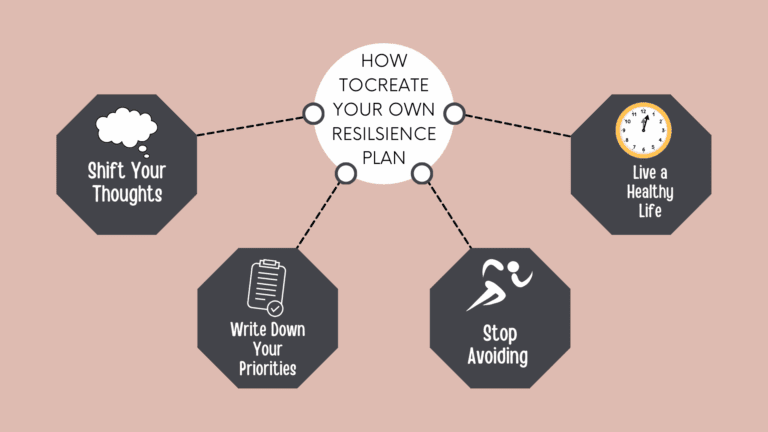
Emotional Resilience
Life can be challenging: Build your own resilience plan
Discover how to build your own resilience plan to navigate life's challenges. Learn practical strategies from experts to cultivate a...
Read article : Life can be challenging: Build your own resilience plan
Emotional Resilience
Neuroscience of Mental Toughness: How Your Brain Builds Unbreakable Resilience
Unlock the neuroscience of mental toughness and discover how your brain builds true resilience, grit, and adaptability. Explore the latest...
Read article : Neuroscience of Mental Toughness: How Your Brain Builds Unbreakable Resilience
Relationship Patterns & Partner Selection
Addressing Dating Challenges: The Neuroscience of Rejection and Optimizing Emotional Resilience
Dating feels tougher than ever—endless swiping, emotional burnout, and the sting of rejection. But what if it's not just you?...
Read article : Addressing Dating Challenges: The Neuroscience of Rejection and Optimizing Emotional Resilience
Emotional Resilience
Building Psychological Resilience: Navigating Life’s Challenges with Strength and Grace
Life is a complex journey filled with challenges and triumphs. Psychological resilience, the ability to adapt and thrive in the...
Read article : Building Psychological Resilience: Navigating Life’s Challenges with Strength and Grace
Leadership & Executive Performance
Exhibiting Leadership Resilience: Overcoming Setbacks with Neuroscience-Backed Strategies
Discover neuroscience-backed strategies to boost your leadership resilience. Learn how to leverage emotional intelligence and brain plasticity to overcome setbacks...
Read article : Exhibiting Leadership Resilience: Overcoming Setbacks with Neuroscience-Backed Strategies
The Neurobiology of Separation
Optimizing Emotional Resilience During Relationship Transitions: A Neuropsychology-Based Coaching Guide
Breaking up with a partner is never an easy decision, and it's something that can cause significant emotional pain and...
Read article : Optimizing Emotional Resilience During Relationship Transitions: A Neuropsychology-Based Coaching Guide