Time Management
The alignment of effort with biology. We analyze circadian rhythms, the "ultradian" cycles of focus, and the protocols required to sync high-demand tasks with peak neural alertness.
10 articles
Time Is Not a Resource You Manage — It Is a Neural Construct You Inhabit
The entire framework of time management is built on a flawed premise: that time is an external resource, like money or fuel, and that the challenge is allocating it efficiently. In 26 years of working with high-performers who have tried every productivity system available, I have observed a consistent pattern — the problem is never the calendar. The problem is the neural architecture that governs how the brain perceives, prioritizes, and allocates temporal experience. Until that architecture is addressed, no system, app, or framework produces lasting change.
What neuroscience reveals about temporal perception is fundamentally different from what the productivity industry assumes. The brain does not experience time as a uniform, objective stream. Time perception is constructed by a distributed neural circuit anchored in the insular cortex and the basal ganglia, modulated by dopaminergic signaling, and filtered through attentional and emotional systems that actively distort how duration is experienced. Bud Craig’s research at the Barrow Neurological Institute demonstrated that the anterior insula integrates interoceptive signals — heartbeat, breathing, visceral state — into a moment-by-moment sense of temporal passage. When the body is aroused, time dilates. When attention is absorbed, time compresses. The “where did the afternoon go” phenomenon is not a failure of discipline. It is the brain’s temporal construction system operating exactly as designed, under conditions that compress experienced duration.
This means that every approach to time management that treats the clock as the variable and the person as the constant has the relationship inverted. The clock does not change. The brain’s relationship to it does — and that relationship is governed by specific, identifiable neural circuits that can be mapped, understood, and restructured.
Why High-Performers Cannot Simply “Manage Time” — The Prefrontal-Limbic Competition
In my practice, the individuals who struggle most with temporal allocation are not disorganized. They are extraordinarily capable — and it is precisely that capability that creates the problem. The prefrontal cortex, which houses executive planning, future-oriented reasoning, and the capacity to sequence actions across time, is in constant competition with the limbic system for attentional resources. This is not a failure of willpower. It is a structural constraint of the brain’s architecture.
The dorsolateral prefrontal cortex maintains what neuroscientists call a temporal action plan — the mental representation of what needs to happen, in what order, over what timeframe. This function is metabolically expensive. It requires sustained activation of working memory circuits, inhibition of competing impulses, and the continuous updating of priority signals as context changes. Meanwhile, the amygdala and ventral striatum are generating their own priority signals: urgency markers, threat flags, and reward predictions that compete directly with the prefrontal plan for control of behavior. When limbic signals win — and they frequently do, because they arrive faster and carry higher biological salience — the prefrontal time plan is disrupted. Not abandoned, but interrupted in ways that compound across a day.
What I consistently observe in high-performing clients is a specific version of this competition. Their prefrontal capacity is exceptional — they can construct complex temporal plans spanning weeks or months. But their environments generate a volume of limbic interrupts that systematically degrades those plans: the urgent email, the interpersonal friction that demands immediate social processing, the opportunity that triggers dopaminergic approach motivation right when sustained focus was needed elsewhere. The result is not poor planning. It is a neural architecture where the planning system is chronically outbid by the urgency system for the same finite pool of attention and focus optimization resources.
The Dopamine-Urgency Connection: Why Deadlines Work Until They Stop Working
There is a reason that so many people describe themselves as performing best under deadline pressure — and a reason that strategy eventually fails. Both are explained by the same mechanism: the dopaminergic system’s response to temporal proximity of consequences.
The mesolimbic dopamine pathway, running from the ventral tegmental area through the nucleus accumbens, encodes not just reward but reward prediction error — the discrepancy between expected and actual outcomes. As a deadline approaches, the predicted consequence of inaction becomes increasingly concrete and temporally proximate. This triggers a dopaminergic surge that sharpens focus, enhances working memory, and produces the subjective experience of clarity and motivation that feels like peak performance. Wolfram Schultz’s foundational research on dopamine neurons confirmed that these cells fire most strongly when a predicted outcome becomes more certain — and an approaching deadline is precisely that kind of certainty signal.
The problem is that this mechanism was not designed for sustained use. It evolved for acute, time-limited challenges. When an individual builds their entire productivity architecture around deadline pressure, they are recruiting a neurochemical system at a frequency and intensity it cannot maintain. Dopamine receptor downregulation follows the same pattern it follows in any chronic overactivation scenario: the system reduces its own sensitivity to protect itself. The result is what I see repeatedly in practice — the individual who used to produce brilliant work in the final 48 hours before a deadline and now finds that even extreme time pressure generates only anxiety without the accompanying clarity and drive. The deadline still creates urgency. It no longer creates capability.
This is the dopaminergic trap of urgency-based productivity: the strategy works until it erodes the neurochemical system it depends on. By the time the person realizes it has stopped working, the receptor changes are already established.
Executive Function Fatigue and the Collapse of Temporal Decision-Making
Every decision about how to spend time is an executive function event. It requires the dorsolateral prefrontal cortex to evaluate options, the anterior cingulate cortex to detect conflicts between competing priorities, and the ventromedial prefrontal cortex to assign value weights to each option based on predicted outcomes. These are among the most metabolically demanding operations the brain performs — and they degrade with use.
Roy Baumeister’s early work on ego depletion, while contested in its original formulation, pointed toward a real neurological phenomenon that subsequent glucose utilization studies confirmed. Executive function fatigue is measurable: prefrontal cortical activity decreases across a day of sustained decision-making, and the quality of those decisions degrades in predictable ways. The brain begins defaulting to the path of least resistance — choosing the immediate, the familiar, and the low-effort option over the strategically optimal one. This is not laziness. It is a resource-constrained system conserving what remains of a depleted capacity.
The degradation has a characteristic signature. Early in the day, when prefrontal resources are fresh, individuals allocate time with strategic precision — high-value tasks get priority and distractions are effectively filtered. By mid-afternoon, the same individual is checking email during a deep-work block and making scheduling decisions based on what feels easiest rather than what matters most. The clock has not changed. The neural infrastructure supporting temporal judgment has been progressively depleted by every decision that preceded this moment. And because the prefrontal cortex does not generate a reliable fatigue signal the way muscles do, the system degrades silently — the person only notices the consequences without recognizing the neurological cause.
The Myth of Multitasking: Neural Switching Costs and the Anterior Cingulate Bottleneck
Multitasking, as it is popularly understood, does not exist at the neural level. What the brain actually does when switching between tasks is a rapid serial alternation that incurs measurable costs at every transition — costs that accumulate throughout the day and systematically destroy temporal efficiency. The research on this is unambiguous, and yet the pattern persists because the brain’s own feedback mechanisms make task-switching feel productive even as it degrades actual output.
The anterior cingulate cortex serves as the brain’s conflict monitor and task-switching regulator. When you shift from writing a report to responding to a message, the anterior cingulate detects the conflict between the two task sets and initiates a reconfiguration of the prefrontal control networks. Joshua Rubinstein and David Meyer’s research on executive control processes documented two distinct stages to every task switch: goal shifting (deciding to switch) and rule activation (loading the cognitive rules for the new task while suppressing the old ones). Each switch takes measurable time — typically 200 to 500 milliseconds per transition — but the cumulative cost is far greater than the sum of those transitions.
The deeper cost is what Gloria Mark’s research at UC Irvine documented: after an interruption, it takes an average of 23 minutes for the brain to fully re-engage with the original task at its previous depth of processing. This is a working memory reconstitution problem — the prefrontal cortex must rebuild the mental model it was operating from before the interruption, reloading context and re-suppressing the competing task set. An individual who switches tasks 10 times in an afternoon has spent the majority of that time reloading cognitive context and operated at reduced depth on every one. And the neurological irony is that task-switching triggers a small dopaminergic reward — the novelty of the new task creates a micro-burst of engagement that feels like productivity, even as the switch degrades the deeper work it interrupted. The subjective experience of multitasking efficiency is neurochemically generated and neurologically false.
Chronotype and Circadian Architecture: There Is No Universal Peak Performance Window
The productivity industry’s insistence on morning routines as the foundation of time management ignores one of the most well-established findings in chronobiology: individual variation in circadian peak performance windows is genetically driven, neurologically real, and not subject to override by habit formation alone.
Chronotype — whether an individual’s neural and hormonal systems peak in the morning, afternoon, or evening — is governed by clock genes including PER3, CLOCK, and CRY1, which regulate the timing of the suprachiasmatic nucleus in the hypothalamus. This master pacemaker coordinates cortisol release, core body temperature, and neurotransmitter availability across the 24-hour period. Till Roenneberg’s research at Ludwig Maximilian University documented that chronotype distribution follows a near-normal curve with significant individual variation — and that this variation has meaningful consequences for when cognitive performance peaks.
Prefrontal cortical function — the substrate for strategic thinking and decision-making architecture — does not operate at uniform capacity across the day. It peaks during an individual’s chronotype-aligned window and degrades outside it. Working memory capacity, inhibitory control, and complex reasoning all follow this circadian curve. An evening chronotype forcing high-stakes strategic work into a 6 AM block is deploying their most metabolically expensive neural operations during the period when those operations run at minimum efficiency.
What I observe in practice is that many accomplished individuals have built their temporal architecture around cultural assumptions about when productive work should happen rather than around their actual neural performance windows. Correcting this single misalignment — matching high-cognitive-demand work to chronotype-aligned peak windows — often produces more measurable improvement in output quality than any productivity system they have previously attempted.
Procrastination as Temporal Miscalibration — Not Laziness
Procrastination is one of the most misunderstood behaviors associated with time management, and the misunderstanding is specifically neural. The popular framing — that procrastination reflects a deficit of discipline or a preference for short-term comfort — misrepresents what the brain is actually doing when it defers important work.
Fuschia Sirois and Timothy Pychyl’s research established that procrastination is primarily an emotion regulation problem, not a time management one. The amygdala generates a negative affective signal associated with the task — anxiety about the outcome, aversion to the effort, fear of judgment — and the brain resolves this signal by avoiding the task entirely. The avoidance produces immediate relief, which the limbic system registers as a successful outcome. The ventral striatum logs this relief as rewarding, reinforcing the avoidance circuit for next time. The pattern becomes self-strengthening: each instance of procrastination and motivational resistance makes the next instance neurologically more likely.
What this means for time management is that the standard interventions — breaking tasks into smaller pieces, setting interim deadlines, creating accountability — address the behavioral surface without touching the neural mechanism. The amygdala’s aversion signal fires before conscious planning engages. By the time the prefrontal cortex is constructing a rationale for why the task can wait until tomorrow, the emotional decision has already been made at the subcortical level.
In my practice, the individuals with the most entrenched procrastination patterns are often those with the highest performance standards. The relationship is mechanistic: perfectionism elevates the affective cost of engagement because every task carries an implicit threat of failing to meet the standard. The higher the stakes assigned to quality, the stronger the amygdala’s aversion signal. These are not people who do not care about their work. They are people whose neural circuitry has learned to treat their own standards as a threat.
Restructuring the Neural Architecture That Governs Temporal Decision-Making
The approach I take at MindLAB Neuroscience begins from a fundamentally different starting point than conventional time management. The question is not “how do you organize your schedule?” The question is “what is your brain’s temporal architecture actually doing, and where is it failing you?”
This means mapping the specific neural patterns: where the prefrontal-limbic competition is being lost, what the dopaminergic urgency profile looks like, how executive function fatigue is distributing across the day, and where chronotype misalignment is costing cognitive performance. These are not abstract concepts — they are observable, identifiable patterns that manifest in real-time decision-making and can be targeted with precision.
Real-Time Neuroplasticity™ operates at the intersection where these patterns are active. The moment when a client is about to abandon a strategic priority in favor of an urgent but low-value demand — that is when the prefrontal-limbic competition is visible and available for intervention. The moment when deadline pressure is generating anxiety without the accompanying dopaminergic clarity — that is when the urgency circuit’s degradation can be addressed. These circuits do not reorganize in retrospective analysis. They reorganize in the live conditions where the pattern is operating.
What I consistently observe is that when the neural architecture governing temporal experience is addressed at this level, the behavioral changes follow without the effortful willpower that characterizes conventional approaches. The client does not need to force themselves to stay on task — their architecture no longer generates the competing signals that pulled them away. The client does not need an elaborate system to prevent procrastination — the amygdala’s aversion signal has been recalibrated so the avoidance impulse no longer fires with the same intensity.
This is the fundamental difference between managing time and optimizing the neural architecture that governs how you experience and inhabit it. Every system and app addresses the behavioral output. None of them address the neural input that generates the behavior. For individuals who have exhausted conventional approaches and recognize that the problem is structural, neurological, and specific to how their brain processes temporal demands — this is the level at which change becomes durable. If you are ready to address the architecture rather than the symptoms, schedule a strategy call with Dr. Ceruto to begin mapping your specific neural patterns.
The articles below explore the neuroscience of temporal cognition, attentional allocation, executive function, and the neural mechanisms that determine whether time works for you or against you.
Latest Articles


Peak Performance & Flow States
Energy Management Over Time Management: A New Framework For High Performers
Energy management isn't about squeezing more hours into your day, it's about understanding how your neurochemical state determines your capacity...
Read article : Energy Management Over Time Management: A New Framework For High Performers
ADHD & Executive Function
ADHD and Executive Function: Optimize Your Brain’s Control Center
ADHD & executive function challenges are not laziness or a lack of willpower. They are rooted in how your brain’s...
Read article : ADHD and Executive Function: Optimize Your Brain’s Control Center
ADHD & Executive Function
Time Optimism at Work: Why Smart People Underestimate Time and How to Resolve It
Time optimism can wreck your schedule even when you’re competent. Discover why your brain misinterprets time at work and apply...
Read article : Time Optimism at Work: Why Smart People Underestimate Time and How to Resolve It
Strategic Career Architecture
10 Productive Activities to Optimize Your Day
Discover 10 powerful productive activities to transform your day and boost your efficiency. From time-blocking to creative pursuits, learn how...
Read article : 10 Productive Activities to Optimize Your Day
Peak Performance & Flow States
The 80/20 Rule: A Neuroscience-Based Approach to Life Transformation
Discover how the 80/20 rule, backed by neuroscience, can transform your life. Learn 7 powerful applications of this principle, from...
Read article : The 80/20 Rule: A Neuroscience-Based Approach to Life Transformation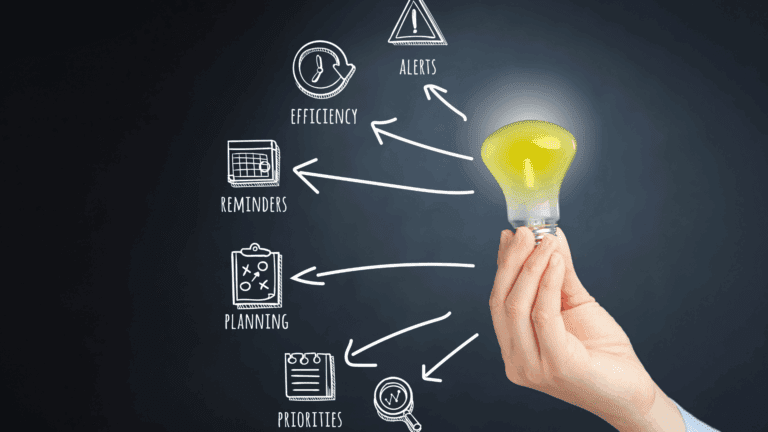
Strategic Career Architecture
Activity Versus Productivity: 7 New Ways to Become Efficient With Your Time
Understanding the difference between activity and productivity is crucial for maximizing our time and achieving our goals. Neuroscience productivity techniques...
Read article : Activity Versus Productivity: 7 New Ways to Become Efficient With Your Time
Dopamine & Motivation
The Neuroscience of Procrastination: Why Your Brain Resists Action and How to Rewire It
Ready to move beyond procrastination? Our article, 'Beyond Procrastination: How Life Coaching Facilitates Goal Achievement & Behavior Change,' delves into...
Read article : The Neuroscience of Procrastination: Why Your Brain Resists Action and How to Rewire It
Dopamine & Motivation
Effective Procrastination: Mastering the Art of Productive Delay
Most of us were taught that procrastination is not an effective strategy for getting things done. The common belief is...
Read article : Effective Procrastination: Mastering the Art of Productive Delay