The Finite Battery
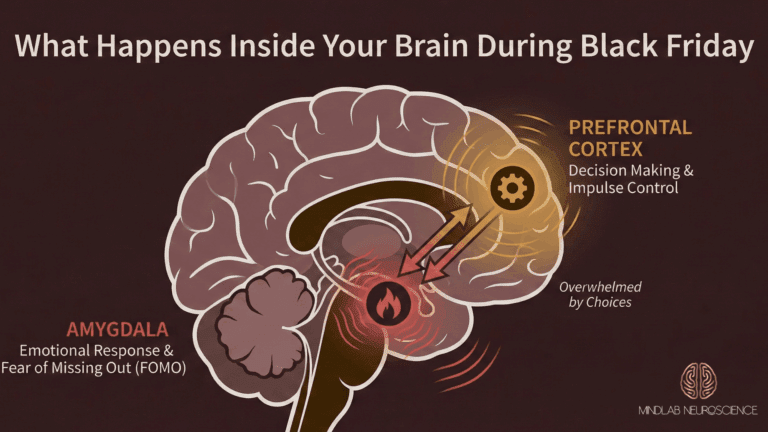
Willpower is not a character trait; it is a measurable physiological resource, a concept known in neuroscience as Ego Depletion. The Prefrontal Cortex (PFC) is the most energy-expensive region of the brain. Every time you inhibit an impulse, make a difficult choice, or regulate an emotion, you burn through available glucose. Once these reserves are low, the brain switches to “economy mode,” resulting in poor decision-making and a reversion to old habits.
The Neural Brake
Self-control is mechanically governed by the Right Inferior Frontal Gyrus (rIFG). This area acts as the brain’s “brake pedal.”
-
Inhibition: When you feel the urge to check your phone but stop yourself, the rIFG fires to suppress the motor command from the basal ganglia.
-
The Delay: Strong willpower is essentially the ability to keep the rIFG active long enough for the “cool” cognitive system to override the “hot” emotional system.
Conserving the Supply
Since willpower is finite, high-performers do not rely on it; they engineer it out of the equation.
-
Decision Hygiene: To prevent “Decision Fatigue,” reduce the number of trivial choices (what to wear, what to eat) you make in the morning. This preserves the PFC’s energy for high-stakes execution.
-
The Belief Effect: Recent research suggests that the belief that willpower is limited actually accelerates depletion. Adopting a “non-limited” mindset—viewing effort as energizing rather than draining—can physically alter how the brain manages its glucose reserves.