Key Takeaways
- Dopamine neurons fire most intensely for uncertain or scarce rewards, not for goals within reach.
- Securing a reward recalibrates the ventral striatum, stripping its dopaminergic charge within days or weeks.
- The brain inflates predictive value for anything blocked, scarce, or socially competitive, making unavailability magnetic.
- Social comparison manufactures artificial scarcity, activating the same wanting circuitry as objectively unavailable rewards.
- Redirecting requires anchoring pursuit to internal outcomes that sustain dopaminergic engagement without restriction or unavailability.
You want what you cannot have because your dopamine system assigns higher value to scarce, uncertain, and restricted rewards than to anything already within reach. This is not a character flaw. It is a neurochemical bias toward anticipation over possession, documented across decades of reward-prediction research, and it explains why the unavailable partner, the out-of-reach role, and the life you see on someone else’s feed generate more neural activation than anything you already hold. The mechanism is precise, it is measurable, and once you understand it, you can redirect that same energy toward pursuits that actually deliver.
Why Does Anticipation Feel Stronger Than Achievement?
Your brain generates more dopaminergic activation during the pursuit of a reward than during its receipt. This is the central finding of Wolfram Schultz’s reward-prediction error research at the University of Fribourg, which demonstrated that dopamine neurons fire most intensely in response to unexpected or uncertain rewards, not to rewards already secured.
In practice, this means the wanting phase of any goal produces a neurochemical experience that the having phase cannot replicate. The promotion you chased for two years produces a dopamine surge the week you receive it, then a sharp decline within days as the ventral striatum recalibrates to the new baseline. The relationship that felt electric during the pursuit settles into neurochemical normalcy within months. The brain registers obtained rewards as “background” and redirects its seeking circuitry toward the next gap. This pattern is examined in the neuroscience of happiness.
I consistently observe a specific version of this in my clients who are high-capacity achievers. They describe it as a hollowness that arrives exactly when satisfaction should. A client who spent eighteen months pursuing a senior leadership position told me the strongest feeling on his first Monday in the role was not pride: it was the immediate awareness of what he still had not accomplished. His wanting system had already moved on. His liking system never fully engaged.
Why the Drop Happens So Fast
Hedonic adaptation is not a gradual fade. Neuroscientist Kent Berridge at the University of Michigan has mapped the distinction between the brain s wanting circuit (mesolimbic dopamine) and its liking circuit (opioid hotspots in the nucleus accumbens). Dopamine does not produce pleasure it produces pursuit . The underlying research is covered in the Dopamine & Motivation hub.
This is the neurological architecture beneath the experience people describe as “I should be happier than I am.” The wanting system is calibrated high. The liking system was never the priority. Related reading: the Cognitive Architecture pillar.
Why Are Unavailable People and Restricted Opportunities So Magnetic?
Scarcity and uncertainty amplify dopamine release because the brain interprets restricted access as a signal of elevated value. Variable-ratio reinforcement the schedule that produces the strongest and most persistent behavioral responding is the exact pattern created by an emotionally inconsistent partner or a feed that intermittently rewards scrolling.
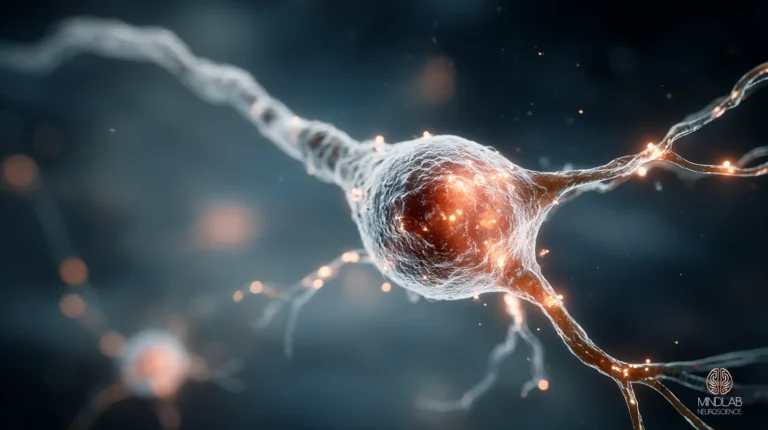
Dopamine neurons fire most intensely for uncertain rewards, producing a neurochemical intensity during pursuit that the having phase can never replicate.
The evolutionary logic is straightforward. For millions of years, a resource that was guarded, competed for, or difficult to obtain was statistically more likely to be worth the effort. A fruit behind thorns was more calorie-dense than the one on the ground. A mate pursued by others carried genetic signals of fitness. The brain learned to use restriction as a proxy for value.
Modern life exploits this wiring with surgical precision. Limited-time offers, exclusive memberships, and “only 3 left” notifications trigger the same scarcity-detection circuits that once motivated foraging in genuinely scarce environments. The neural response is identical. The context has changed completely.
The Relationship Version of This Pattern
In my work with individuals navigating attachment, the most common version of this dynamic involves sustained attraction to partners who give intermittent reinforcement. Enough warmth to maintain hope. Enough withdrawal to keep the dopamine system searching. The hot-and-cold pattern is, neurochemically, the most addictive reinforcement schedule that exists.
What I observe repeatedly is that these clients are not addicted to the person. They are addicted to the neurochemical state the uncertainty produces. When a consistently available partner enters the picture, the dopamine system registers them as low-value precisely because they are not triggering the scarcity signal. The available person feels “boring.” The unavailable person feels “magnetic.” Neither feeling is about the actual human involved: both are dopamine’s evaluation of reward probability.
This is the mechanism behind what people call “having a type.” The type is not a personality profile. The type is a reinforcement schedule.
How Does Social Comparison Manufacture Artificial Scarcity?
Social media converts the brain s natural comparison function into a chronic scarcity generator by presenting algorithmically curated highlight reels as representative samples of other people s lives. The brain constructs emotional experience from available inputs, which means distorted social reference points become the literal building blocks of how people evaluate their own circumstances.
Research by Ethan Kross at the University of Michigan demonstrated that passive social media consumption, scrolling without interacting, produced measurable declines in subjective well-being and increases in loneliness. The mechanism is reference-point distortion. Instead of comparing your present situation to your own past, the brain begins using the curated accomplishments of thousands of strangers as the baseline for what constitutes a normal life. This connects directly to what the research reveals about neuroplastic momentum rewire your brain.
I see this in clients who, by every objective measure, have built extraordinary lives, and cannot feel it. A founder running a profitable company scrolls past a peer’s Series C announcement and spends the rest of the afternoon in a low-grade state of insufficiency. The rational mind knows the comparison is distorted. The striatum does not care. It detected a gap between current state and perceived alternative, and it is now generating urgency to close that gap.
Why Knowing It Is Irrational Does Not Help
The comparison response is subcortical. It fires before conscious evaluation can intervene. By the time you think “that’s just their highlight reel,” the dopamine-seeking signal and the cortisol stress response have already activated. Cognitive understanding operates at the prefrontal level. The scarcity signal operates at the striatal level. These are different systems with different processing speeds.
This is why conventional advice, “stop comparing yourself to others”, fails at the neural level. You cannot override a subcortical signal with a cortical instruction any more than you can will your heartbeat to change by thinking about it. What you can do is change the inputs the system receives and restructure how the seeking signal gets channeled once it fires.
What Happens When Pursuit Becomes Your Identity?
When the wanting state persists long enough, the brain begins encoding pursuit itself as part of self-concept, making both achievement and abandonment feel like identity threats. This is the most complex manifestation of unattainable desire: the point where giving up a goal feels not like changing direction but like losing yourself. The underlying research is covered in the neuroscience of manifestation.
I observe this most frequently in two populations. The first is individuals who have spent years pursuing a specific person who does not reciprocate. The pursuit has become a self-improvement project, a narrative of “becoming worthy,” a structure that organizes daily decisions. When the possibility finally closes, the grief is not primarily about the person. It is about the identity that was built around the chase.
The second is professionals who have oriented years of career development around a specific role or milestone. Every decision filtered through “does this move me closer?” When the role arrives, the organizational framework of their identity collapses. When it does not arrive, the sunk-cost calculation keeps them locked in pursuit long past the point of rational engagement.
The Distinction That Changes Everything
The shift I work on with these clients is the difference between pursuit-driven identity and values-driven identity. Pursuit-driven identity is contingent: I am someone who is going to achieve X. The self depends on the outcome. Values-driven identity is structural: I am someone who operates with precision, builds meaningful work, and invests in genuine connection. Making that shift is the heart of the Pursuit Paradox that Dr. Sydney Ceruto resolves with clients, redirecting the same wanting circuitry toward outcomes that actually deliver.
This is not a motivational reframe. It is a neurological restructuring of what the brain’s default-mode network encodes as “self.” When identity is anchored to values rather than outcomes, the dopamine system still generates pursuit energy, but the pursuit serves the person rather than consuming them. For the mechanism behind this, see the science of brain drives motivation.
How Do You Redirect This System Instead of Being Driven by It?
Strategic redirection of the wanting signal requires intervening at the moment of activation, before the pursuit sequence becomes automatic. This is the core principle behind Real-Time Neuroplasticity™: working with the brain’s reward architecture in the live moment, not after the fact.
The standard advice is to “be present” or “practice gratitude.” These are cortical interventions applied to a subcortical problem. They address the narrative about wanting rather than the mechanism of wanting itself. In my experience across twenty-six years of practice, the clients who successfully redirect their reward systems do so not by thinking differently about their desires but by changing the conditions under which the dopamine signal fires.
Three structural changes produce consistent results:
Reward-signal redistribution. Training the striatum to fire during the process of meaningful work rather than only at the point of completion. This eliminates the post-achievement valley by creating continuous, low-grade reward activation throughout engagement. Athletes describe this state as “flow.” It is not mystical. It is a learnable pattern of reward-circuit activation.
Input curation. Deliberately controlling which scarcity signals reach the comparison system. This is not avoidance: it is the recognition that every input your brain receives shapes its next wanting signal. The question is not “should I be on social media?” The question is “which inputs generate wanting that serves my actual goals, and which generate wanting that serves someone else’s algorithm?” Related reading: the neuroscience of rise of romantasy psychological appeal.
Uncertainty tolerance expansion. Building the nervous system’s capacity to sit with an unsatisfied wanting signal without immediately pursuing resolution. This is the neurological equivalent of letting a wave pass rather than being pulled by its current. The wanting signal still fires. You simply do not follow it automatically.
For a complete framework on understanding and resetting your dopamine reward system, I cover the full science in my book The Dopamine Code (Simon & Schuster, June 2026).
The distinction is not between wanting and not wanting. The distinction is between wanting that you choose and wanting that chooses you. The neural machinery is identical. The direction is everything.
Redirecting these wanting circuits toward healthier reward targets is possible through a structured Dopamine Menu approach that recalibrates anticipation patterns.
The questions below address the most common patterns people encounter when their reward system fixates on unavailable targets. Understanding the underlying neuroscience clarifies why these experiences feel so compelling and what structural changes can redirect the seeking signal toward more purposeful ends.
Why do I lose interest in things once I finally get them?
Your dopamine system generates its strongest activation during anticipation, not possession. Wolfram Schultz s reward-prediction error research shows that dopamine neurons fire most intensely when a reward is uncertain not when it is secured. Once obtained, the ventral striatum recalibrates to the new baseline within days to weeks, reducing the reward signal to background levels.
Why am I attracted to emotionally unavailable people?
Intermittent reinforcement inconsistent warmth followed by withdrawal produces the highest dopamine activation of any reinforcement schedule. The uncertainty itself becomes the reward signal. A consistently available partner generates steady, moderate dopamine activation. An inconsistent partner generates spikes your brain interprets as evidence of higher value, which registers as stronger attraction. The feeling is real. For a deeper look, see the neural patterns behind help i have no self discipline or self control.
Can I stop the “grass is greener” feeling?
Eliminating the comparison function entirely would remove a core motivational signal, and that is not the goal. The comparison function is adaptive it drives growth and prevents complacency. What you can change is which comparisons the system processes. Input curation, combined with values-anchored identity, converts the comparison signal from chronic dissatisfaction into selective, purposeful ambition.
How does social media make this worse?
Social media presents algorithmically optimized highlight reels as representative samples, triggering upward-comparison circuitry against thousands of curated moments simultaneously. Research by Ethan Kross demonstrated that passive scrolling produces measurable declines in well-being. Your striatum processes each curated success as evidence of a gap between your current state and what appears normal, generating chronic low-grade wanting.
Why do humans psychologically want things they cannot have?
The brain’s reward system assigns disproportionately high value to scarce or unavailable resources through a mechanism called reactance, where perceived restrictions on freedom automatically increase the desirability of the restricted option. This cognitive bias evolved because in resource-scarce environments, items that were hard to obtain were often genuinely more valuable for survival.
How does scarcity bias influence romantic attraction and desire?
Romantic unavailability triggers the same dopaminergic seeking circuits that drive all reward-pursuit behavior, with intermittent reinforcement from inconsistent attention creating an addictive pattern similar to variable-ratio reward schedules. Recognizing that heightened desire for unavailable partners reflects a neurological pattern rather than genuine compatibility is the first step toward making relationship choices based on reality rather than reactance.
What is the difference between genuine desire and reactance-driven wanting?
Genuine desire persists and often deepens when the object becomes attainable, while reactance-driven wanting typically diminishes once the barrier is removed because the pursuit itself was generating most of the perceived value. Testing your desires by imagining that the barrier is completely gone and checking whether the longing remains is a powerful way to distinguish authentic motivation from scarcity-inflated craving.
How can someone stop obsessing over things they cannot have?
Deliberate attention redirection toward attainable goals that align with your core values starves the obsessive thought loop of the cognitive fuel it needs to persist. Combining this with acceptance of the unavailability, rather than fighting it, reduces the reactance effect because the brain stops perceiving a freedom restriction once you consciously release the demand for that particular outcome.
About the Author
Founder & CEO of MindLAB Neuroscience, Dr. Sydney Ceruto is the pioneer of Real-Time Neuroplasticity™: a proprietary methodology that durably rewires the neural pathways driving behavior, decisions, and emotional responses.
Dr. Ceruto holds a PhD in Behavioral & Cognitive Neuroscience (NYU) and Master’s degrees in Clinical Psychology and Business Psychology (Yale University). Lecturer, Wharton Executive Development Program: University of Pennsylvania.
Reading about neuroscience builds understanding. Applying it builds a different brain. Dr. Ceruto works directly with individuals to map their specific neural architecture, identifying which circuits are driving current patterns and designing a targeted strategy for measurable change. The gap between knowing and rewiring requires a personalized approach grounded in your neurological profile, not generic advice.. Book a Strategy Call
References
- Schultz, W., Dayan, P., & Montague, P. R. (1997). A neural substrate of prediction and reward. Science, 275(5306), 1593–1599. doi.org/10.1126/science.275.5306.1593
- Berridge, K. C., & Robinson, T. E. (2016). Liking, wanting, and the incentive-sensitization theory of addiction. American Psychologist, 71(8), 670–679. doi.org/10.1037/amp0000059