When the Evidence Never Lands
“Disrupting these patterns requires working at the level of the self-model itself, not the symptoms it produces.”
The defining feature of imposter syndrome is not low confidence. It is the failure of positive evidence to update the self-concept. Promotions arrive, praise accumulates, results materialize, and none of it changes the underlying belief. The person knows, intellectually, that they are performing well. The knowing doesn’t help.
This is not a logic problem. The brain does not store self-beliefs in the same system that processes facts. Self-referential processing, the neural work of deciding who you are, runs through circuits that are governed by prediction and repetition, not evidence and argument. A self-concept formed under conditions of uncertainty, criticism, or mismatched external feedback becomes a stable prediction model. New data that contradicts it isn’t integrated. It’s discarded.
The result is a brain that generates a consistent internal narrative, I am not actually qualified for this, and then selectively filters incoming experience to match that narrative. Positive feedback is attributed to luck, timing, or other people’s errors. Negative feedback is treated as confirmation. The model never breaks because the model controls what counts as evidence.
The Neural Mechanism
Self-assessment is not a rational calculation. It runs through the corticostriatal circuit, the loop connecting the cortex to reward-processing structures beneath it, which updates self-efficacy through a process called prediction error signaling. When outcomes match predictions, the circuit reinforces the existing model. When outcomes exceed predictions, the circuit should update the model upward. In people with imposter syndrome, this update mechanism is suppressed.
The prefrontal cortex, the brain’s self-evaluation center, is generating predictions that are anchored to an earlier, lower-confidence self-concept. When positive outcomes arrive, the prefrontal response is not integration: it is rationalization. The brain works backward from the conclusion (I don’t belong here) to explain away the evidence. This is metabolically efficient. It is also structurally self-defeating.
Dopamine plays a central role here. Prediction error signaling is dopaminergic, meaning the dopamine system is what drives self-model updates when reality diverges from expectation. When that system is calibrated to expect low outcomes, high outcomes don’t generate the learning signal they should. The reward circuit registers success without updating the self-concept that shapes future predictions. Success becomes evidence-free. It feels random, fragile, and temporary, because the brain is treating it that way.
This is why the standard advice (remember your accomplishments, make a list, read the positive reviews) doesn’t work. You are adding data to a system that isn’t updating based on data. The problem is upstream.
What Changes at the Neurological Level
Persistent imposter syndrome is maintained by three reinforcing patterns. First, a self-concept formed early, often under conditions where belonging was conditional or achievement was minimized, that became a stable prediction model before significant external success arrived. Second, a reward system calibrated to expect threat or inadequacy, which treats positive outcomes as statistical anomalies rather than meaningful signals. Third, a suppression of the internal update mechanism that should revise self-efficacy in response to accumulated evidence.
Disrupting these patterns requires working at the level of the self-model itself, not the symptoms it produces. The work involves identifying the specific conditions under which the self-concept was formed, examining how the prediction model generates its current outputs, and creating the conditions for genuine self-efficacy updating. This is precision work. It is also durable work, because it changes the structure of how the brain processes self-relevant information, not just what conclusions it currently holds.
The goal is not confidence in the conventional sense. It is the capacity to let positive evidence land: to let outcomes update the model they belong to. When that mechanism is restored, achievement stops feeling like debt and starts functioning as information. The internal experience begins to match the external reality. Not because the reality changed, but because the brain stopped filtering it out.
How Dr. Sydney Ceruto Works With Imposter Patterns
In my practice, imposter syndrome is one of the most common reasons individuals seek out this work, and one of the most misunderstood. The conventional framing treats it as a confidence problem and prescribes affirmation exercises, journaling, or cognitive reframing. None of these address the mechanism that maintains the pattern.
What I see consistently is a self-model that was calibrated under conditions where belonging was uncertain: environments where achievement was minimized, where recognition was withheld or inconsistent, or where success was attributed to circumstance rather than capacity. That calibration became a stable prediction model. By the time significant achievement arrives, the model is already entrenched. Updating it requires more than new data: it requires restructuring the system that processes the data.
Real-Time Neuroplasticity™ targets this self-assessment system directly. The work does not ask the thinking brain to override the pattern through willpower or reframing. It engages the circuits where self-evaluation actually occurs, during the live moments when the prediction fires. When you receive recognition and feel nothing. When you accomplish something significant and immediately begin anticipating exposure. When you sit among peers and feel the interior conviction that you do not belong.
Those moments are not just symptoms. They are the neural events where the self-model is most active and most amenable to restructuring. Working within them, rather than reflecting on them afterward, is what produces lasting change in how the brain processes self-relevant information.
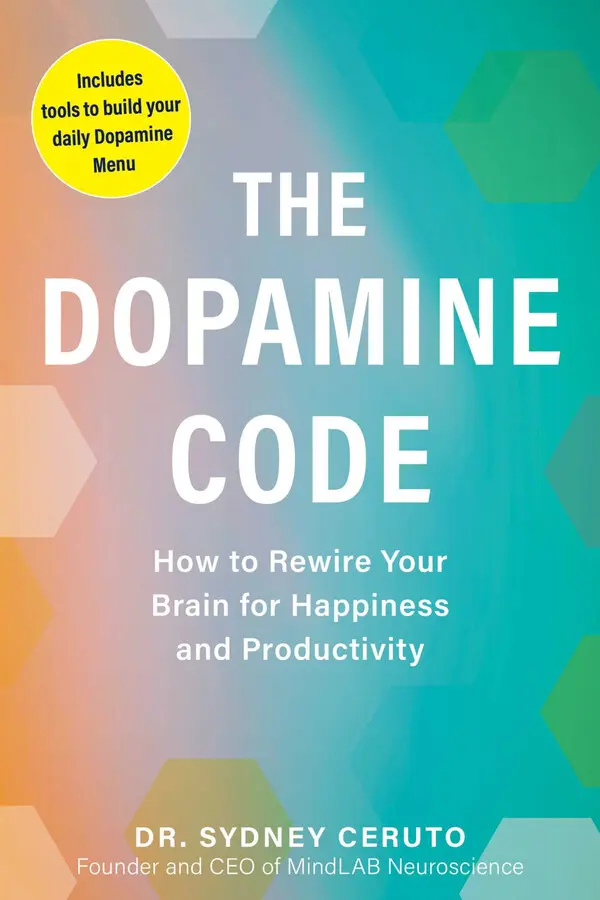
The engagement begins with a Strategy Call: a focused conversation where I map the specific architecture of your imposter pattern: where the calibration formed, what conditions maintain it, and which self-efficacy update mechanisms are suppressed. From there, a protocol is built around your specific neural landscape. As I explore in The Dopamine Code (Simon & Schuster, June 2026), the dopamine-driven prediction error system that governs self-assessment is the same system that determines motivation, risk tolerance, and the capacity to internalize success: restructuring one produces gains across all of them.
Why Bergen County Amplifies Imposter Patterns
Bergen County amplifies imposter syndrome through a mechanism a close-in suburban county is unusually good at producing: the performance of success is everywhere, and the interior experience of doubt is nowhere visible. The corporate campus, the Manhattan floor, the restaurant everyone is trying to get into, the school pickup. Each operates on projected confidence. The county rewards the appearance of having arrived, which means anyone harboring private doubts about belonging is surrounded by a constant stream of curated evidence that everyone else has it figured out.

This is a comparison trap with neurological consequences. The brain’s self-assessment system calibrates partly through social reference, observing peers and inferring where you stand. In an environment where the visible signals are curated displays of success, the prediction model receives systematically distorted input. You compare your internal uncertainty to other people’s external presentations, and the gap registers as confirmation that you are the outlier.
A place where professional and social lives run through the same handful of restaurants and schools intensifies this. Bergen County draws people who chose it deliberately: finance professionals, pharmaceutical and enterprise executives, physicians, and founders who wanted the career and the family life at the same time. But arriving somewhere new also means building a local identity without the relationships and track records that anchored the old one. You are constantly re-introducing yourself, re-establishing credibility, and managing the background anxiety that comes with operating without a proven local history.
Split-location work adds another dimension. Reading a room you are in a few days a week, and reading it through a screen the rest of the time, creates additional contexts where the brain can misread social cues as evidence of not belonging. The complexity is real, but the self-assessment system treats the resulting uncertainty as confirmation of the pre-existing imposter narrative.
Life in a county that empties into Manhattan every morning contributes to an environment where work and home blur in ways that extend the activation window. When professional networking happens at dinners, restaurant openings, and school functions, the entire social sphere becomes a stage where imposter syndrome can fire. There is no clean boundary between professional performance and personal life, and therefore no space where the prediction model goes offline.
References
Bravata, D. M., Watts, S. A., Keefer, A. L., et al. (2020). Prevalence, predictors, and treatment of impostor syndrome: A systematic review. Journal of General Internal Medicine, 35(4), 1252–1275. https://doi.org/10.1007/s11606-019-05364-1
Neureiter, M., & Traut-Mattausch, E. (2016). An inner barrier to career development: Preconditions of the impostor phenomenon and consequences for career development. Frontiers in Psychology, 7, 48. https://doi.org/10.3389/fpsyg.2016.00048