makes you astute in business. This hub is part of the
Relationship Intelligence pillar, where we map the neural architecture of human connection. However, this bodyguard is overzealous. It keeps
everyone out, including potential partners, keeping you in a state of high-alert isolation.
Oxytocin is the VIP pass.
When oxytocin is released through specific bonding behaviors—eye contact, trusted touch, and shared vulnerability—it doesn't just make you "feel good." It chemically signals the bodyguard to stand down. It lowers cortisol (stress) and tells your nervous system, "You are safe here." Without adequate oxytocin uptake, your relationship remains in the lobby, never bypassing the security of your survival instincts to reach the VIP lounge of deep, restorative intimacy. Through Neuro-Optimization, we do not force the door open; we simply print the right pass.
The Neurobiology of Attachment and Desire
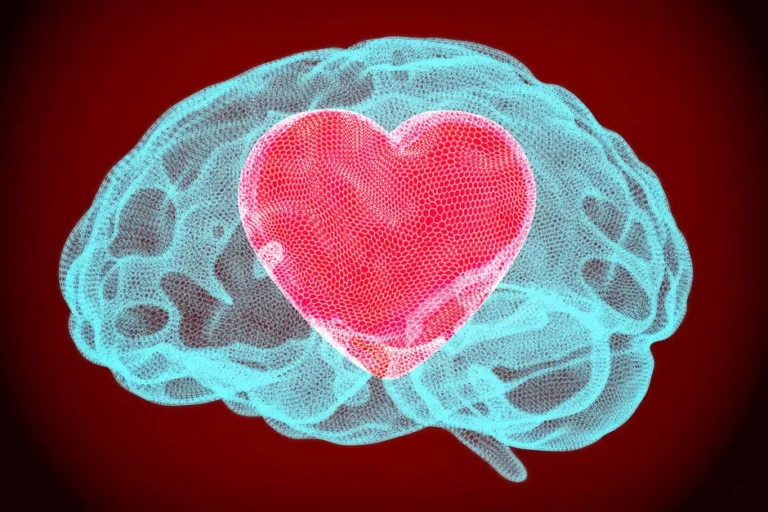
To master intimacy, we must first demystify it. While poetry attributes connection to the heart, neuroscience locates it squarely within the limbic system and the prefrontal cortex. Intimacy is not merely a sentiment; it is a rigorous biological protocol designed to ensure survival through social cohesion. When we engage in deep bonding, we are activating a specific neural circuitry that rivals the complexity of any high-level strategic operation.
The sensation of "falling in love" or feeling deeply attached is actually a cascade of neurotransmitters and hormones working in concert. Understanding the distinction between
limerence and genuine love is essential for recognizing which circuit is running. This is a delicate chemical triangulation involving Dopamine (the pursuit), Oxytocin (the bond), and Vasopressin (the commitment). For the high-functioning individual, understanding this mechanics is the first step toward optimizing it.
Evolutionary Anomalies: The Executive Brain's Resistance
Here lies the paradox for the intellectual elite. The very region of the brain responsible for your professional success—the Prefrontal Cortex (PFC)—is often the greatest saboteur of intimacy. The PFC is the CEO of the brain; it handles logic, risk assessment, and long-term planning. It is designed to analyze variables and predict outcomes.
However, deep bonding requires a temporary "hypofrontality"—a down-regulation or quieting of the PFC. To experience true intimacy, the CEO must briefly leave the boardroom. For many of my clients, this neural brake release is incredibly difficult. Their brains are wired for hyper-analysis, constantly scanning the partner for inconsistencies or potential emotional deficits. The neuroscience behind
attachment styles and their neural signatures explains why these patterns persist despite conscious effort. This over-activity inhibits the release of oxytocin, effectively keeping the brain in a state of "business transaction" rather than "emotional connection." We must learn to toggle between these neural states consciously.
The Metabolic Cost of Vulnerability
From a bio-energetic standpoint, isolation is expensive. The human brain consumes roughly 20% of the body's metabolic energy, and a significant portion of that is dedicated to threat detection via the amygdala. When we lack a secure attachment, the brain remains in a state of low-grade vigilance, constantly scanning the environment for social or emotional threats. This is metabolically taxing and contributes to the fatigue often felt by isolated high-performers.
Oxytocin acts as a metabolic efficiency regulator. By binding to receptors in the amygdala, it inhibits the firing of threat-detection neurons. In essence, a secure partnership allows you to "outsource" some of your vigilance to your partner. This reduces the metabolic load on your nervous system, freeing up cognitive resources for creativity, problem-solving, and innovation. Vulnerability, therefore, is not a weakness; it is a mechanism for energy conservation and neural optimization. Our guide on
the fear of vulnerability in relationships maps this biology in greater depth.
Why Conventional Approaches Fail the High-Performance Brain
If you are a leader in your field, you have likely attempted standard approaches and found them wanting. This is not because you are "unfixable," but because standard interventions are often ill-equipped to handle the cognitive velocity of a high-performance brain. The tools that work for the general population—venting, cognitive reframing, and pharmaceutical blunting—are often counterproductive for those who operate at elite levels.
The "Top-Down" Fallacy of Conventional Approaches
Traditional conventional talk-based approaches, including conventional behavioral approaches, utilizes a "Top-Down" processing model. It asks you to use your Prefrontal Cortex (logic and language) to rationalize and control your Limbic System (emotion and bonding). For the average individual, this is effective. For you, it is a trap.
As a high-performer, you are likely a master of rationalization. You possess the intellectual capacity to construct elaborate, logical narratives that justify your emotional isolation. In conventional engagements, you can easily "out-think" the process, turning the interaction into a debate rather than a resolving modality. We call this
Cognitive Bypassing.
Furthermore, under the stress of intimacy triggers, the brain undergoes "cortical inhibition." The logic center goes offline, and the survival brain takes over. Trying to use conventional talk-based approaches during a moment of relational disconnect is like trying to upload a complex software update while the server is on fire. You cannot logic your way out of a biological reaction; you must address the neural hardware directly.
The Performance Cost of Chemical Blunting
When conventional talk-based approaches fails, the standard medical pivot is often pharmacology—SSRIs or anxiolytics designed to reduce anxiety and mood fluctuation. While these have their place in acute crisis management, for the high-functioning individual seeking intimacy, they present a significant problem:
The Flatline Effect.
Many of these medications work by dampening neural excitability. They lower the floor of your despair, but they also lower the ceiling of your joy, libido, and drive. They create a "glass ceiling" on your cognitive acuity. For a person whose success depends on sharp instincts, high risk-tolerance, and creative brilliance, this trade-off is unacceptable.
You do not need to be numbed; you need to be optimized. The dynamics explored in our article on
stopping hurtful communication patterns illustrate why blunting the signal is never the answer. You require full access to your emotional spectrum—including the rush of oxytocin and dopamine—without being hijacked by the fear circuitry of the amygdala. Neuro-Optimization seeks to regulate the system without dulling the edge that makes you exceptional.
Protocols for Executive Optimization
We do not rely on hope; we rely on neuroplasticity—the brain's ability to reorganize itself by forming new neural connections. Since we are avoiding the "top-down" trap of talking through your defenses, we will utilize
Bottom-Up Cognitive Restructuring. This approach targets the brainstem and limbic system first, calming the physiological state so the cortex can eventually engage without bias. These are not "exercises" in the traditional sense; they are drills to retrain your nervous system's baseline for connection.
Protocol 1: The 20-Second Oxytocin Download
The Mechanism: High-performers are accustomed to efficiency; they want interactions to be quick and transactional. However, the release of oxytocin is not instantaneous. It requires a specific duration of tactile stimulation to signal the amygdala that "the war is over." A brief hug or handshake registers as a social formality, not a bonding event.
The Drill: Engage in a full-contact embrace with your partner. Here is the critical variable:
You must hold it for a minimum of 20 seconds.
The Einstein Translator: Think of this like downloading a massive encrypted file. If you pull the plug (break contact) at 5 seconds, the file is corrupted. You must maintain the connection long enough for the biochemical data to fully transfer. During these 20 seconds, do not speak. Let the pressure of the contact down-regulate your cortisol. You will physically feel a shift—a "softening"—around the 15-second mark. That is the oxytocin taking the helm.
Protocol 2: Ocular Limbic Resonance
The Mechanism: The eyes are the only part of the central nervous system visible from outside the body. When we lock eyes, we activate
mirror neurons—cells that allow us to simulate the internal state of another person. For the executive brain, eye contact is often used for dominance or negotiation. We must retrain the brain to use it for resonance.
The Drill: Sit facing your partner, close enough that your knees touch. Maintain soft-focus eye contact (gazing at the left eye helps access the emotional right hemisphere) for two minutes.
The Einstein Translator: Consider this a "Bluetooth pairing" sequence. Before you can stream music (share deep emotions), the devices must recognize each other and pair. If you try to transmit heavy emotional data without this ocular pairing, the signal drops. This protocol strengthens the bandwidth of your connection, ensuring that when you do speak, you are receiving the signal clearly.
Protocol 3: The Interoceptive Audit
The Mechanism: The Insula is the part of the brain responsible for
interoception—sensing the internal state of the body. When intimacy feels threatening, the body tightens (jaw clenches, breath shallows) before the conscious mind even realizes it. By the time you feel "annoyed," your biology has already entered a defensive state.
The Drill: Before engaging in any intimate conversation or activity, perform a 60-second body scan. Locate the tension. Is your stomach tight? Are your shoulders raised? Consciously mechanically release these muscles. Force the jaw to slacken. Deepen the breath into the diaphragm.
The Einstein Translator: You are checking your dashboard gauges before driving at high speed. If the "Check Engine" light (physical tension) is on, you cannot drive the car (the relationship) safely. By manually resetting the gauges—relaxing the body—you send a reverse signal up the vagus nerve to the brain, effectively hacking the system to believe it is calm, which then allows it to become calm.
Frequently Asked Questions
Does Neuro-Optimization require years of analysis like conventional approaches?
Absolutely not. Traditional analysis often focuses on the archaeology of the past, digging for the "why." Neuro-Optimization focuses on the architecture of the present, solving for the "how." Because we utilize bottom-up restructuring—targeting the nervous system directly rather than filtering through linguistic defense mechanisms—we often see shifts in baseline reactivity and connection capability in a fraction of the time required by conventional approaches. We are building new highways, not analyzing old potholes.
Will increasing my Oxytocin levels blunt my professional "edge"?
This is a common fear among the elite: that happiness or contentment will erode ambition. The neuroscience suggests the exact opposite. A brain starved of connection remains in a hyper-vigilant, high-cortisol state. This is essentially "running the engine in the red." It is sustainable for a sprint, but not a marathon. By optimizing your oxytocin uptake, you lower the metabolic cost of existence. You are not losing your edge; you are stopping the energy leaks. You will return to the boardroom with greater clarity, not less.
My partner is not data-driven. Will these protocols work if they don't understand the science?
Yes. The beauty of neurobiology is that it functions independently of belief. If you perform the
20-Second Oxytocin Download, the biochemical cascade occurs whether your partner understands the role of the hypothalamus or not. These are mechanical levers. Just as gravity works regardless of your knowledge of physics, oxytocin bonds regardless of your partner's knowledge of neuroscience. You can lead the dance; their nervous system will naturally follow.
I am currently single. Can I still benefit from these protocols?
Crucially so. Many high-performers remain single because their amygdala automatically categorizes intimacy as high-risk/low-reward. Exploring the neuroscience of
autophobia and the fear of being alone reveals how isolation can become a self-reinforcing neural loop. By practicing interoception (Protocol 3) and understanding your own attachment neurochemistry, you prepare your neural hardware for a partner. You cannot install high-performance software on a crashed hard drive. We must optimize your capacity to bond
before the high-stakes negotiation of a new relationship begins.
The Executive Conclusion
In a world where you have mastered asset allocation, market timing, and strategic leadership, your own neurochemistry remains the final frontier. To ignore the science of intimacy is to leave your most valuable asset—your brain—unoptimized.
True intimacy is not a soft skill; it is a biological imperative. It is the ultimate competitive advantage. When you have a secure base—a "home" in the neurological sense—you possess a resilience that isolated individuals cannot replicate. You recover faster, you think more clearly, and you endure longer.
You have optimized your portfolio. You have optimized your health. Now, it is time to optimize your connection. For a deeper understanding of the neural patterns that shape partner selection, explore our hub on
relationship patterns and partner selection. If trust architecture is the core challenge, our hub on
infidelity and trust reconstruction maps the neurobiology of repair. Welcome to the new standard of relationships.
About Dr. Sydney Ceruto
Founder & CEO of MindLAB Neuroscience, Dr. Sydney Ceruto is the pioneer of Real-Time Neuroplasticity™ — a proprietary methodology that permanently rewires the neural pathways driving behavior, decisions, and emotional responses. Dr. Ceruto holds a PhD in Behavioral & Cognitive Neuroscience (NYU) and two Master's degrees — Clinical Psychology and Business Psychology (Yale University). Lecturer, Wharton Executive Development Program — University of Pennsylvania.