The Executive Cost of Cognitive Bias
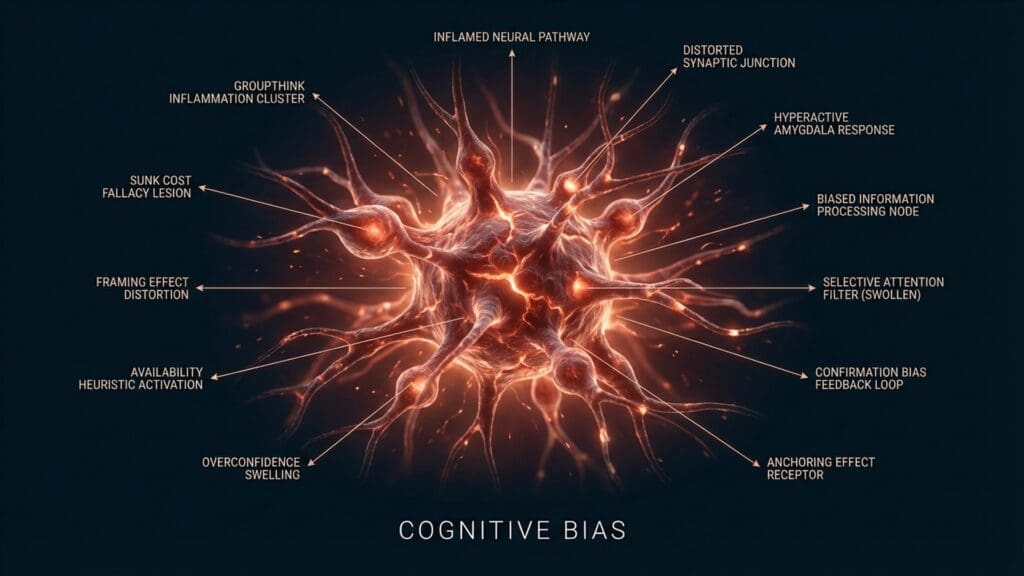
Dr. Sydney Ceruto, in her extensive work with elite performers across diverse high-stakes domains, consistently observes that cognitive biases are not merely minor errors in judgment. They represent a profound and often unseen degradation of executive function, directly impeding leadership efficacy and strategic foresight at the highest organizational levels. These systemic patterns of deviation from rational thought manifest as critical vulnerabilities within the neurological architecture of decision-making. Cognitive bias fundamentally erodes a leader’s strategic vision. It fosters tunnel vision, preventing the accurate assimilation of novel data or the recognition of emergent threats and opportunities. Instead of objective analysis, biases compel the brain to filter information through pre-existing mental models, often reinforcing outdated assumptions or self-serving narratives. This directly compromises adaptive capacity, a non-negotiable trait for navigating complex, volatile environments. The impact extends to resource allocation and innovation. Confirmation bias can lead to the over-investment in failing projects, while anchoring bias can fixate leaders on irrelevant past metrics, blinding them to disruptive potential. Loss aversion, rooted deeply in our neurobiology, often paralyses organizations from taking necessary risks, preferring the certainty of present stagnation over the uncertainty of potentially transformative growth. This is not a failure of intellect, but a hardwired propensity for cognitive shortcuts. From an evolutionary perspective, these biases were once adaptive advantages. Our ancestors operated in environments where rapid, heuristic judgments, even if imperfect, often meant the difference between survival and demise. The brain evolved to conserve metabolic energy by creating efficient, albeit flawed, processing pathways. The prefrontal cortex, the seat of executive reasoning and deliberative thought, is immensely energy-intensive. Relying on intuitive, biased thinking reduces this caloric demand. However, in the modern executive landscape, these ancient mechanisms become maladaptive. The very neural shortcuts designed for efficiency now undermine the nuanced analysis required for complex strategic planning, market disruption, and organizational agility. This creates a metabolic debt; the brain conserves energy in the short term, but the organization pays a far greater cost in missed opportunities, suboptimal decisions, and eroded competitive advantage. Understanding this neurobiological predisposition is the first step towards mitigating its systemic drain on executive performance.
Evolutionary Origins: Why Cognitive Bias Exists
The genesis of cognitive biases lies in their profound utility for ancestral survival. Our cognitive architecture evolved not for optimal truth-seeking in a complex, data-rich world, but for rapid decision-making under conditions of extreme uncertainty and existential pressure. In an environment characterized by scarcity, immediate threats, and limited information, quick, often imprecise, judgments conferred a distinct survival advantage, directly impacting gene propagation. These mental shortcuts, or heuristics, allowed our predecessors to conserve precious metabolic energy. The human brain, an energetically expensive organ, could not afford exhaustive analysis for every decision. Relying on pre-programmed inferences rather than detailed computations permitted faster responses to predators, efficient identification of resources, and seamless social navigation within small, interdependent groups. This efficiency was paramount for immediate survival. Consider the adaptive value of pattern recognition, even if prone to false positives. Misinterpreting a rustle in the bushes as a predator when it was merely wind is biologically less costly than failing to detect a genuine threat. Similarly, in-group favoritism fostered tribal cohesion and collective defense, securing the survival of the gene pool. These mechanisms were exquisitely tuned for a primal world where rapid action trumped deliberative accuracy. The critical disjunction arises when these deeply ingrained, evolutionarily adaptive mechanisms encounter the modern, hyper-complex environment. Our ancestral brains are operating in a world utterly alien to their design parameters. The immediate, physical threats that shaped our cognition have largely been supplanted by abstract, long-term, and systemic challenges in economic, technological, and social domains. Rapid, intuitive decision-making, once a safeguard against sabre-toothed tigers, now precipitates suboptimal strategic choices in executive boardrooms. The drive for cognitive efficiency, once vital for energy conservation, now manifests as entrenched confirmation bias, hindering objective data analysis, critical foresight, and iterative learning in dynamic markets. We default to familiar patterns even when empirical evidence demands a different approach. The ancient imperative for tribal loyalty, critical for localized group survival, now fuels organizational silos, political polarization, and resistance to diverse perspectives, thereby stifling innovation and collaborative problem-solving. Loss aversion, designed to protect scarce resources in a zero-sum world, now prevents necessary strategic risk-taking for growth and adaptation in volatile economic landscapes. Our inherent wiring, while once a profound strength, now frequently acts as a significant liability in the pursuit of high-level performance and strategic leadership.
Rewiring Cognitive Bias with Real-Time Neuroplasticity™
Cognitive biases represent deeply entrenched, often maladaptive, neural pathways—evolutionary remnants designed for rapid threat assessment, not complex strategic calculus. These ingrained patterns dictate automatic responses, subtly yet profoundly distorting perception, judgment, and ultimately, decision architecture in high-stakes environments. Addressing this demands more than mere awareness; it requires a targeted, neuro-scientific intervention.
Dr. Ceruto’s Real-Time Neuroplasticity™ protocol directly confronts these inherent limitations. This methodology is engineered to actively deconstruct the neural scaffolding of ingrained biases and reconstruct more adaptive, objectively superior cognitive frameworks. It is a precise, data-driven approach to cognitive re-regulation, moving beyond superficial introspection to modify brain function at its core.
The Neural Re-Regulation Process
The first phase involves rigorous identification and mapping of an individual’s specific bias landscape. Leveraging advanced neuro-assessment tools, we pinpoint the precise neural signatures and environmental triggers that activate these suboptimal decision pathways. Understanding the specific ‘pain points’—the neural bottlenecks—is paramount for precise intervention.
Following this diagnostic, Real-Time Neuroplasticity™ initiates a proprietary process of neural retraining. This is not passive learning; it is an active engagement with the brain’s capacity for reorganization. Through meticulously designed cognitive exercises and targeted biofeedback loops, individuals learn to consciously intercept and re-route automatic biased responses. The goal is to inhibit the activation of maladaptive neural networks and foster the rapid formation of new, more rational circuits.
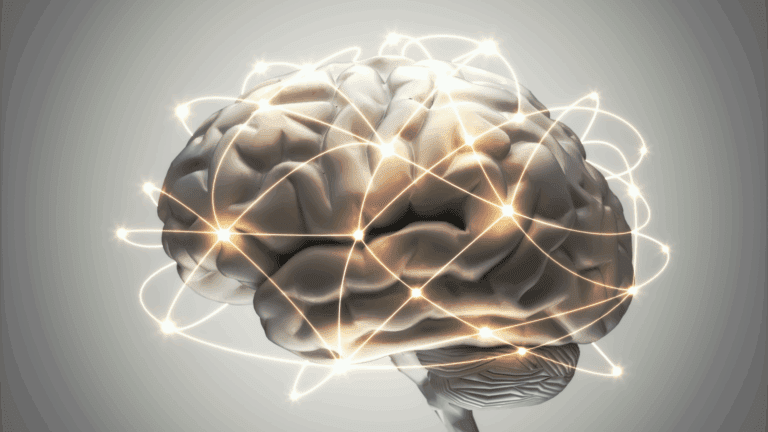
This re-patterning process emphasizes the deliberate cultivation of prefrontal cortical control over limbic system reactivity—the evolutionary seat of many biases. By strengthening executive functions, the protocol enables consistent, non-emotional, data-centric evaluation even under extreme pressure. It is about building a robust neural infrastructure that is resilient to the inherent distortions of the human mind.
The outcome is a profound transformation in cognitive agility and decision-making fidelity. Executives emerge with an optimized neural operating system, capable of transcending innate biases to achieve objective clarity and strategic precision. Real-Time Neuroplasticity™ is the disciplined practice of forging a mind designed not merely to survive, but to dominate in the complex landscapes of modern leadership.
About Dr. Sydney Ceruto
Dr. Sydney Ceruto is a preeminent neuroscientist and elite performance coach, renowned for translating complex brain science into actionable strategies for peak executive function. She is the visionary founder of MindLAB Neuroscience, an institution dedicated to optimizing cognitive architecture for unparalleled decision-making and strategic advantage. Dr. Ceruto is widely recognized as the pioneer of Real-Time Neuroplasticity™, a paradigm-shifting methodology for accelerated brain rewiring. Her groundbreaking research and practical applications are detailed in her critically acclaimed book, “The Dopamine Code,” published by Simon & Schuster. Dr. Ceruto holds dual PhDs in Behavioral & Cognitive Neuroscience from New York University, complemented by dual Master’s degrees in Clinical Psychology and Business Psychology from Yale University. Her unique interdisciplinary expertise provides a rigorous, evidence-based approach to unlocking human potential and mitigating the insidious impact of cognitive biases in high-stakes environments.
Selected Research on Cognitive Bias
- Tversky, A., & Kahneman, D. (1974). Judgment under uncertainty: Heuristics and biases. *Science*, *185*(4157), 1124-1131.
- Bechara, A., Damasio, H., Tranel, D., & Damasio, A. R. (1997). Deciding advantageously before knowing the advantageous strategy. *Science*, *275*(5304), 1293-1295.
- Montague, P. R., & Berns, G. S. (2002). Neural economics and the biological basis of decision-making. *Neuron*, *36*(2), 265-284.
- Sanfey, A. G., Rilling, J. K., Aronson, J. A., Nystrom, L. E., & Cohen, J. D. (2003). The neural basis of economic decision-making in the Ultimatum Game. *Science*, *300*(5626), 1755-1758.
- Glimcher, P. W., & Rustichini, A. (2004). Neuroeconomics: The consilience of brain and decision. *Science*, *306*(5695), 447-452.
- Singer, T., Critchley, H. D., & Dolan, R. J. (2006). Social cognitive neuroscience: Insights into how other minds are represented in the brain. *Nature Reviews Neuroscience*, *7*(7), 570-580.