
Key Takeaways
- 86 billion neurons, each forming up to 10,000 connections: the most sophisticated network on Earth.
- Neurons turn chemical signals electrical, then chemically pass them on, up to 250 mph.
- Every neuron receives information, integrates it, and transmits a response: from reflexes to decisions.
- Neuroplasticity means experience reshapes the connections between neurons: deliberate practice physically rewires who you are.
- Understanding how neurons work is not trivia: it is the foundation for changing behavioral patterns.
The Brain’s Billion-Cell Network
Picture a city alive with energy, every resident contributing to the hum of daily life. Now multiply that city by a thousand, and you begin to grasp the scale of your brain. With roughly 86 billion neurons, each capable of forming up to 10,000 connections, the brain is the most sophisticated network on Earth and the living foundation of your cognitive architecture. I spend my days working inside this network, and I can tell you that once you understand how it actually functions, the patterns that felt permanent start to look like what they are: circuits, and circuits can change.
Every neuron is built for speed, efficiency, and change. That last property is the reason the person you are is not fixed.
Anatomy of a Neuron
A neuron looks deceptively simple, but its design is what lets it process and transmit information at extraordinary speed. Each part has a job.
- Dendrites: Branching extensions that act as the neuron’s antennae, receiving incoming signals from thousands of neighboring cells.
- Cell body (soma): The central hub, holding the nucleus and the machinery that keeps the cell alive.
- Axon: A slender projection that can stretch up to a meter in humans, carrying electrical impulses away from the cell body.
- Myelin sheath: A fatty layer that insulates the axon, letting electrical signals travel fast and cleanly.
- Axon terminals: The neuron’s communication outposts, where signals pass to the next cell in line.
This elegant design lets neurons move information at lightning speed, sometimes as fast as 250 miles per hour.
How a Neuron Fires, Step by Step
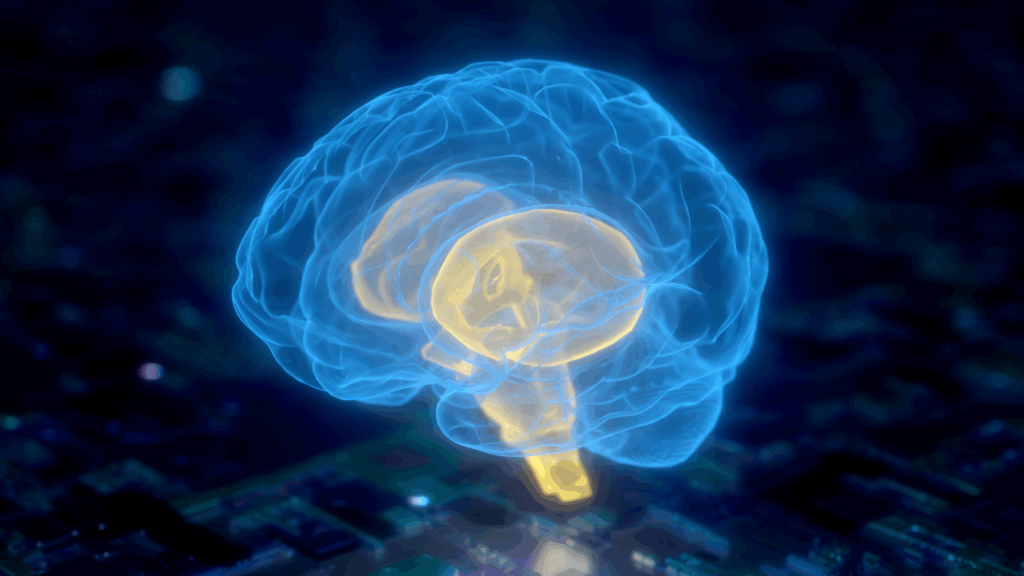
Understanding how a neuron fires reveals the precise sequence of electrical and chemical events behind every thought, movement, and feeling.
- Signal reception: Dendrites receive chemical signals (neurotransmitters) from neighboring neurons, detected by specialized receptors on the dendritic membrane.
- Integration: The cell body collects and combines the incoming signals. If the total input reaches a threshold at the axon hillock, it triggers the next step.
- Action potential: Once the threshold is crossed, voltage-gated sodium channels open, sodium floods in, and the neuron depolarizes rapidly, creating an electrical impulse.
- Propagation: The impulse races down the axon, jumping between the nodes of Ranvier if the axon is myelinated, which dramatically increases its speed.
- Transmission: At the axon terminals, the impulse opens calcium channels. Calcium rushes in, and synaptic vesicles release neurotransmitters into the synaptic cleft.
- Communication: Those neurotransmitters cross the gap, bind to receptors on the next neuron’s dendrites, and the process begins again.
This cycle of electrical and chemical signaling is the foundation of how neurons process and transmit information throughout the nervous system.

The Three Things Every Neuron Does
For all their sophistication, neurons do three essential things.
- Receive information. Neurons gather input from sensory organs, other neurons, and the environment. Sensory neurons detect light, sound, touch, and chemical signals and relay them to the brain.
- Integrate and process. Within the cell body, a neuron sums all its incoming signals, both excitatory and inhibitory, to decide whether to pass the message on. This integration is the basis of decision-making, learning, and identity.
- Transmit a response. Neurons fire electrical impulses down their axons to communicate with muscles, glands, or other neurons, producing actions, thoughts, and physiological change.
Receiving, integrating, and transmitting: those three functions are the essence of how neurons work, and they scale from a knee-jerk reflex to complex reasoning.
How Neurons Communicate
Neurons communicate through a blend of electrical and chemical signaling, and the reliability of that system is what makes stable thought possible.
- Electrical signaling. When a neuron receives enough excitatory input, it generates an action potential that travels rapidly along the axon as voltage-gated ion channels open and close.
- Chemical signaling. At the axon terminal, that electrical signal releases neurotransmitters into the synaptic cleft. These chemical messengers cross the gap and bind to the next neuron, either exciting or inhibiting it.
- Synaptic integration. Each neuron receives hundreds or thousands of inputs at once. The net effect decides whether it fires.
This interplay lets neurons process enormous amounts of information and coordinate complex behavior, thought, and emotion. It also means the network is shaped by what it experiences. Teicher and Samson documented that childhood adversity produces measurable, lasting changes in brain structure, particularly in the hippocampus, amygdala, and prefrontal cortex, a reminder that the wiring we are describing is written by real life, and can be rewritten by it too.

What Activates a Neuron
Neurons respond to a range of stimuli, both internal and external.
- Sensory input. Light, sound, touch, pressure, temperature, taste, and smell activate sensory neurons that relay information to the brain.
- Neurotransmitters. Chemical signals from other neurons can excite or inhibit a neuron by binding to its receptors.
- Electrical change. Shifts in the voltage across a neuron’s membrane, driven by ion flow, can push it past the firing threshold.
- Mechanical force. Stretch or pressure on the membrane can open ion channels and trigger activation.
- Internal signals. Hormones and other chemical messengers modulate neuronal activity, shaping mood, motivation, and physiological state.
The sum of these inputs decides whether a neuron fires, which is how the nervous system filters signal from noise and passes on only what matters.
The Many Types of Neurons
Not all neurons are alike. Sensory neurons detect changes in the environment, light, sound, touch, and relay them to the brain. Motor neurons carry commands from the brain to the muscles, enabling movement. Interneurons, the most numerous type, act as connectors and processors, integrating information and coordinating responses.
Even within those categories, the diversity is striking. Purkinje cells in the cerebellum grow a dense, bushy dendritic tree built to integrate enormous amounts of input. Pyramidal cells in the cortex are shaped for long-distance communication that supports higher-order thinking and decision-making. This specialization is what lets the brain juggle an extraordinary range of tasks at once.
Excitation, Inhibition, and Balance
Neural communication is a constant balance between excitation and inhibition. Excitatory neurotransmitters like glutamate raise the odds that a neuron fires. Inhibitory ones like GABA lower them. The interplay between these forces decides whether a signal is amplified or quieted, and that balance governs everything from movement to regulating mood and a runaway ego. When the balance is disrupted, the consequences show up as neurological and emotional difficulty, which is exactly why understanding these mechanics matters for how we live, not just how we study the brain.
Neuroplasticity: The Property That Changes Everything
This is the part of neuroscience I care about most, because it is where change lives. Neuroplasticity is the brain’s ability to reorganize itself in response to experience. Every time you learn a skill, repeat a habit, or adapt to something new, you are physically reshaping your neural circuits. Experience-dependent plasticity operates across the whole lifespan, with focused practice producing measurable changes in cortical thickness within weeks.
It works through a few mechanisms. When neurons fire together repeatedly, the connection between them strengthens, a phenomenon called synaptic plasticity that is the physical basis of memory. Encoding turns an experience into a pattern of neural activity; retrieval reactivates that pattern so you can recall it. Frequently used pathways strengthen, unused ones weaken and get pruned, and even as the brain ages it keeps compensating by reinforcing existing connections and forming new ones. This adaptability is the heart of how growth emerges from difficulty. By deliberately choosing new experiences and reflecting on the outcomes, you strengthen the pathways you want and let the ones you do not need fade. Understanding how neurons work is what lets you take charge of that process instead of leaving it to chance.
The Brain Under Pressure: Stress and Resilience
Stress is a double-edged tool. In small doses it sharpens focus and lifts performance. But chronic stress floods neurons with cortisol, which impairs communication between them and, over time, can damage the cells that support the growth of new neurons. Understanding how neurons behave under stress is essential to building genuine resilience.
The good news is that the same plasticity that lets stress wear grooves into the brain lets you cut new ones. Practices like present-moment attention, clear goals, and honest reflection help regulate neural activity and support recovery. I saw this play out with Alex, a mid-career executive who came to me buried in decision fatigue and chronic stress. Small, consistent changes, made with an understanding of what his brain was actually doing, produced a profound shift in his focus and well-being. I will come back to his story.
The Social Brain: Neurons and Connection
We are social to the core, and our neurons are wired to connect. Mirror neurons, discovered in the 1990s, fire both when we act and when we watch someone else act. That mirroring underlies empathy, learning by imitation, and the formation of social bonds. The brain’s social circuitry reaches into complex networks that read facial expression, tone of voice, and body language, and understanding how those circuits work sharpens communication, leadership, and emotional intelligence, skills that carry directly into personal and professional growth.
That impact extends well beyond any single person. Social interaction shapes neural circuits, influencing everything from emotional regulation to moral reasoning. Strong relationships buffer the brain against stress, while isolation erodes it. Communities that foster genuine connection and shared purpose create the conditions where individual brains, and the people who carry them, actually thrive.
A Client Story: Rewiring Alex’s Pathways
Let me return to Alex, the executive worn down by decision fatigue and stress. Through our neuroscience-based work together, we traced his habitual thought patterns back to well-worn neural pathways, automatic responses built up over years of experience. Because we understood how those circuits formed, we could build strategies to rewire them on purpose.
Alex practiced new routines that created positive feedback loops, gradually shifting his mindset and rebuilding his resilience. Over time he reported sharper focus, steadier mood, and real professional satisfaction. None of it came from a quick fix. It came from working with the science of neural communication and plasticity, deliberately, in the moments that mattered.
Putting This to Work in Your Own Life
Understanding how neurons work is not confined to a laboratory. Every decision, habit, and relationship runs on neural processes. The human brain operates as a network, and the efficiency of information transfer between its regions shapes your capacity more than the activity of any single area, which is why self-awareness is so powerful. When you understand the science behind your own thoughts and behavior, you can make more intentional choices, interrupt unhelpful patterns, and build change that lasts.

The practical levers are simple and well supported. Physical activity increases blood flow to the brain, supports the growth of new neurons, and strengthens synaptic plasticity. Quality sleep consolidates memory and clears metabolic waste. A balanced diet supplies the raw materials for neurotransmitters and neural repair. Clear goals, gratitude, and genuinely challenging mental work all recruit the plasticity that supports emotional well-being and executive function. The science keeps advancing, but the core truth is already yours to use: your brain is built to change, and you have more say in how it changes than you think.
References
- Draganski, B., Gaser, C., Busch, V., Schuierer, G., Bogdahn, U., and May, A. (2004). Neuroplasticity: Changes in grey matter induced by training. Nature, 427(6972), 311-312. https://doi.org/10.1038/427311a
- Pascual-Leone, A., Amedi, A., Fregni, F., and Merabet, L. B. (2005). The plastic human brain cortex. Annual Review of Neuroscience, 28, 377-401. https://doi.org/10.1146/annurev.neuro.27.070203.144216
- Maguire, E. A., Gadian, D. G., Johnsrude, I. S., Good, C. D., Ashburner, J., Frackowiak, R. S., and Frith, C. D. (2000). Navigation-related structural change in the hippocampi of taxi drivers. Proceedings of the National Academy of Sciences, 97(8), 4398-4403. https://doi.org/10.1073/pnas.070039597
- Kolb, B., and Gibb, R. (2011). Brain plasticity and behaviour in the developing brain. Journal of the Canadian Academy of Child and Adolescent Psychiatry, 20(4), 265-276. https://pubmed.ncbi.nlm.nih.gov/22114608/
- Kandel, E. R., Schwartz, J. H., Jessell, T. M., Siegelbaum, S. A., and Hudspeth, A. J. (2013). Principles of Neural Science, 5th Edition. McGraw-Hill.
- Damasio, A. R. (1996). The somatic marker hypothesis and the possible functions of the prefrontal cortex. Philosophical Transactions of the Royal Society B, 351(1346), 1413-1420. https://doi.org/10.1098/rstb.1996.0125
- Bassett, D. S. & Sporns, O. (2017). Network neuroscience. Nature Neuroscience, 20(3), 353-364.
- Kolb, B. and Gibb, R. (2014). Searching for the principles of brain plasticity and behavior. Cortex, 58, 251-260.
- Teicher, M. H. and Samson, J. A. (2016). Annual research review: Enduring neurobiological effects of childhood abuse and neglect. Journal of Child Psychology and Psychiatry, 57(3), 241-266.
Knowing how neurons work on a page is one thing. Seeing the specific pathways running your own patterns, named precisely and traced to where they formed, is another, and it is where change actually begins. A strategy call with Dr. Sydney Ceruto is a working conversation built to do exactly that: to map the circuitry behind the pattern you want to change and show you what rewiring it would involve. You leave understanding what your brain is doing, why, and what it would take to change it.
Book a Strategy CallHow do neurons communicate with each other?
Neurons communicate through a combination of electrical and chemical signaling. When a neuron receives enough stimulation, it generates an electrical impulse called an action potential that travels down the axon at speeds up to 250 miles per hour. At the axon terminal, this electrical signal triggers the release of neurotransmitters into the synaptic gap between neurons. These chemical messengers cross the gap and bind to receptors on the receiving neuron’s dendrites, either exciting or inhibiting it. This electrochemical relay system allows billions of neurons to coordinate complex processes including thought, movement, memory formation, and emotional regulation across vast neural networks.
What are the main types of neurons and what do they do?
The brain contains three primary neuron types, each with a distinct role. Sensory neurons carry information from the body and external environment to the brain, converting stimuli like light, sound, and pressure into electrical signals. Motor neurons transmit commands from the brain to muscles and glands, enabling movement and physiological responses. Interneurons, the most abundant type, form the processing networks between sensory and motor neurons where all complex cognition occurs. These interneuron networks handle pattern recognition, decision-making, memory encoding, and emotional processing. Their connections are highly plastic, meaning they continuously reorganize based on experience and learning.
Can you grow new neurons as an adult?
Adult neurogenesis, the production of new neurons, occurs primarily in the hippocampus, a brain region central to learning and memory. Research confirms that physical exercise, novel learning experiences, and enriched environments stimulate the production of new neurons throughout life. However, the brain’s primary adaptation mechanism is not growing new neurons but strengthening and reorganizing connections between existing ones through neuroplasticity. Each neuron can form up to 10,000 synaptic connections, and the constant remodeling of these connections is what underlies skill acquisition, behavioral change, and cognitive development. Both processes work together to maintain the brain’s adaptability across the lifespan.
How does neuroplasticity allow the brain to change?
Neuroplasticity operates through several mechanisms that physically alter brain structure. When neurons fire together repeatedly, the synaptic connections between them strengthen through a process called long-term potentiation, making future communication faster and more efficient. Frequently used neural pathways develop thicker myelin sheaths, which accelerate signal transmission. Unused connections weaken and are pruned away through synaptic elimination. The brain also reorganizes functional maps, allowing healthy regions to assume functions previously handled by damaged areas. These structural changes occur in response to learning, experience, focused practice, and environmental demands, allowing the brain to continuously adapt its architecture throughout life.
What activates neurons and how can you optimize neural function?
Neurons activate when incoming signals from other neurons, sensory receptors, or environmental stimuli reach a threshold voltage at the axon hillock. Once this threshold is crossed, the neuron fires an all-or-nothing action potential. Optimizing neural function involves supporting the biological conditions neurons need to fire efficiently. Adequate sleep allows synaptic homeostasis and waste clearance through the glymphatic system. Physical exercise increases brain-derived neurotrophic factor, which supports neuron health and new connection growth. Challenging cognitive tasks strengthen specific circuits through repeated activation. Proper nutrition provides the raw materials for neurotransmitter production. Chronic stress impairs neural function and, through excessive catecholamine signaling amplified by cortisol, weakens synaptic connections over time.