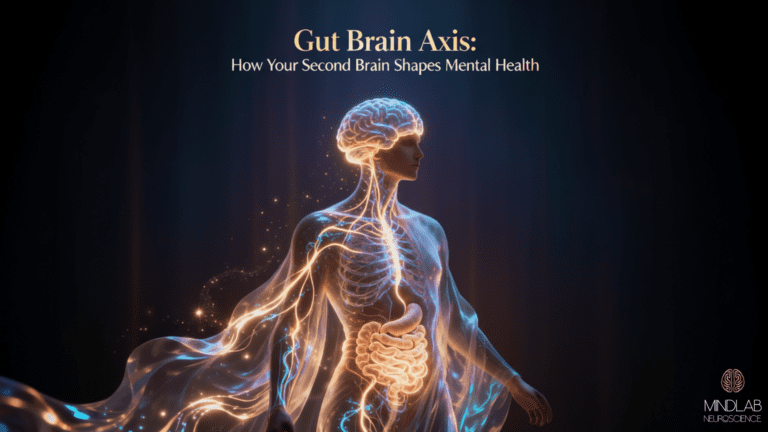
Gut Brain Axis: How Your Second Brain Shapes Mental Health
The gut brain axis is not just about digestion; it is a powerful control center for mood, focus, and resilience...
Read article : Gut Brain Axis: How Your Second Brain Shapes Mental Health

The ability to self-author brain structure. We explore mechanisms like Long-Term Potentiation (LTP) and the specific focus-rest protocols required to hardwire new skills and behaviors.
255 articlesNeuroplasticity is the mechanism that makes lasting change possible. It refers to the brain’s ability to reorganize its own structure — forming new synaptic connections, pruning unused pathways, and strengthening circuits through repeated activation. This is not a metaphor. It is observable at the cellular level: dendritic branching, long-term potentiation, myelination of frequently used axonal pathways. Every behavior pattern you maintain, every emotional response you default to, every decision heuristic you rely on exists because neuroplasticity built the circuitry that supports it.
The foundational work of Merzenich at UCSF demonstrated that cortical maps are not fixed after critical developmental periods, as neuroscience had assumed for most of the twentieth century. They are continuously remodeled by experience. Pascual-Leone’s research at Harvard extended this principle, showing that even mental rehearsal — imagining a piano sequence without physical practice — produces measurable cortical reorganization. The implication is profound: the brain does not distinguish between a vividly experienced internal event and an external one when it comes to structural adaptation. What you repeatedly think, feel, and do literally reshapes the physical architecture of your neural networks.
But neuroplasticity is not inherently positive. The same mechanism that enables recovery from stroke or the acquisition of a new language also consolidates maladaptive patterns. Chronic anxiety strengthens threat-detection circuits. Avoidance behavior reinforces the neural pathways that produce it. Rumination deepens the grooves of default mode network loops. The brain is always plastic — the question is whether that plasticity is being directed toward patterns that serve you or patterns that constrain you.
This distinction is central to Dr. Sydney Ceruto’s work at MindLAB Neuroscience. Real-Time Neuroplasticity — the methodology she developed across 26 years of clinical practice — is built on a specific principle: that the most efficient window for circuit-level change is the live moment when a pattern is actively firing. Not in retrospective analysis. Not in a controlled office setting removed from the context where the pattern operates. In the real-time conditions that trigger the circuitry, which is precisely when the brain is most available for reorganization. A strategy call is where this process begins — mapping the patterns and identifying what targeted neuroplastic intervention looks like for your specific circuitry.
The articles below explore how neuroplasticity operates across cognitive, emotional, and behavioral domains — and what the science reveals about directing it with precision.
The gut brain axis is not just about digestion; it is a powerful control center for mood, focus, and resilience...
Read article : Gut Brain Axis: How Your Second Brain Shapes Mental HealthTired of one-size-fits-all therapy that ignores how your brain actually works? Real-Time Neuroplasticity Coaching™ delivers personalized, neuroscience-based support for lasting...
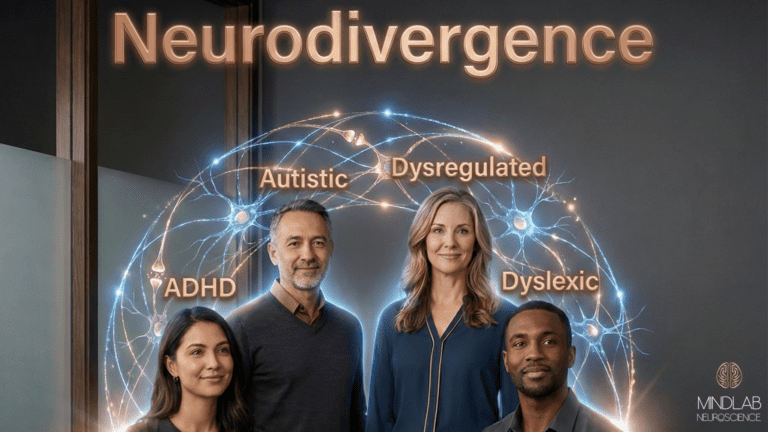
Read article : Neurodivergent Coaching: Real-Time Neuroplasticity™How to remember to forget is the skill of releasing the loop while keeping the lesson. A warm neuroscience-based guide...
Read article : How to Remember to Forget: The Neuroscience of ForgivenessRemote neuroscience coaching is not talk therapy on Zoom. It is real-time brain rewiring in the moments your nervous system...
Read article : Remote Neuroscience Coaching: How It Works and Who It’s ForMost people think perfectionism is “having high standards.” It is not. High standards create clarity and momentum. Perfectionism creates pressure,...
Read article : Perfectionism vs High Standards: How to Tell the DifferenceWe explore the evolutionary neuroscience of self-hatred to reveal why shame is not a flaw but a survival mechanism. From...
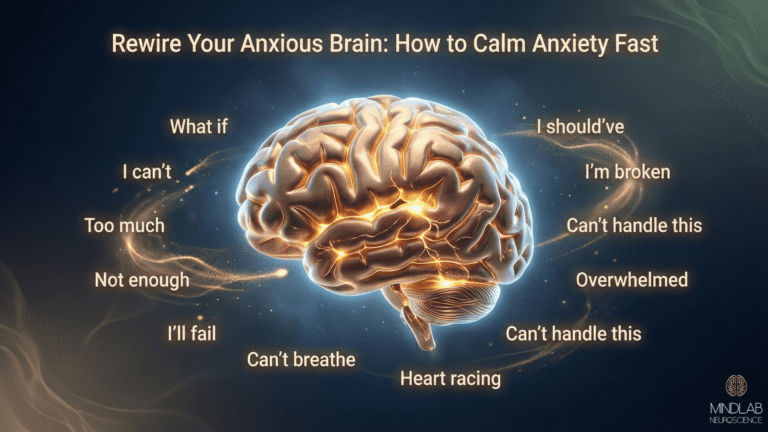
Read article : The Evolutionary Neuroscience of Self-Hatred: Why Your Brain Turns on YouIf your brain feels stuck in fear, this is your guide to rewiring it. You’ll learn what an anxious brain...
Read article : Rewire Your Anxious Brain: How to Calm Anxiety FastRage bait hijacks attention fast. Here’s the neuroscience behind it and a practical protocol to stay calm, think clearly, and...
Read article : Rage Bait: Neuroscientific Ways To Optimize Your ResponseA practical neuroscience guide on how to rewire your brain for habits, focus, and emotional stability using real-world protocols that...
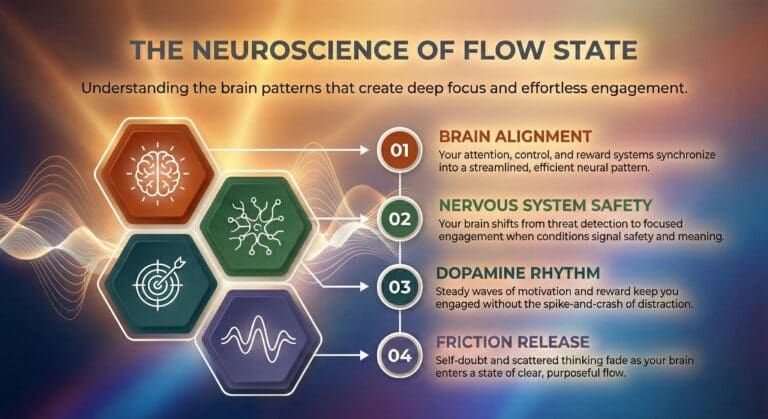
Read article : How To Rewire Your Brain: A Neuroscience-Based Guide That Actually WorksLearn what a real flow state is, how your brain builds it, and how to use neuroscience-based tools to access...
Read article : Flow State: A Neuroscience Guide to Optimize Peak LivingMost people think career development is about skills, strategies, or working harder, but real progress begins in the brain. Drawing...
Read article : Next-Level Career Development: Neuroscience Coaching That Rewires SuccessHabit loops quietly train your brain every day. See how they form, why bad ones cling so tightly, and how...
Read article : Habit Loops: How to Break Bad Ones and Build Better Ones