Career Guidance Service in Miami

Navigate high-stakes career transitions in Miami's rapidly shifting professional landscape. Neuroscience-based career guidance rooted in real-time neuroplasticity methodology.

Miami's professional landscape is undergoing a marked transformation. The metro added 42,600 nonfarm jobs year-over-year as of mid-2025—a 2.5% growth rate that outpaces the national average of 1.1%. That acceleration has created a particular kind of professional anxiety: opportunity abundance paired with navigating instability. Across downtown Miami, Brickell, Coral Gables, and Wynwood, I consistently observe the same pattern: talented professionals who excel technically but struggle with the relational, identity, and strategic dimensions of their careers.

The neuroscience is instructive. Research by Kwon et al. (2023) in *eLife* identified midlife (ages 35–55) as a neurologically critical window for adaptation. The prefrontal cortex—the brain region that governs goal-directed behavior, working memory — the brain's short-term mental workspace —, and cognitive flexibility—shows measurable plasticity during this window, but only when the right conditions are present. Chronic stress, unclear identity, or misaligned career decisions activate the hypothalamic-pituitary-adrenal — the body's central stress-response system — (HPA) axis in ways that impair neuroplasticity itself. Put plainly: the pressure you feel isn't just psychological. It's a neurobiological signal that your current trajectory may not be supporting the neural flexibility you need to adapt.
Schedule a Strategy Call

Career Counseling

Career Counseling in my practice is not career advice. It’s a structured process of discovery that bridges your current professional identity, your neurobiological strengths, and the actual market conditions you’re facing.

In my work with Miami professionals, I begin by mapping the gap between how you think about your career and how your brain actually processes professional decision-making. The ventromedial prefrontal cortex (vmPFC) encodes self-concept in terms of personal importance—this is research documented by Zarzeczny et al. in the Journal of Neuroscience. When you’re unclear about what matters most, that circuit misfires. You make decisions based on external signals (title, compensation, status) rather than internal alignment.

Career Counseling activates this circuit deliberately. We examine the situations and pressures you’ve navigated throughout your career—not just the titles you’ve held. We look for patterns in what energizes versus depletes your cognition. We identify the values that actually guide your decision-making, as opposed to the values you think should guide them. And we situate all of this within the real market dynamics of Miami’s professional landscape.

The result is a Personal Career Blueprint: a document that articulates your core professional identity, your strategic differentiators, and the specific career trajectory that aligns with both your neurobiological strengths and current market opportunity. For relocators and career-changers, this becomes your foundation for all subsequent work.


Learn more about Career Counseling in Miami →

Career Assessment

Career Assessment bridges psychometric evaluation and neuroscience. Standard career assessments—the Myers-Briggs Type Indicator, the Strong Interest Inventory—measure personality and interest. They’re useful, but incomplete.

My assessment methodology integrates three layers:

First, Vocational Neurocognitive Profiling. Sung et al. (2018) in Human Brain Mapping identified 19 distinct functional brain networks that correspond to 19 vocational aptitude categories. Their research found that career satisfaction and performance increase measurably when work activates the specific neural networks you’re neurologically optimized for. My assessment maps your strengths across those networks—not as abstract personality traits, but as measurable cognitive capacities.

Second, Relational & Identity Alignment. We assess how well your current professional identity aligns with how you operate in real time—in rooms, in negotiations, in leadership moments. Blankenship et al. (2024) in Frontiers in Human Neuroscience found that higher identity-brand alignment shifts cognitive processing from the amygdala (threat and pattern-matching) to the frontal lobe (strategic reasoning and authentic expression). The greater the alignment, the more your brain operates from strength rather than from defensive protection.

Third, Market Fit Analysis. We map your assessed strengths against the specific market conditions in Miami—the industries with highest growth, the companies and sectors that reward your particular cognitive profile, and the role types that activate your strongest neural networks.

This three-layer approach produces what I call a Neurological Career Match Report: a clear-eyed assessment of where your brain naturally excels, where your current positioning creates friction, and which career paths would activate the most efficient and powerful neural networks. For professionals relocating to Miami or navigating a career pivot, this becomes the basis for all positioning work.

Learn more about Career Assessment in Miami →

Career Transition Planning

Career transition activates the entire stress-response system. Ran et al. (2023/2024) in the International Journal of Environmental Research and Public Health documented that career transitions chronically elevate cortisol and suppress BDNF (brain-derived neurotrophic factor), the molecule essential for learning and neuroplasticity. The stress isn’t the problem; suppressed neuroplasticity is.

In my practice, Career Transition Planning is a structured program designed to manage that neurobiological reality. We begin by mapping the specific pressures you’re navigating—identity ambiguity, network discontinuity, financial uncertainty, relational disruption. Each pressure activates distinct neural systems. Unclear professional identity activates the default mode network. Relational rupture activates the social brain. Financial uncertainty activates threat-detection circuits. A transition program that addresses only one dimension will fail.

We structure the transition into three phases:

Phase One: Stabilization & Reconnection (Weeks 1–4). We establish a Personal Career Blueprint (see Career Counseling). We identify your non-negotiable values and constraints. We begin rebuilding or redirecting your professional network—particularly critical for Miami relocators. We establish cognitive and somatic practices that downregulate the stress response and support neuroplasticity.

Phase Two: Identity & Positioning Reconstruction (Weeks 5–12). We construct a coherent professional narrative that accounts for your transition (whether geographic, sectoral, or relational). We reposition your credentials, experience, and strengths in language that resonates in Miami’s market. We build your personal brand—online and in-person—so it serves your actual professional identity, not a defensive version of it.

Phase Three: Market Entry & Relational Activation (Weeks 13+). We execute a strategic outreach program that leverages your rebuilt network and clarified positioning. We conduct mock meetings and negotiations. We prepare you for the relational intelligence demands of Miami’s relationship-first professional culture.

Throughout, we track neurobiological markers of successful adaptation: emotional regulation, decision clarity, relational ease, and sustained motivation. Career transition planning isn’t complete until your nervous system has genuinely adapted—not just until you’ve accepted a new role.

Learn more about Career Transition Planning in Miami →

Executive Career Coaching

Executive Career Coaching addresses the leadership decisions, relational challenges, and identity pressures that senior professionals face. In Miami, this population is distinct: it includes C-suite executives who relocated for tax or growth advantages; founded or scaled companies; manage substantial teams or budgets; and face unique pressures around positioning, board relationships, and the next chapter.

Smith (2025) in Nursing Administration Quarterly documented that executive coaching directly supports neuroplasticity and emotional regulation in high-stress roles. The mechanism: coaching creates a deliberate space for metacognition—thinking about your own thinking—which activates the anterior cingulate cortex and strengthens connections between the prefrontal cortex and the amygdala. This creates measurably better decision-making under pressure.

My executive coaching methodology focuses on three core domains:

Domain One: Situational Clarity & Pressure Navigation. Most executives have substantial positional clarity but face confusion about specific, high-stakes situations: a difficult board conversation, a team restructuring, a compensation negotiation, or a strategic pivot. We examine the specific pressure in granular detail—the relational dynamics, the information gaps, the emotional reactions that are hijacking your strategic reasoning. We map the neural systems activated by that situation. We build a specific, rehearsed approach that allows you to remain in your prefrontal cortex (strategic reasoning) rather than defaulting to limbic reactivity.

Domain Two: Identity & Legacy Alignment. Many senior executives find themselves succeeding in roles that don’t actually align with what matters most—or they’re facing a transition (retirement, downshift, second act) that requires identity reconstruction. We clarify what you actually want from this chapter of your career, independent of external expectations. We address the gap between your professional persona and your authentic professional identity.

Domain Three: Team Leadership & Relational Leverage. Executives lead through their team and their relational networks. We examine how you activate (or suppress) the neural systems in others that create engaged, resilient, high-performing teams. This isn’t soft skills training. It’s applied neuroscience of team leadership.

For Miami executives navigating tax changes, market volatility, or the particular pressures of the tech and crypto sectors, this becomes a critical container for sustaining both performance and purpose.

Learn more about Executive Career Coaching in Miami →

Personal Branding

Personal Branding is one of the most misunderstood services in career guidance. Most professionals think it means “create a LinkedIn profile” or “build a polished online presence.” What we actually do is far more fundamental: we align how you’re known in the world with who you actually are, and we position that alignment strategically in the markets that matter to you.

Blankenship et al. (2024) in Frontiers in Human Neuroscience found that when professional identity and actual brand (how you’re known) are well-aligned, cognitive processing shifts from the amygdala to the frontal lobe. Misalignment keeps you in threat-detection mode. You’re constantly managing the gap between the persona and the person. That’s exhausting, and it suppresses authentic leadership.

In Miami’s market, I observe a particular pattern: professionals who are highly relational and effective in-person but whose online presence doesn’t reflect that reality. Or they have strong individual credentials but haven’t built a coherent professional narrative. Or they’ve relocated and haven’t yet established visibility in Miami-specific networks and communities.

My Personal Branding program includes:

Narrative Construction. We build a cohesive professional story that integrates your background, your values, your expertise, and your current positioning. For relocators, this story accounts for the transition. For founders, it situates your venture within your broader professional identity. For Latin American professionals, it positions your international background and credentials as advantage, not obstacle.

Digital Brand Development. We construct or reconstruct your LinkedIn presence, website, and relevant platforms (Twitter/X for tech professionals, etc.) so they authentically reflect your professional identity and the positioning we’ve developed. This isn’t generic optimization. It’s a deliberate expression of who you are and why you matter in your market.

In-Person Brand Activation. How you show up in meetings, in presentations, in one-on-one conversations—this is your brand in real time. We work on the relational and communication dimensions that create alignment between your digital brand and your in-person presence. In Miami’s relationship-first culture, this is essential.

Community & Network Positioning. We identify the specific professional communities, organizations, and networks where your brand should have presence. We develop a strategy for how you’ll show up in those communities authentically and strategically.

Strong personal branding doesn’t create artifice. It removes the noise and allows your actual professional identity to be clear and coherent in the markets that matter.

Learn more about Personal Branding in Miami →

Salary Negotiation Coaching

Salary negotiation is one of the highest-stakes moments in any career transition. For Miami professionals, it’s often more complex: relocators may have equity from prior ventures; tech and crypto professionals face token-heavy compensation structures; executives negotiate not just salary but board roles, severance, and deferred compensation. The financial stakes are substantial. So are the neurobiological stakes.

Trotschel et al. (2016) in PLOS ONE found that stress reappraisal—the ability to reframe a high-stakes negotiation as a problem-solving conversation rather than a threat—predicted salary outcomes with striking precision. Professionals trained in stress reappraisal in experimental conditions secured $50,486 median salaries versus $48,640 for control groups. Reinhard et al. (2024) in Scientific Reports demonstrated that stress reappraisal interventions show reliable, durable effects. Put simply: how your brain processes the negotiation—threat or challenge—directly predicts the outcome.

My Salary Negotiation Coaching program includes three core components:

Component One: Total Compensation Strategy. Before you ever enter a negotiation, we analyze the full scope of compensation: salary, bonus, equity, benefits, working conditions, role scope, and career architecture. For tech and crypto roles, this includes mapping token vesting schedules and liquidity events against your personal financial goals. For executives, it includes severance protection and board compensation. We identify your walk-away point, your target range, and your leverage—what the employer actually needs from you that they can’t easily replace.

Component Two: Negotiation Preparation & Reappraisal Training. We conduct multiple mock negotiations, each one raising the pressure incrementally. You practice staying in your prefrontal cortex—strategic reasoning, clear communication, curiosity—rather than defaulting to limbic reactivity (defensiveness, anxiety, aggression). We teach you stress reappraisal explicitly: how to reframe the negotiation as a joint problem-solving conversation where both parties are seeking alignment. Research shows this single reframe improves outcomes measurably.

Component Three: Relational Intelligence & Pressure Navigation. Negotiation is a relational dance. We examine the specific negotiator across the table—their incentives, constraints, and pressure points. We identify where your interests align (common ground) and where they diverge. We develop a specific communication strategy that maintains your authenticity and clarity while building connection and demonstrating understanding.

For Miami professionals, particularly those navigating the unique compensation structures of the tech sector or the relational intensity of founder and executive-level roles, this program becomes a container for securing not just higher compensation but compensation that actually aligns with your market value and your personal circumstances.

Learn more about Salary Negotiation Coaching in Miami →

To understand career guidance in Miami, you must first understand the market itself.

Miami’s economy is in the middle of a structural shift. From 2012 to 2023, Brickell’s population grew 89 percent; the 35-64 cohort grew 213 percent. Average household income in that neighborhood is now $137,219, with individual earnings averaging $96,317. Downtown Miami workers earn an average of $103,000—1.2 times the county average. Compensation costs across the region grew 4.7 percent, outpacing every other metro in the South.

But the most consequential trend is migration. In 2024, 55,244 out-of-state workers relocated to the Miami metro. Of those, 7,372 came from New York alone, bringing median earnings of $164,480. Professional, Scientific, and Technical Services is now the top industry among out-of-state relocators, at 12.9 percent of all migration. These aren’t entry-level hires. They’re senior professionals, entrepreneurs, and equity-holders who left established cities for Miami’s lower tax burden, faster growth, and climate advantages.

Simultaneously, Miami hosts a significant Latin American professional cohort: 47 percent of the metro identifies as Hispanic, and 43 percent are Spanish-fluent. Close to 60,000 Latino-owned businesses operate in Miami-Dade County. Many of these professionals face a distinct career challenge: credentials earned in Mexico City, Bogotá, or São Paulo don’t translate directly into U.S. professional positioning. Identity reconstruction and relational network-building become urgent.

The tech and crypto sectors add another layer. Miami ranks in the top 10 U.S. venture markets, with Wynwood emerging as a tech hub. Crypto and tech companies in that district often offer equity-heavy compensation structures that create unique total compensation negotiation challenges.

In short: Miami’s career market rewards clarity, relational intelligence, and strategic identity work. Those are not talents that emerge by accident. They’re the outputs of deliberate, neuroscience-informed career guidance.

Dr. Sydney Ceruto, PhD — Founder, MindLAB Neuroscience

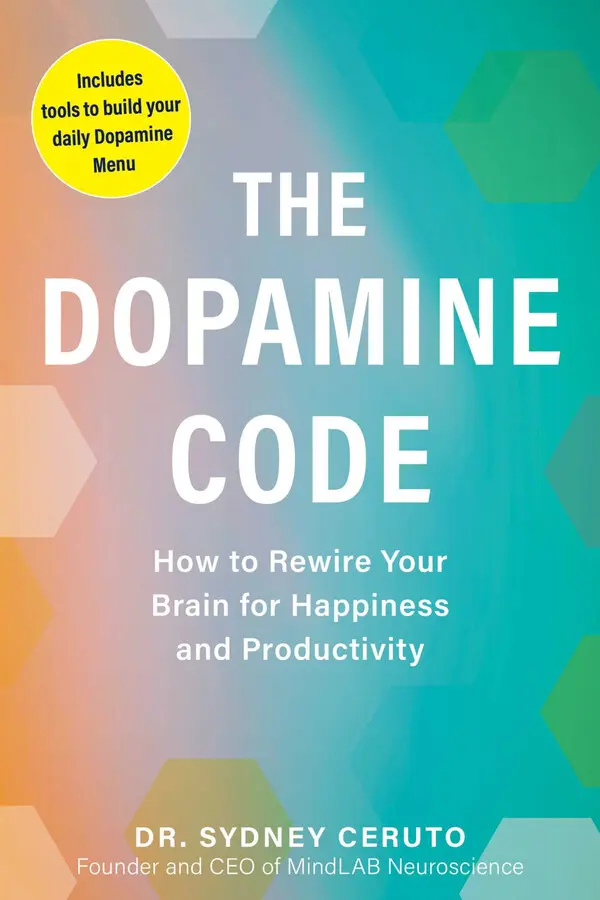
Dr. Sydney Ceruto holds a PhD in Behavioral & Cognitive Neuroscience from NYU and Master’s degrees in Clinical Psychology and Business Psychology from Yale University. She is a Lecturer in the Wharton Executive Development Program at the University of Pennsylvania, an Executive Contributor to Forbes Coaching Council, and an inductee in Marquis Who’s Who in America. Dr. Ceruto founded MindLAB Neuroscience in 2000 and has spent more than 26 years developing and refining her proprietary methodology, Real-Time Neuroplasticity™. She is the author of The Dopamine Code (Simon & Schuster, June 2026).

Frequently Asked Questions

I moved from New York to Brickell six months ago—my network here is zero. Where does career guidance actually start for someone rebuilding from scratch?
It starts with clarity about what you actually want from Miami, independent of what you're trying to escape. Many relocators are running from rather than running toward. We map your professional identity and values first, then we build a network strategy rooted in that clarity. Your lack of existing network is actually an asset—it allows you to build relationships with intention rather than perpetuating your prior pattern. We identify the specific professional communities and influencers in Miami that align with your positioning, and we develop a concrete outreach and participation strategy.
I'm a Latin American executive who relocated to Coral Gables. My credentials don't translate the way I expected. What does this address?
This is a positioning and narrative problem, not a credential problem. We reconstruct how you articulate your background, your expertise, and your accomplishments in language that U.S. employers and networks immediately understand. We reposition your international experience as a distinct competitive advantage—relationship-building across cultures, regulatory navigation, expanded market perspective. We help you build visibility in Miami's significant Latin American professional community and in broader U.S. networks simultaneously. Your "non-translation" is usually a storytelling gap, not a qualification gap.
How is neuroscience-based career guidance different from the career programs I've already tried that didn't stick?
Most career programs treat career as a series of decisions to make: which role, which company, which industry. We treat career as a neurobiological process of continuous adaptation. We're not just helping you choose a role; we're helping your brain develop the neural networks and regulatory capacities that support sustainable career satisfaction and performance. That's why outcomes stick. You're not relying on willpower or external accountability. You're building actual neural adaptations that make the new trajectory feel coherent and sustainable.
I'm a finance professional in Brickell. What kind of measurable results should I expect from neuroscience-based career guidance?
Direct ROI includes: improved total compensation through enhanced negotiation and strategic positioning, accelerated advancement, and reduced role-related stress — measurable in sleep quality, anxiety reduction, and decision clarity. Indirect ROI includes: improved team performance and retention if you're managing others, better strategic decision-making in your role, and sustainable career satisfaction rather than chronic dissatisfaction that erodes performance. We measure all of this explicitly — before, during, and after the engagement. Finance professionals consistently see measurable improvements across these dimensions within the first 90 days. Program structure and investment details are discussed during your Strategy Call with Dr. Ceruto.
Miami is a relationship-first market. My personal brand online doesn't match how people know me in the room. What fixes that gap?
This is a brand alignment problem. We audit how you show up online versus in-person—your communication style, your positioning, your story. We usually find that your online brand is either too polished (disconnected from your actual relational warmth) or too generic (it doesn't communicate your specific value). We reconstruct your digital brand so it authentically reflects who you are in the room. Then we activate your brand through strategic community participation—the specific networks and forums where Miami professionals actually know each other. Brand alignment removes the exhaustion of managing multiple versions of yourself.
I'm a founder who just exited my startup in Wynwood and I don't know what's next. Is career counseling even the right name for this?
The name is less important than the function. What you need is a deliberate space to clarify what you actually want—from work, from your career, from your next chapter. Many founders experience identity collapse after an exit. The company that consumed your attention is gone. You haven't yet reconstructed a professional identity that's independent of that venture. We do exactly that. We examine what energized you about founding, what you learned about how you actually like to operate, and what role or venture would activate those same strengths. For many founders, the next chapter is entirely different from what they assumed it would be—but only after they've worked through the real questions.
The tech and crypto companies in Wynwood offer equity-heavy comp. How do you navigate total comp negotiation when half the offer is tokens?
This requires understanding both the financial structure and the neurobiological reality. We model out the actual value of your compensation under different market scenarios. We identify your walk-away point and your target—understanding both what you need and what you actually want. Then we prepare you to negotiate with clarity about the token component's legitimacy and its risk. We also address the relational and identity dimensions: compensation conversations at this level are as much about role scope, decision authority, and relational positioning as they are about numbers. We prepare you for all three dimensions.

Ready to Perform at Your Highest Level?

Navigate high-stakes career transitions in Miami's rapidly shifting professional landscape and unlock your neurobiological potential for sustained success.

Schedule a Strategy Call
MindLAB Neuroscience consultation room
Locations

The Intelligence Brief

Neuroscience-backed analysis on how your brain drives what you feel, what you choose, and what you can’t seem to change — direct from Dr. Ceruto.