Business Development Service in Lisbon

Neuroscience-grounded founder development, growth strategy, and investor preparation for Lisbon's startup ecosystem — where Web Summit energy meets the neural demands of building across borders.

Lisbon's startup ecosystem has reached 5,091 active companies, drawn seven unicorns, and hosts the world's largest technology conference annually. The ecosystem provides abundant tactical resources — accelerators, pitch workshops, mentor networks, and the annual catalytic pressure of Web Summit. What it does not provide is the neuroscience-based developmental work that determines whether a founder can sustain the cognitive demands of building a business across cultures, time zones, and investor expectations. I work at that level: the neural architecture of the founder, not the mechanics of the business plan.
Schedule a Strategy Call

Founder Coaching

The founder operating under fundraising, launch, or scaling pressure exists in precisely the neurobiological conditions that degrade strategic decision-making. Sarmiento et al. (2024), publishing in Brain, Behavior and Immunity — Health, demonstrated that acute stress activates the HPA axis and shifts cognition from goal-directed prefrontal behavior to habitual, stimulus-response patterns dominated by the amygdala and striatum. High noradrenaline and dopamine disrupt working memory and strategic reasoning within minutes. Egana-delSol, Sun, and Sajda (2023), in a randomized controlled trial published in Scientific Reports, provided the first RCT-level evidence that programs targeting emotion regulation produce measurable prefrontal neurophysiological changes in founders — and that these neural changes predict real outcomes including university enrollment gains and dropout reduction. Hosoda et al. (2020), publishing in Communications Biology, demonstrated MRI-confirmed structural neuroplastic changes in the left frontal pole cortex following engagement with structured subgoals, converting 86% of predicted non-achievers into achievers. In my practice, I work with founders whose decision-making under pressure has become reactive rather than strategic — targeting the specific neural circuits that stress has compromised and restructuring them through Real-Time Neuroplasticity™ within the live context of building their company.

Learn more about Founder Coaching in Lisbon →

Business Growth Consulting

Business growth requires cognitive capacities that are measurably trainable at the neural level. Zeng (2025), in a scoping review published in Brain Sciences synthesizing 15 neural studies, identified that growth mindset is associated with increased cortico-striatal connectivity, enhanced error-monitoring networks, and increased grey matter volume in the medial orbitofrontal cortex — structural brain changes that predict post-error accuracy and adaptive learning from setbacks. Critically, post-error accuracy — the ability to adapt and learn from business failures — is significantly higher in individuals with trained growth mindset architecture. Balconi, Angioletti, and Crivelli (2020) demonstrated that a neurofeedback training protocol with top managers produced measurable results within two to three weeks: significantly reduced perceived stress, anxiety, and fatigue while enhancing working memory, cognitive flexibility, problem-solving, and inhibitory control — the exact cognitive capacities required for sustained business scaling. A revised three-week protocol enhanced self-awareness and self-regulation in senior managers operating under conditions comparable to Lisbon’s high-velocity startup environment. Zientz et al. (2023) quantified the results of a six-month brain health program: 75% of completers showed significant gains on the BrainHealth Index with a medium effect size (Cohen’s d=0.53), including connectedness gains of +36.8 points and emotional balance improvements of +32.3 points, both directly associated with reduced exhaustion and depersonalization — key burnout precursors that undermine growth-oriented thinking. Growth plateaus in capable founders trace to neural architecture rather than market conditions. The ceiling on business growth is usually the ceiling on the founder’s cognitive and emotional processing capacity. My methodology identifies and restructures these neural bottlenecks, restoring the prefrontal function and reward-system engagement that sustained growth demands.

Learn more about Business Growth Consulting in Lisbon →

Investor Relations Coaching

Investor decision-making is a limbic phenomenon, not a rational one. Ortiz-Teran, Diez, and López-Pascual (2021), in an ALE meta-analysis of 16 fMRI studies with 594 healthy adults published in Brain Sciences, identified the ventral striatum, anterior insula, amygdala, and anterior cingulate cortex as the primary neural structures involved in investment decisions — limbic structures integrating reward anticipation, risk perception, and emotional conflict. Excessive activation of these limbic structures leads to systematic decision-making errors driven by prior history, social behavior, sunk costs, and the disposition effect. Sarmiento et al. (2024) established the complementary mechanism: a founder’s own stress response is neurologically transmitted to the investor through social neural coupling. High noradrenaline levels disrupt the dorsolateral prefrontal cortex within minutes, shifting the founder from goal-directed behavior to habitual, reactive patterns — and this shift is neurologically readable by the investor’s own brain. A stressed founder activates the investor’s threat-detection circuitry; a composed, neurologically regulated founder engages the investor’s goal-directed prefrontal commitment pathways. I regularly see that founders preparing for high-stakes capital conversations often focus exclusively on narrative and financials while ignoring the neural state they transmit. I prepare founders for investor interactions at the neurobiological level — restructuring the stress-response systems that determine what signals you project before you speak your first word. For Lisbon’s founders preparing for Web Summit investor meetings where nearly 200 startups from the 2024 program secured $715.5 million in post-event investment, European VC conversations, or cross-continental fundraising, this preparation is the layer that pitch rehearsal cannot reach.

Learn more about Investor Relations Coaching in Lisbon →

Lisbon has become one of the most concentrated founder ecosystems in Europe, and the neuroscience of operating within it is specific and demanding. Portugal’s startup count reached 5,091 in 2025, an 8% year-over-year increase, with 45% located in Lisbon and ICT accounting for 63% of total startup turnover. The city has produced seven unicorns — TalkDesk, OutSystems, Sword Health, Anchorage Digital, Remote, Tekever, and Feedzai — and its ecosystem value grew 13% since 2022 while global startup valuations declined. Startup Genome placed Lisbon in the Top 30 Emerging Global Startup Ecosystems in 2025, characterizing it as entering the Early-Globalization phase.

Web Summit, permanently hosted in Lisbon since 2016, is the annual pressure catalyst. The 2025 edition drew 71,386 attendees from 157 countries, including a record 1,857 investors from 86 countries — a 74% surge from the previous year. Nearly 200 startups from the 2024 program secured post-event investment totaling $715.5 million. This concentration of investor capital, founder ambition, and international attention creates an annual high-stakes window that amplifies every cognitive demand founders face: pitch preparation, investor relationship management, partnership evaluation, and the social comparison stress of operating alongside the most ambitious operators in global technology.

The Lisbon founder profile carries specific neurological pressures beyond those documented in other startup ecosystems. Expat founders navigated Portuguese bureaucracy, cultural norms, and investor relationships across multiple markets simultaneously. Digital nomad entrepreneurs manage location-independent businesses while contending with the isolation and identity challenges of working without a home-country anchor. Portugal’s D8 visa community represents a self-selecting cohort of financially resourced professionals, but financial qualification does not insulate against the cognitive load of building across cultures and regulatory frameworks. The SIFIDE R&D tax credit — offering up to 82.5% recovery of qualifying R&D investment, with an enhanced 47.5% base rate for startup SMEs — creates additional strategic complexity for founders unfamiliar with Portuguese fiscal instruments.

The Lisbon Founders Club, a selective community for expat founders with €1M+ annual revenue, has operated since 2021, hosting 40+ offline events annually and peer advisory groups. Its existence confirms the demand for high-level peer support among Lisbon’s founder community — and its limitations confirm the gap: no member-driven peer group can provide the neuroscience-based developmental work that determines whether a founder can sustain the cognitive and emotional demands of scaling from a Southern European base while managing global ambitions.

The tax incentive landscape adds strategic complexity for founders unfamiliar with Portuguese fiscal instruments. The SIFIDE R&D tax credit offers a base rate of 32.5% deduction on qualifying R&D expenses with an enhanced 47.5% base rate for startup SMEs — recovering up to 82.5% of R&D investment. The IFICI program, replacing the terminated NHR regime in 2024, provides a 20% flat income tax rate for qualifying professionals in eligible sectors including IT and innovation-focused roles. Portugal’s Golden Visa program issued a record 4,987 visas in 2024, a 72% year-over-year increase, further expanding the high-net-worth international founder population establishing Lisbon bases. These instruments create opportunity, but navigating them under the cognitive load of simultaneously building a company, managing investor relationships, and adapting to Portuguese business norms produces the kind of sustained prefrontal demand that, without neurobiological support, degrades the strategic decision-making quality that founder success depends on.

I work with founders whose external conditions for growth are favorable — strong ecosystem, available capital, proven product — but whose internal neural conditions are constraining execution. The pattern is identifiable: stress-driven reactivity replacing strategic thinking, decision fatigue compounding with isolation, growth mindset architecture downregulating under the comfort of a Lisbon lifestyle that neurologically rewards staying still. My methodology addresses each of these patterns at its neural source, within the live context of building a company in one of Europe’s most concentrated and competitive startup ecosystems.


Dr. Sydney Ceruto, PhD — Founder, MindLAB Neuroscience

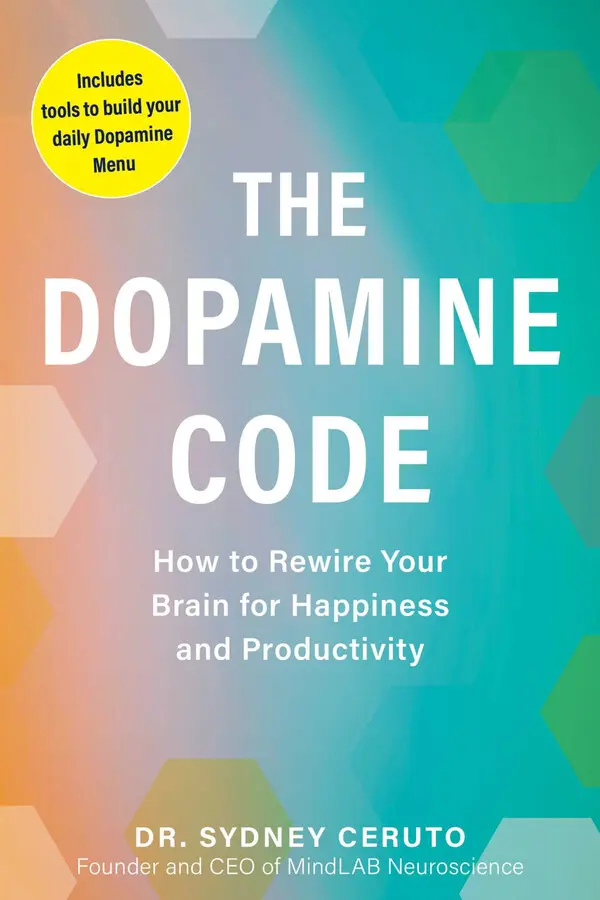
Dr. Sydney Ceruto holds a PhD in Behavioral & Cognitive Neuroscience from NYU and Master’s degrees in Clinical Psychology and Business Psychology from Yale University. She is a Lecturer in the Wharton Executive Development Program at the University of Pennsylvania, an Executive Contributor to Forbes Coaching Council, and an inductee in Marquis Who’s Who in America. Dr. Ceruto founded MindLAB Neuroscience in 2000 and has spent more than 26 years developing and refining her proprietary methodology, Real-Time Neuroplasticity™. She is the author of The Dopamine Code (Simon & Schuster, June 2026).

Frequently Asked Questions

What makes neuroscience-based founder development different from the startup accelerators and mentor networks available through Web Summit or Startup Lisboa?
Accelerators provide market validation, tactical frameworks, and investor access — essential infrastructure for early-stage companies. They do not address the neural architecture of the founder making the decisions. Research published in Scientific Reports (Egana-delSol et al., 2023) demonstrated that programs targeting emotion regulation produce measurable prefrontal neurophysiological changes that predict real business outcomes. My methodology operates at this level: restructuring the founder's decision-making, stress-response, and cognitive flexibility — the ability to shift thinking between concepts — systems so the tactical knowledge accelerators provide can actually be executed under the pressures of building a company.
I relocated to Lisbon to build my startup and keep making decisions I know are wrong. What's happening?
You are describing a stress-cognition shift that has a precise neural mechanism. Sarmiento et al. (2024) established that acute stress shifts cognition from goal-directed prefrontal processing to habitual, amygdala — the brain's threat-detection center —-dominated response patterns. Relocation compounds this: the brain's threat-detection systems are activated by environmental novelty, cultural unfamiliarity, and the absence of established professional networks — all while you are making the most consequential decisions of your business. My methodology targets this specific neural dynamic, restoring prefrontal decision-making capacity while you continue to operate in the environment creating the stress.
How can neuroscience-based preparation help me before investor meetings at Web Summit — beyond pitch rehearsal?
Pitch rehearsal addresses the content of your presentation. Neuroscience-based preparation addresses the neural state you transmit before you speak. Ortiz-Teran et al. (2021) demonstrated that investor decision-making is driven by limbic structures — ventral striatum, anterior insula, amygdala — not rational evaluation alone. A founder's stress response is neurologically contagious: anxiety activates the investor's threat-detection circuitry, while composed confidence engages their goal-directed commitment pathways. My methodology restructures your stress-response system for the specific high-stakes context of investor interaction, producing a neural state that investors' brains register as credibility and control.
My business generates strong revenue but I cannot seem to scale internationally from Portugal. Is that a strategy problem or something internal?
In my practice, I consistently observe that scaling constraints in capable founders trace to neural bottlenecks rather than strategic deficits. Zeng (2025) identified that growth mindset — the neural architecture supporting belief in expansion beyond current limits — is associated with specific, trainable brain changes: increased cortico-striatal connectivity and enhanced error-monitoring networks. When scaling stalls despite strong fundamentals, the constraint is typically the founder's cognitive and emotional processing capacity — the neural ceiling above which stress-driven reactivity replaces strategic thinking. My methodology identifies and raises that ceiling.
As a digital nomad founder in Lisbon, I work alone most days and make all major decisions without a team. How does this address the isolation and decision fatigue?
Isolation depletes the social neural feedback that sustains motivation and decision quality. Research confirms that dopaminergic social reward (related to the brain's dopamine system)— the neural signal produced by meaningful professional interaction — is structurally reduced in remote work environments. The decision fatigue you describe is a prefrontal resource depletion compounded by the absence of externalized processing that team interaction provides. My embedded partnership model directly addresses this: providing the consistent, high-quality relational context that the brain requires to sustain strategic-level decision-making — a neurologically grounded alternative to the peer support that solo founder life in Lisbon structurally removes.
I came to Lisbon for the lifestyle but my business has plateaued. Is comfort actually suppressing my growth drive?
The neuroscience is direct on this point. Comfortable environments reduce the dopaminergic novelty signaling (related to the brain's dopamine system) that drives exploration, risk-taking, and growth-oriented behavior. The medial orbitofrontal cortex — the brain's outcome-evaluation center — processes reward and long-term value, and when the reward from current circumstances is sufficient, the neural systems that generate growth-seeking behavior downregulate. Zeng (2025) demonstrated that this pattern is modifiable: growth mindset training produces structural changes in the medial OFC and cortico-striatal circuits, re-engaging the neural architecture of growth. My methodology targets this specific dynamic — not by disrupting the life you built, but by restructuring the neural reward systems that have shifted from growth-seeking to comfort-maintaining.
How is business growth work at MindLAB different from hiring a strategy consultancy like Bain or McKinsey in Lisbon?
Strategy firms deliver market analysis, operational frameworks, and organizational recommendations — valuable for the company. My methodology operates on the founder or leader who must execute those recommendations. Research confirms that strategic decision quality is constrained by individual cognitive capacity (Rustichini et al., 2022), affect-cognition integration (Cristofaro et al., 2022), and stress-mediated prefrontal function — variables that organizational strategy consulting does not address. The two approaches are complementary, not competitive: the strategy firm optimizes the business architecture; I optimize the neural architecture of the person building it.

Ready to Perform at Your Highest Level?

Lisbon's startup ecosystem provides the market, the infrastructure, and the investor attention. What determines whether you capitalize on those conditions is the neural capacity you bring to the decisions that matter most — under the specific pressures of building across borders, cultures, and investor expectations from a Southern European base.

Schedule a Strategy Call
MindLAB Neuroscience consultation room
Locations

The Intelligence Brief

Neuroscience-backed analysis on how your brain drives what you feel, what you choose, and what you can’t seem to change — direct from Dr. Ceruto.