Porn & Sexual Compulsivity in Beverly Hills

Entertainment industry normalization, image culture, and total privacy create a structural environment where the reward system escalates without friction or consequence.

Compulsive pornography use is not a moral problem. It is a reward-system problem — specifically, a dopamine problem. The brain's mesolimbic reward architecture — the circuitry that assigns value, drives approach behavior, and generates motivation — was not designed for the conditions that internet pornography creates. Unlimited novelty. Zero friction between impulse and reward. Infinite escalation without physical consequence. The result is a pattern of neural hijacking that mirrors every other compulsive behavior: escalating tolerance, diminishing return, and a widening gap between what the screen delivers and what real intimacy can produce.

At MindLAB Neuroscience, I work at the level where this pattern actually lives: the reward circuitry that has been systematically sensitized, the escalation architecture that demands increasing intensity to generate the same signal, and the real-world arousal and intimacy disruption that accumulates silently underneath a life that looks entirely intact from the outside. This is not a conversation about willpower. It is a conversation about neural architecture — and what it takes to restructure it.

Book a Strategy Call

Key Points

  1. What the brain learns from sustained exposure is not sexual satisfaction.
  2. The arousal architecture has been reconfigured to respond to the specific conditions that pornography delivers — high novelty, high visual intensity, zero relational friction — and real-world intimacy does not replicate those conditions.
  3. This gap — between screen-calibrated arousal and real-world relational intimacy — produces secondary effects that extend well beyond the sexual.
  4. The brain's reward circuitry evolved to motivate behavior in environments where novelty was rare, access was effortful, and the pursuit of reward required sustained engagement with real-world consequences.
  5. The brain recalibrates downward, because familiar rewards carry less information about the environment than new ones do.
  6. The mechanism is the Coolidge effect — the neurobiological phenomenon in which a novel mate triggers a fresh dopamine response even after the previous stimulus has been habituated.
  7. That recalibration is what my work addresses — not at the behavioral level, but at the level of the circuitry that produced and maintains it.

How Internet Pornography Exploits the Reward System

“The problem is that the program was written for a screen, and the screen is not the person in front of you.”

The brain’s reward circuitry evolved to motivate behavior in environments where novelty was rare, access was effortful, and the pursuit of reward required sustained engagement with real-world consequences. Dopamine — the neurotransmitter driving this system — functions as a prediction-error signal. When an outcome exceeds what the brain anticipated, dopamine fires. When the same reward arrives repeatedly in the same form, the signal diminishes. The brain recalibrates downward, because familiar rewards carry less information about the environment than new ones do.

Internet pornography exploits this architecture with a precision that no naturally occurring stimulus can match. The mechanism is the Coolidge effect — the neurobiological phenomenon in which a novel mate triggers a fresh dopamine response even after the previous stimulus has been habituated. The brain evolved this response for survival contexts where novelty signaled genuine opportunity. Online, novelty is infinite and instantaneous. Every tab is a new stimulus. Every click resets the dopamine signal. The result is a reward loop that never closes — a system that was designed to habituate being continuously prevented from doing so.

What the brain learns from sustained exposure is not sexual satisfaction. It is escalation. The reward threshold rises. The stimuli that previously generated a significant dopamine response become insufficient. The system requires higher-intensity, more novel, or more extreme material to produce the signal it has been trained to expect. This escalation is not a character development. It is a predictable output of a sensitized reward system operating exactly as its circuitry predicts — seeking higher-amplitude input because the previous baseline has been systematically desensitized.

The Desensitization That Real Intimacy Cannot Compete With

The damage to real-world intimacy is the most functionally disruptive consequence of compulsive pornography use — and the one most people recognize least clearly until the gap has become undeniable. The reward system that has been calibrated to respond to infinite novelty, perfect stimulation, and zero relational complexity is being asked to engage with a real person: someone with their own rhythms, needs, inconsistencies, and the slow accumulation of familiarity that is inherent to genuine relationship. The brain’s reward circuitry has been trained to disengage from familiarity, not toward it.

The result is arousal disruption — difficulty becoming or staying aroused in real-world sexual contexts that would have been unremarkable before the desensitization pattern developed. This is not a physical problem. It is a reward-system problem. The arousal architecture has been reconfigured to respond to the specific conditions that pornography delivers — high novelty, high visual intensity, zero relational friction — and real-world intimacy does not replicate those conditions. The brain is not malfunctioning. It is executing the program it was trained to run. The problem is that the program was written for a screen, and the screen is not the person in front of you.

This gap — between screen-calibrated arousal and real-world relational intimacy — produces secondary effects that extend well beyond the sexual. The relationship between a person and their own capacity for genuine intimacy is altered. The ability to be present, to tolerate the imperfect conditions of real connection, to allow desire to build through relational context rather than visual novelty — all of these are downstream functions of a reward system that has been optimized for something else entirely. The screen does not just compete with intimacy. Over time, it restructures the neural architecture that makes intimacy possible.

The Hidden Pattern Behind a Visible Life

Compulsive pornography use almost never appears on the surface. The person managing this pattern is, in most cases, outwardly functional — professionally capable, socially present, relationally available in most of the ways that are visible to others. The pattern lives in private digital space: in the hours between when the household is asleep and when the alarm goes off, in hotel rooms during travel, in the locked device that sits at the edge of every shared moment. The functional surface and the private compulsive pattern can coexist indefinitely, because the pattern requires almost nothing except a screen and unmonitored time.

This invisibility is part of what makes the pattern persist. There is no external accountability structure, no moment where the behavior becomes undeniable to others, no forced reckoning with what is accumulating. The compulsive loop operates in isolation, which means the escalation also happens in isolation — the threshold rising, the content intensifying, the gap between screen-world and real-world widening — without any of the friction that would slow a behavior that carries external consequences.

What makes the pattern recognizable to the person inside it is usually one of two things: the intimacy disruption becomes impossible to attribute to anything else, or the hours consumed become incompatible with the life they are supposed to be living. By the time either of these happens, the reward system has typically been operating in escalation mode for months or years. The neural architecture is not slightly modified. It has been systematically recalibrated. That recalibration is what my work addresses — not at the behavioral level, but at the level of the circuitry that produced and maintains it.

Why Willpower and Restriction Fail

The standard interventions for compulsive pornography use — blocking software, accountability apps, commitment-based restriction strategies — address the behavior at the level of access. They make the reward harder to reach. What they do not do is address the reward system that is driving the behavior. A sensitized dopamine architecture does not become desensitized because the specific stimulus is blocked. It remains at its elevated threshold, generating the craving signal at the same intensity, now directed toward finding a way around the restriction rather than toward the screen directly.

This is why restriction strategies so frequently produce what looks like a paradox: the behavior stops, the craving intensifies, and the eventual return to the pattern arrives with higher urgency and often escalated content preferences than what preceded the restriction period. The reward system was not addressed. It was temporarily frustrated. Frustrating a sensitized reward system does not recalibrate it. It maintains the sensitization while adding a new layer of deprivation-driven urgency on top of it.

Walnut desk with marble inlay crystal brain sculpture and MindLAB journal in warm California afternoon light in Beverly Hills private study

The work that produces structural change operates at a different level entirely. The reward circuitry that has been recalibrated upward can be recalibrated back — but only through targeted work that addresses the dopamine signaling architecture directly, rebuilds the brain’s capacity to register ordinary-level rewards as meaningful, and restructures the prediction-error system that is currently demanding escalating input to generate any response at all. This is the precise level where my work operates. Not managing the behavior. Restructuring the system that produces it.

Marker What You Experience What's Happening Neurologically What We Restructure
Internet Pornography Exploits the Reward The result is a reward loop that never closes — a system that was designed to habituate being continuously prevented from doing so. The brain's reward circuitry evolved to motivate behavior in environments where novelty was rare, access was effortful, and the pursuit of reward required sustained engagement with real-world consequences. The brain recalibrates downward, because familiar rewards carry less information about the environment than new ones do.
Desensitization That Real Intimacy Cannot The problem is that the program was written for a screen, and the screen is not the person in front of you. The brain's reward circuitry has been trained to disengage from familiarity, not toward it. Over time, it restructures the neural architecture that makes intimacy possible.
Hidden Pattern Behind a Visible The person managing this pattern is, in most cases, outwardly functional — professionally capable, socially present, relationally available in most of the ways that are visible to others. By the time either of these happens, the reward system has typically been operating in escalation mode for months or years. That recalibration is what my work addresses — not at the behavioral level, but at the level of the circuitry that produced and maintains it.
Willpower and Restriction Fail The standard interventions for compulsive pornography use — blocking software, accountability apps, commitment-based restriction strategies — address the behavior at the level of access. The reward circuitry that has been recalibrated upward can be recalibrated back — but only through targeted work that addresses the dopamine signaling architecture directly, rebuilds the brain's capacity to register ordinary-level rewards as meaningful,. The reward circuitry that has been recalibrated upward can be recalibrated back — but only through targeted work that addresses the dopamine signaling architecture directly, rebuilds the brain's capacity to register ordinary-level rewards as meaningful,.

Why Porn & Sexual Compulsivity Matters in Beverly Hills

Porn & Sexual Compulsivity in Beverly Hills

The entertainment industry’s relationship with sexuality is unlike any other professional context — and not in the way the culture usually frames it. Beverly Hills and the wider Los Angeles industry culture treat sexualized imagery as both product and currency. The normalization runs deep: extreme sexual content is not just present in the professional environment, it is produced, consumed, and analyzed within it as a matter of craft. For people working inside that culture, the threshold for what registers as extreme shifts in both directions — in public professional contexts where extreme content is unremarkable, and in the private reward-system escalation that runs on its own timeline entirely.

The gap between performed sexuality and authentic intimacy is a specific feature of the image-based Beverly Hills social environment that has a direct neurological correlate in compulsive pornography use. When sexual self-presentation is culturally required — in casting contexts, in social environments where desirability is professionally relevant, in a culture that treats the body as a primary form of capital — the relationship between sexuality and authenticity can become structurally complicated. The performance layer and the private compulsive pattern occupy different spaces, but they share the same reward architecture. The dopamine system does not distinguish between the sexuality performed for the culture and the sexuality sought on the screen. It responds to the signal, not the framing.

West Hollywood’s sexual openness is genuinely liberatory for many people — and for some, it is a context in which compulsive escalation proceeds without the external friction that social stigma previously provided. The absence of shame is not the problem. Shame was never a functional brake on the reward system — it was an external social pressure that produced suppression, not resolution. But the removal of stigma does not automatically produce the neural structure that would replace it. A reward system that has been desensitized through escalating consumption does not recalibrate because the surrounding culture is accepting. It recalibrates because the neural architecture is addressed directly.

The privacy and wealth of Beverly Hills proper create zero external friction conditions for compulsive behavior of every kind. There are no structural consequences. The private residence, the private device, the disposable income that can move the pattern into premium platforms without financial consequence — all of it removes every layer of external accountability that might otherwise slow the escalation. Privacy plus access plus the cultural normalization of indulgence produces an environment where the reward system runs without resistance.

The body-image culture concentrated in Beverly Hills — cosmetic procedures normalized at the level of routine maintenance, physical appearance as a direct correlate of career standing, the Dr. Simon Ourian aesthetic becoming shorthand for a specific beauty standard — feeds self-objectification patterns that intersect directly with compulsive pornography use. When the body is evaluated with the same precision applied to any other professional asset, the relationship between sexuality and self-worth becomes structurally entangled with performance anxiety. The casting couch legacy — now encoded in the industry’s historical memory even if its overt expression has shifted — leaves a pattern of exploitation and power-asymmetric sexuality that shapes the relational architecture of people who grew up inside this culture. The 90210 zip code’s combination of extreme isolation and absolute access is not background color. It is the operating environment.

My work in Beverly Hills addresses the specific ways that the entertainment industry context, the image culture, and the high-privacy, high-wealth environment intersect with the reward-system architecture that compulsive pornography use produces. The cultural normalization of extreme sexual imagery is an environmental fact. The desensitized dopamine circuitry is the neural fact. The restructuring work operates at the level of the circuitry — which is not affected by what the surrounding culture has decided to normalize.

Dr. Sydney Ceruto, PhD — Founder, MindLAB Neuroscience

Dr. Sydney Ceruto, PhD — Founder & CEO, MindLAB Neuroscience

Dr. Ceruto holds a PhD in Behavioral & Cognitive Neuroscience from NYU and two Master’s degrees from Yale University. She lectures at the Wharton Executive Development Program at the University of Pennsylvania and has been an Executive Contributor to the Forbes Coaching Council since 2019. Dr. Ceruto is the author of The Dopamine Code (Simon & Schuster, June 2026). She founded MindLAB Neuroscience in 2000 and has spent over 26 years pioneering Real-Time Neuroplasticity™ — a methodology that permanently rewires the neural pathways driving behavior, decisions, and emotional responses.

References

Hilton, D. L., & Watts, C. (2011). Pornography addiction: A neuroscience perspective. Surgical Neurology International, 2, 19. https://doi.org/10.4103/2152-7806.76977

Kühn, S., & Gallinat, J. (2014). Brain structure and functional connectivity associated with pornography consumption: The brain on porn. JAMA Psychiatry, 71(7), 827–834. https://doi.org/10.1001/jamapsychiatry.2014.93

Voon, V., Mole, T. B., Banca, P., Porter, L., Morris, L., Mitchell, S., Lapa, T. R., Karr, J., Harrison, N. A., Potenza, M. N., & Irvine, M. (2014). Neural correlates of sexual cue reactivity in individuals with and without compulsive sexual behaviours. PLOS ONE, 9(7), e102419. https://doi.org/10.1371/journal.pone.0102419

Banca, P., Morris, L. S., Mitchell, S., Harrison, N. A., Potenza, M. N., & Voon, V. (2016). Novelty, conditioning and attentional bias to sexual rewards. Journal of Psychiatric Research, 72, 91–101. https://doi.org/10.1016/j.jpsychires.2015.10.017

Success Stories

“I knew the scrolling was a problem, but I didn't understand why I couldn't stop — or why it left me feeling hollow every time. Dr. Ceruto identified the dopamine-comparison loop that had fused my sense of worth to a feed. Years of trying to set boundaries with my phone hadn't worked because the problem was never the phone. Once the loop broke, the compulsion just stopped. My relationships started recovering almost immediately.”

Anika L. — Creative Director Los Angeles, CA

“Willpower, accountability systems, cutting up cards — none of it worked because none of it addressed what was actually driving the behavior. Dr. Ceruto identified the reward prediction error that had been running my purchasing decisions for over a decade. Once the loop was visible, it lost its power. The compulsion didn't fade — it stopped.”

Priya N. — Fashion Executive New York, NY

“Ninety-hour weeks felt like discipline — the inability to stop felt like a competitive advantage. Nothing I tried touched it because nothing identified what was actually driving it. Dr. Ceruto mapped the dopamine loop that had fused my sense of identity to output. Once that circuit was visible, she dismantled it. I still work at a high level. I just don't need it to know who I am anymore.”

Jason M. — Private Equity New York, NY

“My phone was the first thing I touched in the morning and the last thing I put down at night — and every app blocker, digital detox protocol, and willpower-based system I tried lasted less than a week. Dr. Ceruto identified the variable-ratio reinforcement loop that had hijacked my attention circuits and dismantled it at the neurological level. My phone is still in my pocket. The compulsion to reach for it isn't. That's a fundamentally different kind of fix.”

Tomas R. — Architect Lisbon, PT

“Dr. Ceruto restructured how I show up in high-stakes conversations. The blind spots I couldn't see for years became visible in our first sessions. I went from an overwhelmed Managing Director to a leader people actually want to follow. The change wasn't cosmetic — it was architectural. The way I process high-pressure interactions is fundamentally different now.”

Matteo R. — Investment Banker London, UK

“Every system, every supplement, every productivity method I tried collapsed within weeks — and nothing held because nothing addressed why my attention kept fragmenting. Dr. Ceruto identified the dopamine regulation pattern that was hijacking my prefrontal cortex every time I needed sustained focus. She didn't give me another workaround. She restructured the architecture underneath. My brain holds now. That's not something I ever thought I'd be able to say.”

Derek S. — Film Producer Beverly Hills, CA

Frequently Asked Questions About Porn & Sexual Compulsivity

Is compulsive pornography use an addiction?

The compulsive pattern that develops around pornography use shares the core neural architecture of every other compulsive behavior: escalating tolerance, diminishing return from the same stimulus, craving, loss of voluntary control, and continued use despite consequences. Whether it is labeled an addiction is a semantic question. What matters for the work is the neural reality: the reward circuitry has been systematically desensitized through repeated high-amplitude stimulation, and the system now requires escalating input to generate responses that ordinary rewards previously produced without difficulty. That architecture is the target of the work — not the label applied to it.

How do I know if my pornography use is compulsive or just normal?

The functional indicators are more useful than volume or frequency as measures. If the behavior is escalating — requiring more intensity, more novelty, or more extreme content over time to produce the same response — that is a reward-system signal, not a preference. If you have tried to stop or reduce and found yourself returning despite the intention to stop, that is a loss-of-voluntary-control signal. If the pattern is producing a gap between how you respond sexually to a screen and how you respond sexually to a real person, that is a desensitization signal. Any one of these indicators points to a reward system that has been modified by the pattern. The question is not whether your use is normal. The question is whether the neural architecture is functioning as you would want it to.

Why does willpower not work?

Willpower operates through the prefrontal regulatory circuits — the systems responsible for inhibition, delay, and voluntary control. These circuits have real capacity, and they are also depletable, fatigue-dependent, and structurally outgunned by a sensitized dopamine system at its peak craving intensity. When the reward system is driving toward a behavior it has been trained to expect, the prefrontal brake is competing against a signal that evolved to override delay in high-value pursuit contexts. The dopamine architecture does not negotiate with inhibitory intention. It runs the program. Willpower can interrupt the loop in low-arousal, low-fatigue moments. It cannot restructure the circuitry that generates the loop. That requires a different level of intervention entirely.

What is the Coolidge effect and why does it matter?

The Coolidge effect is the neurobiological phenomenon in which a novel partner or stimulus triggers a fresh dopamine response even after the previous stimulus has been habituated. The brain evolved this mechanism in environments where novelty signaled genuine biological opportunity — a new mate meant new genetic possibility. Internet pornography exploits this mechanism with a precision that no naturally occurring context can match. Every new tab is a new stimulus. Every click resets the dopamine signal. The system that was designed to habituate to repeated exposure is continuously prevented from habituating, because novelty is functionally infinite. The escalation that follows is not a moral development. It is the Coolidge effect running in a delivery environment it was never designed to encounter.

Can this pattern affect real-world intimacy even if the relationship looks fine from the outside?

Yes — and this is often the most significant consequence and the last one to be named. The reward circuitry that has been calibrated to respond to infinite novelty, zero relational friction, and high-intensity visual stimulation is being asked to generate arousal in the presence of a real person: someone familiar, imperfect, and embedded in a relationship that carries history, complexity, and genuine stakes. The brain's reward system has been trained to disengage from familiarity. A real partnership requires the opposite. The gap that develops — between screen-calibrated arousal and real-world relational intimacy — can be present and widening long before it becomes undeniable to either person in the relationship.

Is blocking software or accountability apps enough to address this?

Blocking tools address access. They do not address the reward system that is generating the drive toward that access. A sensitized dopamine architecture does not become desensitized because the specific pathway to the stimulus has been restricted. It remains at its elevated threshold, generating the craving signal at the same intensity, now directed toward circumventing the restriction rather than toward the original behavior. This is why restriction strategies so frequently produce intensified craving and, after the restriction ends, an escalated return to the pattern. The reward system was not addressed. It was frustrated. The work that produces structural change operates at the level of the circuitry — not at the level of the lock on the door.

Does this pattern affect people regardless of relationship status or gender?

Yes. The reward-system architecture that compulsive pornography use modifies does not sort by relationship status, gender, or sexual orientation. The dopamine circuitry responds to the stimulus properties — novelty, intensity, frictionless access — not to the demographic features of the person consuming it. People in committed partnerships can carry this pattern invisibly for years. People in no relationship can carry it without any external accountability structure ever prompting examination. The pattern is defined by what it does to the neural architecture, not by who is carrying it or what their relationship context looks like.

Is this a phone consultation or in-person?

All work with me begins with a Strategy Call — a one-hour phone consultation. Not virtual, not in-person: phone. The $250 fee covers a precision assessment of your specific neural patterns, the conditions that shaped them, and whether my methodology is the right fit for your situation. I do not take every inquiry. The call is not a preliminary step toward a sales conversation. It is an honest evaluation: I assess whether the work I do is genuinely suited to what you are dealing with, and I tell you directly what I find — including if my approach is not the right fit.

Why doesn't understanding the problem resolve it?

Because the circuits that maintain the compulsive pattern are not the same circuits that process understanding. The prefrontal cortex — the region that integrates language, reasoning, and conscious insight — does not have direct, reliable authority over the subcortical reward architecture that is running the compulsive loop. Many people who come to me understand precisely what is happening in their reward system. The understanding is accurate. The pattern persists anyway. This gap is not a failure of intelligence or effort. It is a structural feature of how the brain is organized: the circuitry that knows the pattern is harmful and the circuitry that generates the craving signal are not the same system, and knowing does not give one system control over the other.

How do I take the first step?

The entry point is a Strategy Call — a one-hour phone consultation at a fee of $250. Before the call, I review what you share about your situation to confirm that I can offer something genuinely useful. The call is a precision assessment, not an intake process: I evaluate whether my methodology is the right fit for your specific reward-system architecture and circumstances, and I tell you honestly what I find. If the work is the right fit, we will have a clear plan by the end of the hour. If it is not, I will tell you that too — rather than proceed with work that is unlikely to produce what you need.

Also available in: Miami · Wall Street · Midtown Manhattan · Lisbon

Take the First Step

The Strategy Call is a focused conversation with Dr. Ceruto that maps the specific neural mechanisms driving your concerns and determines the right path forward.

Book a Strategy Call
MindLAB Neuroscience consultation room

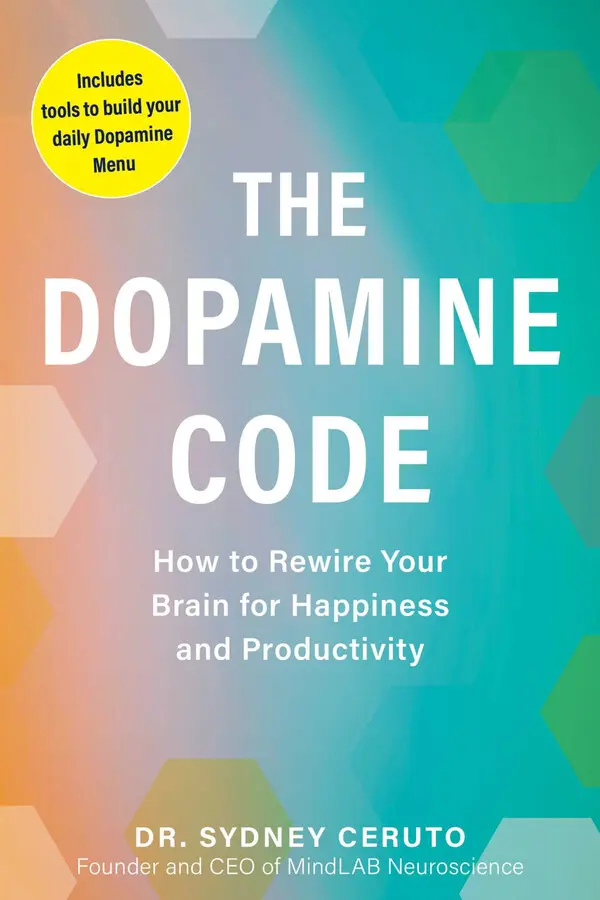
The Dopamine Code

Decode Your Drive

Why Your Brain Rewards the Wrong Things

Your brain's reward system runs every decision, every craving, every crash — and it was never designed for the life you're living. The Dopamine Code is Dr. Ceruto's framework for understanding the architecture behind what drives you, drains you, and keeps you locked in patterns that willpower alone will never fix.

Published by Simon & Schuster, The Dopamine Code is Dr. Ceruto's framework for building your own Dopamine Menu — a personalized system for motivation, focus, and enduring life satisfaction.

Order Now

Ships June 9, 2026

The Dopamine Code by Dr. Sydney Ceruto — Decode Your Drive
Locations

The Intelligence Brief

Neuroscience-backed analysis on how your brain drives what you feel, what you choose, and what you can’t seem to change — direct from Dr. Ceruto.