Hopelessness & Emotional Recovery in Beverly Hills

When making it didn't change anything, when the wellness industry delivered products instead of recovery, and when sobriety revealed what was underneath — the work begins at the neural level.

Nothing is going to change. That certainty feels absolute — and it is wrong.

Hopelessness is a prediction error, not a perception of reality.

Book a Strategy Call

Key Points

  1. The neural architecture is doing exactly what it was trained to do — protecting against the additional pain of effort that produces no change, by assigning that outcome near-zero probability before the effort begins.
  2. The anterior cingulate cortex's error-signal function and the dopamine system's anticipatory signal are not directly addressable through insight or reframing.
  3. The prediction system generating the hopelessness state does not operate primarily through the channels that conscious reasoning has access to.
  4. The brain's predictive architecture is always running a model of what is likely to happen next.
  5. The dopamine anticipatory system, which normally generates the forward-leaning expectation that movement toward a goal will produce something worthwhile.
  6. The neural reality is that the system responsible for generating the motivational pull has stopped generating it reliably.
  7. The more central the experience to the person's model of how things work, the more thoroughly it updates the prediction circuitry when it contradicts that model.

What Hopelessness Actually Is — And What It Is Not

“The certainty is part of the experience — the sense that you are not being pessimistic, you are being realistic, because the evidence is right there.”

Hopelessness does not feel like a prediction. It feels like an accurate read of the situation. The certainty is part of the experience — the sense that you are not being pessimistic, you are being realistic, because the evidence is right there. And that is precisely what makes it so difficult to address through reasoning or reframing, because the system generating the certainty is not a reasoning system. It is a prediction system, and it has been calibrated by experience to generate this conclusion as its most probable output.

The brain’s predictive architecture is always running a model of what is likely to happen next. When that model has been updated by repeated negative outcomes — effort that produced no change, attempts that failed, moments of vulnerability that were not received — the system learns. It adjusts its predictions. It assigns lower probability to positive outcomes. It begins generating the experience of futility before any action is taken, because the prediction system has learned that action does not change things. This is not a choice. It is a calibration. And a calibrated system does not revise its outputs in response to encouragement or to the observation that others are managing differently.

The anterior cingulate cortex — a structure involved in generating the signal that something is worth pursuing, that a discrepancy between the current state and a better state is worth closing. Has stopped producing that signal with adequate strength. The dopamine anticipatory system, which normally generates the forward-leaning expectation that movement toward a goal will produce something worthwhile. Has been trained by a history of unrewarded or under-rewarded effort to stop generating that expectation reliably. What follows is a state where the future feels foreclosed not because it is. Because the neural systems responsible for predicting the future have been shaped by a specific history of experiences that made foreclosure the most probable outcome. The distinction between those two things — a foreclosed future and a prediction system that learned to generate foreclosure — is where the work begins.

Understanding hopelessness as a neural calibration rather than a personal conclusion matters for one reason above all: it changes what is required. The path forward is not convincing the person that things will get better. A prediction system calibrated toward hopelessness will reject that input as inaccurate. Because the system is running a model, and the model says that positive change has near-zero probability, and a message claiming otherwise does not carry enough weight to update the model. The path forward is working at the level of the prediction system itself, directly, with precision, to reset the calibration so that the model of what is possible can actually change.

The Certainty That Effort Will Not Matter

One of the most important features of hopelessness is how absolute the certainty feels. It does not present as a guess or a fear. It presents as knowledge — a settled understanding of how things are and how they will continue to be. The person in this state is not choosing to believe that nothing will change. The prediction system is generating that as the highest-probability outcome, and the experience of certainty follows automatically from how the architecture works.

This is why hopelessness is so resistant to encouragement, success stories, or lists of reasons things could be different. Those inputs arrive into a system already running a model where improvement is improbable, and the prediction system simply weighs them against its existing calibration and finds them unconvincing. The person is not being stubborn. The neural architecture is doing exactly what it was trained to do — protecting against the additional pain of effort that produces no change, by assigning that outcome near-zero probability before the effort begins. The pessimism is not a choice. It is a learned protective mechanism that has become the dominant operating mode of the prediction circuitry.

The dopamine anticipatory system is central to this dynamic. Under ordinary circumstances, the anticipation of reward — the expectation that doing something will produce something worthwhile — is enough to initiate and sustain movement toward a goal. When that anticipatory signal has been suppressed by a history of unrewarded effort, the motivation to try evaporates. Not because the person lacks willpower or desire, but because the mechanism that makes effort feel worth initiating has gone quiet. The felt experience is that nothing is worth trying. The neural reality is that the system responsible for generating the motivational pull has stopped generating it reliably. The prediction model has been updated to expect that the pull, if followed, will not lead anywhere worth going.

This also explains the exhaustion that accompanies hopelessness. Maintaining effort when the prediction system is generating persistent signals that effort will not be rewarded requires overriding those signals continuously. That override is neurologically costly — it draws on regulatory resources that are not unlimited. The fatigue is not laziness. It is the cumulative cost of operating against a prediction architecture that is running at full strength in the direction of futility, day after day, in every domain where the person tries to move forward.

Why Hopelessness Can Feel Like Clarity

There is a feature of hopelessness that distinguishes it from ordinary low mood and from the forward-looking distress of anxiety, and that makes it particularly difficult to address from the outside. Hopelessness has the quality of resolution. The uncertainty has collapsed. The question of whether things will change has been answered — by the prediction system — and the answer is no. And while that answer is devastating, there is a kind of stillness to it that can be mistaken for acceptance, or even for a hard-won form of clarity. The person has stopped struggling against the uncertainty. The prediction is in. The future is known.

The brain’s predictive architecture does not flag its own conclusions as uncertain. Once the model has been updated to reflect near-zero probability of positive change, it generates that prediction with the same confidence it would generate any highly probable outcome. The person experiences this as knowing — as having seen clearly through the fog of hope that others are still caught in. The hopelessness feels like realism. It feels like having finally understood something true about the situation, or about oneself, that was previously obscured by wishful thinking or by the refusal to accept what the evidence actually showed.

This is one of the reasons working with hopelessness requires such precision and care. The goal is not to introduce false optimism into a system that will correctly identify it as inaccurate. False optimism, cheerful encouragement, the insistence that things will get better. All of these are processed by a prediction system running a well-established model, and they tend to increase the isolation of the experience rather than resolve it. The goal is to work at the level of the calibration itself: to examine what the prediction system learned, from what experiences, under what conditions. Whether those specific inputs are being applied to a broader range of situations than they were ever qualified to govern.

The Learning History That Built the Calibration

Hopelessness is always learned. The prediction system does not arrive at near-zero probability for positive change without inputs that justified that calibration. This matters not as a search for blame or as an archaeological exercise, but as a precise identification of what the system learned from. Because the inputs that updated the model are the key to understanding what new inputs could update it again.

For some people, the learning is cumulative — many smaller experiences across years of trying and finding that the trying did not produce change. Relationships that were invested in without a return in kind. Professional environments that rewarded output without ever acknowledging the person generating it. Conventional and self-improvement strategies that produced temporary change and then reverted to baseline. Each experience updates the prediction model in the direction of futility. Not dramatically, not in a way that would be visible as a turning point, but persistently, incrementally, until the cumulative weight of the calibration tips into hopelessness. There is no moment of origin. There is only a learning curve that arrived at its current position.

For others, the learning comes from a more concentrated experience. A loss that was supposed to be survivable but left permanent structural marks on the prediction model. A failure that was significant enough in the context of the person’s life to update the model with corresponding force. A sustained period of effort that produced no return and that the system registered as definitive evidence that effort of that class does not produce change. The prediction system updates from significant experiences with significant weight. The more central the experience to the person’s model of how things work, the more thoroughly it updates the prediction circuitry when it contradicts that model.

In both cases, the prediction system has done exactly what it is designed to do — update its model based on available evidence. The problem is not that the system malfunctioned. The problem is that the evidence it learned from, however valid in the specific context in which it was gathered, is now being applied too broadly. To situations and possibilities that were not part of that original learning, and that the system has never had the opportunity to test. The recalibration work is precision work: identifying specifically what the system learned, from what inputs, and creating conditions where new inputs with sufficient weight and specificity can update the model.

What Recovery Requires at the Neural Level

Recovery from hopelessness is not primarily a matter of thinking differently. Cognitive change can be a component of the work, but it is not where the leverage is. The prediction system generating the hopelessness state does not operate primarily through the channels that conscious reasoning has access to. The anterior cingulate cortex’s error-signal function and the dopamine system’s anticipatory signal are not directly addressable through insight or reframing. They are addressable through targeted work at the level of the architecture — work that changes the inputs the system is receiving and the conditions under which those inputs are weighted.

The methodology I use at MindLAB Neuroscience begins with a precise mapping of the learning history that calibrated the prediction system to its current output. This is not a narrative retelling of what happened — it is a careful identification of the specific experiences that updated the model, in what direction, and with what weight. That map tells me which inputs carry the most significance for the specific architecture of this person’s hopelessness. Which aspects of the prediction model are most accessible to recalibration given the current state of the system.

From there, the work addresses the physiological and attentional patterns that maintain the hopelessness state between sessions. The prediction system does not operate in isolation. It is sustained by a whole network of associated patterns: the way attention is directed, the behavioral patterns that confirm the hopelessness prediction by avoiding situations where the prediction might be tested. The physiological baseline that the system has settled into, the relational patterns that have formed around the hopelessness state. Each of these is part of the architecture maintaining the calibration, and each of them is a point of access for the recalibration work.

Walnut desk with marble inlay crystal brain sculpture and MindLAB journal in warm California afternoon light in Beverly Hills private study

Finally, the work creates conditions where the system can receive new inputs with sufficient weight and specificity to actually update the prediction model. Not temporary relief, not inspirational reframing that the system discounts within days, but genuine recalibration of what the prediction architecture generates as its most probable output when it models the future. This requires precision and repetition. The model learned over time, from accumulated evidence. Recalibrating it requires new evidence with enough cumulative weight to shift the model’s output. That shift is possible. The prediction system is plastic. The certainty that nothing will change is generated by an architecture that is itself capable of being recalibrated.

The Difference Between Hopelessness and Depression

Hopelessness and depression overlap substantially and frequently co-occur, but they are not identical, and the distinction matters for how the work proceeds. Depression involves a systemic downregulation of the mood-regulation architecture — a broad reduction in the output of systems involved in motivation, affect, hedonic response, and energy. The whole system is running at reduced capacity. Hopelessness is more specific: it is a prediction generated by the brain’s anticipatory circuitry about the probability of change. Depression is a state condition. Hopelessness is a predictive conclusion.

A person can experience significant depression without hopelessness — the system is running at low output, but somewhere the prediction model still assigns meaningful probability to the possibility that things could be different. And a person can experience hopelessness in the relative absence of the other markers of depression. They can be functional, capable, even outwardly productive, while the prediction system is quietly foreclosing on the possibility of meaningful change in the domains that matter most to them. The flatness is internal and specific, not visible in how they present.

The reason this distinction matters is that hopelessness, because of its predictive quality, can override the other resources available to the system. A person who maintains a practice, holds relationships, continues to function — and who has come to believe that none of it will lead to what they actually need — is not lacking resources. They are experiencing a prediction system that has foreclosed on the possibility of those resources producing meaningful change. Adding more resources to the system does not address the foreclosure. The work has to engage directly with the prediction architecture that generated the foreclosure, not with the resource deficit.

The First Step When the Prediction System Says There Is No Point

The most difficult aspect of hopelessness is that the system generating it applies its calibration to every potential next step — including the step of reaching out. Contacting MindLAB Neuroscience, scheduling a Strategy Call, taking any action that might be characterized as trying something. All of these require the prediction system to assign some probability to the idea that the step will matter. And hopelessness is precisely the state in which that probability signal has been suppressed.

The felt experience is: this probably will not help either. That experience is not evidence that help will not work. It is evidence that the prediction system is running its current calibration at full strength. The system applies its near-zero probability estimate to incoming help the same way it applies it to incoming effort in any other domain — because that is what a calibrated prediction system does. It is not a signal to wait until you believe differently. It is a signal that the prediction system is doing exactly what it has been trained to do.

The Strategy Call at MindLAB Neuroscience is conducted by phone — one hour, unhurried, not a pitch and not a standard intake process. It is a careful, precise examination of the neural patterns at work and what the specific architecture of your situation actually requires. It is a space designed for people who are not in a position to perform readiness or manage optimism — who are reaching out from a place of near-exhausted residual effort, not from genuine hope. That is exactly who this work is designed for. The first step is contact. The prediction system’s objections to that step are part of what gets examined once the call begins.

Marker What You Experience What's Happening Neurologically What We Restructure
Hopelessness Actually Is — And The certainty is part of the experience — the sense that you are not being pessimistic, you are being realistic, because the evidence is right there. The brain's predictive architecture is always running a model of what is likely to happen next. When that model has been updated by repeated negative outcomes — effort that produced no change, attempts that failed, moments of vulnerability that were not received — the system learns.
Certainty That Effort Will Not One of the most important features of hopelessness is how absolute the certainty feels. When that anticipatory signal has been suppressed by a history of unrewarded effort, the motivation to try evaporates. The person in this state is not choosing to believe that nothing will change.
Hopelessness Can Feel Like Clarity The person experiences this as knowing — as having seen clearly through the fog of hope that others are still caught in. The brain's predictive architecture does not flag its own conclusions as uncertain. Once the model has been updated to reflect near-zero probability of positive change, it generates that prediction with the same confidence it would generate any highly probable outcome.
Learning History That Built the For some people, the learning is cumulative — many smaller experiences across years of trying and finding that the trying did not produce change. Professional environments that rewarded output without ever acknowledging the person generating it. The recalibration work is precision work: identifying specifically what the system learned, from what inputs, and creating conditions where new inputs with sufficient weight and specificity can update the model.
Recovery Requires at the Neural This is not a narrative retelling of what happened — it is a careful identification of the specific experiences that updated the model, in what direction, and with what weight. The anterior cingulate cortex's error-signal function and the dopamine system's anticipatory signal are not directly addressable through insight or reframing. Cognitive change can be a component of the work, but it is not where the leverage is.
Difference Between Hopelessness and Depression And a person can experience hopelessness in the relative absence of the other markers of depression. Hopelessness is more specific: it is a prediction generated by the brain's anticipatory circuitry about the probability of change. Hopelessness and depression overlap substantially and frequently co-occur, but they are not identical, and the distinction matters for how the work proceeds.

Why Hopelessness & Emotional Recovery Matters in Beverly Hills

Hopelessness & Emotional Recovery in Beverly Hills

Beverly Hills produces a specific form of hopelessness that is particularly difficult to speak aloud. The surrounding cultural context makes it nearly unspeakable: the hopelessness of having made it and found that it did not help. The career reached a level that was supposed to confer a particular interior condition — security, meaning, the sense of having arrived somewhere real. The arrival happened. The interior condition did not correspondingly change. The prediction system, which had been running a model in which this level of achievement would resolve the underlying state, updates its calibration: the expected outcome did not follow from the expected input. The system recalibrates in the direction of: there is no input that produces the expected outcome. And that calibration — arrived at by following the logic of the environment’s own success narrative — is one of the loneliest places the prediction system can land.

In the entertainment industry specifically, career death. The sudden or gradual removal of a professional identity organized around visibility, creative output, and the particular form of recognition that the industry confers — produces a form of hopelessness with its own texture. The prediction system had been running on a model in which the career provided the organizing framework for what the future looked like, what it was being built toward. What made the present effort worth sustaining. When that framework is removed, the system does not automatically generate a replacement model. It generates a forecast of the future organized around the absence — around what is no longer available — and that forecast tends toward foreclosure. The future that was being built toward is gone. The system is generating near-zero probability for alternative constructions of a meaningful future. The identity architecture that was doing the building is no longer intact and the system does not yet have evidence that an alternative architecture is viable.

The wellness industry presents a particular complication in Beverly Hills. The density of wellness offerings, somatic practices, retreats, optimization frameworks, and curated recovery products creates an environment in which hope is constantly being offered as a deliverable. For someone whose prediction system has already been updated by repeated experiences with interventions that produced no durable change, this environment becomes another source of evidence for the hopelessness calibration. The system has tried things of this class. They did not work. The prediction model updates accordingly: interventions in this category do not produce change for this person. And the hopelessness about recovery from hopelessness deepens — because the environment is full of people selling exactly the thing the system has learned to distrust.

Substance recovery adds another specific layer. The person who completed the work, maintained the sobriety, followed the program with genuine commitment — and found that the emotional state underneath the substance use was still present, still flat, still generating futility. The prediction system has now learned that even the removal of the substance does not produce the interior change that was the actual need. The hopelessness that was being managed is now fully present and unmedicated, the recovery framework has been completed without the expected result, and the system is generating near-zero probability for what comes next. At MindLAB Neuroscience, the work in all of these situations begins at the level of the prediction architecture — not the story of what has already been tried.

Dr. Sydney Ceruto, PhD — Founder, MindLAB Neuroscience

Dr. Sydney Ceruto, PhD — Founder & CEO, MindLAB Neuroscience

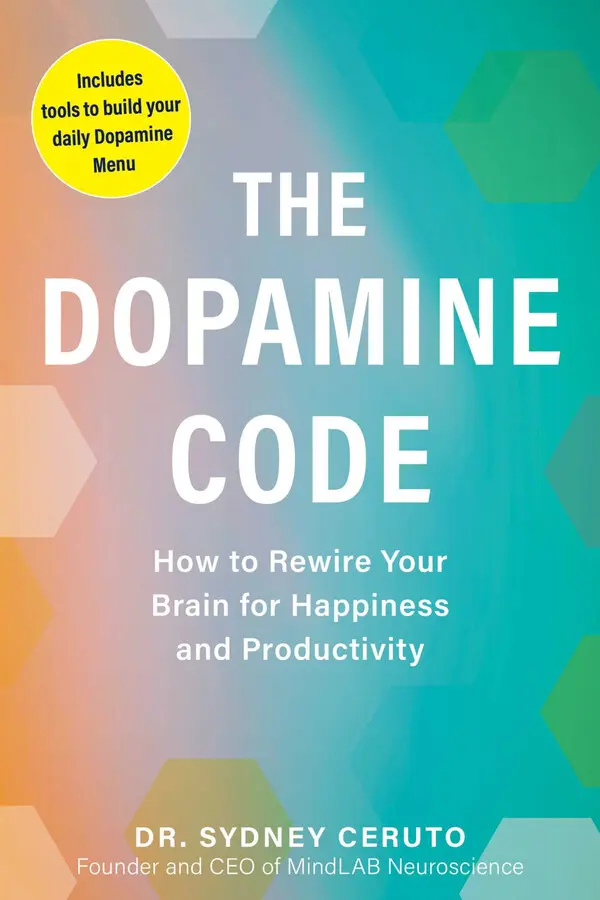
Dr. Ceruto holds a PhD in Behavioral & Cognitive Neuroscience from NYU and two Master’s degrees from Yale University. She lectures at the Wharton Executive Development Program at the University of Pennsylvania and has been an Executive Contributor to the Forbes Coaching Council since 2019. Dr. Ceruto is the author of The Dopamine Code (Simon & Schuster, June 2026). She founded MindLAB Neuroscience in 2000 and has spent over 26 years pioneering Real-Time Neuroplasticity™ — a methodology that permanently rewires the neural pathways driving behavior, decisions, and emotional responses.

References

Abramson, L. Y., Metalsky, G. I., & Alloy, L. B. (1989). Hopelessness depression: A theory-based subtype of depression. Psychological Review, 96(2), 358–372. https://doi.org/10.1037/0033-295X.96.2.358

Pizzagalli, D. A. (2014). Depression, stress, and anhedonia: Toward a synthesis and integrated model. Annual Review of Clinical Psychology, 10, 393–423. https://doi.org/10.1146/annurev-clinpsy-050212-185606

Treadway, M. T., & Zald, D. H. (2011). Reconsidering anhedonia in depression: Lessons from translational neuroscience. Neuroscience & Biobehavioral Reviews, 35(3), 537–555. https://doi.org/10.1016/j.neubiorev.2010.06.006

Keller, M. C., Neale, M. C., & Kendler, K. S. (2007). Association of different adverse life events with distinct patterns of depressive symptoms. American Journal of Psychiatry, 164(10), 1521–1529. https://doi.org/10.1176/appi.ajp.2007.06091564

Success Stories

“Outperforming every metric for years and feeling absolutely nothing — no satisfaction, no drive, just a compulsive need to keep going. Executive retreats, meditation protocols, none of it made a difference. Dr. Ceruto identified the dopamine downregulation that was driving the entire pattern. My reward system had essentially gone offline from overstimulation. She didn't teach me to reframe success — she restored the neurochemistry that lets me actually experience it.”

Mikhail D. — Family Office Principal Washington, DC

“Anxiety and depression had been running my life for years. Dr. Ceruto helped me see them not as permanent conditions but as neural patterns with identifiable roots. Once I understood the architecture, everything changed.”

Emily M. — Physician Portland, OR

“Every metric was green and I felt nothing. Conventional approaches told me I was 'burned out' or needed gratitude practices — none of it touched the actual problem. Dr. Ceruto identified that my dopamine baseline had shifted so high from constant reward-chasing that normal achievement couldn't register anymore. She recalibrated the reward system itself. I didn't need more success. I needed my brain to actually experience the success I already had.”

Rafael G. — Screenwriter New York, NY

“I struggled with anxiety since I was 13. I simply could not control my thoughts, and no medication or therapy was helping. Since working with Sydney, I’ve gained a whole new perspective on what anxiety actually is and — most importantly — how to control it. Her approach is unlike anything I’ve ever experienced, a must for anyone who wants to understand what drives their actions and emotions. At 28, I’m finally in a happy place with solid emotional management and real coping skills.”

Lydia G. — Gallerist Paris, FR

“After the concussion, my processing speed collapsed — I couldn't hold complex information the way I used to, and no one could explain why the fog wasn't lifting. Dr. Ceruto mapped the damaged pathways and built compensatory networks around them. My brain doesn't work the way it did before the injury. It works differently — and in some ways, more efficiently than it ever did.”

Owen P. — Orthopedic Surgeon Scottsdale, AZ

“When I started working with Dr. Ceruto, I was feeling stuck, not happy whatsoever, detached from family and friends, and definitely not confident. I’d never tried a neuroscience-based approach before, so I wasn’t sure what to expect — but I figured I had nothing to lose. My life has completely changed for the better. I don’t feel comfortable discussing publicly why I sought help, but I was made to feel safe, secure, and consistently supported. Just knowing I could reach her day or night was a relief.”

Algo R. — Fund Manager Dubai, UAE

Frequently Asked Questions About Hopelessness & Emotional Recovery

Is this therapy?
No. MindLAB Neuroscience is not a therapy practice and Dr. Ceruto is not a therapist. The methodology works at the level of neural architecture — the predictive and regulatory systems generating the hopelessness state — rather than through a therapeutic or clinical frame. If you are currently working with a therapist, that work and this work can coexist. They operate at different levels of the system.
Why does hopelessness feel so certain when it is described as a prediction error?
The prediction system does not flag its own conclusions as uncertain. When the brain's anticipatory circuitry has been calibrated to assign near-zero probability to positive change, it generates that prediction with the same felt certainty it would generate any high-probability outcome. The experience of certainty is a feature of how the prediction architecture operates — not evidence that the prediction is accurate. A system can be miscalibrated and still feel completely confident in its output.
I have tried many approaches and none of them have worked. Why would this be different?
This is one of the most important questions to ask, and it is worth asking directly. Many approaches to hopelessness engage at the level of the narrative — examining thoughts, reframing beliefs, building coping strategies — without working at the level of the prediction architecture generating the hopelessness state. If the prediction circuitry has not been recalibrated, the system continues producing near-zero probability for positive change regardless of what strategies are applied on top of it. The work at MindLAB Neuroscience addresses the architecture, not just the outputs.
How is the Strategy Call conducted?
The Strategy Call is conducted by phone — not video, not in person. It is one hour, and it is a careful, precision examination of the neural patterns at work and what the specific architecture of your situation requires. It is not a pitch or a standard consultation. The fee is $250 and does not apply toward any program investment.
Can hopelessness that has been present for years or decades actually change?
Yes. The prediction system is plastic — it can be recalibrated. The calibration that produced the hopelessness was learned from experience, and the system that learned it is capable of learning differently. The length of time the calibration has been in place affects how embedded it has become, but it does not make the architecture fixed. What is required is working at the level of the prediction system with sufficient precision and weight to give the system new inputs that can actually update the model — not arguments or encouragement, but genuine recalibration work.
I do not have enough energy to do this work. Is that a barrier?
It is not a barrier, and it is not an accident. The fatigue that accompanies hopelessness is a direct product of operating continuously against a prediction system generating persistent signals that effort will not produce change. The energy cost of overriding those signals, day after day, is real and cumulative. The Strategy Call is one hour, by phone, and it requires no preparation, no readiness, and no particular level of energy to begin. You are welcome to come from exactly where you are.
What is the difference between hopelessness and depression?
Depression involves a broad downregulation of the mood-regulation architecture — reduced motivation, affect, energy, and hedonic response across the system. Hopelessness is more specific: it is a prediction generated by the brain's anticipatory circuitry about the probability of positive change. The two frequently overlap, and hopelessness is often the deepest layer of a depressive state. But they are distinct, and addressing hopelessness requires working specifically at the level of the prediction architecture, not only at the level of the broader mood system.
Is the Strategy Call appropriate if I am in a very dark place right now?
The Strategy Call is designed for people in serious distress. If you are in immediate crisis or danger, please contact a crisis line or emergency services first. If you are in a very dark place but not in immediate danger, the call is appropriate — it is specifically designed for people who are not in a position to perform readiness or manage optimism. Honesty about where things are is all that is required.
How does the dopamine system connect to the experience of hopelessness?
The dopamine anticipatory system generates the forward-leaning expectation that action will produce a worthwhile outcome — the signal that makes effort feel worth initiating before the outcome arrives. When that system has been trained by repeated unrewarded effort to assign low probability to positive outcomes, the anticipatory signal weakens. The result is that effort stops feeling worth taking before it is taken. Recalibrating the prediction architecture involves restoring the conditions under which that anticipatory signal can function reliably again.
How do I take the first step when the prediction system is telling me there is no point?
You are welcome to take the first step from exactly that place. The prediction system applies its calibration to reaching out as thoroughly as it applies it to anything else — the felt experience is that this probably will not help either. That is the architecture operating as trained, not a signal to wait until you feel differently. Contact through the website is the beginning. The Strategy Call takes it from there.

Also available in: Miami · Wall Street · Midtown Manhattan · Lisbon

Take the First Step

The Strategy Call is a focused conversation with Dr. Ceruto that maps the specific neural mechanisms driving your concerns and determines the right path forward.

Book a Strategy Call
MindLAB Neuroscience consultation room
Locations

The Intelligence Brief

Neuroscience-backed analysis on how your brain drives what you feel, what you choose, and what you can’t seem to change — direct from Dr. Ceruto.